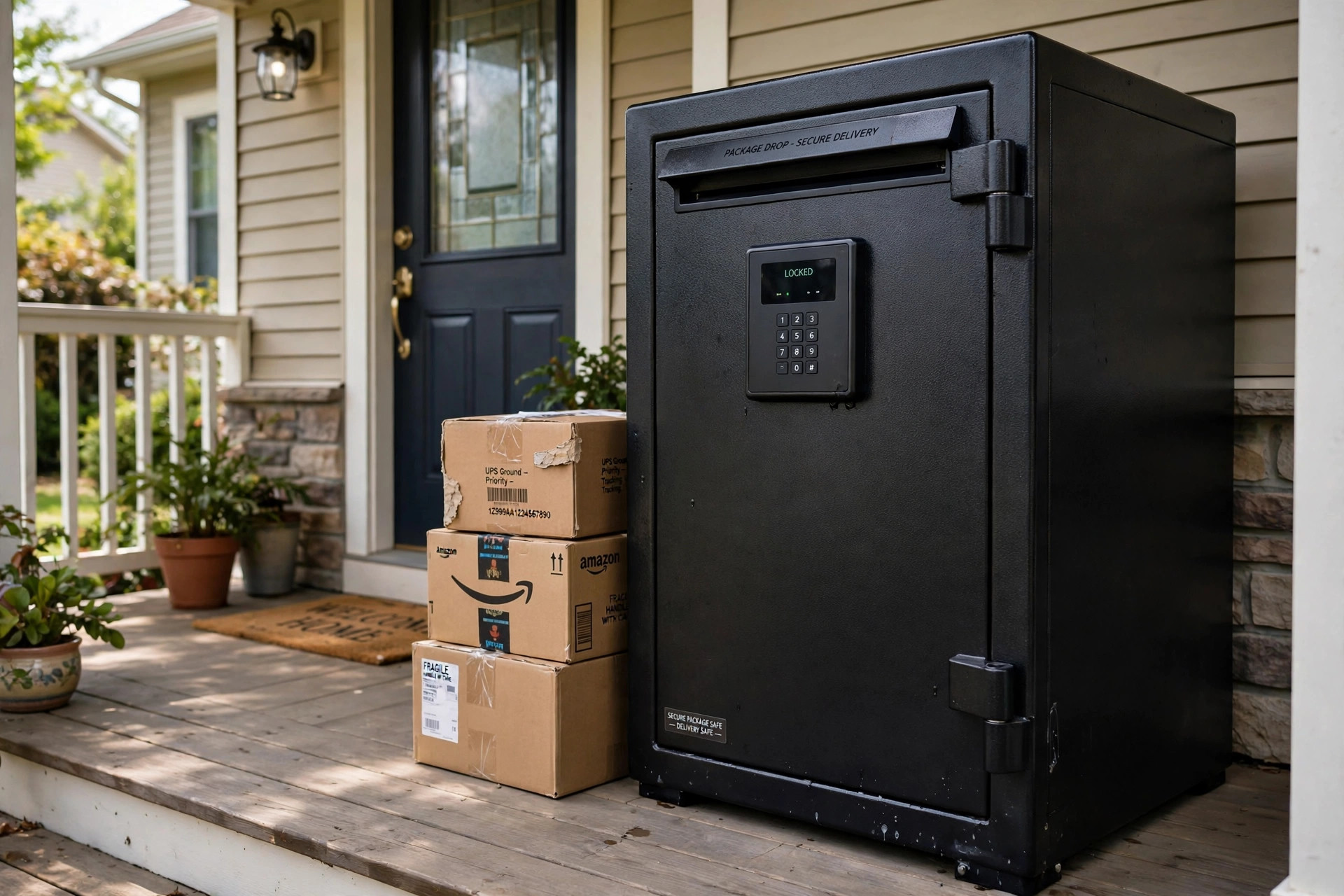

More Americans order goods by mail than ever before. Shoes, books, medicine, and gifts arrive each week. Many of these parcels sit on the front porch for hours. This is where a package lock box for porch reviews usa becomes useful reading. A lock box is a steel or plastic container that holds packages behind a locked door. The delivery driver drops the parcel inside. Only the owner has the key or code. Thieves see an empty porch and move on.
This guide gathers what reviewers report about porch package lock boxes sold in the USA. It explains why they matter, what to look for, the main types, what they cost, and how to keep them working well. It also answers common questions and notes safety points. The goal is simple: help you choose a box that fits your home and your habits.
Why a Porch Package Lock Box Matters
Porch theft is a daily problem in many American neighborhoods. A package sits in plain view. A stranger walks past. In seconds the box is gone. Police reports show that thieves often follow delivery trucks. They watch for the drop and strike within minutes. A package lock box for porch reviews usa writers test each box against this threat. Most reviewers agree on the core idea. A locked container turns an easy crime into a hard one.
The box also solves a smaller worry. Neighbors report that rain can soak a cardboard parcel in minutes. A box with a lid keeps parcels dry. It also hides them from curious children and dogs. Some models are large enough to hold several parcels at once. This helps on busy shopping days. Many families say the box gave them peace of mind. They no longer rush home at lunch to guard the doorstep.
A lock box also helps delivery drivers. A driver on a tight route can drop a parcel in the box and leave. There is no need to wait at the door. No signature is needed for most goods. Some boxes have a printed label that tells the driver how the latch works. Reviewers say simple instructions work best. The easier the box is for the driver, the more likely it gets used.
What to Look For When You Choose: Package Lock Box for Porch Reviews Usa
Reviews point to five main features. First is size. Measure the parcels you receive. Many boxes fit small to medium parcels. Fewer fit large cartons. A box about 20 inches tall and 16 inches wide is common. Some tall models accept larger cartons. Check the slot or door size before you buy. This is the most common mistake reviewers mention.
Second is the locking method. A keyed lock is simple and cheap. You keep the key on your ring. A combination lock needs no key. You share the code only with family. Some models have a latch that lets the driver lock the box without a key. The driver closes the lid. The lock clicks shut. Only your key opens it again. Reviewers of a package lock box for porch reviews usa favor this one-way locking design. It is fast for the driver and safe for you.
Third is the build. Steel boxes last longer than plastic ones. Look for heavy gauge steel. A good paint finish keeps rust away. The door hinge should feel solid. Thin hinges are the weak point of cheap boxes. Many reviewers also test the weight. A box of 20 to 30 pounds is harder to carry off. Some boxes come with holes so you can bolt them to the floor or wall. Bolting is the single best theft guard, say many reviewers.
Fourth is weather protection. The box sits outside all year. Rain, snow, and sun test every joint. Look for a rain gutter above the door. Check that the door closes tight. Powder-coated steel resists rust well. Wood and soft plastic swell or crack in wet weather. Reviewers in cold states warn that cheap locks freeze shut. A lock with a cover flap works better in winter.
Fifth is appearance. The box sits by your front door. Neighbors see it every day. Some cities and homeowner groups have rules about porch items. A plain dark box in black, brown, or gray blends in best. A few makers offer boxes that look like porch benches or planters. These hide the purpose from strangers. Reviews say such boxes work well but cost more.
Types and Options
The most common type is the upright lock box. It stands like a small cabinet. The driver opens the front door or drops parcels through a top slot. Models with a top slot are quick to use. The driver never touches the lock. This is the type most porch package delivery box reviews cover.
A second type is the parcel chest. It opens from the top like a trunk. Many chests look like porch furniture. They hold more than upright boxes. Some families use them as extra seating. The lid locks with a key or latch. Reviews say chests suit homes with wide porches. They take up more floor space than upright boxes.
A third type is the in-ground or wall-mounted safe. It bolts to the house frame or a concrete pad. It cannot be carried away. It usually holds fewer parcels than a chest. Reviews praise its security but note the fixed spot. You must plan the location before you buy. These boxes suit people who want the highest level of protection.
A fourth type is the soft or foldable bag with a lock. These are fabric bags with a steel cable. You loop the cable around a porch rail. Reviews are mixed. The bag is cheap and light. A determined thief can cut the fabric. Most reviewers treat these bags as a short-term fix, not a lasting answer. They suit renters who cannot bolt anything to the porch.
Some owners pair a lock box with other gear. A mailbox with lock handles letters while the box handles parcels. A security camera with local storage watches the porch and records motion. A smart gate opener with camera adds another layer at the driveway. Reviews note that layers work best together. A thief sees the camera, the box, and the locked gate, and picks an easier house.
Cost and Price
Prices vary with size, metal, and brand. Small plastic boxes sell for about 60 to 90 dollars. Mid-size steel boxes with good locks run 120 to 250 dollars. Large chests and bench-style boxes cost 250 to 450 dollars. Wall-mounted safes run 300 to 600 dollars, plus any mounting work. Most reviews cluster around the 150 to 250 dollar range. That is the sweet spot for steel, a good lock, and a fair size.
Think about value, not just price. A cheap box may need replacement in two years. Rust or a broken hinge ends its life early. A well-made steel box can last a decade. Reviews from testing sites such as Consumer Reports often stress the long view. A box that costs 200 dollars and lasts ten years costs 20 dollars a year. A box that costs 70 dollars and fails in two years costs more in the end.
Check what the price includes. Some boxes ship with mounting bolts. Others do not. Some need assembly. Read the reviews for notes on hard assembly. A box that takes two hours to build costs you time as well. Also check shipping. Heavy boxes can carry high freight fees. Many buyers report free shipping from large home stores.
Care and Upkeep
A porch lock box needs little care, but not none. Wipe the outside each season. Dirt holds moisture against the paint. Oil the lock once or twice a year. A light machine oil or lock spray works well. Do not use heavy grease. It collects dust and jams the pins. If your lock froze in winter, warm the key in your hand before turning it. Many northern owners switch to covered locks after one cold winter.
Check the bolts twice a year. Wood floors and rails shrink and swell with the seasons. A bolt that felt tight in summer may be loose in winter. Tighten them before a thief tests them. Check the paint too. Touch up chips with rust-proof paint. A small chip left alone can rust through the panel in a year or two. Porch lock box theft prevention guides from SimpliSafe and ADT often add the same point. Keep the hardware tight and the finish sound.
Empty the box each day. A full box invites the next driver to leave the parcel beside it. That defeats the purpose. Tell the driver if you will be away. Many services let you hold deliveries. Clear snow from the lid in winter so it opens fully. Keep the driver instruction label clean and readable. If the code changes, update any note the driver reads.
Safety
A lock box is safer than an open porch, but it has limits. No box stops a well-armed thief with tools. Bolting is your best guard. A bolted box forces a thief to work in the open. Most thieves will not. Reviews also warn against oversized labels. A big sign that reads “PACKAGES HERE” tells thieves what to steal. Keep the box plain. Let it look like a storage chest.
Think about fire and access. Do not bolt a box across your only walkway. Keep the path clear for you and for visitors. If the box holds medicine or heat-sensitive goods, bring them inside fast. Summer heat inside a steel box can be high. Electronics and candles can melt or fail. Some reviewers place a small thermometer in the box for a week. This shows the real heat range.
The Consumer Product Safety Commission reminds owners of one more point. Pinching hazards matter with heavy lids. Teach children to keep fingers clear. A lid that slams shut can hurt small hands. Some boxes have soft-close hinges. These cost more but add safety. If you have small children, choose a model with a slow lid or a light plastic build.
Cameras and lights add to safety. A Ring doorbell or a Google Store camera can record each visit. Motion lights make night theft harder. Review sites such as CNET, PCMag, and The Verge test these devices each year. Their reviews help you match the camera to the box. A camera that stores video without a monthly fee suits many budgets.
Frequently Asked Questions
Will a delivery driver actually use my lock box? Most drivers use it if the instructions are clear. Print a short note on the box. “Please place packages inside and close the lid.” Keep the latch simple. Reviewers say top-slot boxes get the best driver compliance. A box that needs a key code from the driver gets the worst. Never make the driver work hard.
What size box should I buy? Look at your last month of parcels. Measure the largest common one. Add two inches each way. Most homes do well with a box around 20 inches tall and 16 inches wide. If you get large cartons often, choose a chest style. It holds more volume than an upright box of the same height.
Can thieves steal the whole box? An unbolted box can be carried away. Reviews stress this point again and again. Bolt the box to the porch floor or a wall. Use the anchor holes the maker provides. If you rent and cannot drill, choose a heavy chest and a short steel cable to a rail. It is not perfect, but it slows a thief down.
Do lock boxes keep packages dry? Good ones do. Look for a raised lid edge or rain gutter. Check that the door seal is tight. Cheap boxes leak at the hinge. Read the weather notes in package lock box for porch reviews usa before you buy. Reviewers in rainy regions rate boxes on this point alone.
Are there any monthly fees? A plain lock box has no fee. You buy it once and it is yours. Smart boxes with electronic locks or cameras may need a data plan or a subscription. Check the maker page before you buy. A Ring or Google Store device may carry a cloud storage fee. A plain keyed box never does.
How long does a steel lock box last? Most last eight to twelve years with light care. Powder-coated steel resists rust well. Keep the finish sound and the lock oiled. Boxes in coastal areas face salt air. They may last fewer years. Reviewers near the sea suggest marine-grade paint or a plastic model for those zones.
A Final Word
A package lock box is a simple answer to a common worry. It will not end all theft. But it takes your parcels off the open porch and behind a lock. That change matters. Most thieves want the easy grab. A locked box makes them look elsewhere. Choose a size that fits your parcels. Pick a solid steel build with a good lock. Bolt it down. Keep it plain and keep it clean. Do those five things and the box will serve you well for many years. Read a few recent package lock box for porch reviews usa before you buy. The details in those tests will guide you to the right model for your porch.
References
ADT. (n.d.). Home security and automation. https://www.adt.com CNET. (n.d.). Technology news and reviews. https://www.cnet.com Consumer Reports. (n.d.). Product reviews and ratings. https://www.consumerreports.org Google Store. (n.d.). Smart home devices. https://store.google.com PCMag. (n.d.). Technology product reviews. https://www.pcmag.com Ring. (n.d.). Smart home security devices. https://www.ring.com SimpliSafe. (n.d.). Home security systems. https://www.simplisafe.com The Verge. (n.d.). Technology news and reviews. https://www.theverge.com U.S. Consumer Product Safety Commission. (n.d.). Product safety information. https://www.cpsc.gov
Was this guide helpful?

About Robert Taylor
The My Garden US editorial team writes practical, in-depth home and garden guides for American homeowners — tested advice, no fluff.
You May Also Like

Smart Air Purifier With App Reviews 2026 USA: A Practical Guide for American Homes
February 20, 2026 0 views
Tesla Wall Connector vs ChargePoint Comparison: Which Home EV Charger Should You Buy?
January 16, 2026 0 views
Smart Home Routines for Vacation Mode USA: A Complete Homeowner Guide
April 27, 2026 0 views