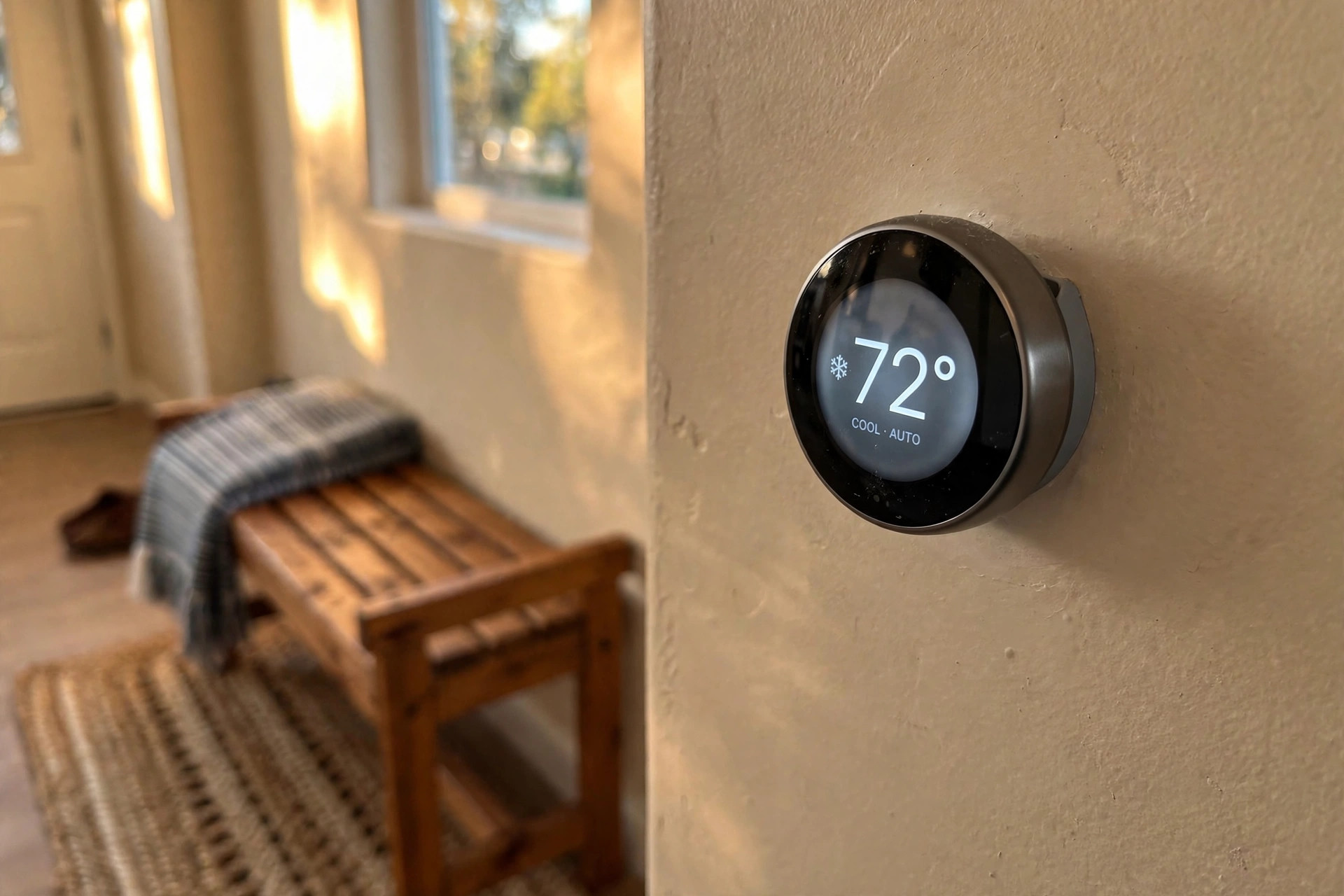

When you search for the best smart thermostat for vacation rental usa properties, you are asking a practical question. A vacation home sits empty for weeks. Guests arrive late at night. Energy bills climb when no one is watching. A smart thermostat solves these problems in one small device. It lets the owner set the heat or the cooling from a phone, from anywhere in the world. It saves money. It protects the house. It keeps guests happy. This guide explains what to look for, what types exist, what they cost, and how to keep one running well.
Why a Smart Thermostat Matters for a Vacation Rental
A rental home is not like a family home. The owner is often miles away. The guests change every few days. Some guests turn the air down to 60 degrees and leave the windows open. Others never touch the heat and let the pipes freeze. A standard thermostat cannot tell you what is happening. A smart thermostat can.
The main gain is control from a distance. From a phone app, the owner can see the indoor temperature. If it climbs too high in summer or drops too low in winter, the owner can act. Many models send alerts when the temperature goes past a set limit. That alert can stop a frozen pipe before it bursts. It can stop a runaway air conditioner from doubling the power bill.
Money is the second reason. Heating and cooling make up about half of a home’s energy bill in most parts of the United States. A smart thermostat learns the daily pattern of the house. It trims waste when the house is empty. The United States Department of Energy notes that turning back the temperature by 7 to 10 degrees for 8 hours a day can save up to 10 percent on heating and cooling costs. For a rental that sits empty half the year, the savings are larger. A review by Consumer Reports has pointed to the same steady finding: smart models pay back their price through lower bills.
Guests notice comfort too. A good host sets the house to a pleasant temperature before the guest arrives. With a smart thermostat, this is a tap on a phone screen. No one needs to drive to the house. No one needs to leave the system running all week just in case.
What to Look for in a Rental Property: Best Smart Thermostat for Vacation Rental Usa
A thermostat made for a rental home must do things that a home model does not. The first is remote control. The app should work over Wi-Fi and cell data. It should show the current temperature, the set point, and whether the system is heating, cooling, or off. The app should be simple. A host may hand control to a manager or a cleaner for a short time, so multi-user access is a plus.
The second need is lock control. Guests will push buttons. A good rental thermostat lets the owner set a temperature range, such as no lower than 68 and no higher than 76. Some models let the owner lock the screen with a code. This stops guests from running the air all night at 58 degrees.
Third, the device should work with the heating system in the house. American homes use forced air, heat pumps, boilers, electric baseboards, and more. Not every smart thermostat fits every system. The most common wires are R, W, Y, G, and C. The C wire, the common wire, gives the thermostat steady power. Older homes may lack it. Some brands sell power extender kits for homes without a C wire.
Fourth, look for temperature alerts. The best models text or email the owner when the indoor temperature goes above or below a chosen line. This is the single most useful rental feature. A burst pipe can cost thousands. An alert costs nothing.
Fifth, think about the network. A vacation house may have weak Wi-Fi. A thermostat that loses Wi-Fi should keep running its schedule from memory. It should reconnect on its own when the network returns.
Types of Smart Thermostats
Learning Models
Learning models watch the house for a week or two and build a schedule on their own. They notice when the house is empty and cut the heat or cooling back. They learn how long the furnace takes to warm the house and start early. These models suit busy hosts who do not want to program anything. Google Nest makes the most known learning thermostat, and other leading brands sell learning models that appear in many buyer guides.
Programmable Smart Models
These work like the digital thermostats of the 1990s, but with an app and remote control. The host sets a schedule: warm by check-in, setback after check-out. They cost less than learning models. They fit hosts who like full control and a fixed pattern. Many guides on CNET explain how these schedules cut waste in second homes.
Room Sensor Models
Some homes have hot and cold rooms. A thermostat with wireless room sensors reads the temperature in several places, not just the hallway. It can average the readings or follow one room. This helps large rental houses where the upstairs bedroom bakes while the downstairs sits cold. Reviews on PCMag often test how well these sensors hold an even temperature.
Zoned and Heat Pump Models
Houses with zone dampers or heat pumps need a thermostat that speaks their language. Heat pump models handle the backup heat strip with care so the costly backup does not run when the pump alone will do. Hosts with such systems should check the maker’s compatibility list before buying. Articles on The Verge cover how new models have improved heat pump support in recent years.
Cost and Price
Prices vary with features. Basic smart models start near 100 dollars. Mid-range models with room sensors and good apps run 170 to 250 dollars. Top learning models with large screens run 250 to 300 dollars or more.
The device price is only part of the cost. A host may pay an HVAC tech 100 to 200 dollars for install if the wiring is old. A C wire add-on kit costs 25 to 50 dollars. There is no monthly fee for most brands. A few offer paid services, such as energy reports or extended warranties, but the core remote control is free.
The payback is real. A rental that sits empty from Monday to Thursday can save 20 to 40 dollars a month on power in a hot climate. In two years, the device pays for itself. Hosts who pair the thermostat with a smart lock for airbnb remote access reviews can run check-in and climate from the same phone, which saves trips to the property.
When comparing brands, the ecobee vs honeywell thermostat comparison usa guide is a useful next read, since both brands sell models that suit rental homes.
Care and Upkeep
A smart thermostat needs little care, but a rental host should follow a simple routine.
Keep the firmware fresh. Makers send updates that fix bugs and add features. Most models update on their own at night. The host should check the app once a month to confirm the software is current.
Clean the air around the unit. Dust on the temperature sensor makes readings drift. Wipe the unit with a dry cloth twice a year. Keep lamps and sun off the wall where it sits. Heat from a lamp fools the sensor and makes the system run too long.
Check the schedule each season. In spring, shift from heat to cool. In fall, shift back. If the rental has a hot tub or pool season, align the setback times with the cleaning schedule.
Test the alerts. Once a season, set a test alert line and confirm the phone gets the message. An alert that fails in January is no help at all.
Change HVAC filters on time. A dirty filter makes the system work hard and can trip safety limits. Many smart models remind the owner when the filter is due. For hosts who also watch for water damage, a smart water leak detector reviews 2026 usa guide pairs well with thermostat alerts.
Safety
A thermostat touches the home’s wiring and the heating system. Safety rules are plain but firm.
Turn off power at the breaker before touching any wire. Label each wire with tape as you remove the old unit. A photo of the old wiring saves time if something goes wrong.
Do not let the indoor temperature drop too far in winter. Set a low limit of 55 degrees for most homes, or 60 if the house has old pipes on outer walls. Frozen pipes burst and flood. The cost of one burst pipe dwarfs a year of heating bills. The Consumer Product Safety Commission offers general home safety guidance that every host should know.
In summer, do not shut the system off fully in humid states. A house left at 90 degrees grows mold. Set a high limit near 78 to 80 when empty. The system will run a little, and the house will stay dry.
Keep guest safety in mind. Do not lock guests out of heat in winter. A range of 68 to 74 is fair in cold months. In summer, a range of 70 to 76 works for most people. SimpliSafe and ADT both note in their home guides that steady indoor climate is part of a safe rental.
Frequently Asked Questions
Can guests change the temperature? Yes, but the host sets the limits. Most rental models allow a locked range. Guests can move the dial inside the range, and the app can show the owner what they chose. Full lockout is possible but harsh; a fair range keeps both sides happy.
Will it work if the Wi-Fi goes down? Most models keep running the last schedule without Wi-Fi. Remote control stops until the network returns. Choose a model that reconnects on its own. A Ring doorbell camera on the same network can help the host confirm the house is fine while the thermostat is offline.
Do I need a C wire? Many smart thermostats need steady power from a C wire. Older homes often lack it. Check the wires first. Some brands include a power adapter kit that adds power through the existing wires. An HVAC tech can also run a new wire for a modest fee.
How much can it save on a vacation rental? Empty-house savings run 10 to 20 percent of heating and cooling costs. For a home that sits empty half the year, hosts often report 200 to 400 dollars a year in savings. The number depends on climate, system type, and power rates.
Can one app control several rental homes? Yes. Most apps support many homes under one account. The host can name each house and switch between them. Alerts can be set per house. This is ideal for hosts with two or three properties.
Is a smart thermostat hard to install? For a host who can turn off a breaker and follow color codes, install takes 30 to 45 minutes. Heat pump and multi-zone systems are trickier. When in doubt, hire a licensed tech. A wrong wire can harm the furnace board.
A Short Final Word
The best smart thermostat for vacation rental usa hosts is not the fanciest one. It is the one with solid remote control, a locked temperature range, honest alerts, and a fit for the home’s system. Pick it well, install it with care, and it will guard the house and trim the bills for years.
References
ADT. (n.d.). Home security and automation. https://www.adt.com CNET. (n.d.). Technology news and reviews. https://www.cnet.com Consumer Reports. (n.d.). Product reviews and ratings. https://www.consumerreports.org Google Store. (n.d.). Smart home devices. https://store.google.com PCMag. (n.d.). Technology product reviews. https://www.pcmag.com Ring. (n.d.). Smart home security devices. https://www.ring.com SimpliSafe. (n.d.). Home security systems. https://www.simplisafe.com The Verge. (n.d.). Technology news and reviews. https://www.theverge.com U.S. Consumer Product Safety Commission. (n.d.). Product safety information. https://www.cpsc.gov
Was this guide helpful?

About David Wilson
The My Garden US editorial team writes practical, in-depth home and garden guides for American homeowners — tested advice, no fluff.
You May Also Like
The Best Parcel Drop Box for Deliveries in the USA
August 16, 2026 0 views
Smart Vent for Room Balancing Reviews USA: A Plain Guide to Even Heat and Cool Air
April 7, 2026 0 views
Schlage vs Kwikset Smart Lock Comparison USA: Which Front Door Lock Is Right for You
January 23, 2026 0 views