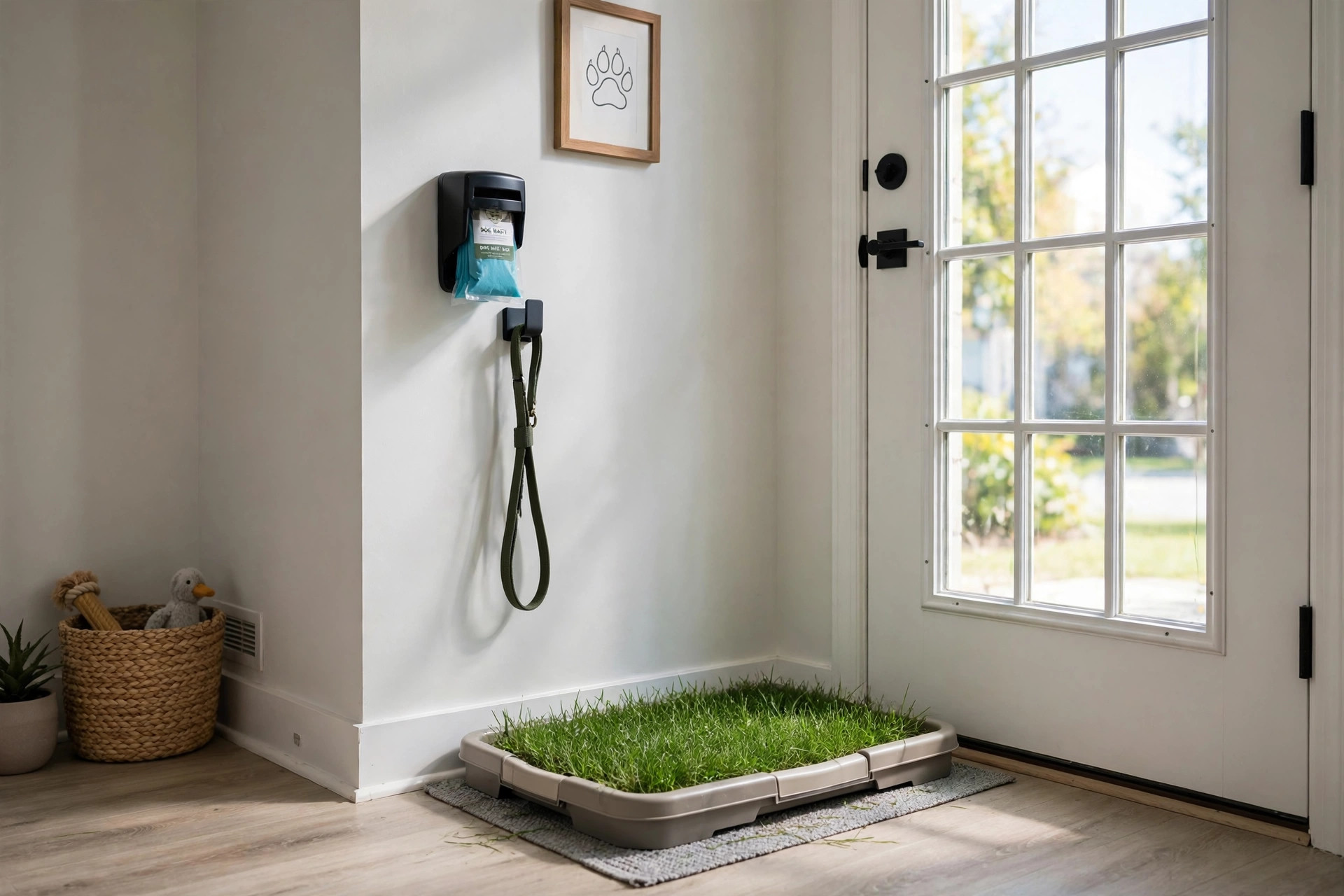

An indoor dog potty for apartment living training gives city dogs a clean spot to relieve themselves at home. Many apartment owners cannot run down five flights of stairs every time a puppy needs to go. Some work long hours. Some face harsh winter weather. An indoor system fills the gap. It is not a replacement for outdoor walks. It is a backup plan that keeps floors dry and neighbors happy. With the right product and a steady routine, most dogs learn to use it within a few weeks.
Why an Indoor Dog Potty Matters
City life makes potty breaks hard. Elevators break down. Rain pours. Late-night walks feel unsafe. A puppy under four months old needs to go out every two hours. No working person can keep that schedule by hand. An indoor potty gives the dog a legal spot when the owner cannot get outside fast enough.
Senior dogs gain the most. Old dogs lose bladder control. Their legs weaken. Stairs become painful. An indoor station lets them relieve themselves without pain or shame. Small breeds benefit too. Tiny dogs have small bladders. They need frequent breaks. The American Kennel Club offers house training guidance that stresses routine and patience for all dogs.
Owners with health problems also benefit. A bad back or a long recovery can keep a person home for weeks. The dog still needs a place to go. An indoor potty keeps the home clean during those hard spells.
How to Choose the Right System: Indoor Dog Potty for Apartment Living Training
Three factors decide the choice: size, material, and drainage. Measure the dog first. A tray should be at least as long as the dog from nose to tail. Puppies grow fast. Many owners buy a tray one size up to avoid replacing it in three months. For homes with more than one dog, a wider pad reduces fights over space.
Material matters for smell and cleaning. Hard plastic trays last for years. They wipe clean with a damp cloth. Rubber edges keep urine from running onto the floor. Soft grass pads feel natural under paws. Dogs trained on real grass outdoors take to them fast. But grass needs frequent swaps to stay fresh.
Drainage decides how much work the owner does. Basic trays hold a pad or sheet of grass. The owner lifts the pad and throws it away. Advanced systems route liquid into a tank or a drain line. They cost more but cut daily mess. Product listings on Chewy show the full range, from simple trays to plumbed stations.
Height matters for older dogs. A tall lip keeps urine in but trips up stiff joints. Pick a low entry model for seniors. For puppies, a shallow tray with a small lip works best. They step in without fear.
Types of Indoor Dog Potties
Disposable Pee Pads
These are the cheapest option. A pad holds a quilted top sheet over an absorbent core. The owner lays one on the floor or in a tray and swaps it daily. Pads work well for young puppies in training. They also serve as a backup in hotel rooms. The downside is waste. A busy household can use hundreds of pads a year. The Petco store range shows many sizes and scent options.
Reusable Grass Pads
Real grass pads sit in a plastic tray with a raised grate. The grass absorbs liquid and holds smell down. Many dogs like the natural feel. The owner swaps the grass sheet every week or two. Some services ship fresh grass to the door on a schedule. Synthetic grass is the cheaper cousin. It rinses under a tap. It lasts for months. But urine can linger in the fibers and build up odor over time. Health notes on PetMD remind owners that wet bedding can irritate skin, so clean pads matter.
Litter Box Systems
Dog litter looks like cat litter but comes in larger pellets. The box needs high sides for big dogs. Litter works for small breeds that already know boxes from early puppyhood. It needs daily scooping and full changes weekly. Some owners like the low waste. Others find tracking a problem. Pellets stick to paws and scatter across the floor.
Self-Draining Stations
These are the premium choice. A perforated grate sits over a catch basin. Liquid drains into a sealed tank or a home drain line. Solid waste is picked up by hand. The owner empties the tank every day or two. These stations cost the most but need the least daily fuss. Buyer guides on The Spruce Pets compare features across brands.
Cost and Price
A simple tray with disposable pads starts near twenty dollars. A month of pads adds ten to thirty dollars more. Reusable grass systems run forty to ninety dollars for the tray, with fresh grass costing twenty to forty dollars a month. Litter box kits land in the same range as grass systems. Self-draining stations cost two hundred to five hundred dollars. They have almost no monthly cost beyond soap and water.
Think in years, not months. A cheap pad habit can cost more over a year than a good grass station. Add the cost of floor cleaner. Accidents happen during training. A bottle of enzyme cleaner costs about ten dollars and lasts for months. It removes the urine smell that pulls a dog back to the same spot.
Training Your Dog Step by Step
Training is the same for every system. The dog must learn that the station is the right place. Keep the plan simple. Do not rush it.
Step one: pick one spot. Place the potty in a quiet corner away from food and bed. Dogs like a bit of privacy. Keep it in the same place every day. Moving the station confuses the dog.
Step two: introduce the station. Let the dog sniff it. Place a treat on the pad. Do not push the dog onto it. Some owners use a playpen to limit space during early training. Guides to the best dog playpen for puppies indoor outdoor can help set up a safe practice area.
Step three: follow a routine. Take the dog to the station after meals, after naps, after play, and first thing in the morning. Use one command, such as “go potty.” Keep the voice calm. Wait a few minutes. If the dog goes, praise at once.
Step four: reward every success. Give a small treat and warm praise within seconds. Timing matters. A reward that comes late does not connect to the act. Never punish accidents. Rubbing a nose in a mess teaches fear, not manners. The ASPCA training pages stress that gentle reward-based methods build trust faster than scolding.
Step five: build on crate habits. Many owners crate train at night. Dogs dislike soiling their sleeping area. A crate teaches bladder control between breaks. For dogs that fear crates, the best dog crate for anxious dogs escape proof shows calmer options. During the day, move the dog from crate to potty station on a set schedule.
Most puppies grasp the idea in two to six weeks. Stubborn or older dogs may need longer. Keep the routine steady. Cut water an hour before bed to reduce night accidents.
Cleaning and Upkeep
Clean the station every day. Remove solid waste at once. Swap pads or rinse grates daily. Wipe trays with a mild soap solution. Enzyme cleaners break down the proteins that cause smell. Regular bleach is too harsh and can sicken dogs. Ventilate the room after cleaning.
Wash hands after handling waste. Dog waste can carry germs. Wear gloves if the owner has open cuts. Families with toddlers should keep the station behind a baby gate. Care guides on Rover give more detail on safe daily puppy care routines.
A quick weekly deep clean keeps odor low. Scrub the tray with warm water and dish soap. Air dry in sunlight when possible. Sun kills many germs. Replace synthetic grass every three to six months. Replace worn trays when cracks appear. Cracks trap urine and smell.
Pet hair also builds up around the station. A quick pass with the vacuum keeps the area tidy. Reviews of the best pet vacuum for dog hair on furniture help owners pick a machine that handles pet zones well.
Safety Notes
The station must stay stable. A sliding tray scares dogs and spills waste. Put a non-slip mat under it. Keep cords and cleaners out of reach. Dogs chew. Scented pads can draw heavy chewing in some dogs. If the dog eats pad material, switch to a grate system that hides the pad.
Watch for skin problems. Standing in damp pads can cause red paws. Keep the surface dry. Vet resources at VCA explain how damp bedding links to skin irritation in dogs.
Place the station away from heat vents. Heat dries pads fast and spreads odor. Keep it off thick carpet. Even a tray can leak. A waterproof mat under the station protects the floor. Welfare tips from The Humane Society of the United States remind owners to keep pet areas clean and dry.
Dogs on medication may urinate more often. Ask the vet if a new drug raises water intake. Plan more frequent pad changes. Old dogs may miss the tray. Lower the entry or switch to a flat pad during their senior years.
Frequently Asked Questions
Will an indoor potty ruin outdoor training? No, in most cases. Dogs can learn both. Keep outdoor walks on the schedule. Use the same command in both places. Some dogs prefer one over time. That is fine as long as the home stays clean.
What size tray does my dog need? The tray should fit the whole dog with room to turn. A twenty-pound dog needs a tray about twenty-four inches long. A sixty-pound dog needs closer to thirty-four inches. When in doubt, buy the larger size. Pet supply stores like PetSmart list tray sizes in their product details.
How often should I change the pads? Change disposable pads once or twice a day for one dog. More dogs mean more changes. Wet pads breed smell and bacteria. Fresh grass sheets last one to two weeks. Synthetic grass needs a rinse every day.
Is real grass better than synthetic grass? Real grass smells right to dogs. It absorbs urine well. It costs more and needs regular delivery. Synthetic grass costs less over time. It needs more scrubbing to stay fresh. Try both if the budget allows. Let the dog choose.
Can large dogs use indoor potties? Yes, with the right size. A big tray with strong sides works for dogs up to about eighty pounds. Very large breeds may do better with a balcony station or a low deck box. The key is space. The dog must step on and turn with ease.
How do I stop my dog from chewing the pads? Chewing is common in puppies. Use a tray with a locking grate that covers the pad. Spray a bitter apple product on the tray edge. Give the puppy a chew toy during station visits. Most dogs outgrow the habit by one year of age.
A Final Word
An indoor dog potty for apartment living training is a tool, not a trick. It buys time for busy owners. It saves floors. It gives old and young dogs a clean, safe spot. Pick a system that fits the dog and the home. Train with patience and praise. Clean it well. The result is a calm home where accidents are rare and the dog feels at ease.
References
American Kennel Club. (n.d.). Dog care and training resources. https://www.akc.org ASPCA. (n.d.). Pet care and animal welfare resources. https://www.aspca.org Chewy. (n.d.). Pet supplies. https://www.chewy.com Petco. (n.d.). Pet supplies and services. https://www.petco.com PetMD. (n.d.). Pet health information. https://www.petmd.com PetSmart. (n.d.). Pet supplies and services. https://www.petsmart.com Rover. (n.d.). Pet sitting and dog walking services. https://www.rover.com The Humane Society of the United States. (n.d.). Animal protection and care. https://www.humanesociety.org The Spruce Pets. (n.d.). Pet care guides and product reviews. https://www.thesprucepets.com VCA Animal Hospitals. (n.d.). Pet health resources. https://www.vca.com
Was this guide helpful?

About Michael Thompson
The My Garden US editorial team writes practical, in-depth home and garden guides for American homeowners — tested advice, no fluff.
You May Also Like
Best Cat Scratching Post Tall for Large Cats
March 20, 2026 0 views
Dog Crate Mat Waterproof for Messy Puppies: A Complete Guide
February 10, 2026 0 views
A Dog Car Seat for Small Dogs: The Console Booster Guide
January 21, 2026 0 views