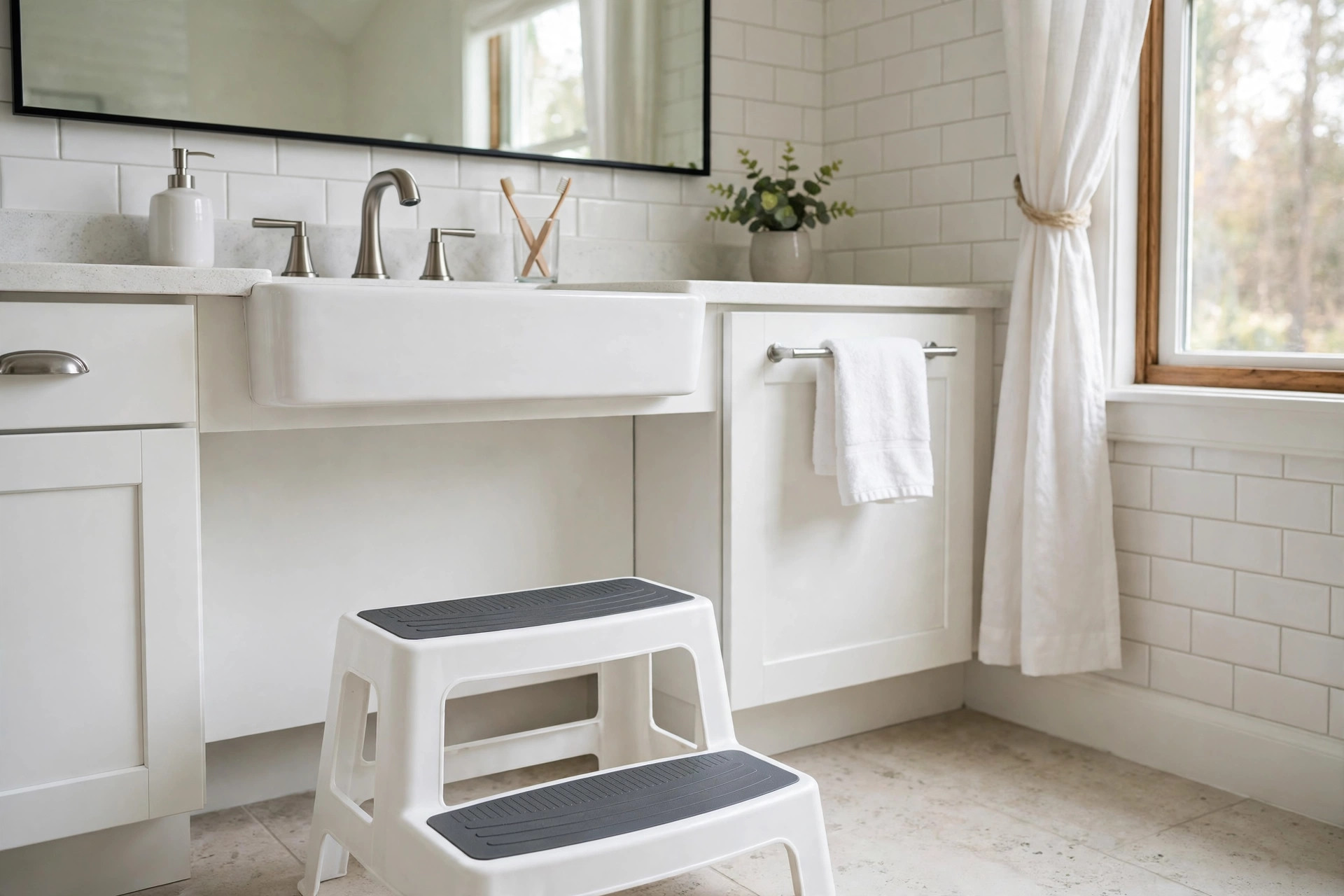

A toddler step up stool for sink reaching is one of the simplest tools a parent can buy for a growing child. The bathroom sink sits high above a small child. Without help, a toddler cannot reach the tap or the soap. With a step stool, the child can climb up, turn on the water, wash hands, and brush teeth on his or her own. It sounds like a small thing, yet it changes daily life in a family home.
Every parent knows the morning rush. The child must brush teeth. Hands must be washed after meals and after play. A parent who lifts a child to the sink each time grows tired, and the child learns to wait for help instead of trying. A toddler step up stool for sink reaching gives the child a way to do these jobs alone. It builds habit. It builds pride. And it does all of this at very low cost.
Why a Step Stool for Sink Reaching Matters
Toddlers want to do things by themselves. This wish is normal and healthy. When a child can reach the sink, washing hands stops being a chore that needs an adult. It becomes a task the child owns. Doctors and child health groups say that hand washing is one of the best ways to stop the spread of colds and stomach bugs in homes with small children, and advice from HealthyChildren.org explains how proper hygiene habits start early in life.
A step stool also protects the parent. A toddler who is lifted to the sink again and again is heavy. Lifting a growing child ten times a day strains backs and arms. A stool removes that lifting. The child climbs up alone, and the parent stands nearby in case help is needed.
There is a third reason, and it matters to teachers and child care workers. Children who learn self-care early grow more sure of themselves. Montessori teachers have long said that a child who can reach the tools of daily life acts with more calm and focus. A toddler step up stool for sink reaching brings that idea into the home bathroom.
What to Look for When Choosing a Stool: Toddler Step Up Stool for Sink Reaching
Height and Fit
The first thing to check is height. A bathroom sink in an American home usually stands about 30 to 32 inches from the floor. A toddler of two or three years is about 32 to 38 inches tall. The stool must lift the child high enough that the tap and soap sit within easy arm reach, but not so high that the child must stretch or lean far over the basin.
Measure your own sink before you shop. Measure from the floor to the top edge of the basin. Most good stools lift the child eight to sixteen inches. For a taller sink, choose a two-step model. For a lower pedestal sink, a single-step stool is enough. Retailers such as IKEA and Wayfair list product heights clearly, so compare the numbers before you buy.
Stability and Weight Limit
A toddler step up stool for sink reaching must not tip or slide. The base should be wide. Rubber feet or rubber pads on the bottom keep the stool from moving on tile. Check the weight limit. Most toddler stools hold 80 to 200 pounds. A limit of at least 100 pounds is wise, since the child will grow and may lean or rock while standing.
Stand the stool on your bathroom floor before the child uses it. Press down on the top edge with your hand and rock it side to side. If it wobbles on the store shelf, it will wobble in your home. Do not buy it.
Rails, Handles, and Anti-Slip Steps
Many parents prefer a step stool with rails or handles on the sides. These rails give the child something to hold while climbing up and stepping down. They are not a must, but they add comfort for younger or nervous children.
Anti-slip material on each step is close to a must. Bathroom floors get wet. Wet socks on hard plastic or wood can slide. Look for textured rubber mats or sandpaper-style strips on the top of each step. A step stool for toddlers in the bathroom without anti-slip steps asks for trouble.
Material: Plastic, Wood, or Metal
Plastic stools are light, cheap, and easy to clean. Many families choose them for these reasons. Good plastic models come in bright colors and rounded shapes made for children.
Wooden stools look warm and blend with home decor. A wooden step stool for toddler sink use is often sold in natural or painted finishes. Wood is heavy, which adds stability, but it must be sealed against water. An unsealed wood stool in a damp bathroom will swell and crack over time.
Metal stools are rare in this category but exist. They are strong and thin, yet they can rust near water unless coated. For most families, plastic or sealed wood is the better pick.
Age Range and Size
Most step stools are made for children aged two to six years. Under two years, a child may not have the balance to use a stool safely. Over six years, the child often reaches the sink without help. Check the maker’s stated age range and compare it to your child’s size. A tall four-year-old and a small three-year-old may need different stools.
Types of Step Stools for Toddlers
Single-Step Stools
The single-step stool is the simplest kind. It is a low platform, often with one wide step. It suits low sinks and younger toddlers. It is light, so the child can move it to the kitchen sink or the toilet when needed. Prices are low, and many models stack for storage.
Two-Step Stools
A two-step stool has two levels, like small stairs. The child climbs the first step, then the second. This design suits higher sinks and older toddlers. Two-step models are wider and heavier, so they stay put. Some fold flat for storage behind a door.
Step Stools with Rails
A toddler bathroom step stool with rails adds side handles or a back rail. The child grips the rails while climbing. These models are popular with parents of two-year-olds. They cost a bit more, but the extra grip gives peace of mind.
Convertible and Growth Stools
Some stools adjust in height or turn into a small chair. These convertible designs grow with the child and last longer. They cost more up front but may serve the family for years. Parents who dislike buying new gear every year often pick this type.
Cost and Price
A toddler step up stool for sink reaching is not an expensive item. Basic plastic single-step stools often sell for ten to twenty dollars. Two-step models with anti-slip surfaces run from twenty to forty dollars. Wooden stools, especially handcrafted ones, range from forty to eighty dollars or more.
Prices move with season and store. Large home goods sites such as Pottery Barn Kids sell decorated stools at the higher end, while discount stores and warehouse clubs keep prices low. Buying two stools, one for each bathroom, is common in larger homes, so check for bundle deals.
Shipping matters when buying online. A stool is bulky. Some sellers ship free, while others charge a large fee that erases the savings. Compare the total price, not just the sticker price. Used stools from thrift stores or parent groups cost little, but check for cracks, missing rubber feet, or wobbly joints before use.
Care and Upkeep
A step stool needs little care, yet a small routine keeps it safe. Wipe the stool down once a week with a damp cloth and mild soap. Pay attention to the anti-slip strips. Soap film and dust make them smooth over time. A quick scrub with an old toothbrush restores their grip.
Check the rubber feet each month. Feet wear down on hard tile. If a foot is gone, the stool will slide. Many makers sell replacement feet, or you can buy stick-on rubber pads from a hardware store.
Wooden stools need more care. Re-seal them once a year with a child-safe finish. Tighten any screws twice a year. Loose screws cause wobble, and wobble causes falls. The CPSC, the federal product safety agency, posts recalls for children’s products, so parents should check that no recall affects their stool model.
Store the stool where the child can reach it. A stool hidden in a closet will not get used. Tuck it against the bathroom wall under the sink. Some families keep a second stool in the kitchen so the child can help wash fruit or reach the counter safely.
Safety
Safety comes first with any toddler step up stool for sink reaching. The child will stand on it near water, and water makes floors slick. Place a bath mat or non-slip rug under and around the stool. Keep the floor dry. A wet tile floor under a stool is a common cause of falls.
Teach the child to use the stool facing the sink, with both feet on the platform. Show the child how to step down backward or sideways, never jump. Stay within arm’s reach for children under three. For older toddlers, stay in the room until the child shows steady, calm use.
Watch the water temperature. A child who can now reach the tap can also turn on hot water. Set your water heater to no more than 120 degrees Fahrenheit. This setting limits scald burns. The Centers for Disease Control and Prevention provide guidance on preventing childhood injuries at home, and hot water burns are one of the injuries they address.
Check the stool’s weight limit and do not let two children share it at once. One child at a time is the rule. Also keep small objects off the steps. A toy left on the step can roll under a small foot and cause a fall.
FAQ
At what age can my toddler use a step stool for sink reaching?
Most children are ready between two and three years old. The child should be able to climb stairs with one hand held before using a stool alone. If the child is under two, the parent should lift and hold the child instead. Every child is different, so watch your own child’s balance and confidence.
Is a one-step or two-step stool better?
It depends on your sink height. For a low pedestal sink, one step is enough. For a standard vanity sink of 30 inches or more, two steps make climbing easier and safer. Measure your sink and the child’s reach, then decide. Many guides on The Spruce discuss bathroom layout and child-friendly design.
Plastic or wood: which lasts longer?
Sealed wood lasts longer if cared for, but plastic is easier to keep clean in a wet bathroom. A good plastic stool can last through several children. A wood stool kept dry and re-sealed yearly can last even longer. Choose by your care habits and taste in decor.
Can the stool be used in the kitchen too?
Yes. Many families move the stool between the bathroom and the kitchen. In the kitchen, the child can reach the sink to wash fruit or help with dishes. The same rules apply: dry floor, one child at a time, and an adult nearby. Expectant parents often read about child safety basics on What to Expect before the baby arrives, and the same care habits apply once the child is a toddler.
How do I clean an anti-slip step surface?
Use warm water, mild soap, and a stiff brush. Scrub along the texture of the rubber or grip strips. Rinse and let the stool dry fully before use. Avoid harsh chemicals, which can break down rubber and harm little hands.
What should I do if the stool slides on my tile floor?
First check that all rubber feet are present and in good shape. Replace worn feet. Then place a non-slip bath mat under the stool. If it still slides, the stool’s base may be too narrow for your floor, and a wider model is the safer buy. The American Academy of Pediatrics offers family guidance on home safety that covers fall prevention for small children.
A Short Final Word
A toddler step up stool for sink reaching costs little and gives much. It turns a daily struggle into a daily habit. The child learns to wash hands, brush teeth, and take part in the morning routine without being lifted each time. Choose a stable, non-slip model that fits your sink. Keep the floor dry. Stay close while the child learns. With these simple steps, the stool becomes a quiet helper in the home, and the child grows one small skill at a time.
Related reading: kids loft bed with desk underneath for teens, crib canopy net for mosquito protection usa, nursery glider slipcover for easy washing.
References
American Academy of Pediatrics. (n.d.). HealthyChildren.org. https://www.healthychildren.org American Academy of Pediatrics. (n.d.). Child health resources. https://www.aap.org Centers for Disease Control and Prevention. (n.d.). Cleaning and disinfecting your home. https://www.cdc.gov IKEA. (n.d.). Home furnishings. https://www.ikea.com Pottery Barn Kids. (n.d.). Kids furniture and decor. https://www.potterybarnkids.com The Spruce. (n.d.). Home and garden advice. https://www.thespruce.com U.S. Consumer Product Safety Commission. (n.d.). Product safety information. https://www.cpsc.gov Wayfair. (n.d.). Furniture and home goods. https://www.wayfair.com What to Expect. (n.d.). Pregnancy and parenting guidance. https://www.whattoexpect.com
Was this guide helpful?

About Jennifer Lee
The My Garden US editorial team writes practical, in-depth home and garden guides for American homeowners — tested advice, no fluff.
You May Also Like
Nursery Closet Organizer for Baby Clothes: A Practical Guide for New Parents
May 17, 2026 0 views
A Nursery Crib with Changing Table Attached: What Parents Should Know Before They Buy
June 8, 2026 0 views
Kids Desk Lamp with USB Port for Homework: A Parent’s Guide
February 28, 2026 0 views