---
Table of Contents
Table of Contents
Bang. Rattle. Hiss. Tick. Water pipes make a whole vocabulary of noises, and the walls turn up the volume. A pipe that knocks every time the washing machine shuts off can wake the whole house. A pipe that ticks behind the bedroom wall can make falling asleep a chore. If you are new to noisy water pipes, start with the basics below.
The good news is that pipe noises are diagnostic. Each sound points to a specific cause, and each cause has a specific fix. You do not have to live with the noise, and you do not have to tear out walls to start. This guide walks through the common sounds, what they mean, and how to silence them, from the simplest five-minute fixes to the jobs that need a plumber.
Noisy Water Pipes: Identify the Noise First
When it comes to noisy water pipes, getting the details right makes all the difference.
Many homeowners find that noisy water pipes is easier than they expected once they know the basics.
Before you fix anything, listen carefully. Note when the noise happens and what it sounds like. Different problems make different sounds:
- A single loud bang when a faucet or appliance shuts off: water hammer.
- Rattling or shaking while water runs: loose pipes.
- Ticking or clicking as hot water runs or after it stops: thermal expansion.
- Humming or whistling while water flows: high pressure or a worn valve washer.
- Sputtering or gurgling when a faucet first opens: air trapped in the lines.
Write down what you hear and when. That list is your roadmap.
Fix the Bang: Water Hammer
Many homeowners find that noisy water pipes is easier than they expected once they know the basics.
The key to noisy water pipes is choosing the right approach for your space and budget.
Water hammer is the most dramatic pipe noise. It happens when fast-moving water is stopped suddenly. The classic trigger is a washing machine or dishwasher valve snapping shut, or a faucet turned off quickly. The moving column of water has momentum. When the valve closes, that energy slams into the pipe walls as a pressure wave. You hear it as a bang, sometimes a series of bangs that rattle the wall.
Water hammer is not just noise. The repeated shock loosens fittings over time and can shorten the life of valves and fixtures. It deserves a real fix.
Start by recharging the air chambers. Many homes have short vertical pipes, called air chambers, tucked in the walls near fixtures. They hold a cushion of air that absorbs the shock. Over time they fill with water and stop working. To recharge them:
1. Shut off the main water valve to the house. 2. Open the highest faucet in the house. 3. Open the lowest faucet, usually a basement sink or outdoor hose bib. 4. Open all other faucets and flush the toilets. 5. Let the system drain fully. Wait until water stops flowing. 6. Close all the faucets and turn the main water back on.
The chambers refill with air instead of water, and the banging often stops. Bob Vila's plumbing guide describes this drain-and-refill as the first fix to try for water hammer [3].
If the bang comes back, install water hammer arrestors. These are small sealed cylinders that screw onto the supply lines near the noisy fixture. Inside is a piston or an air bladder that absorbs the shock wave. They mount at washing machine hookups, dishwasher lines, and sink shutoff valves. Many models screw on by hand with no pipe cutting. For lines inside the wall, a plumber can install them when the wall is open for another reason. Bob Vila notes that arrestors sized for the fixture are the most reliable long-term fix [4].
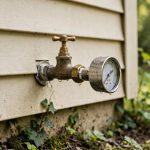
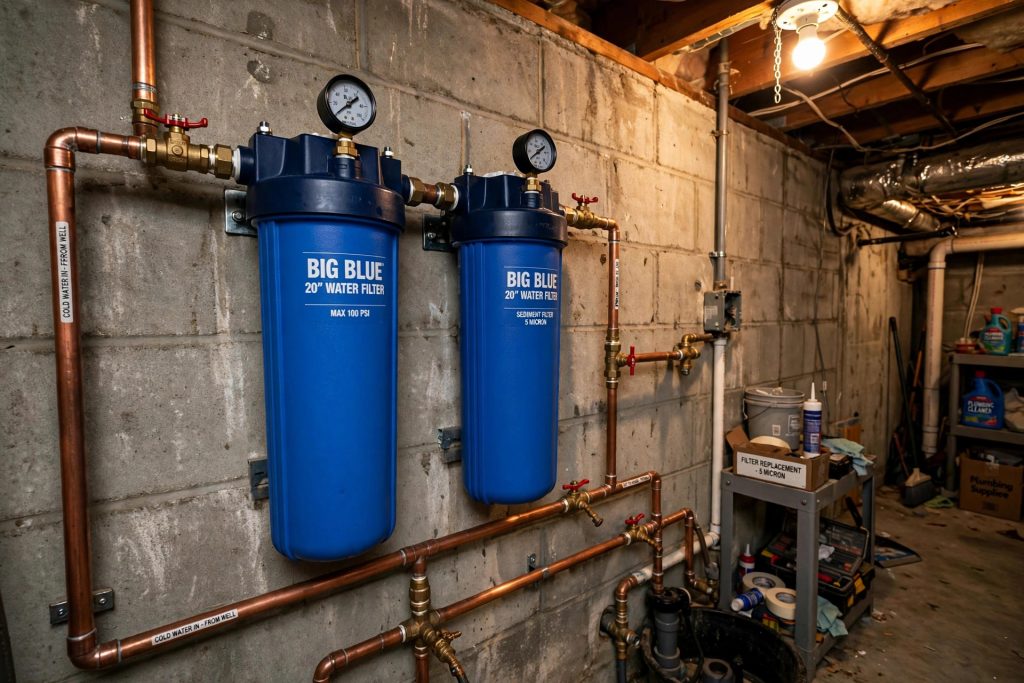
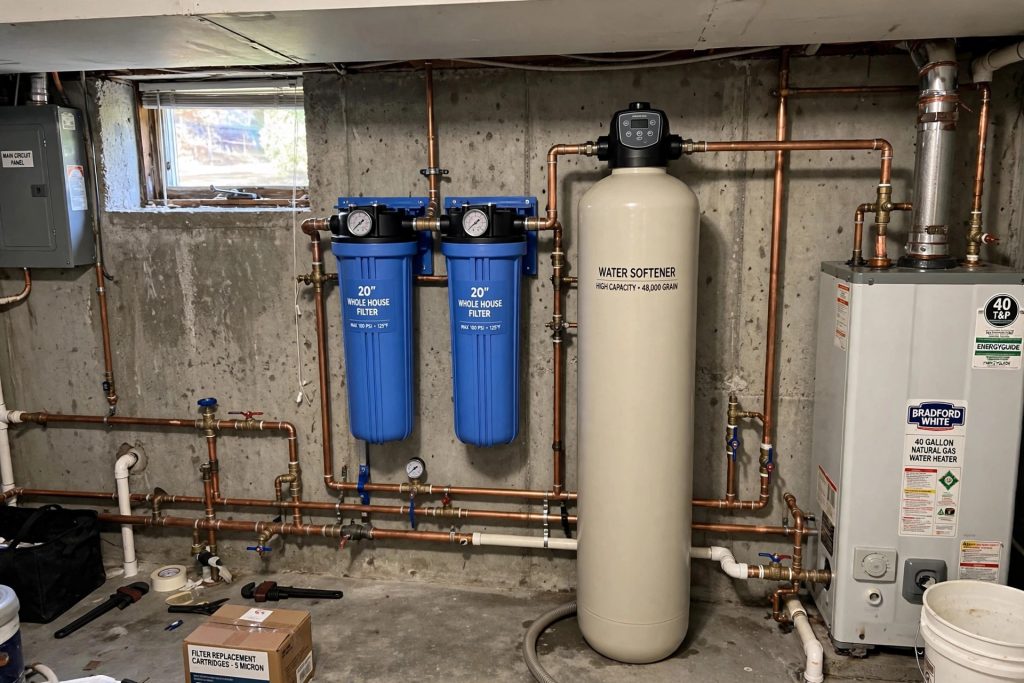
Check your water pressure. High pressure makes water hammer worse. Screw a pressure gauge onto an outdoor hose bib with all fixtures off and read it. Most homes should sit between 40 and 60 psi, and anything above 80 psi is too high. If your pressure is high, a pressure-reducing valve near the main line brings it down. Journeyman HQ explains that these valves ship preset near 50 psi and adjust with a simple bolt-and-locknut turn [7].
Fix the Rattle: Loose Pipes
The key to noisy water pipes is choosing the right approach for your space and budget.
With a little planning, noisy water pipes can fit even a busy schedule.
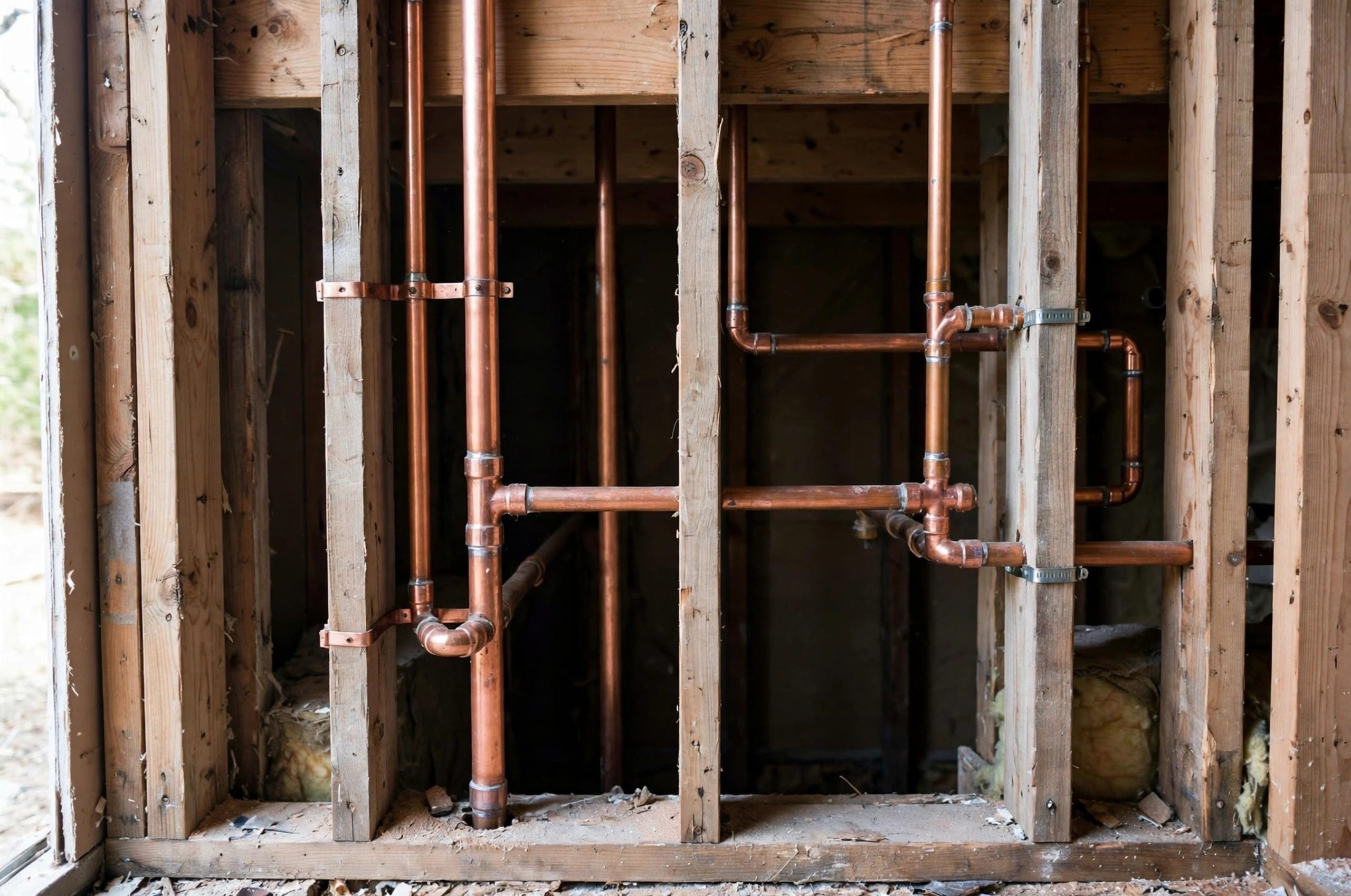
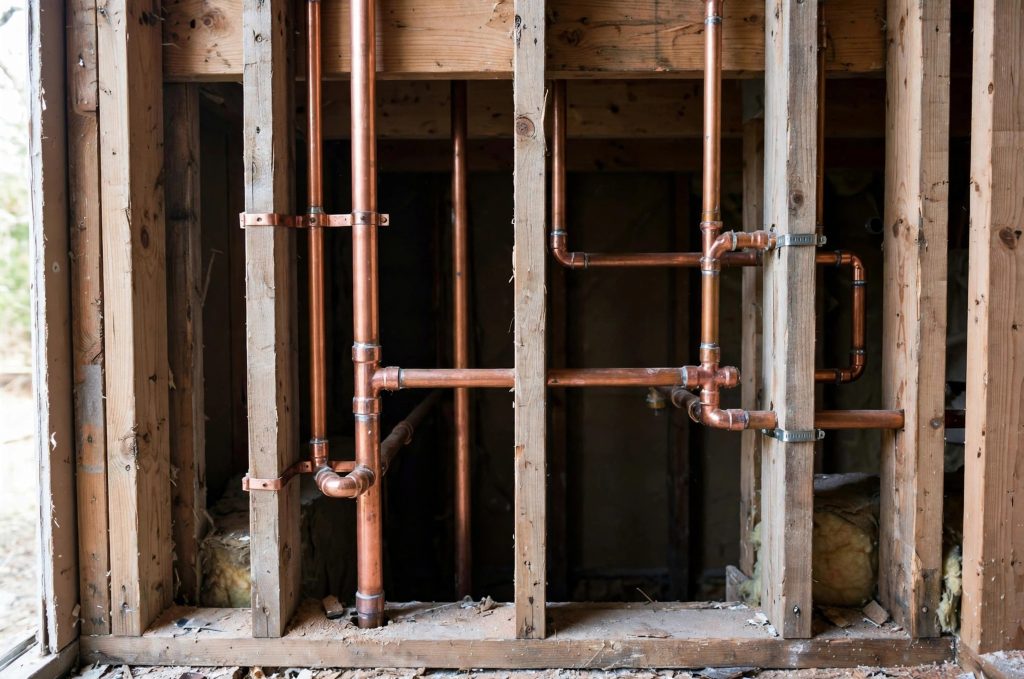
Pipes that were never strapped well, or whose straps worked loose over the years, move when water flows through them. The pipe vibrates against wood framing or drywall, and the wall amplifies it into a rattle or a buzz. This is common in older homes and in homes where pipes run through walls with no insulation around them.
Start where you can reach the pipes: the basement, crawlspace, utility room, or an unfinished garage. Look for pipes that move when you push them gently. Add pipe straps or hangers to any run that is loose. Strap every few feet on long runs. Where a pipe passes through a wood stud or joist, slip a piece of foam pipe insulation around it. The foam cushions the pipe and stops the rattle at the contact point. Engineer Fix recommends rubber or neoprene isolation pads between the pipe and metal straps for the same reason [1].
If the rattling pipe is inside a finished wall, you have two choices. You can live with it until the wall is opened for another project, or you can open a small section of drywall to add straps and insulation. Patching drywall is a weekend job. Many homeowners combine it with painting the room.
Heat tape for water pipes is sold for freeze protection, but the foam insulation that goes with it doubles as a rattle cure wherever you install it.
Fix the Tick: Thermal Expansion
With a little planning, noisy water pipes can fit even a busy schedule.
Before you start, it helps to understand how noisy water pipes works in real homes.
Hot water pipes expand as they heat up and shrink as they cool. A long copper run can grow a noticeable amount. If the pipe is tight against a stud or wedged through a too-small hole, the movement makes a ticking or clicking sound. You hear it while hot water runs and for a while after it stops, as the pipe cools.
The fix is to give the pipe room to move. Where you can reach the pipe, replace rigid metal clips with plastic clips or add foam sleeves at every point where the pipe touches wood. The sleeve lets the pipe slide silently instead of grabbing and releasing. At holes through studs, the hole should be a little larger than the pipe, with insulation wrapped around the pipe where it passes through.
Ticking that comes and goes with the water heater cycle can also mean the pipes near the heater need the same treatment. Check the first few feet of hot water line leaving the tank.
With the basics clear, noisy water pipes becomes straightforward.
Fix the Hum: High Pressure and Worn Washers
Before you start, it helps to understand how noisy water pipes works in real homes.
A good plan for noisy water pipes saves time, money, and frustration.
A humming or whistling that starts when water flows usually means one of two things. The first is high water pressure, which makes water whistle through partly open valves and aerators. The second is a worn washer or a loose part inside a fill valve, often in a toilet. The vibration of the worn part hums through the pipe.
Measure the pressure first with a gauge on the hose bib. If it reads high, adjust or install a pressure-reducing valve. If pressure is normal, hunt for the humming fixture. Turn fixtures on one at a time until you find the one that hums. Toilet fill valves are the usual suspects. Replacing a worn fill valve is a cheap repair that often ends the hum.
Do not ignore humming that starts suddenly. A new hum can mean a valve failing or a leak starting somewhere. If you ever suspect a hidden leak, water leak sensors in the basement catch the water before it does real damage.
Fix the Sputter: Air in the Lines
A good plan for noisy water pipes saves time, money, and frustration.
For most people, noisy water pipes comes down to a few smart choices.
If faucets sputter and spit when first opened, air is trapped in the lines. This happens after plumbing work, after the water was shut off, or when a well pump pulls air. The fix is simple. Open every faucet in the house, starting with the lowest, and let them run until the water flows steady with no spitting. Then close them one by one, starting with the highest. The air works its way out.
Sputtering that never goes away can mean a leak on the suction side of a well system or a failing pressure tank. That is plumber territory.
When the Noise Is Inside a Finished Wall
For most people, noisy water pipes comes down to a few smart choices.
Many pipe noises live inside walls you cannot reach. Here is how to decide whether to open the wall:
- Try every outside fix first. Recharge air chambers, check pressure, strap every reachable pipe, and cushion pipes at framing contact points. These solve most noise problems.
- Open the wall if the noise is loud, getting worse, or paired with a leak. Water hammer that shakes the wall can loosen joints over time. Cut a neat inspection hole, fix the pipe, and patch the drywall.
- Combine the job. If you are opening a wall for paint, electrical work, or a bigger project like adding a bathroom to a basement, strap and insulate every pipe you expose. Adding arrestors near fixtures while the wall is open is cheap insurance.
Cut drywall carefully and shallowly. Pipes and wires hide just behind the surface. A keyhole saw or oscillating tool with the depth set shallow keeps you out of trouble.
When to Call a Plumber
If you are new to noisy water pipes, start with the simplest option and build from there.
Call a professional when water hammer persists after recharging chambers and checking pressure, when you need a pressure-reducing valve installed or replaced, or when the noise comes with low pressure, discolored water, or signs of a leak. Pipe replacement, repiping a section, or installing arrestors inside finished walls are all fair plumber jobs. Noisy pipes are often a symptom, and a plumber can tell you whether the noise is a nuisance or a warning.
Most pipe noise is fixable, and the fixes are straightforward once you match the sound to the cause. Bang means shock. Rattle means loose. Tick means expansion. Hum means pressure. Listen first, fix second, and enjoy the quiet. A little care goes a long way with noisy water pipes.
References
When it comes to noisy water pipes, getting the details right makes all the difference.
Engineer Fix. (n.d.). How to fix noisy pipes in walls. https://engineerfix.com/how-to-fix-noisy-pipes-in-walls/
Engineer Fix. (n.d.). How to fix noisy pipes: Causes and solutions. https://engineerfix.com/how-to-fix-noisy-pipes-causes-and-solutions-2/
Bob Vila. (n.d.). How to quiet loud pipes. http://www.bobvila.com/articles/15-how-to-quiet-loud-pipes/?bv=ymal
Bob Vila. (n.d.). Water hammer arresters. https://www.bobvila.com/articles/water-hammer-arresters/?bv=ymal
Grand Lake Plumbing & Heating. (n.d.). Identifying and fixing noisy pipes. https://www.grandlakeplumbing.com/5-ways-to-conserve-water-around-the-home/item/58-identifying-and-fixing-noisy-pipes
Engineer Fix. (n.d.). Why are my pipes groaning and how do I fix it? https://engineerfix.com/why-are-my-pipes-groaning-and-how-do-i-fix-it/
Journeyman HQ. (n.d.). What is a pressure reducing valve and what is it used for? https://www.journeymanhq.com/2108/pressure-reducing-valve-product-guide/
The Great Plumbing Co. (n.d.). How to adjust your water pressure regulator. https://www.thegreatplumbingco.com/blog/how-to-adjust-your-water-pressure-regulator-step-by-step-guide/
Many homeowners find that noisy water pipes is easier than they expected once they know the basics.
Was this guide helpful?

About My Garden US
The My Garden US editorial team writes practical, in-depth home and garden guides for American homeowners — tested advice, no fluff.