Adding a bathroom to a basement is one of the most common home projects in America. It gives the house a second full bath. It helps with guests. It raises the value of the home. The plumbing cost is the part that surprises most owners. Basements sit below the main sewer line. Water and waste do not flow uphill on their own. That one fact shapes every dollar you will spend. This guide walks through the options, the price ranges, and the questions to ask a plumber before work begins.
Why a Basement Bathroom Matters
A basement bathroom turns a cold lower level into a living space. A teenager gets a private bath. Overnight guests stop climbing the stairs. A future rental unit becomes possible. Real estate agents often list a second or third bathroom as a strong selling point. The work is not small, but the payback in daily comfort is real. The key is to plan the plumbing first, because the pipes decide where everything else can go.
How Basement Plumbing Works: Adding Bathroom to Basement Plumbing Cost
House plumbing relies on gravity. Waste pipes slope down toward the street sewer or the septic tank. A basement floor sits below that line. Waste from a basement toilet or shower must be lifted up before it can join the main drain. This is the central problem of the whole project. It is also why adding bathroom to basement plumbing cost runs higher than plumbing on a main floor.
There are three common answers to the problem. Each has its own price. Your plumber will pick the one that fits your house.
Rough-In Plumbing Already in Place
Many homes were built with rough-in plumbing in the basement slab. The builder left capped drain stubs and a boxed-out area for a future bath. If you have this, you are lucky. You may need only to hook up the fixtures and add vents. This is the cheapest path. The article on rough-in bathroom costs explains what that finish work usually runs.
A Sewage Ejector System
If there is no rough-in, the standard fix is a sewage ejector system. The plumber breaks a pit in the floor. A basin goes in. The drains feed the basin. A pump lifts the waste up to the main sewer line. This works for a full bathroom with a toilet, sink, and shower. The pump needs power and a vent. It needs service now and then. Read up on pump pricing in this guide to sewage ejector pump installation cost.
A Macerating or Upflush Toilet
A macerating toilet grinds waste and pumps it through small pipes to the main drain. It needs no big pit and no broken concrete. It can sit almost anywhere. It is best for a small half bath or a guest bath. It costs less up front than an ejector system. It has more moving parts and a shorter life. For model choices, see this look at the best macerating toilet for basement use.
What Drives the Plumbing Cost
The price is never one number. It is a stack of choices. Here are the parts that move the total up or down.
Distance to the Main Drain
Every foot of new drain pipe costs money. If the new bath sits next to the existing stack, the run is short. If it sits at the far end of the house, the run is long. Longer runs mean more pipe, more labor, and often more concrete cutting.
Breaking the Concrete Floor
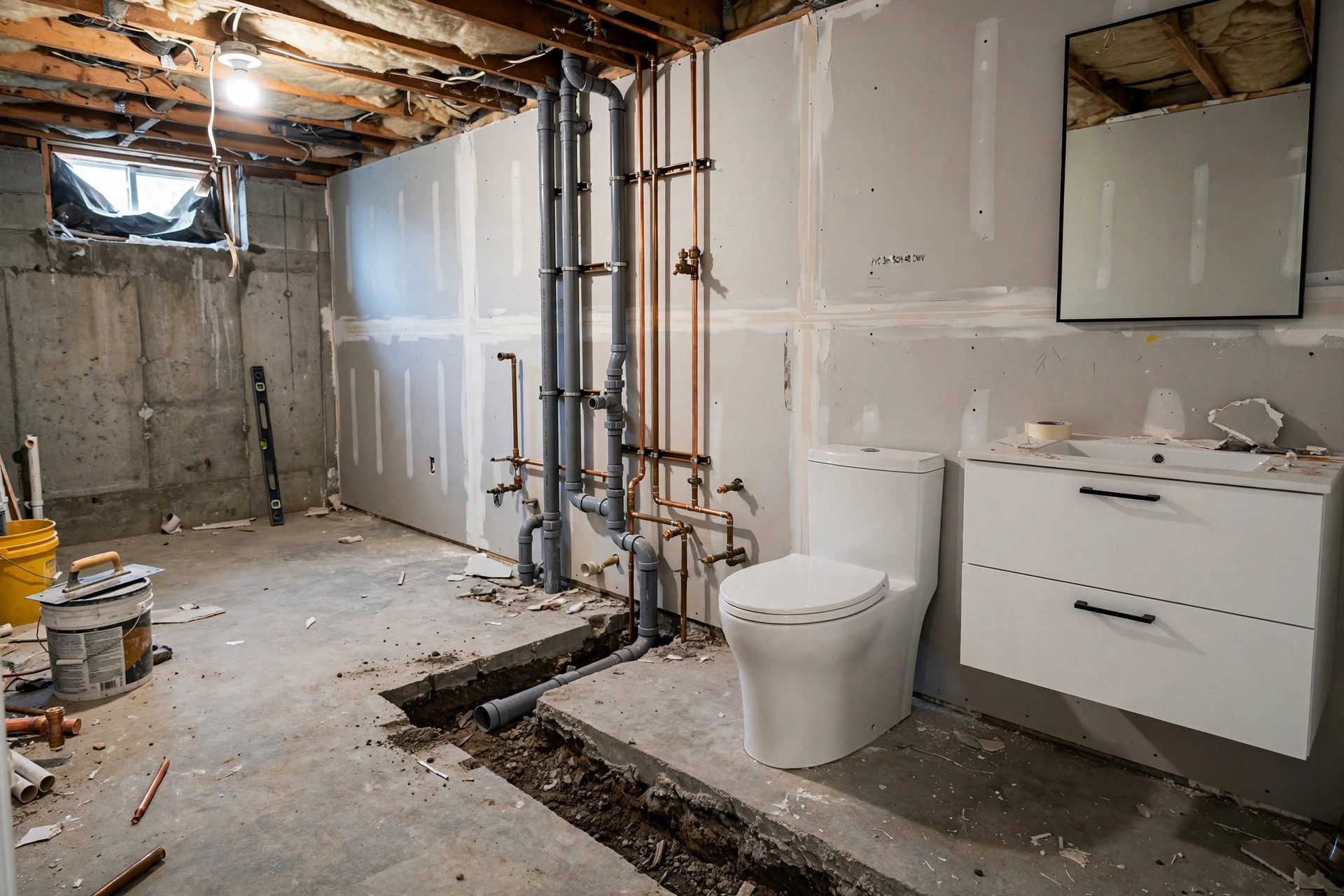
Tying into the drain below the slab means cutting the floor. A plumber or a concrete crew saws a trench. They dig, lay pipe, and pour new concrete. This is dusty, noisy work. It adds one to three days to the job. Homes with a rough-in skip most of this step.
Venting
Every fixture needs a vent to the roof or a mechanical vent the code allows. Basements often need long vent runs. Vent pipe is cheap. The labor to run it through walls and floors is not.
Fixtures You Choose
A basic white toilet, a plain sink, and a fiberglass shower cost far less than designer pieces. Fixture brands such as Kohler sell lines at many price levels. Faucet and shower makers like Delta Faucet and Moen do the same. Pick fixtures before the plumber bids the job. The bid should list them by model number.
Water Lines and Shutoffs
Hot and cold water lines must reach the new bath. In an open basement this is simple work. In a finished basement it means opening ceilings and walls. New shutoff valves are cheap insurance. Ask for them on every line.
The Panel and Power
Ejector pumps and macerating toilets need a dedicated circuit. If the panel has room, the electrician adds a breaker. If the panel is full, you may need a subpanel. That adds several hundred dollars.
Typical Cost Ranges
Prices vary by state and by contractor. These are rough national ranges reported by homeowners and cost guides in 2026. Treat them as planning numbers, not bids.
– Full basement bath, rough-in present: $3,000 to $8,000 for plumbing alone. The plumber sets fixtures, adds vents, and ties into stubs. – Full basement bath, new ejector system: $6,000 to $15,000 for plumbing. The pit, pump, concrete work, and long pipe runs make up most of it. – Small half bath with a macerating toilet: $2,500 to $7,000 for plumbing. Less concrete work, but the unit itself costs $1,000 to $2,500. – Concrete cutting and trench work: $2,000 to $5,000 extra when the slab must be opened. – Permits: $200 to $1,000 depending on the city or county.
Total bathroom projects, with walls, tile, and electrical, often land between $8,000 and $25,000. The plumbing share is usually one-third to one-half of that. Home improvement sites such as This Old House and The Spruce publish remodeling cost guides that stay close to these ranges. Remodeling cost guides from Bob Vila break the numbers down by trade.
How to Get a Fair Bid
Get three written bids. Each bid should list the scope in the same way. Fixtures by model number. Pipe material and size. Concrete work included or not. Permit fees included or not. Clean-up included or not. A low bid that skips half the scope is not a low bid. Ask each plumber to walk the basement with you. Ask how they will handle the vent. Ask what happens if the slab hides something odd. Family Handyman publishes DIY plumbing guidance that helps owners ask sharper questions, and big-box pricing at Home Depot gives a rough check on fixture and material costs.
Permits and Inspections
Nearly every city requires a permit for new bathroom plumbing. The inspector checks pipe slope, vent size, and backflow protection. The work must pass before walls close. Skipping the permit can block a future sale. A buyer can ask for proof. An insurer can deny a water claim on unpermitted work. The permit fee is small next to the cost of the job. Pull it. The EPA offers background on household water and plumbing standards that explain why these rules exist.
Mistakes That Raise the Bill
A few common errors turn a fair project into an expensive one. They are easy to avoid when you know about them.
First, skipping the camera inspection. Before any cutting, a plumber can run a camera down the main line. The camera shows cracks, roots, and bellies in the old pipe. Tying new drains into a bad main line is a waste. The inspection costs a few hundred dollars. It can save thousands.
Second, moving fixtures after the floor is cut. Once the trench is poured, a moved toilet or shower means cutting again. Mark the fixture spots on the floor with tape. Live with the layout for a day. Then tell the plumber it is final.
Third, forgetting the cleanout. A cleanout is a capped access point in the drain line. It lets a plumber clear a clog without tearing up the floor. Codes often require one. Make sure it is on the bid.
Fourth, an undersized vent. A vent that is too small gurgles and drains slow. Fixing it later means opening walls again. Ask the plumber to state the vent size in the bid.
Fifth, hiring on price alone. The cheapest bid often hides missing items. Compare line by line. A fair middle bid from a licensed plumber beats a low bid that grows during the job. Remodeling advice from This Old House and project guides on The Spruce stress the same point: scope first, price second.
Care and Upkeep
Basement bath plumbing needs a little care. Ejector pumps last about seven to ten years with normal use. Test the pump twice a year by pouring a bucket of water into the basin. Listen for smooth running. Keep grease out of every drain. Do not flush wipes, even the ones marked flushable. They jam pumps and macerator blades.
Macerating units have small tanks that need descaling. The makers of upflush systems, such as Saniflo, print care steps in the manual. Follow them. A failed pump in a basement means waste with nowhere to go. A small alarm on the basin can warn you early. It costs little and earns its keep.
Safety
Concrete cutting makes silica dust. A good crew wets the cut and seals the work area. Ask about it. Sewage work brings germs. The crew should wear gloves and masks and disinfect tools. Backflow preventers keep city sewer water from entering the bath during a main-line backup. Many codes demand one. Ask your plumber if yours is required. Keep a fire extinguisher near the work area during the job. Keep children and pets away from the open trench.
Frequently Asked Questions
Can I add a bathroom to a basement without breaking the floor?
Yes, in some cases. A macerating toilet and a small sink can run through thin pipes behind the wall. No pit, no trench. This suits a powder room. A full bath with a shower almost always needs below-slab drains.
How long does the plumbing take?
A simple rough-in hookup takes two to five days. An ejector system with concrete work takes one to three weeks. Inspections add wait time between steps. Plan for a month from start to finish on most jobs.
Do I need a licensed plumber?
Yes. Drain slope, venting, and backflow rules are code work. A licensed plumber pulls the permit and schedules the inspection. DIY mistakes in below-grade plumbing are costly to fix.
Will a basement bathroom freeze in winter?
It can, in a cold basement with outside walls. Insulate the pipes. Keep the room above freezing. Pipes on exterior walls need extra care. Ask the plumber about freeze-safe routing.
Does a basement bathroom add home value?
Most appraisers count a finished basement bath as real value. The exact return depends on the market. In most regions the project pays back a large share of its cost at sale time.
What is the cheapest way to do this?
Use a rough-in if you have one. If not, keep the bath close to the main stack. Pick simple fixtures. Do the painting and trim yourself. Spend the money on the licensed plumber and the permit.
A Short Final Word
The plumbing is the hard part of a basement bathroom. The rest is tile and paint. Pick the waste system first. Price the concrete work second. Get the permit third. When the pipes are right, the room above them will serve the house for decades.
References
Bob Vila. (n.d.). Home improvement advice. https://www.bobvila.com Delta Faucet. (n.d.). Kitchen and bathroom faucets. https://www.deltafaucet.com Family Handyman. (n.d.). DIY home repair and maintenance. https://www.familyhandyman.com Kohler. (n.d.). Bathroom and kitchen fixtures. https://www.kohler.com Moen. (n.d.). Faucets and plumbing fixtures. https://www.moen.com Saniflo. (n.d.). Macerating and upflush toilet systems. https://www.saniflo.com The Home Depot. (n.d.). Home improvement products. https://www.homedepot.com The Spruce. (n.d.). Home and garden advice. https://www.thespruce.com This Old House. (n.d.). Home renovation guidance. https://www.thisoldhouse.com U.S. Environmental Protection Agency. (n.d.). Protecting human health and the environment. https://www.epa.gov
Was this guide helpful?

About Michael Thompson
The My Garden US editorial team writes practical, in-depth home and garden guides for American homeowners — tested advice, no fluff.