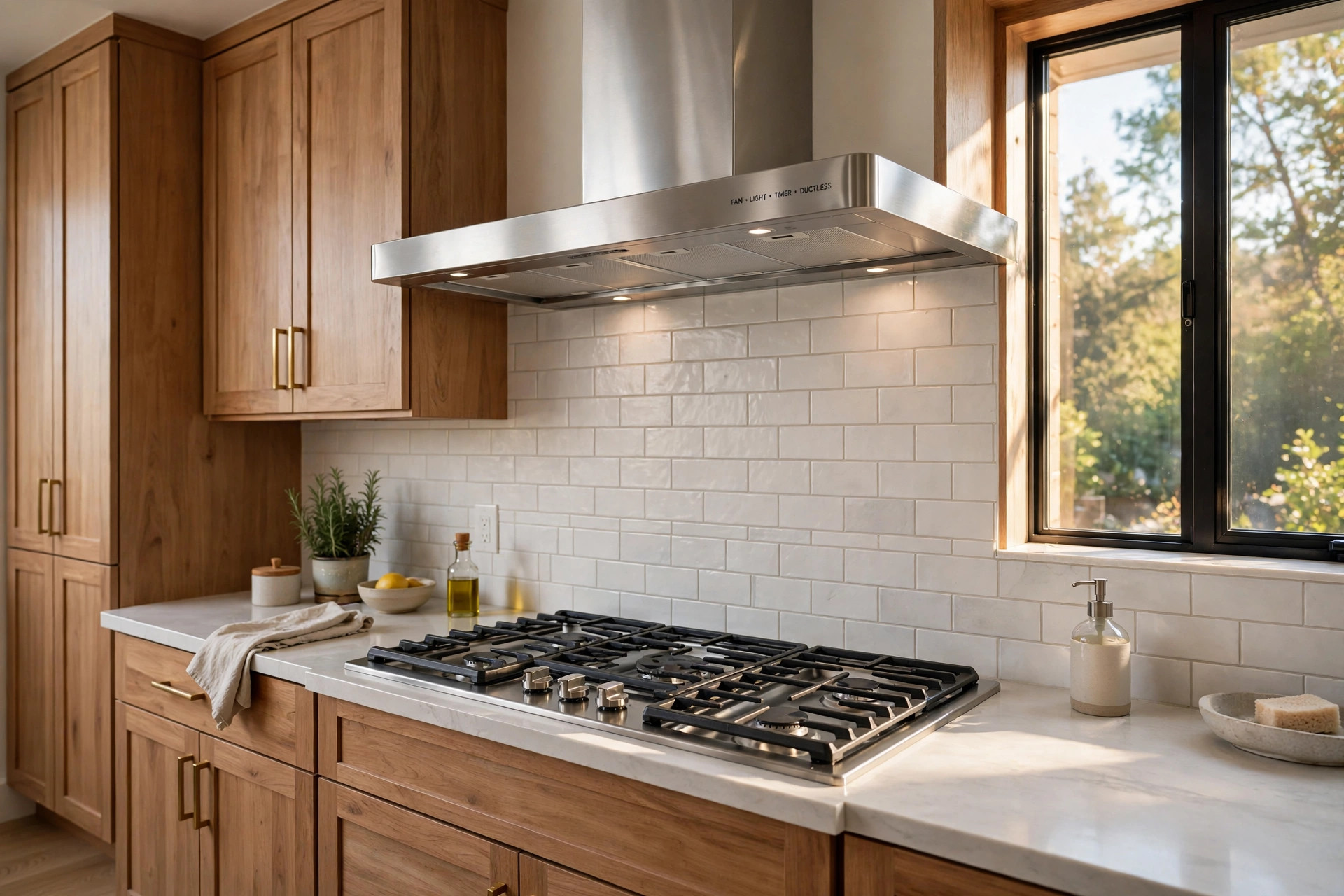

A good range hood clears smoke, grease, and smells from the kitchen. Not every home can use a ducted hood. Apartments, condos, and many older homes lack a vent path to the outside. This is where ductless models help. They pull air in, filter it, and send clean air back into the room. This guide walks through the best ductless range hood reviews 2026 USA so you can shop with confidence.
Ductless hoods are also called recirculating hoods. They do not need a hole in the wall or the roof. That makes installation far simpler and far cheaper. Renters and condo owners often choose them for that reason. But not all ductless hoods work the same. Some move much more air than others. Some run quiet. Some trap grease well and last for years. The sections below explain how to tell the good ones from the poor ones.
Why a Ductless Range Hood Matters
Cooking makes more air pollution than many people think. Gas burners give off nitrogen dioxide. Frying fills the air with fine grease drops. Strong smells settle into curtains and furniture. A range hood pulls these out of the air before they spread.
The U.S. Department of Energy notes that good ventilation is part of a healthy home. In a kitchen, the range hood is the main defense. Even a small unit is better than none. A ductless hood is a strong choice when a ducted hood is not possible.
Health is the first reason. Clean kitchen air helps everyone breathe easier. Children and older adults gain the most. The second reason is comfort. A hood that removes heat and smells makes cooking more pleasant. The third reason is the home itself. Less grease on walls and cabinets means less cleaning and less wear over time.
How to Choose the Best Ductless Range Hood: Best Ductless Range Hood Reviews 2026 Usa
Shopping for a ductless hood is easier when you know the key points. The reviews in this guide rate each model on the same set of traits. Use these traits to judge any hood you see in a store or online.
Measure Your Cooktop
The hood should be as wide as the cooktop, or a little wider. A 30-inch cooktop needs at least a 30-inch hood. A 36-inch range needs a 36-inch hood. This is the most common mistake buyers make. A hood that is too small will miss smoke from the outer burners.
Also check the height. Most makers ask for 24 to 30 inches of space between the cooktop and the bottom of the hood. Too low, and the hood may be a fire risk. Too high, and it will not catch the rising air. Measure before you buy.
Check the Airflow Rating
Airflow is rated in CFM, which means cubic feet per minute. It tells you how much air the fan moves. For a ductless range hood, a rating of 200 to 400 CFM suits most home kitchens. Light cooking needs about 200 CFM. Gas ranges and heavy frying need 300 CFM or more.
Note that ductless hoods lose some power through the filters. The charcoal filter slows the air down. A hood rated at 300 CFM in open air may move closer to 250 CFM in use. For this reason, it is smart to pick a slightly stronger hood than you think you need.
Look at Noise Levels
Noise is rated in sones. One sone is about as loud as a quiet refrigerator. Two sones sound like normal talk. Good ductless hoods run at 1 to 3 sones on low speed. Cheap models can reach 6 sones or more on high, which is loud enough to drown out speech.
Check the sone rating at each speed, not just the lowest one. You will use the high speed for frying and searing. If the high speed is too loud, you will avoid using it. That defeats the purpose of the hood.
Types of Ductless Range Hoods
Range hoods come in several shapes. Each shape fits a different kitchen layout. All of them can run in ductless mode, though some need an extra filter kit.
Under-Cabinet Models
Under-cabinet hoods mount beneath a wall cabinet over the stove. They are the most common type in American kitchens. They are also the cheapest. Most cost between 100 and 400 dollars. Installation is simple. Two people can often do it in an hour or two.
These models suit renters well. They cause no change to the building. Many landlords accept them. Look for one with a metal grease filter plus a charcoal filter slot.
Wall-Mount Models
Wall-mount hoods attach to the wall and often have a chimney-style cover. They look more modern than under-cabinet units. They cost more, usually 250 to 800 dollars. The chimney can hide the filter area and give a clean look.
These are a good fit for kitchens without a cabinet over the range. Many new homes are built this way. The chimney adds style but takes up wall space. Measure the wall before you order.
Island Models
Island hoods hang from the ceiling over a cooktop on a kitchen island. They need solid ceiling support. They are the most costly type, often 500 dollars or more. In ductless mode, they must be hung at the right height so the rising air reaches the intake.
Island hoods make a strong visual mark in the kitchen. They suit large open kitchens. They do not suit low ceilings. You need at least eight feet of ceiling height in most cases.
Insert and Downdraft Styles
Insert hoods hide inside a custom wood cover. They give a built-in look. Downdraft units rise up from behind the cooktop and then sink back down when not in use. Both types can run ductless with the right filters.
These styles cost the most and need careful planning. They are best for full kitchen remodels. For most buyers, an under-cabinet or wall-mount model is the smarter pick.
Ductless Versus Ducted: A Quick Comparison
A ducted hood sends kitchen air outside through a vent. This is the most effective method. It removes heat, moisture, smoke, and gas fumes fully. A ductless hood filters the air and returns it to the room. It catches grease and smells well. It does not remove heat or moisture as well as a ducted hood.
Ductless hoods win on ease of installation. A ducted hood needs a vent run through the wall or roof. That job can cost 500 to 1,500 dollars in labor alone. A ductless hood needs only a power outlet and some screws. Many homeowners install it themselves with help from step-by-step guides from Family Handyman.
Ductless hoods also win on cost. The unit itself is cheaper, and the install is far cheaper. The trade-off is filter cost. Charcoal filters must be changed every three to six months. They cost 15 to 40 dollars a set. Over years, this adds up. Even so, most buyers find ductless the better value when ducting is not an option.
One more point matters. A ductless hood cannot remove carbon monoxide. Gas ranges make small amounts of it. A ductless hood still helps by moving air, but it is not a full fix. If your gas range has no outside vent, keep a carbon monoxide detector in the kitchen. This is simple, cheap safety.
What the Best Ductless Range Hood Reviews 2026 Look At
The best ductless range hood reviews 2026 share a few traits. They test airflow with real instruments, not just the maker number. They measure noise at each speed. They check how well the grease filter cleans. They run the hood for weeks and report on filter life.
Reviews this year agree on a few top names. Stainless steel under-cabinet models from well-known kitchen brands score well for value. Wall-mount chimney models score well for looks and power. Budget models under 150 dollars often disappoint on noise and filter quality.
When you read a review, look for these details. Does the reviewer test with real cooking, or only read the box? Do they report the sone rating? Do they say how often the charcoal filter needs changing? A review that skips these points is not much help.
Big-box stores like Home Depot carry most major brands, which makes it easy to compare models side by side. Independent review sites also test hoods year after year, so check more than one source before you decide.
Cost and Price: What You Will Pay
Ductless range hood prices fall into three bands. Budget models run from 80 to 150 dollars. They handle light cooking. They often run louder and use thinner filters. Mid-range models run from 150 to 400 dollars. This is the sweet spot for most homes. You get stronger fans, quieter motors, and better filters.
Premium models run from 400 to 1,000 dollars or more. These include island hoods, designer wall-mount units, and models with auto heat sensors. The sensors turn the fan on when the air gets hot. This is a nice touch but not a must.
Do not forget the running costs. Charcoal filters cost 15 to 40 dollars per set. Change them two to four times a year. Grease filters are usually washable and last for years. Power use is small. A range hood uses less power than a light bulb on most speeds.
If you are planning other home upgrades, it helps to compare costs across projects. For example, reading about heat pump versus furnace costs gives a sense of how kitchen ventilation spending fits into a full home budget. Big HVAC makers like Carrier, Trane, Lennox, Rheem, and Goodman publish helpful guides on home air quality that put kitchen ventilation in context.
Care and Upkeep
A ductless hood only works well if you care for it. The filters do the hard work. Dirty filters cut airflow and let grease pass through. A simple routine keeps the hood strong for years.
Charcoal Filters
Charcoal filters trap smells and gases. They cannot be washed. They must be replaced. Most makers say to change them every three to six months. Homes that fry food often should change them every three months.
Write the install date on the new filter with a marker. This simple habit stops you from guessing. Keep a spare set on hand so a change takes five minutes, not a shopping trip. Some makers sell filter packs in bulk at a lower price per set.
Cleaning the Hood
The metal grease filter should be washed each month. Most can go in the dishwasher. Check the manual first. A greasy filter is a fire risk, so do not skip this step.
Wipe the outside of the hood with a damp cloth and mild soap. Stainless steel needs a soft cloth to avoid scratches. Clean the fan blades once or twice a year if you can reach them. Unplug the hood first. Safety comes before a clean fan.
Safety Notes
Range hoods sit over heat, so safety rules matter. Mount the hood at the height the maker states. Most ask for 24 to 30 inches above the cooktop. Check your local building code too. Some cities have their own rules.
Clean the grease filter on time. Grease buildup can catch fire. Never leave frying food alone while the hood runs. The hood moves air, but it cannot watch the pan for you.
Make sure the power hookup is sound. The hood should plug into a grounded outlet or be wired by a qualified person. If the cord or plug shows damage, stop using the hood until it is fixed. Guides at This Old House walk through common kitchen wiring questions in plain terms.
Frequently Asked Questions
Do ductless range hoods really work? Yes, they work well for smoke, grease, and smells. They pull air through a grease filter and a charcoal filter, then return clean air to the room. They do not remove heat and steam as well as ducted hoods. For apartments and condos where ducts are not possible, they are the best option.
How often must I change the charcoal filter? Every three to six months for most homes. Homes that fry food often need a change every three months. Homes that cook lightly can stretch to six months. A weak smell removal is the sign that the filter is spent.
Can I convert a ducted hood to ductless? Many models support both modes. You add a charcoal filter kit and a recirculation vent. Check the manual for your exact model. Some ducted-only hoods cannot be converted, so confirm before you buy.
What size hood do I need for a 30-inch gas stove? A 30-inch hood at minimum. Many buyers pick a 36-inch hood for a 30-inch stove to catch more air. Gas stoves need at least 300 CFM in a ductless setup because of the extra fumes and heat.
Are ductless hoods allowed by building code? In most U.S. cities, yes. Some local codes ask for outside ventilation in new builds. Renters and owners of older homes almost always may use ductless hoods. Check your city rules if you are unsure.
How loud should a good ductless hood be? Look for 1 to 3 sones on low speed and under 5 sones on high. If the maker does not list sones, treat that as a warning sign. Quiet hoods get used more, and a hood that runs is a hood that works.
A Short Final Word
The best ductless range hood is the one that fits your stove, your kitchen, and your cooking habits. Match the width to the cooktop. Pick enough CFM for your heaviest meals. Choose a noise level you can live with. Change the filters on time. Do these four things, and any well-reviewed hood from the best ductless range hood reviews 2026 USA will serve you well for years.
If you are comparing ventilation costs with other home comfort work, guides on variable-speed air conditioning and mini-split upkeep costs can help you plan the full budget. A clean, well-vented kitchen is worth the effort. Your lungs, your cabinets, and your cooking will all thank you.
References
Carrier. (n.d.). Heating and cooling systems. https://www.carrier.com Family Handyman. (n.d.). DIY home repair and maintenance. https://www.familyhandyman.com Goodman. (n.d.). Heating and cooling equipment. https://www.goodmanmfg.com Lennox. (n.d.). Heating and cooling systems. https://www.lennox.com Rheem. (n.d.). Heating, cooling, and water heating. https://www.rheem.com The Home Depot. (n.d.). Home improvement products. https://www.homedepot.com This Old House. (n.d.). Home renovation guidance. https://www.thisoldhouse.com Trane. (n.d.). Heating and air conditioning. https://www.trane.com U.S. Department of Energy. (n.d.). Energy efficiency and renewable energy. https://www.energy.gov
Was this guide helpful?

About Sarah Mitchell
The My Garden US editorial team writes practical, in-depth home and garden guides for American homeowners — tested advice, no fluff.
You May Also Like
Best Line Voltage Thermostat Reviews USA: A Plain Guide to Smart, Simple, and Reliable Heating Control
January 11, 2026 0 views
Multi Zone Mini Split Cost Installed in the USA: A 2026 Guide
June 30, 2026 0 views
Best Ceiling Fan for High Ceilings Reviews: A Practical Guide
April 11, 2026 0 views