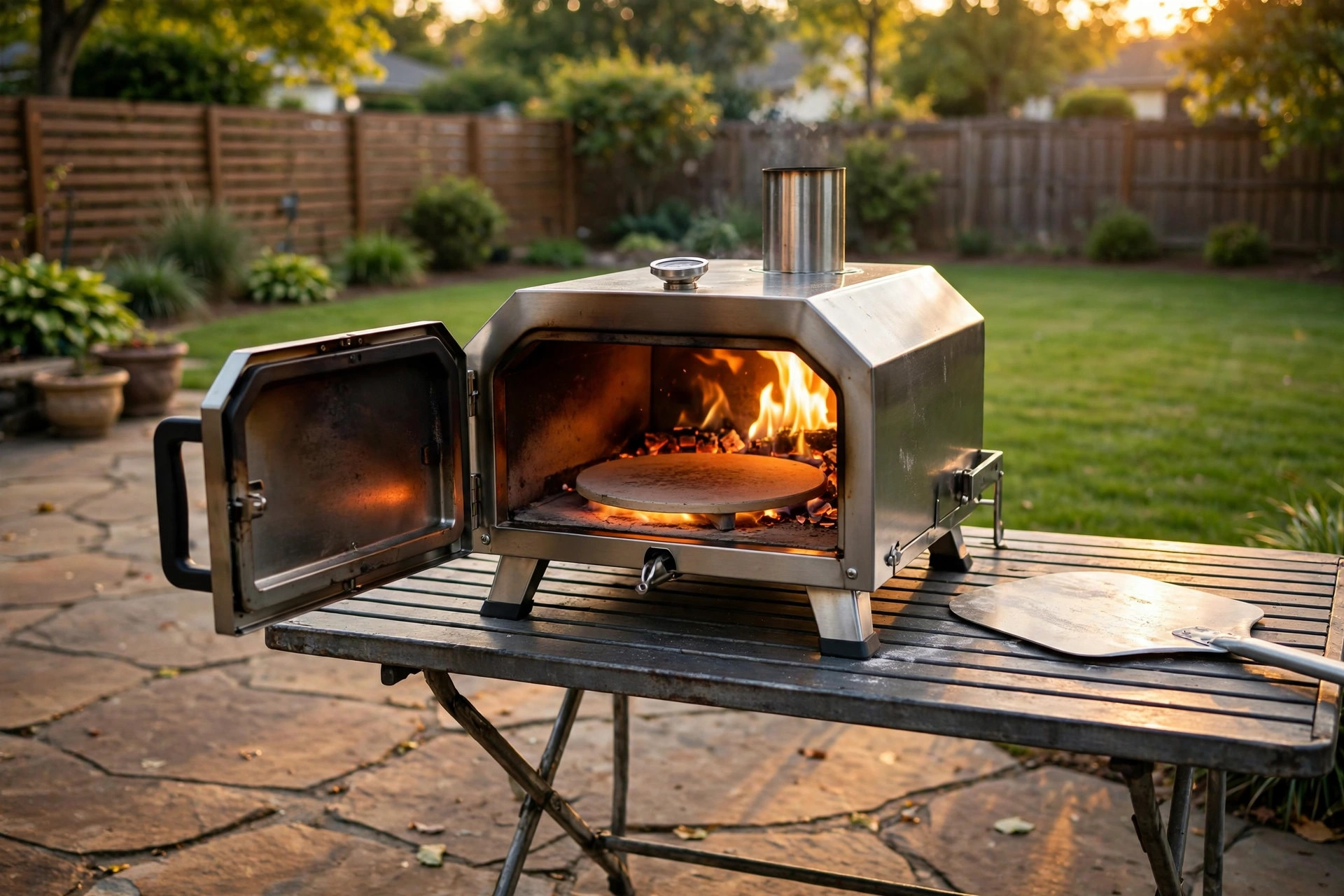

A backyard cookout used to mean burgers and hot dogs. That is no longer the whole story. More families now want the best outdoor pizza oven under 400 dollars, and the reasons are plain. A home oven can only reach about 500 degrees. A true pizza oven reaches 800 to 900 degrees. That heat cooks a thin crust in two minutes and gives the edge the puff and char that people love in a real pizzeria pie.
A buyer no longer needs to spend two thousand dollars on a brick oven. A good portable pizza oven now costs between 200 and 400 dollars, and a family can make pies on the patio all summer. This guide explains what these ovens are, what to look for, what they cost, and how to keep one in good shape.
Why an Outdoor Pizza Oven Is Worth the Money
A pizza made at home tastes better than a frozen one, and it often beats delivery. When you control the dough, the sauce, and the toppings, you control the result. An outdoor oven adds the one thing a kitchen cannot give: very high, even heat. A pizza stone inside a pizza oven stores that heat and gives it back to the crust all at once. The bottom browns fast. The top bubbles.
An outdoor oven is also a social tool. It sits on a table or a stand, and guests gather around it. One pie goes in, and while it cooks, the next one is shaped on the peel. Children like to add their own toppings. It becomes a ritual, not just a meal.
There is a cost angle too. A pizza night for a family of five at a restaurant can cost 60 to 90 dollars. The same five people can make flour, sauce, and cheese pies at home for about 15 dollars in food. If a family has pizza night twice a month, a 300 dollar oven pays for itself in under a year. The pellet grill vs gas grill pros and cons debate follows the same math: buy the right tool once, then save on every cook.
What to Look for in a Pizza Oven Under 400: Best Outdoor Pizza Oven under 400
Not every oven under 400 dollars is worth buying. A shopper should check five points before spending money.
Heat and Temperature Range
The best outdoor pizza oven under 400 should reach at least 750 degrees Fahrenheit. Many good models reach 900 degrees. Check the maker’s stated top temperature, but also read buyer reviews. A real pizza oven must hold high heat through a full evening of pies. Thin steel walls cool down between pies, which slows the next one. Thick insulation or a dense stone keeps the heat steady.
Size of the Cooking Surface
Most ovens in this price range have a stone that is 12 to 14 inches wide. A 12-inch stone makes a 10 to 12 inch pie, which feeds one to two people. A 14-inch stone is more flexible and makes a 13 inch pie. Larger is not always better. A bigger oven takes longer to preheat and uses more fuel. For a family of four, a 13 or 14 inch oven is the sweet spot.
Fuel Type
Three fuels are common under 400 dollars: gas, wood pellets, and charcoal. Gas is the easiest. It lights with a knob, heats in 15 minutes, and holds a steady temperature. Wood pellets give a smoky taste that many people love, but they need refilling and more care. Charcoal sits in the middle: good flavor, medium effort. There is more detail on gas grill basics for beginners if the buyer already owns gas equipment and wants to stay with one fuel.
Weight and Portability
Many buyers store the oven in a garage and carry it out for pizza night. A good portable oven weighs 25 to 35 pounds. That is light enough for one adult to move. Some ovens have folding legs, which makes storage simple. Check whether the stone is removable. A removable stone is easier to clean and to replace if it cracks.
Build Quality and Warranty
Look for stainless steel or powder-coated steel. Thin painted steel can rust after one season. A ceramic or cordierite stone is the standard. The warranty should run at least one year. Two or three years is better. A maker with a strong consumer guide to grills and ovens rating is a safer bet than a brand no one has heard of.
Types of Pizza Ovens Under 400 Dollars
Gas Pizza Ovens
Gas ovens are the most popular choice under 400 dollars. They run on a standard propane tank. They heat in 15 to 20 minutes and reach 900 degrees. The flame spreads under the stone and gives even heat. Gas ovens need almost no learning. The buyer turns a knob, waits for the stone to heat, and slides the pie in. Retailers such as the big home improvement stores stock many gas models, so parts and accessories are easy to find.
Pellet Pizza Ovens
Pellet ovens burn small wood pellets made from compressed sawdust. The pellets feed into a fire box by hand or by gravity. They give a light wood-smoke flavor that gas cannot match. The trade-off is work. The buyer must feed pellets every 10 to 15 minutes and watch the flame. Pellet ovens take about 20 minutes to preheat. They suit a cook who likes to tend the fire. Some owners also read pellet grill cooking advice to learn how wood pellets behave in outdoor cookers.
Charcoal Pizza Ovens
A few ovens under 400 dollars burn lump charcoal. Charcoal burns very hot and gives a clean, smoky heat. It costs more per cook than gas or pellets, and the ash must be emptied after each use. But many old hands say charcoal gives the best crust. A charcoal pizza oven is a good match for someone who already loves charcoal. People who enjoy a backyard barbecue on charcoal will feel at home with this style.
Wood-Fired Small Ovens
Real wood ovens that cost under 400 dollars are usually small. They burn sticks or splits of hardwood. The flavor is the best of all, but the learning curve is the steepest. The cook must manage the fire size to hold the right temperature. Wood ovens also make smoke, so the buyer should check local rules before lighting up in a small yard.
Cost and Price Guide
The best outdoor pizza oven under 400 dollars usually falls into three price bands.
The budget band runs from 150 to 220 dollars. Ovens here are simple gas boxes with thin walls. They reach 750 to 800 degrees and make good pies, but they cool down between rounds. They suit a buyer who wants to try pizza night a few times a summer.
The middle band runs from 220 to 320 dollars. This is where most buyers should look. Ovens here have thicker insulation, better stones, and steady 900-degree heat. They preheat fast and hold heat through a long evening. Many include a peel and a cover.
The top band runs from 320 to 400 dollars. These ovens have premium touches: folding legs, two burners, better doors, and longer warranties. They still cost far less than a big built-in oven.
Beyond the oven itself, a buyer should budget about 60 to 100 dollars for extras: a peel, a thermometer, and a cover. A propane tank costs about 40 dollars if the buyer does not already own one. A 50-pound bag of pizza flour costs about 30 dollars and makes more than 40 pies. Cheap ingredients keep the long-term cost low. The buyer can browse grill and oven prices at major retailers and pizza oven specialists to compare models side by side.
Running costs stay small. A gas oven uses about one pound of propane per hour. A 20-pound tank holds enough gas for about 15 to 18 pizza nights. A tank refill costs about 20 dollars. That works out to just over one dollar per pizza night in fuel.
Care and Upkeep
A pizza oven needs little care, but it needs the right care. The stone is the heart of the oven, and it lasts for years if treated well.
Never wash a hot stone with water. The shock can crack it. Let the oven cool fully, then brush loose ash and flour off with a dry brush. A little black on the stone is normal. It is called seasoning.
The oven body should be wiped down after it cools. Grease and sauce drips can bake onto steel. A damp cloth with mild soap handles most of it. Check the burners once a month if the oven is gas. Spider webs and food bits can block the flame holes. A wire brush clears them fast. Regular gentle care keeps any outdoor cooker in good shape.
Store the oven under a cover or in a dry shed. Rain and snow shorten the life of any steel oven. If the stone stays damp, it can grow mold. Keep it dry and it will serve for many seasons.
Once a year, check all the screws and the door hinges. Heat loosens metal parts over time. A quick tightening takes five minutes and keeps the oven safe.
Safety Tips for Backyard Pizza Nights
An oven that runs at 900 degrees demands respect. Follow these rules every time.
Set the oven on a stable, fireproof surface. A metal table or a stone patio is ideal. Never set it on a wooden deck without a heat shield. Keep the oven at least three feet from any wall, fence, or hanging branch.
Keep children and pets at a safe distance. The outside of the oven gets very hot. A small fence or a line of chairs can mark the safe zone. Never leave a lit oven alone, even for a minute.
For gas ovens, check the hose and the tank connection for leaks before each season. A simple soap-water test shows bubbles at any leak. For wood and charcoal ovens, keep a metal ash bucket and a fire extinguisher nearby. Official guidance on outdoor cooking safety is worth reading before the first cook.
Long oven gloves are not optional. A 12-inch peel keeps hands clear, but turning the pie still brings hands close to the opening. Buy gloves rated for 900 degrees. Let the oven cool for at least an hour before touching the stone or moving the unit.
Frequently Asked Questions
How long does a pizza take to cook in an outdoor oven?
A thin-crust pie cooks in 60 to 90 seconds once the stone is fully hot. Thicker crusts take two to three minutes. The first pie of the night may take a little longer because the stone is still warming up. After the third pie, times stay steady.
Can I use a pizza oven in the winter?
Yes, with care. Gas ovens work in cold weather, but preheating takes longer. Keep the oven dry. Never use it under a roof or an awning.
Do I need special dough for a pizza oven?
High heat works best with dough made for it. A 60 to 65 percent hydration dough, made with bread flour or 00 flour, puffs well at 900 degrees. Regular grocery store dough works, but it browns fast and can burn on the bottom before the top is done. Many pizza recipes and dough guides show how to mix dough at home for little money.
What toppings work best?
Simple toppings cook best at high heat. Tomato sauce, fresh mozzarella, and basil need only 90 seconds. Wet toppings like fresh pineapple or thick tomato slices can make the center soggy. Pat them dry first. Avoid sugary sauces and thick cheese layers, which burn before the crust finishes.
How do I keep the bottom from burning?
Two things cause a burnt bottom: a stone that is too hot and a pie that sits too long. Let the oven preheat for the full time the maker suggests, usually 20 to 30 minutes. Then slide the pie in and turn it every 20 to 30 seconds. A thin metal peel lifts the pie so the cook can check the bottom. If it browns too fast, move the pie to a cooler part of the stone. Reading live-fire cooking advice from barbecue experts helps build the same feel for heat zones.
Is a pizza oven better than a grill with a stone?
A grill with a pizza stone can make a decent pie, but it is not the same. A grill loses heat every time the lid opens, and the top heat is weak. A real pizza oven holds high heat and blasts the top of the pie at the same time. The result is a puffier crust and better char. The best outdoor pizza oven under 400 dollars will beat any grill setup for pizza. That said, a good grill still has its place. Owners of classic kettle grills and pellet grills often keep both tools and use each for what it does best.
A Final Word
The best outdoor pizza oven under 400 dollars is not the fanciest one. It is the one that gets used. A simple gas oven that heats fast and holds 900 degrees will make better pies than a costly oven that sits in the garage because it is too much work to light. Pick the fuel that fits your habits, buy the size that fits your table, and spend the savings on good flour and cheese.
Start small. Make plain cheese pies until the timing feels natural. Then try a margherita, then a pepperoni, then your own creation. Within a month, pizza night will be the night the family looks forward to. The oven pays for itself in saved restaurant bills, but the real return is the evening itself: warm air, hot stone, and a pie that came out of your own backyard.
References
AmazingRibs.com. (n.d.). Barbecue and grilling science. https://www.amazingribs.com Broil King. (n.d.). Gas and charcoal grills. https://www.broilkingbbq.com Char-Broil. (n.d.). Gas and charcoal grills. https://www.charbroil.com Consumer Reports. (n.d.). Product reviews and ratings. https://www.consumerreports.org Napoleon. (n.d.). Fireplaces, grills, and heating products. https://www.napoleon.com The Home Depot. (n.d.). Home improvement products. https://www.homedepot.com The Spruce Eats. (n.d.). Recipes and cooking guides. https://www.thespruceeats.com Traeger. (n.d.). Wood pellet grills. https://www.traeger.com U.S. Consumer Product Safety Commission. (n.d.). Product safety information. https://www.cpsc.gov Weber. (n.d.). Grills and outdoor cooking. https://www.weber.com
Was this guide helpful?

About Sarah Mitchell
The My Garden US editorial team writes practical, in-depth home and garden guides for American homeowners — tested advice, no fluff.
You May Also Like
How to Make Beef Jerky on Smoker: A Plain Guide to Safe, Smoky Results
June 9, 2026 0 views
Pellet Grill vs Offset Smoker Flavor Comparison: Which Gives Better Taste
January 6, 2026 0 views
How to Start a Charcoal Grill Without Lighter Fluid: 5 Safe Methods
August 2, 2026 0 views