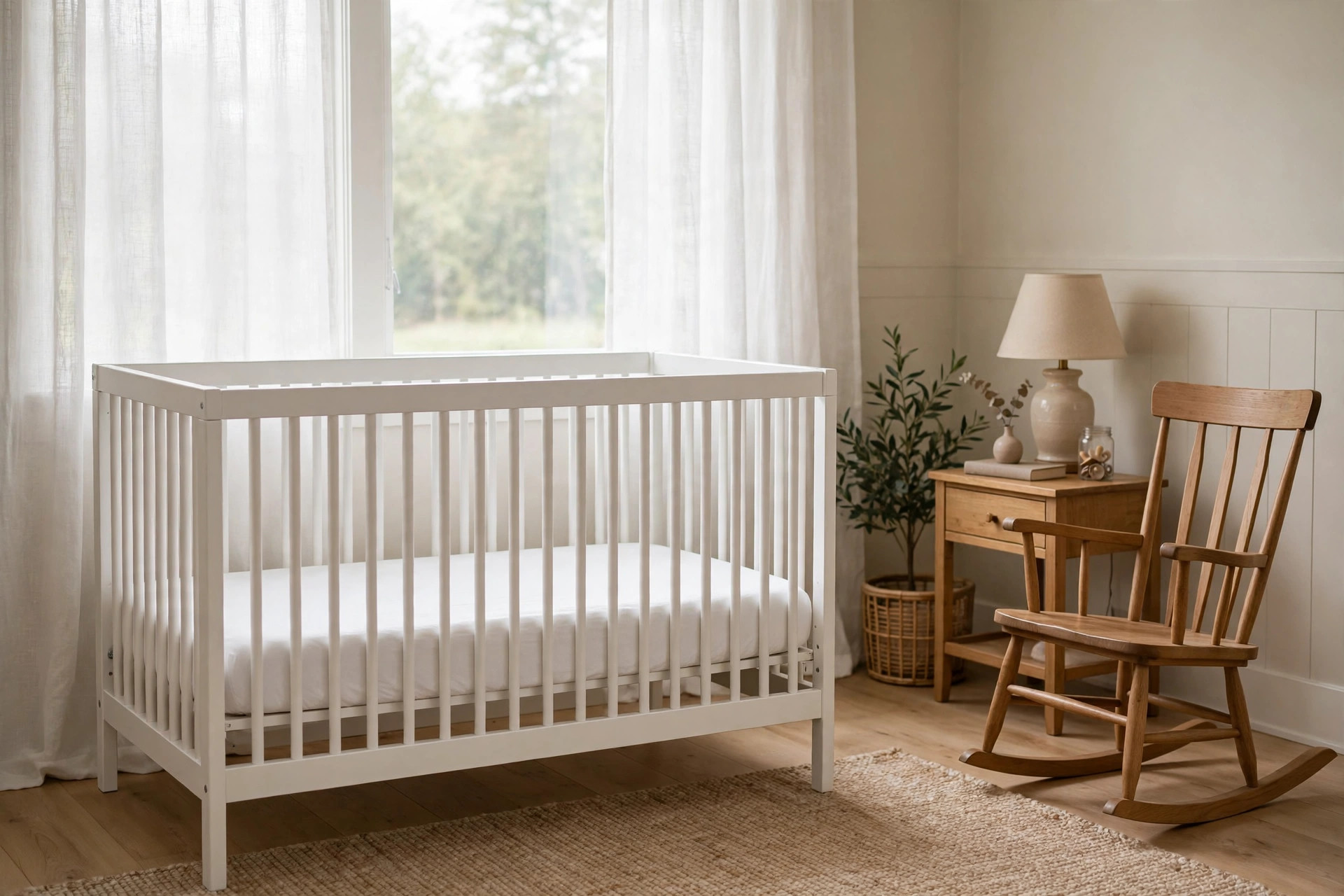
Many new parents hear about a crib wedge for reflux sleeping position safe use and wonder if it can help a fussy baby sleep better. Infant reflux is very common. Milk comes back up from the stomach into the throat, and babies spit up, cry, or wake often. It is natural to search for a simple fix, and a small wedge under the mattress can look like one. But the question of safety comes first, and the answer from pediatricians is clear and steady.
This guide explains what a crib wedge is, what doctors and safety agencies say about a crib wedge for reflux sleeping position safe use, and what you can do instead when your baby struggles with reflux. Every sentence here is written to be plain and honest, so you can make a calm, well-informed choice for your nursery.
Why Parents Ask About Crib Wedges
Reflux touches most babies in the first months of life. The muscle between the stomach and the throat is still weak, so milk flows back up with ease. Babies spit up after feeds, cough, hiccup, and sometimes arch their backs. Night feeds feel endless. Parents lose sleep and look for tools that promise rest.
A crib wedge is a firm foam ramp that sits under or on the crib mattress to lift the baby’s head a few inches. The idea is simple. A slight incline should keep milk down, the way sitting upright helps adults after a heavy meal. Many stores sell them, and older advice columns once suggested them. That is why the phrase crib wedge for reflux sleeping position safe shows up in so many parent searches today.
Wanting relief does not make a parent careless. It makes them human. The key step is to check what the newest medical advice says, because guidance on infant sleep has changed over the years, and old tips are not always safe tips.
What Doctors Say About Safe Sleep: Crib Wedge for Reflux Sleeping Position Safe
Pediatricians in the United States follow safe sleep guidance from the American Academy of Pediatrics. The rule is plain. Babies should sleep on their backs on a firm, flat surface with nothing else in the crib. No pillows, no blankets, no bumpers, and no positioners. This guidance is built on years of research into sudden infant death syndrome, and it has saved many lives.
According to HealthyChildren.org, the parent site of the American Academy of Pediatrics, inclined sleep surfaces and positioning devices are not recommended for infant sleep. A crib wedge lifts the baby’s head and shoulders, which breaks the flat-surface rule. Babies can slide down the incline, press their chins to their chests, and have trouble breathing. These risks are why the answer to the crib wedge for reflux sleeping position safe question is a firm no from doctors.
The Consumer Product Safety Commission has warned families about infant sleep positioners and inclined products for many years. Reports of injuries and deaths linked to these products led to recalls and to a federal rule against inclined sleepers. The agency’s message is steady. Nothing should raise or angle a baby’s sleep surface.
This advice can feel hard when your baby spits up all night. Yet flat sleep remains the safest choice. Reflux is common and almost always fades as the baby grows. Unsafe sleep, by contrast, can have results that no family can undo. Talk with your pediatrician about the reflux itself. There are safe ways to ease it that do not change how your baby sleeps.
How to Choose Products for a Reflux Baby
Since a crib wedge is not advised, what should parents look for instead? Start with the crib itself. A safe crib has a firm mattress that fits tight, with no gaps at the edges. The sheet should fit snug. Keep the crib bare. These basics matter far more than any add-on product.
Look for feeding tools that may cut down on spit-up. Bottles with slow-flow nipples and anti-colic vents can lower the air a baby swallows. Burp cloths, upright feeding chairs, and a calm feeding pace help too. None of these change the sleep surface, so they fit the safe sleep rules.
When you shop for nursery items, buy from makers with a clear safety record. Big home stores carry cribs that meet current federal standards. The Home Depot lists cribs with safety details in each product page. IKEA sells simple, low-cost cribs that meet United States safety standards. Wayfair offers a wide range of nursery furniture with customer reviews that mention build quality. Pottery Barn Kids carries nursery furniture with detailed safety notes. The Spruce publishes plain nursery guides that explain crib safety rules in simple terms. A convertible crib for a small nursery room can grow with your child and save space at the same time.
Check labels for the mark of an independent testing lab. Avoid any product that claims to hold a baby in one sleep pose, reduce reflux by tilting the crib, or let a baby sleep at an angle. Claims like these go against current medical advice.
Types of Products Marketed for Reflux
Shelves and search results show several product types aimed at reflux babies. It helps to know what each one is and what doctors say about it.
Crib wedges and mattress inclines. These foam ramps lift the head of the mattress. As noted above, doctors do not recommend them for sleep. They break the flat-surface rule.
Sleep positioners. These are bolsters or rolls that claim to keep a baby on the back or side. Safety agencies have warned against them for years. Babies can roll into the soft parts and suffocate.
Inclined sleepers and loungers. These once-popular seats let babies nap at an angle. They are now banned for infant sleep in the United States after injury reports. They should never be used for naps or night sleep.
Upright carriers and bouncers. Holding a baby upright after a feed can ease spit-up. Carriers and bouncers are fine for awake, watched time. They are not sleep devices. Move a sleeping baby to a flat crib.
Anti-colic bottles. These do not change sleep position. They may cut swallowed air and lower spit-up for some babies. They are a reasonable, low-risk step to try.
If reflux seems severe, your pediatrician may suggest thickened feeds or medicine in rare cases. These choices belong to a doctor, not to a store shelf.
Cost and Price
A crib wedge for reflux sleeping position safe searches often come with price hopes. Wedges themselves are cheap. Most foam wedges cost between ten and forty dollars. But price is not the point here, because doctors advise against using them at all. Spending less on an unsafe product is still a poor choice.
Safe alternatives cost little. A firm crib mattress runs from about eighty to two hundred fifty dollars. Snug fitted sheets cost a few dollars each. Anti-colic bottles cost ten to twenty dollars for a small set. Blackout curtains for nursery windows help babies sleep longer and cost twenty to sixty dollars a pair.
A pediatrician visit is the best money you can spend on reflux. Most insurance plans cover well-baby visits. Call your doctor’s office if spit-up comes with poor weight gain, blood in the spit-up, or long crying spells. These signs call for medical care, not a store product.
Care and Upkeep of the Nursery Sleep Space
A safe sleep space needs simple upkeep. Wash crib sheets often in hot water and dry them fully. Check the mattress each month. Press the center and the edges. It should feel firm and spring back. If it sags, replace it.
Tighten crib bolts twice a year. Wood loosens with rocking and use. Check that the mattress support sits at its lowest setting once your baby can pull up. Look at the crib rails for cracks or loose slats. A quick monthly check takes five minutes and keeps the crib sound.
Keep the nursery air fresh and the room at a mild temperature. Dress the baby in light sleep clothes rather than adding blankets. A bare crib is a safe crib. When your child outgrows the crib, a toddler bed with guard rails makes the next step safer.
Safety Rules Every Parent Should Follow
Safe sleep rules are few and clear. Learn them by heart.
First, always place the baby on the back to sleep, for naps and at night. Second, use a firm, flat mattress in a safety-tested crib. Third, keep the crib bare. No pillows, blankets, toys, or wedges. Fourth, share your room, not your bed, for at least the first six months. A crib or bassinet next to your bed is the safest setup.
Fifth, skip all positioning devices. This includes crib wedges, sleep positioners, and inclined loungers. Sixth, keep the baby from overheating. A cool room and light clothing work best.
These rules come from years of research. The American Academy of Pediatrics publishes the full safe sleep guidance for families and doctors. They apply to every baby, including babies with reflux. If well-meaning family members suggest propping the mattress, share what your pediatrician said. Gentle, firm words protect your baby.
Soothing a Reflux Baby the Safe Way
You cannot tilt the crib, but you can still ease reflux. Feed smaller amounts more often. Burp halfway through and after each feed. Hold the baby upright for twenty to thirty minutes after feeding while the baby is awake. This lets gravity help without changing sleep.
Try a slower-flow nipple if milk pours too fast. Keep feeds calm and quiet. Jostling and bouncing right after a feed can bring milk back up. If you breastfeed, ask a lactation nurse about latch and let-down speed.
Watch for signs that need a doctor. The Mayo Clinic advises parents to call when a baby refuses feeds, gains weight slowly, or vomits forcefully. What to Expect offers week-by-week baby care guides that help new parents spot what is normal. Most reflux is simple spit-up and fades by the first birthday. Trust your sense of when something feels wrong and call early.
Frequently Asked Questions
Is a crib wedge for reflux sleeping position safe to use at night?
No. Pediatricians and safety agencies say babies should sleep on a flat, firm surface. A crib wedge tilts the sleep surface and raises the risk of sliding, chin-to-chest breathing trouble, and suffocation. Flat sleep is the safe choice.
Did doctors ever recommend crib wedges for reflux?
Years ago, some doctors suggested a slight incline. Guidance changed as research grew. The American Academy of Pediatrics now advises flat sleep for all babies, and the Consumer Product Safety Commission warns against sleep positioners. Old advice should not be followed.
What can I do instead of using a wedge?
Hold your baby upright for twenty to thirty minutes after feeds while awake. Feed smaller amounts more often. Burp well. Try anti-colic bottles. Keep the crib bare and flat. Ask your pediatrician about thickened feeds if spit-up is severe.
Will flat sleep make reflux worse?
There is no proof that flat sleep harms babies with reflux. Millions of reflux babies sleep flat and do well. The known dangers of inclined sleep are far greater than the discomfort of spit-up. Talk with your doctor about safe ways to ease symptoms.
Are there any safe incline products for infant sleep?
No. Inclined sleepers are banned for infant sleep in the United States. Positioners, wedges, and loungers should not be used for sleep. Any product that angles a baby’s sleep surface goes against current medical advice.
When does infant reflux go away?
Most babies outgrow reflux by twelve to eighteen months. The stomach muscle grows stronger with time. If symptoms are severe or last past the first birthday, your pediatrician may look for other causes.
A Final Word
The search for a crib wedge for reflux sleeping position safe use comes from love. Tired parents want rest for their baby and for themselves. But love is best shown by following the safest path. Flat, bare, back sleep protects babies in a way no wedge can.
Work with your pediatrician on the reflux. Use the safe soothing steps in this guide. Keep the crib simple and flat. Your baby’s digestion will mature, the spit-up will fade, and you will look back glad that you chose safety first.
References
American Academy of Pediatrics. (n.d.). HealthyChildren.org. https://www.healthychildren.org American Academy of Pediatrics. (n.d.). Child health resources. https://www.aap.org IKEA. (n.d.). Home furnishings. https://www.ikea.com Mayo Clinic. (n.d.). Diseases and conditions. https://www.mayoclinic.org Pottery Barn Kids. (n.d.). Kids furniture and decor. https://www.potterybarnkids.com The Home Depot. (n.d.). Home improvement products. https://www.homedepot.com The Spruce. (n.d.). Home and garden advice. https://www.thespruce.com U.S. Consumer Product Safety Commission. (n.d.). Product safety information. https://www.cpsc.gov Wayfair. (n.d.). Furniture and home goods. https://www.wayfair.com What to Expect. (n.d.). Pregnancy and parenting guidance. https://www.whattoexpect.com
Was this guide helpful?

About Emily Rodriguez
The My Garden US editorial team writes practical, in-depth home and garden guides for American homeowners — tested advice, no fluff.