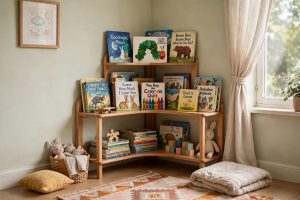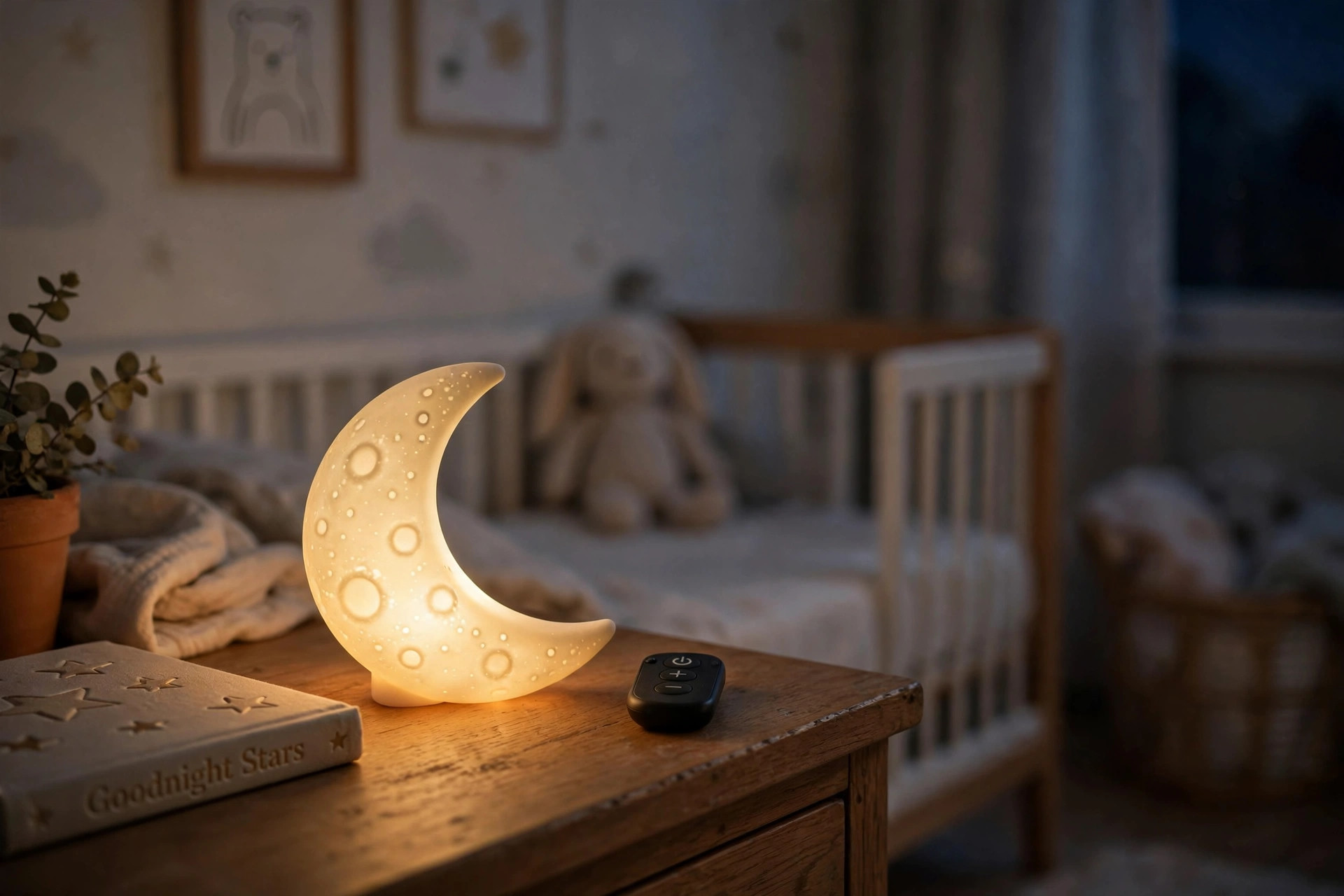

Many parents know the scene well. The child is almost asleep. The room is dark. The parent stands in the doorway and wishes the lamp were a little dimmer, or a warmer color, or simply off. Walking back into the room can wake the child. This is the problem the best kids night light with remote control solves. A small remote lets you change the light without crossing the room.
A night light with a remote is a simple device. It sits on a shelf or a nightstand. It gives a soft glow. The remote works from across the room. You can raise or lower the brightness. You can change the color. You can set a timer so the light turns itself off. For tired parents, this small convenience makes the evening routine much easier.
Why the Best Kids Night Light With Remote Control Matters
Children between the ages of two and eight often fear the dark. A night light removes that fear. It gives the room a soft, steady glow. The child can see the shape of the door. The child can see familiar toys. This comfort helps the child fall asleep faster and sleep longer.
The remote adds something extra. Babies wake at night for feeding. A parent can dim the light with the remote before entering the room. Bright light would wake the baby fully. Dim light keeps the baby drowsy. After the feeding, the parent can turn the light off from the doorway. This keeps the child in a sleepy state. It also saves the parent from stumbling across a dark room.
Older children like control too. A child who can hold the remote feels safer. The child can turn the light down as sleep comes. The child can pick a favorite color. This small choice gives the child a sense of control over the night. Child health experts note that children who feel safe at bedtime settle faster. The American Academy of Pediatrics family site offers steady guidance on healthy sleep routines for children of all ages.
What to Look For When You Choose One: Best Kids Night Light with Remote Control
Not all night lights with remotes are equal. Some are cheap and break in a month. Some are too bright even at the lowest setting. Some remotes are hard to use in the dark. The best kids night light with remote control gets the basics right.
Brightness and Dimming
Look for a light with smooth dimming. The best models dim from a bright reading level down to a faint glow. A light that only has three fixed levels may jump from too dim to too bright. Smooth dimming costs a little more, but it is worth the price. You will use the dimmest setting most nights.
Color Options
Many remote night lights offer warm white, cool white, and several colors. Warm white is the best choice for sleep. Cool white and blue light can delay sleep in children. Color options like soft red or amber are gentle on the eyes. A single button on the remote should cycle through the colors.
Timer Settings
A timer turns the light off on its own. Common settings are 15, 30, and 60 minutes. The child falls asleep with the light on. The light turns off by itself. This saves power and keeps the room fully dark for deep sleep. Make sure the remote has a clear timer button.
Power Source and Battery
Some night lights plug into the wall. Some use batteries. Some do both. A plug-in light never runs out of power, but the cord can be a hazard in a nursery. A battery light can sit anywhere, but you must charge it or change the batteries. Rechargeable models are a good middle ground. One charge often lasts several nights.
Remote Range and Simplicity
The remote should work from at least 15 feet away. It should work through a half-open door. The buttons should be large and few. A remote with twenty tiny buttons is hard to use at 2 a.m. Five or six large buttons are enough: on and off, brighter, dimmer, color, and timer.
Home decor guides such as The Spruce review many nursery lighting options and explain how placement affects a child’s sleep. It helps to read a few honest reviews before you buy.
Types of Night Lights With Remotes
Plug-In Wall Lights
These small lights plug directly into a wall outlet. They give a low glow. The remote controls brightness and timing. They use very little power. They work well in hallways and bathrooms too. The main drawback is that they must sit near an outlet.
Tabletop and Shelf Lamps
These sit on a nightstand or a shelf. Many come in fun shapes: clouds, animals, moons, and stars. Children love them. They are larger than plug-in lights and give more light. Most have a rechargeable battery and a remote. They cost more than plug-in models.
Projector Night Lights
Projectors cast stars or shapes onto the ceiling. Children find them calming. Many projector models now come with remotes. You can change the projected color and set a timer. Projectors use more power than simple glow lights. They work best in rooms with plain, light-colored ceilings.
Smart and App-Controlled Lights
Some lights connect to a phone app or a smart speaker. These can also work with a simple remote. Smart lights offer the most control. You can set schedules for school nights and weekends. The drawback is complexity. A grandparent or babysitter may not know how to use the app. A simple remote is easier for everyone.
Retailers like IKEA and Wayfair carry wide ranges of children’s lighting at many price points, which makes it easy to compare styles side by side.
Cost and Price
Prices for the best kids night light with remote control range from about 12 dollars to about 45 dollars. Most good models sit between 18 and 30 dollars.
– Budget models (12 to 18 dollars): Basic glow lights with a simple remote. They dim and change color. Build quality varies. Check reviews for battery life. – Mid-range models (18 to 30 dollars): Smoother dimming, better colors, timers, and rechargeable batteries. This is the sweet spot for most families. – Premium models (30 to 45 dollars): Projector lights, smart features, and high-quality materials. They last longer and look better in the room.
Do not judge by price alone. A 20-dollar light with honest reviews often beats a 40-dollar light with paid reviews. Look for lights that have sold well for at least a year. New models with no track record are a gamble.
You do not need to spend much. Even a basic model changes the bedtime routine. If money is tight, choose a simple dimmable light with a remote and a timer. That covers the features that matter most.
Care and Upkeep
Night lights need little care. Wipe the surface with a dry cloth once a month. Dust dims the glow over time. Keep the light away from water and from heating vents. Heat shortens battery life.
Check the remote batteries twice a year. A weak remote may work only from close range. Keep a spare set of batteries in a drawer. If the light is rechargeable, do not leave it plugged in all day every day. Charge it when the battery runs low. This keeps the battery healthy for years.
If the light sits on a high shelf, secure it so it cannot fall. A falling lamp can break or startle a sleeping child. A small strip of museum putty under the base holds most lights in place. It leaves no mark when you remove it.
Store the remote in the same place every night. Many parents keep it on their own nightstand or hang it on the nursery door handle. A lost remote turns a smart light into a plain light. Some families buy a second remote as a backup. Remotes for popular models are often sold separately for a few dollars.
Safety
Safety comes first in any nursery. The U.S. Consumer Product Safety Commission sets standards for children’s products and recalls unsafe ones. Check its site before you buy.
Follow these rules:
– Choose lights with cool-touch LED bulbs. Old-style bulbs get hot. LED lights stay cool. – Keep cords out of reach. If the light plugs in, run the cord behind furniture. Better yet, choose a cordless rechargeable model for the crib area. – Make sure the light cannot be pulled down. Toddlers climb. Anchor the light or place it out of reach. – Avoid small parts. Some decorative lights have small pieces that can break off. These are choking hazards for children under three. – Look for safety marks. A UL or ETL listing on the box means the light passed independent safety tests. – Do not place the light inside the crib. Place it on a shelf or dresser across the room. The glow still reaches the child.
Parenting guides like What to Expect also cover safe nursery setup in plain language. It is worth a short read before you arrange the room.
One more note: avoid blue and white light at full brightness near bedtime. Studies on sleep show that bright blue-white light in the evening can make it harder for children to fall asleep. Warm amber or red light is the gentlest choice for the hour before bed.
Frequently Asked Questions
At what age can my child use a night light with a remote?
A night light is safe from birth when placed outside the crib. Children usually start to fear the dark around age two or three. That is when a night light helps most. The remote itself is best given to children aged four and up. Younger children may lose it or chew on it.
Will a night light keep my child awake?
A dim, warm night light should not keep a child awake. Bright or blue-white light can. Keep the brightness low and the color warm. Use the timer so the light turns off after the child falls asleep. If your child still struggles, try moving the light farther from the bed.
How long do rechargeable night lights last on one charge?
Most last 8 to 20 hours on the dimmest setting. On the brightest setting, they last 3 to 6 hours. Since you will use the dim setting at night, one charge usually covers several nights. Check the product details before you buy, since battery size varies a lot.
Can I use the remote through a closed door?
Most remotes need a clear line of sight or a partly open door. Radio remotes work through doors and walls. Infrared remotes do not. If you want to control the light from the hallway with the door shut, look for a light that uses a radio remote. The product box usually says which type it is.
Is a projector light or a simple glow light better?
It depends on the child. Simple glow lights suit babies and light sleepers. The steady glow is calming and does not distract. Projector lights suit toddlers and older children who enjoy watching the stars move. Some children find moving shapes too exciting at bedtime. If you are unsure, start with a simple glow light. You can add a projector later.
Where should I place the night light in the nursery?
Place it across the room from the crib or bed, on a stable shelf or dresser. The light should glow softly in the room without shining into the child’s eyes. Never place it inside the crib or on the bed. A good test: stand where your child sleeps and look at the light. If it makes you squint, move it farther away or dim it.
Related Nursery Ideas
A night light works best as part of a calm nursery. Blackout curtains for nursery windows keep morning light out so the night light and the dark room can do their work together. A nursery night light with a dimmer for feeding is a simpler option if you do not need a remote. And a musical crib mobile for baby sleep pairs gentle sound with gentle light for newborns.
Children’s retailers are a good place to see how a light will look in a real room. Pottery Barn Kids shows styled nursery photos that help you judge size and glow. Big general stores like Target and Walmart stock many remote night lights, so you can compare prices in one trip. Independent testing groups such as Consumer Reports sometimes test children’s lighting for safety and battery life, which adds a second opinion to store reviews.
A Short Final Word
The best kids night light with remote control is not the fanciest one. It is the one that dims smoothly, glows warm, turns itself off, and answers the remote from the doorway. Buy a solid mid-range model. Place it safely across the room. Set the timer. Then enjoy the quiet walk back to your own bed while your child drifts off under a soft, steady glow.
References
American Academy of Pediatrics. (n.d.). HealthyChildren.org. https://www.healthychildren.org Consumer Reports. (n.d.). Product reviews and ratings. https://www.consumerreports.org IKEA. (n.d.). Home furnishings. https://www.ikea.com Pottery Barn Kids. (n.d.). Kids furniture and decor. https://www.potterybarnkids.com Target. (n.d.). Retail store. https://www.target.com The Spruce. (n.d.). Home and garden advice. https://www.thespruce.com U.S. Consumer Product Safety Commission. (n.d.). Product safety information. https://www.cpsc.gov Walmart. (n.d.). Everyday low prices. https://www.walmart.com Wayfair. (n.d.). Furniture and home goods. https://www.wayfair.com What to Expect. (n.d.). Pregnancy and parenting guidance. https://www.whattoexpect.com
Was this guide helpful?

About Michael Thompson
The My Garden US editorial team writes practical, in-depth home and garden guides for American homeowners — tested advice, no fluff.
You May Also Like
Toddler Reading Nook Canopy Tent for Bedroom
September 28, 2026 0 views
Toddler Bedding for Crib to Bed Transition: A Complete Guide
May 29, 2026 0 views
The Best Nursery Rug Washable for Easy Cleaning
January 20, 2026 0 views