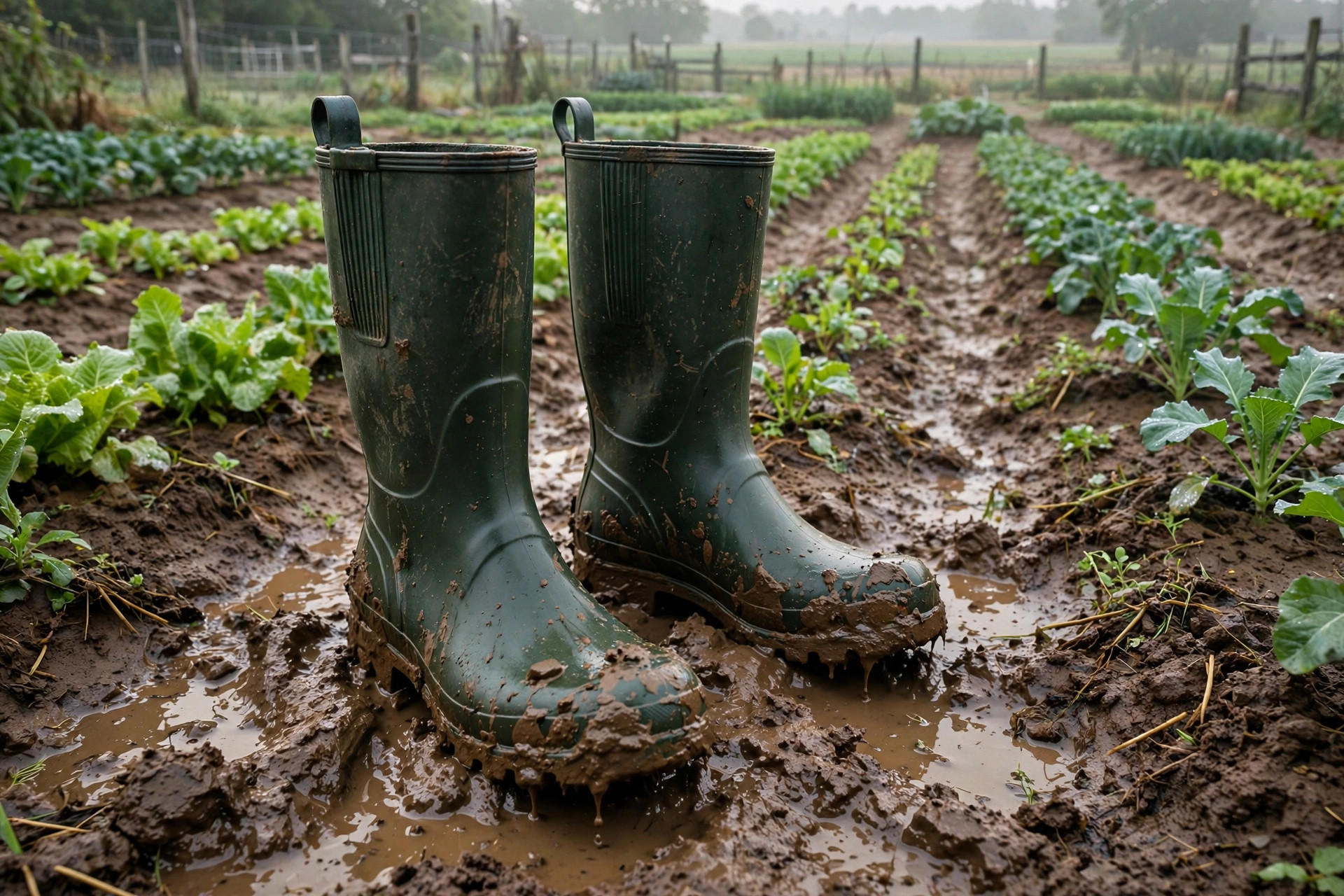

A garden turns wet in spring. The soil stays damp after rain. Low beds hold water for days. A gardener who works in ordinary shoes soon works in wet socks. The best garden boots waterproof for mud solve this common problem. They keep feet dry when the ground is soft and heavy. They let a gardener move with care between rows. They protect feet from thorns, stones, and cold water. This guide explains what to look for and how to choose.
The first one hundred words matter less than honest work, but the honest truth is this: wet feet ruin a day of gardening. Cold seeps into the bones. Blisters form fast in soaked shoes. Mud clings to cloth and canvas. A good pair of waterproof garden boots for muddy ground changes the whole season. A gardener can start earlier in spring. He or she can work longer after a storm. The soil gets tended at the right time. That is the real value of the best garden boots waterproof for mud.
Why Waterproof Garden Boots Matter
Every garden has a wet season. Spring rain soaks the beds. Autumn dew leaves the lawn cold until noon. Irrigation adds water all summer. The ground in a working garden is wet for half the year. Feet take the worst of it.
A wet foot is not a small thing. Cold, damp feet sap strength. The body burns extra warmth to keep them going. Blisters form where wet socks rub. Fungus grows in dark, moist boots that never dry. Nails soften and break. Over a long season, poor footwear brings real trouble.
Waterproof boots change the daily rhythm of the garden. A gardener can walk out after rain without fear. The early spring beds can be turned while the soil is right. Fallen fruit can be picked from soft ground. Compost can be moved in a storm. The garden does not wait for dry weather, and with the right boots, the gardener need not wait either.
Safety is another reason. Muddy slopes are slick. Smooth rubber soles slide on wet grass. A good garden boot has deep lugs that grip. It keeps a worker upright on a hill or beside a ditch. That matters most for older gardeners. A fall in the garden can mean a broken bone and a lost season.
What to Look for When You Choose: Best Garden Boots Waterproof for Mud
Not every rubber boot does the job. Some leak at the seams. Some are too stiff to walk in. Some are too short to keep out deep mud. The best garden boots waterproof for mud share a few plain qualities.
First, the rubber must be real and solid. Natural rubber resists cracking in cold weather. Thin plastic splits after one winter. Look for boots made of one molded piece where possible. Fewer seams mean fewer leaks. Press the sides of the boot in the store. It should give a little but spring back.
Second, check the height. Mid-calf boots suit most garden beds. Knee-high boots serve deep mud and wet ditches. Short ankle boots are easy to pull on, but mud flows in over the top. Measure your worst patch of mud. Buy boots at least two inches taller than that mark.
Third, study the sole. Deep, wide lugs grip mud and loose soil. A flat sole slips. A sole that is too narrow sinks. The heel should be low and stable. A gardener walks on soft, uneven ground all day. The boot must hold steady.
Fourth, think about comfort. Waterproof boots can be hard inside. A padded footbed helps. A removable insole helps more, because it can be taken out to dry. Look for a heel cup that holds the foot in place. If the foot slides, blisters follow.
Fifth, consider warmth. Unlined rubber boots are fine for summer. For spring and fall, a light neoprene lining adds warmth. Heavy insulated boots suit cold regions. Buy for your own climate. A boot that is too warm makes feet sweat, and sweat is its own kind of wet.
Types of Waterproof Garden Boots
Garden boots come in several common types. Each serves a different need.
Classic wellington boots are the tall rubber boots known for a century. They rise to mid-calf or the knee. They are simple, tough, and easy to clean. The best garden boots waterproof for mud often follow this pattern. The one-piece design keeps water out.
Chelsea-style garden boots are short ankle boots with elastic sides. They pull on in seconds. They suit dry days and light work. They do not suit deep mud. Water runs in over the ankle cuff.
Clog-style garden shoes are backless slip-ons. Many gardeners love them for quick trips to the bed. They are not true mud boots. Mud and rain get in at the heel. Keep them for dry weather.
Neoprene-lined boots add a warm layer inside the rubber. They suit cold springs and late falls. They cost more. They weigh more. For cold-climate gardeners, they are worth the weight.
Hunting-style rubber boots are built for swamps and fields. They run tall and tight. They grip well. Some gardeners borrow this design for heavy mud. They can be warm in summer, so save them for the wet season.
There is no single right type. Match the boot to your garden and your weather. A small city plot needs less boot than a country acre.
Cost and Price
Waterproof garden boots run across a wide price range. Plain rubber wellingtons start around twenty to thirty dollars. These serve for a season or two of light work. Mid-range boots cost forty to eighty dollars. They use better rubber. They have better soles and better insoles. Most home gardeners do well in this range.
Premium boots cost eighty to one hundred fifty dollars or more. They use thick natural rubber. They add warm linings. They carry real warranties. Farmers and market growers often choose this tier. The boots last for years of daily use.
Price tells a story, but it is not the whole story. A cheap boot with no lining is fine for summer rain. An expensive boot that does not fit is still a bad boot. Fit and build matter more than the brand name. Read the buying advice from Consumer Reports before you pay top dollar. Their tests of outdoor gear are honest and plain.
Where you buy matters less than what you buy, but wide choice helps. Large home stores such as Home Depot and Lowe’s stock many brands side by side. You can try them on. That is a real gain. A boot that feels wrong in the store will feel worse in the field.
Care and Upkeep
Good boots last longer with simple care. Rubber is tough, but it has enemies. Heat, sunlight, and sharp edges wear it down.
Clean boots after muddy work. Knock off the big clumps first. Then rinse with a hose. Let them dry in the shade. Do not leave them in hot sun. Sunlight cracks rubber over time. Do not store them near a furnace or a heater. Heat does the same damage.
Dry the inside too. Pull out the insoles after a wet day. Stuff the boots with newspaper. The paper draws out moisture. Change it once if the boots are very wet. A dry boot is a boot that does not smell and does not grow mold.
Check for cracks each spring. Bend the boot and look at the creases. Small cracks can be patched with rubber repair kits from Corona Tools dealers and garden centers. Big splits mean the boot is done. A boot that leaks is worse than no boot, because it traps water inside.
Store boots upright in a cool, dry place. Do not fold them down at the ankle. The crease becomes a weak spot. A simple boot rack or a dry corner of the shed does fine. Guides from Bob Vila and The Family Handyman both stress this point: straight storage keeps rubber alive.
Oil or condition the rubber once a year if you work hard ground. A thin coat of rubber conditioner keeps the surface soft. Wipe off the extra. This small habit can add a year or two to a good pair.
Safety in Muddy Conditions
Mud is a safety question as much as a comfort question. Slick ground brings falls. Deep mud can trap a foot. Sharp objects hide in soft soil.
Choose boots with real grip. Test the sole on wet ground before you trust it. Walk a slope. Turn sharply. If the boot slides, send it back. Reviews at Gardener’s Supply often mention grip in real gardens, which helps.
Watch for buried hazards. Old wire, broken glass, and nails sink into mud and stay hidden. A thick rubber sole stops most of them. Do not wear thin boots where the ground is rough. The garden tools sold by Fiskars are sharp by design; dropped pruners in mud are a real risk, and thick boots are the answer.
Dress for the season. In cold rain, add warm socks. Wool keeps feet warm even when damp. Cotton does not. In hot sun, a tall rubber boot can overheat the foot. Take breaks. Air your feet. Change socks at midday if you work long hours.
Keep a dry pair nearby. If a boot tears or fills with water, stop and change. Working in a boot full of water invites blisters and chill. A second cheap pair in the shed costs little and saves much.
Frequently Asked Questions
How do I know if garden boots are truly waterproof? Look for one-piece molded rubber or sealed seams. Read the maker label for words like waterproof, not water-resistant. Water-resistant boots shed light rain. Waterproof boots stand in puddles. The planting guides at Burpee remind gardeners that real waterproofing matters most in spring, when beds are at their wettest.
Should garden boots be tight or loose? Snug at the heel, roomy at the toes. The heel must not slip. The toes need space to move. Try boots with the socks you will wear. Walk the store aisle. If the heel lifts, try a smaller size or a different shape.
Can I wear waterproof garden boots in summer? Yes, but choose light ones. Unlined rubber boots breathe a little. Tall insulated boots will make feet sweat in July heat. Short boots or clogs suit hot days. Save the heavy boots for spring and fall.
How long should a good pair last? Two to five years for most home gardeners. Daily professional use wears boots faster. Care adds life. Sun and heat take it away. When cracks appear at the bend points, the end is near.
Do I need steel toes in garden boots? For most home gardens, no. Thick rubber stops small hazards. If you move heavy stones, logs, or equipment, steel toes add real protection. Many farm supply boots offer this choice.
Are expensive boots worth it for a small garden? It depends on how much you work. A small plot with light weekend work does fine with mid-range boots. If you garden daily or work wet ground, a better boot pays back in comfort and years of use. Practical home advice from The Spruce often reaches the same plain conclusion: buy for the work you do, not the work you dream of.
A Short Final Word
The best garden boots waterproof for mud are not a luxury. They are a tool, like a good spade or a sharp pair of pruners. They keep feet dry. They keep a gardener upright on slick ground. They open the garden in the wet months when the work matters most.
Choose with care. Match the boot to your mud, your climate, and your hours. Clean them, dry them, and store them straight. A good pair will carry you through many wet springs. The garden will thank you, and so will your feet.
For more on garden tool care, see our guide to retractable hose reel reviews. If you start seeds indoors, read our heat mat thermostat reviews. And for year-round growing, learn how to build a cheap cold frame.
References
Bob Vila. (n.d.). Home improvement advice. https://www.bobvila.com Burpee. (n.d.). Seeds, plants, and gardening supplies. https://www.burpee.com Consumer Reports. (n.d.). Product reviews and ratings. https://www.consumerreports.org Corona Tools. (n.d.). Garden and landscape tools. https://www.corona-tools.com Family Handyman. (n.d.). DIY home repair and maintenance. https://www.familyhandyman.com Fiskars. (n.d.). Garden and cutting tools. https://www.fiskars.com Gardener’s Supply Company. (n.d.). Gardening tools and supplies. https://www.gardeners.com Lowe’s. (n.d.). Home improvement products. https://www.lowes.com The Home Depot. (n.d.). Home improvement products. https://www.homedepot.com The Spruce. (n.d.). Home and garden advice. https://www.thespruce.com
Was this guide helpful?

About Michael Thompson
The My Garden US editorial team writes practical, in-depth home and garden guides for American homeowners — tested advice, no fluff.
You May Also Like
Best Garden Sprayer for Pesticides Reviews: How to Choose the Right One
April 6, 2026 0 views
Best Garden Cart for Seniors Reviews: How to Pick the Right Cart
August 28, 2026 0 views
Best Garden Watering Timer Reviews: What to Know Before You Buy
August 3, 2026 0 views