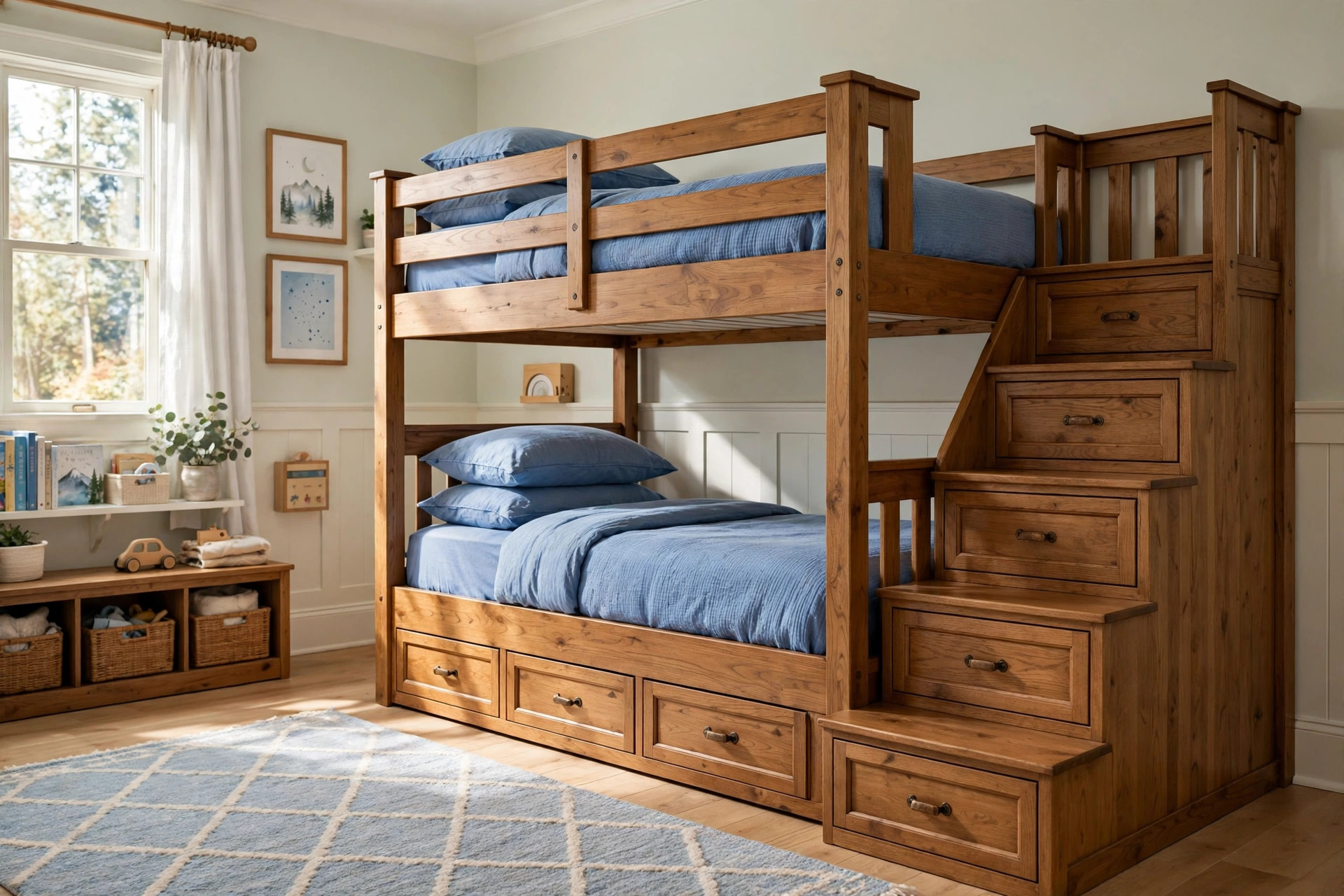

Why So Many Parents Want the Best Bunk Bed With Stairs for Kids Room
A child climbs to bed every night. A ladder works, but it is narrow. Small feet slip. Hands reach for rungs in the dark. Stairs change this. Wide steps give a child a safe path up to the top bunk. That is why the search for the best bunk bed with stairs for kids room grows each year. Parents want safety first, and stairs deliver it.
Stairs also save space in a clever way. Many stair bunks have drawers built into each step. A dresser drawer hides under a riser. A shelf opens at the side. In a small room, every inch counts. A bed that holds clothes, toys, and books while two children sleep in it is worth its price.
A bunk with stairs feels calmer than one with a ladder. A younger child can climb up alone at bedtime. A parent can walk up with the child and sit on the top bunk for a story. This matters more than most people think. Night routines go smoother when the climb is easy.
The cost is higher than a plain ladder bunk. Stairs need more wood and more work to build. Expect to pay one and a half to two times the price of a simple ladder model. Many families find the extra cost fair. Safety and storage have real value. The right choice pays for itself over years of use.
Safety First: What the Experts Say: Best Bunk Bed with Stairs for Kids Room
Safety rules come first with any bunk bed. The U.S. Consumer Product Safety Commission sets clear limits for bunk beds sold in America. Guardrails on the top bunk must stand at least five inches above the mattress top. Openings in the frame must be small enough that a child cannot slip through or get trapped. These rules protect children from the most common accidents, which are falls.
Stairs make these rules easier to follow in daily life. A child does not swing out on a ladder at night. Steps are wide. Many have grooves or anti-slip strips. Handrails run along the stair side. A sleepy child going down for water can hold the rail the whole way. Compare that to a ladder, where the child turns around to climb down backward in the dark.
Age matters too. Doctors at the American Academy of Pediatrics advise that children under six should not sleep on the top bunk. The body of a small child is not steady enough for the height. This rule holds for stair bunks as well. Stairs make climbing safer, but they do not make the top bunk safe for a toddler. Keep the younger child on the bottom bunk. Move the older child up when they are ready.
Anchor the bed to the wall. Even a heavy wood frame can shift when children climb stairs or play. A simple L-bracket into a wall stud stops all movement. This takes ten minutes and basic tools. Home improvement experts at Bob Vila recommend wall anchoring for all tall children’s furniture, not just bunk beds.
Check the weight limits. A good stair bunk holds 400 to 450 pounds on the top bunk. Cheap models hold less. Look for this number on the product page or the box. If the maker hides the number, that is a bad sign. Solid pine or hardwood frames hold more than particle board. Metal frames hold more still, though they are rarer in stair models.
Types of Bunk Beds With Stairs
Twin Over Twin With Stairs
The twin over twin is the classic shape. Two standard twin beds stacked, with a stair unit on one end or along the side. It fits two children of the same age well. It is also the smallest stair bunk you can buy. A typical size is about 98 inches long and 60 inches wide. Measure your room first. The stair unit adds width, so the bed is wider than a ladder bunk.
Twin Over Full With Stairs
The twin over full gives more room below. An older child or a teen sleeps fine on a full bed. The twin top stays for a younger sibling. This shape works well when the age gap is large. It needs more floor space. Check that the room still has space to walk and open doors.
L-Shaped Bunk With Stairs
The L-shape puts the top bunk at a right angle to the bottom. The stairs run along one side. This shape opens floor space in the middle of the room. It looks modern and gives each child a sense of their own area. It needs a bigger room, though. Measure the corner carefully.
Loft Bed With Stairs
A loft bed has only a top bunk. The space below is free for a desk, a reading corner, or storage. Add stairs instead of a ladder and it becomes a safe loft for an older child. Lofts work well for one child in a small room. Pair the space below with a small bookshelf and the room stays tidy.
Stairs That Double as Storage
Many of the best designs build drawers into the steps. Each step pulls out like a drawer. Deep drawers hold clothes or toys. Some stair units have a bookcase on the back side. A few even hide a small closet. These beds cost more, but they replace a dresser. In a tiny room, this is a real win.
What to Look for When You Shop
Frame Material
Solid wood is the best pick for most families. Pine is common and holds up well. Rubberwood and beech are stronger. Hardwood frames last through years of climbing and play. Engineered wood costs less but dents and chips faster. If the budget is tight, choose a model with solid wood posts at least. The posts carry the load.
Finish matters with children. Look for a non-toxic finish with low VOC levels. White, gray, and natural wood tones suit most kids rooms. Painted finishes chip over time. A natural stain hides wear better. Keep a small bottle of touch-up paint from the maker if you choose white.
Stair Design
Not all stairs are the same. The best stairs for a kids room are wide, deep, and gentle. A step width of about 10 to 12 inches gives a child a full foot on each step. A gentle slope feels safer than steep steps. Handrails should run the full length of the stairs on the open side.
Check which side the stairs sit on. Some beds allow stairs on the left or the right. Others fix the side. Know your room layout before you order. The stairs need clear floor space in front of them. Nothing should block the first step.
Guardrails
The top bunk needs guardrails on all sides that face open air. The rail must run the full length of the bed with no large gaps. The wall side can have a shorter rail if the bed sits against a wall. Still, a full rail on every side is safer. Children roll in sleep.
Some parents add extra protection. A soft, padded rail cover stops bumps. After the stairs are set, consider reading about a bed rail for top bunk safety to add a second layer of guard on the open side.
Drawer Quality
If you pay for storage stairs, test the drawers. They should glide on real metal slides. Cheap plastic glides stick and break. Deep drawers hold folded clothes. Shallow ones suit books and toys. Soft-close slides keep little fingers safe from slamming drawers.
Mattress Size and Thickness
Most stair bunks take standard twin mattresses. The top bunk mattress should be no thicker than six inches. A thick mattress lowers the guardrail height. The rail must stand five inches above the mattress. Measure before you buy. The bottom bunk can take a thicker mattress for comfort.
Assembly
Stair bunks are heavy and complex. Assembly takes two adults two to four hours. Look for models with clear picture instructions. Some makers offer white-glove delivery with assembly. This costs extra but saves a weekend. Home advice sites like The Spruce note that poor assembly causes most bunk bed accidents, so follow every step and tighten every bolt.
Cost and Price Ranges
Prices vary by material and features. Here is what to expect in the current market.
– Budget ($400 to $700): Engineered wood frames with basic stairs. Few drawers. Fine for light use but check the weight limit. – Mid-range ($700 to $1,200): Solid pine frames with storage stairs. This is the sweet spot for most families. Drawers glide well and frames hold up. – High-end ($1,200 to $2,000+): Hardwood frames, deep storage stairs, bookcase backs, and premium finishes. These beds look like fine furniture and last a decade.
Delivery costs add up. A stair bunk ships in several heavy boxes. Free delivery is common from major home retailers, but check the fine print. White-glove assembly can add $100 to $200. It is worth it for a first-time buyer.
Watch for sales in late summer. Retailers clear stock before the school year. Holiday weekends bring discounts too. A mid-range bed bought on sale often costs what a budget bed costs in spring.
Care and Upkeep
A stair bunk needs little care, but small habits keep it safe for years.
Tighten all bolts twice a year. Wood shrinks and swells with the seasons. Bolts loosen. A quick check with an Allen wrench takes ten minutes. Focus on the stair joints and the top bunk rails. These carry the most force.
Wipe the stairs with a damp cloth each month. Dust and crumbs build up on the steps. Slippery dust on stairs defeats the purpose of safe steps. Anti-slip strips wear out. Replace them when the edges curl.
Check the drawers yearly. Slides need a drop of silicone spray if they stick. Wood drawers may swell in humid summers. A little wax on the drawer sides helps them glide.
Look at the finish once a year. Chips in paint expose raw wood. Touch up paint stops moisture from getting in. A small chip is fine. A large bare patch needs sanding and a fresh coat.
Rotate the mattresses every three months. This stops sagging and keeps both children sleeping level. A sagging mattress makes the top bunk less comfortable and lowers the rail height. Replace a mattress that sags more than an inch and a half.
Teach children the rules. No jumping from the top bunk. No rough play on the stairs. One child on the stairs at a time. These rules sound strict, but they stop the injuries that send children to the emergency room. Parenting guides stress that steady rules work better than one-time warnings.
Making the Room Work Around the Bed
A stair bunk is the biggest piece in the room. Plan the rest of the room around it.
Leave at least two feet of clear space in front of the stairs. A child steps off and needs room to land. Do not place a toy box right at the stair base. Keep a nightlight near the stairs for nighttime trips.
Use the wall space above the bottom bunk for storage. A narrow shelf holds books and a small lamp. This keeps the floor clear. A small rotating shelf fits tight corners well; see our guide to a kids bookshelf rotating for small room for ideas that pair with bunks.
Keep the bedding simple. A fitted sheet, a light blanket, and one pillow suit the top bunk. Heavy quilts slide off and pile on the floor. For the bottom bunk, softness matters more. A good toddler duvet insert for small bed comfort can make the lower bunk the coziest spot in the house for a younger child.
Rugs help. A low-pile rug under the stair base softens landings and cuts noise. Avoid thick shag rugs near the stairs. Little feet can catch in deep pile.
Lighting matters for safety. A small clip lamp on the top bunk rail lets a child read without climbing down. A plug-in nightlight at stair height guides nighttime trips. Battery puck lights stuck under each step work well too.
Shopping Tips: Where to Look and What to Ask
Start your search with well-known furniture retailers like Wayfair and IKEA, and children’s furniture brands such as Pottery Barn Kids. Big names carry many models and clear return policies. Read the full product page before you buy. Look for the weight limit, the mattress thickness limit, and the exact dimensions.
Ask these questions before you pay:
1. What is the weight limit for the top bunk? 2. How thick can the top mattress be? 3. Can the stairs go on the left or right? 4. Do the drawers use metal slides? 5. What is the finish made of, and is it low VOC? 6. Does delivery include assembly?
Independent testers publish bunk bed ratings each year. Their reports cover frame strength and finish safety. Check one before you buy a high-end model. The small effort can save you from a costly mistake.
Read parent reviews too. Look for reviews from families who owned the bed for a year or more. Early reviews praise the look. Long-term reviews tell you about loose bolts, sticking drawers, and chipped paint. Ten honest long-term reviews beat fifty first-day reviews.
Measure twice. Write down the room length and width. Mark where the door swings. Mark the windows. Draw the bed shape on paper with the stair unit included. A common mistake is buying a bed that blocks a closet door. The stair unit adds a foot or more to the bed width.
FAQ
Are bunk beds with stairs safer than ladders?
Yes, in most daily use. Stairs give wide steps and a handrail. A child climbs up and down facing forward. Ladders force a backward climb down. Falls from ladders are the most common bunk bed injury. Stairs cut that risk a lot. Still, follow all safety rules and keep children under six off the top bunk.
What age is right for a stair bunk bed?
The top bunk suits children six and older. The bottom bunk suits any age with proper rails for toddlers. Stairs help younger children climb safely during the day for play, but sleep rules stay the same. Age six is the line that safety groups draw.
Do stair bunk beds fit in small rooms?
They fit, but they need more width than ladder bunks. The stair unit adds about 18 to 24 inches to the bed width. Storage stairs replace a dresser, so the room may feel bigger overall. Measure the full footprint with stairs before you order.
How much weight can the stairs hold?
Good stairs hold an adult. Most makers rate the stairs for 200 to 250 pounds. This lets a parent climb up for bedtime stories. Cheap stairs may rate lower. Check the product page for a stair weight limit separate from the bunk limit.
Can I separate a stair bunk into two beds?
Some models split into two twin beds. Check before you buy. Convertible models cost more but last longer as children grow. The stair unit usually becomes a standalone drawer unit. Not all beds offer this, so ask the seller.
What mattress works best on the top bunk?
A firm twin mattress no thicker than six inches. The guardrail must stand at least five inches above the mattress top. A thin, firm mattress keeps the rail high and the sleeper safe. A bunkie board under the mattress adds support without adding height.
A Short Final Word
The best bunk bed with stairs for kids room is the one that fits your space, holds your children safely, and lasts for years. Start with safety rules. Pick solid wood. Choose stairs wide enough for small feet. Add storage drawers if the room is tight. Measure twice and anchor the bed to the wall.
A good stair bunk costs more than a ladder bunk. It also does more. It keeps children safe at night. It stores clothes and toys. It makes bedtime calmer. For most families, that is money well spent. Take your time, read the reviews, and choose the bed your children will climb with a smile for years to come.
References
Bob Vila. (n.d.). Home improvement advice. https://www.bobvila.com Consumer Reports. (n.d.). Product reviews and ratings. https://www.consumerreports.org IKEA. (n.d.). Home furnishings. https://www.ikea.com Pottery Barn Kids. (n.d.). Kids furniture and decor. https://www.potterybarnkids.com The Spruce. (n.d.). Home and garden advice. https://www.thespruce.com U.S. Consumer Product Safety Commission. (n.d.). Product safety information. https://www.cpsc.gov Wayfair. (n.d.). Furniture and home goods. https://www.wayfair.com What to Expect. (n.d.). Pregnancy and parenting guidance. https://www.whattoexpect.com
Was this guide helpful?

About David Wilson
The My Garden US editorial team writes practical, in-depth home and garden guides for American homeowners — tested advice, no fluff.
You May Also Like
Kids Loft Bed With Slide for Fun Bedroom: A Parent’s Guide
August 3, 2026 0 views
Nursery Diaper Pail With Odor Lock System: A Complete Parent Guide
October 3, 2026 0 views
Nursery Dresser with Removable Changing Tray: A Practical Buying Guide
January 3, 2026 0 views