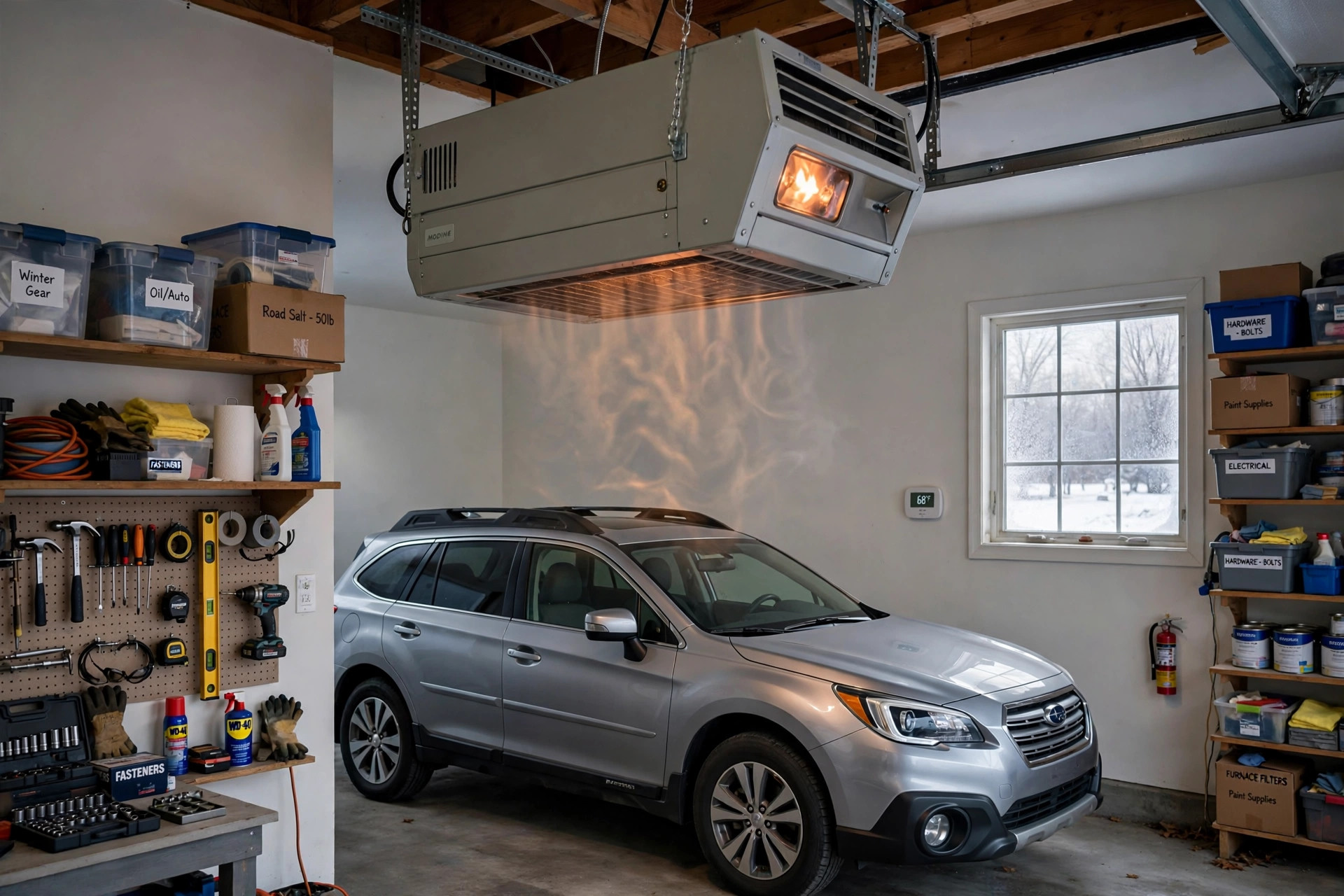

When winter comes, an unheated garage can feel like a walk-in freezer. Cars are hard to start. Tools feel cold in the hand. A home workshop sits unused for months. This is why many owners ask about the gas garage heater installation cost usa homeowners actually pay. The short answer is that most full installs land between one thousand and three thousand dollars, heater and labor included. But the real price depends on the size of the garage, the type of heater, the fuel you use, and how far the gas line must run. This guide walks through every cost step by step, in plain words, so you can plan your budget with care.
Why a Gas Heater Makes Sense for Your Garage
A garage is different from a bedroom or a living room. It has thin walls, a big door that leaks air, and bare concrete underfoot. Electric space heaters warm one small corner and drive the power bill up fast. A gas heater works at a different scale. It puts out tens of thousands of BTUs, which is the unit used to measure heat, and it can lift the whole space from freezing to comfortable in under an hour.
Gas is also cheap per unit of heat in most states. Natural gas costs less than electricity for the same warmth in much of the country. Propane costs more than natural gas, but it still beats electric heat in a large shop. If you use the garage every day as a workshop, or you park cars there and hate cold starts, the monthly fuel bill stays modest. Many owners find that a gas unit heater pays for itself in comfort within the first winter.
There is another gain. A warm garage protects what is inside. Paint, glue, and car batteries last longer above freezing. Pipes in a wall between the garage and the house are less likely to burst. If your garage shares a wall with the home, steady warmth there takes strain off the main furnace too.
What to Look For Before You Call a Contractor: Gas Garage Heater Installation Cost Usa
A good install starts with good planning. Measure your garage. Note the length, width, and ceiling height. A two-car garage of twenty by twenty feet with an eight-foot ceiling is common. Larger shops, tall ceilings, and poor insulation all push the heat load up.
How to Choose the Right Size
Heater size is rated in BTUs per hour. A common rule is thirty to forty-five BTUs per square foot of garage floor in cold states, less in mild ones. A standard two-car garage often needs forty-five thousand to seventy-five thousand BTUs. A three-car shop or a tall barn-style garage can need one hundred thousand or more.
An oversized heater is not a bargain. It short-cycles, which means it fires up and shuts down in quick bursts. That wastes fuel and wears parts fast. An undersized heater runs all day and never reaches your set point. Ask the contractor to run a real heat-loss estimate. Major makers such as Carrier publish sizing guidance that shows how insulation, doors, and ceiling height change the math.
Natural Gas or Propane
If your home already uses natural gas for the furnace or water heater, the choice is simple. Extend the existing line to the garage. Natural gas is piped in, so you never haul fuel, and the price per unit of heat is the lowest of any common fuel.
If you live beyond the gas mains, propane is the answer. You will need a tank on the property, usually one hundred to two hundred fifty gallons for a garage heater. Most unit heaters ship set for natural gas and include a conversion kit for propane. Your installer adjusts the gas valve and burner orifices during the job. Running costs are higher with propane, so factor that into your long-term budget. The federal Energy Department offers fuel-cost comparisons that help owners weigh gas against electric heat.
Types of Gas Garage Heaters
Not all gas heaters are built the same. Each type fits a different garage and a different way of working.
Forced-Air Unit Heaters
This is the classic garage heater. It hangs from the ceiling and blows warm air down with a fan. Brands in this class are workhorses in shops across the country, including the well-known Hot Dawg style units you may have read about in our Modine Hot Dawg heater review for garages. They heat fast, they are simple to service, and they vent through the wall or roof. Expect to pay four hundred to nine hundred dollars for the unit itself, depending on BTU rating.
Infrared Tube Heaters
These long tubes mount high on the ceiling or wall and glow with radiant heat. Instead of warming the air, they warm objects, floors, and people directly, the way the sun does. They feel pleasant in a workshop where the big door opens and closes often, because the heat does not escape with the air. They cost more up front, often nine hundred to one thousand eight hundred dollars for the heater, but they run quietly and use fuel well in drafty spaces.
Wall-Mounted Heaters
Small wall-mounted gas heaters suit a one-car garage or a corner work area. Some are vent-free blue-flame models. Be careful here. Vent-free heaters are not allowed by code in every state, and they add moisture to the air. Many building inspectors will not pass them in a garage that stores paint or fuel. A vented wall unit costs less to install because the vent run is short, but it still needs a gas line and a permit.
If your garage stays mild and you only need heat in the shoulder seasons, a ductless mini split may be worth a look as well. Our guide to mini splits for garage heating and cooling compares electric heat-pump costs with gas.
Gas Garage Heater Installation Cost in the USA
Here is where the numbers come together. For a common case, a forty-five thousand to seventy-five thousand BTU forced-air unit heater in a two-car garage, most owners pay between one thousand two hundred and two thousand five hundred dollars all in. That figure includes the heater, the labor, the gas piping, the venting, the wiring, and the permit.
The table below breaks the job into parts. Prices are national ranges for 2026.
| Cost item | Typical range | |—|—| | Heater unit, forced-air, 45k-75k BTU | $400-$900 | | Heater unit, infrared tube | $900-$1,800 | | Labor, full install | $500-$1,500 | | Gas line extension, 10-30 feet | $300-$800 | | New gas line from meter, long run | $800-$2,000 | | Venting and flue work | $200-$500 | | Electrical circuit and thermostat | $150-$400 | | Permit and inspection | $50-$250 |
What Raises or Lowers the Price
Distance is the biggest cost driver. If the gas meter sits on the far side of the house and the garage is detached, the pipe run can double the job. Trenching under a driveway adds hundreds more. An attached garage with a gas line already in the wall is the cheapest case.
Venting adds cost too. A power-vented unit that pushes exhaust sideways through a wall is simpler than a tall roof flue. High-efficiency sealed-combustion heaters cost more to buy but vent with small plastic pipe, which can cut the vent labor in half.
Local labor rates matter as well. Big-city contractors charge more per hour than small-town shops. Always get three written quotes. Make sure each quote lists the heater model, the BTU rating, the gas line length, the vent plan, and the permit fee. Quotes that lump everything into one number hide surprises. Guidance on fair contractor pricing appears regularly at This Old House, and brand sites such as Trane and Lennox explain what a professional install should include.
One more line item people forget: the thermostat. A basic line-voltage thermostat costs little. A smart thermostat with a garage-rated sensor costs more but lets you warm the shop from your phone before you walk out. Goodman and Rheem both publish control options that pair with unit heaters.
Care and Upkeep Through the Years
A gas garage heater is a simple machine, and simple machines last when they are cleaned. Once a year, before the heating season, vacuum the dust from the burner area and the fan blades. A dirty fan moves less air and makes the motor work harder. Check the vent pipe for nests, leaves, or rust holes. A blocked vent is a safety risk, not just a repair bill.
Look at the flame when the unit runs. On natural gas it should burn mostly blue with small yellow tips. A lazy yellow flame can mean a dirty burner or a vent problem. Call a technician rather than poking at the gas valve yourself.
Change or clean the air filter if your model has one. Many unit heaters have only a screen, but wash it anyway. Keep the area around the heater clear. Do not stack paint cans, cardboard, or sawdust near the burner. The maker labels state the clearance, often three feet in front and one foot on the sides. Step-by-step seasonal checklists from Family Handyman are a good reminder before the first cold snap.
Expect a service life of fifteen to twenty years for a quality unit heater. The fan motor or the igniter may need replacement once in that span, each a modest repair. Budget about one hundred to two hundred dollars a year for a professional tune-up if you use the heater hard all winter.
Safety Rules You Must Follow
Gas heat is safe when it is installed right and dangerous when it is not. These rules are not optional.
First, the install must be permitted and inspected. A licensed contractor pulls the permit, sizes the gas line, and sets the vent to code. Skipping the permit can void your home insurance. If a fire ever starts, the insurer will ask who installed the heater.
Second, install a carbon monoxide alarm in the garage and one in the room next to it. Carbon monoxide has no color and no smell. The U.S. safety agency CPSC guidance pages explain where to place alarms, and ENERGY STAR notes that proper venting is part of every safe heating plan.
Third, never store gasoline, solvents, or open paint cans near the heater. The pilot or igniter can light fumes from across the room. Keep fuel in sealed cans in a separate cabinet.
Fourth, do not run a car in a closed garage to warm it up, even with the heater on. The heater does not remove exhaust. Open the door before you start the engine.
Fifth, keep the vent clear of snow. A drift against a side-wall vent can push exhaust back into the garage. After a heavy storm, walk around and check it.
Frequently Asked Questions
How much does it cost to install a gas garage heater? Most full installs in the USA cost between one thousand two hundred and two thousand five hundred dollars, heater and labor included. A long gas-line run, a detached garage, or an infrared tube heater can push the total past three thousand five hundred dollars.
Can I install a gas garage heater myself? You can hang the unit and wire the thermostat if you have skill, but the gas piping should be done by a licensed professional in almost every state. Gas leaks are deadly, and most codes require a licensed gas fitter plus a pressure test and inspection. Saving a few hundred dollars on labor is not worth the risk.
How many BTUs do I need for a two-car garage? A standard insulated two-car garage of about four hundred square feet needs roughly forty-five thousand to sixty thousand BTUs in cold climates. Poor insulation, tall ceilings, or frequent door openings raise the need toward seventy-five thousand. A heat-loss estimate from your contractor is the safest way to size it.
Is natural gas or propane cheaper for a garage heater? Natural gas is cheaper per unit of heat in most of the country and needs no tank. Propane works where gas mains do not reach, but the fuel costs more and you must keep the tank filled. Either way, gas beats electric resistance heat on running cost in a large space.
Do I need a vent for a gas garage heater? Yes, in almost all cases. Vented units send exhaust outside through a wall or roof flue. Vent-free models exist, but many local codes ban them in garages, and they add moisture that can rust tools. Plan for a vented unit and budget two hundred to five hundred dollars for the vent work.
How long does installation take? A straightforward replacement or new install in an attached garage usually takes one day. A job that needs a long new gas line, trenching, or electrical panel work can take two to three days, plus the inspection visit.
A Final Word
The gas garage heater installation cost usa buyers face is fair for what they get: a warm, usable garage all winter, lower fuel bills than electric heat, and a machine that lasts twenty years with basic care. Spend your money where it counts: the right size, a licensed installer, a proper vent, and a permit. Compare heater styles side by side in our roundup of the best garage heaters for winter before you sign a quote, and read owner advice at The Spruce for one more point of view. A warm garage changes how you use your home. Plan it well, and the first frost will feel like an invitation instead of a warning.
References
Carrier. (n.d.). Heating and cooling systems. https://www.carrier.com ENERGY STAR. (n.d.). Energy efficient products. https://www.energystar.gov Family Handyman. (n.d.). DIY home repair and maintenance. https://www.familyhandyman.com Goodman. (n.d.). Heating and cooling equipment. https://www.goodmanmfg.com Lennox. (n.d.). Heating and cooling systems. https://www.lennox.com Rheem. (n.d.). Heating, cooling, and water heating. https://www.rheem.com The Spruce. (n.d.). Home and garden advice. https://www.thespruce.com This Old House. (n.d.). Home renovation guidance. https://www.thisoldhouse.com Trane. (n.d.). Heating and air conditioning. https://www.trane.com U.S. Consumer Product Safety Commission. (n.d.). Product safety information. https://www.cpsc.gov U.S. Department of Energy. (n.d.). Energy efficiency and renewable energy. https://www.energy.gov
Was this guide helpful?

About Robert Taylor
The My Garden US editorial team writes practical, in-depth home and garden guides for American homeowners — tested advice, no fluff.
You May Also Like

How Much Do Wood Pellets Cost USA 2026: Prices by Bag, Ton, and Region
July 30, 2026 0 views
Bathroom Exhaust Fan Installation Cost USA: A Full 2026 Guide
May 23, 2026 0 views
Best Garage Heater for Winter Reviews USA: A Practical Guide to Warmth
September 16, 2026 0 views