
A dog that comes from a shelter or a rescue group has seen hard times. Many have lived on cold floors. Many have never had a soft place of their own. The best calming bed for anxious rescue dogs can change that. It gives the dog one warm, safe spot in a new home. This guide explains what makes a calming bed work, how to choose one, and how to help a fearful dog learn to use it. Every rescue dog is different, but the basic needs are the same. Comfort, safety, and a quiet corner to call home.
Why Rescue Dogs Need a Calming Bed
A rescue dog arrives in a new home with old fears. Loud sounds may scare it. Fast movements may make it flinch. New smells may keep it on edge. Sleep is often the first thing that suffers. A dog that cannot rest cannot heal. That is why a calming bed matters so much.
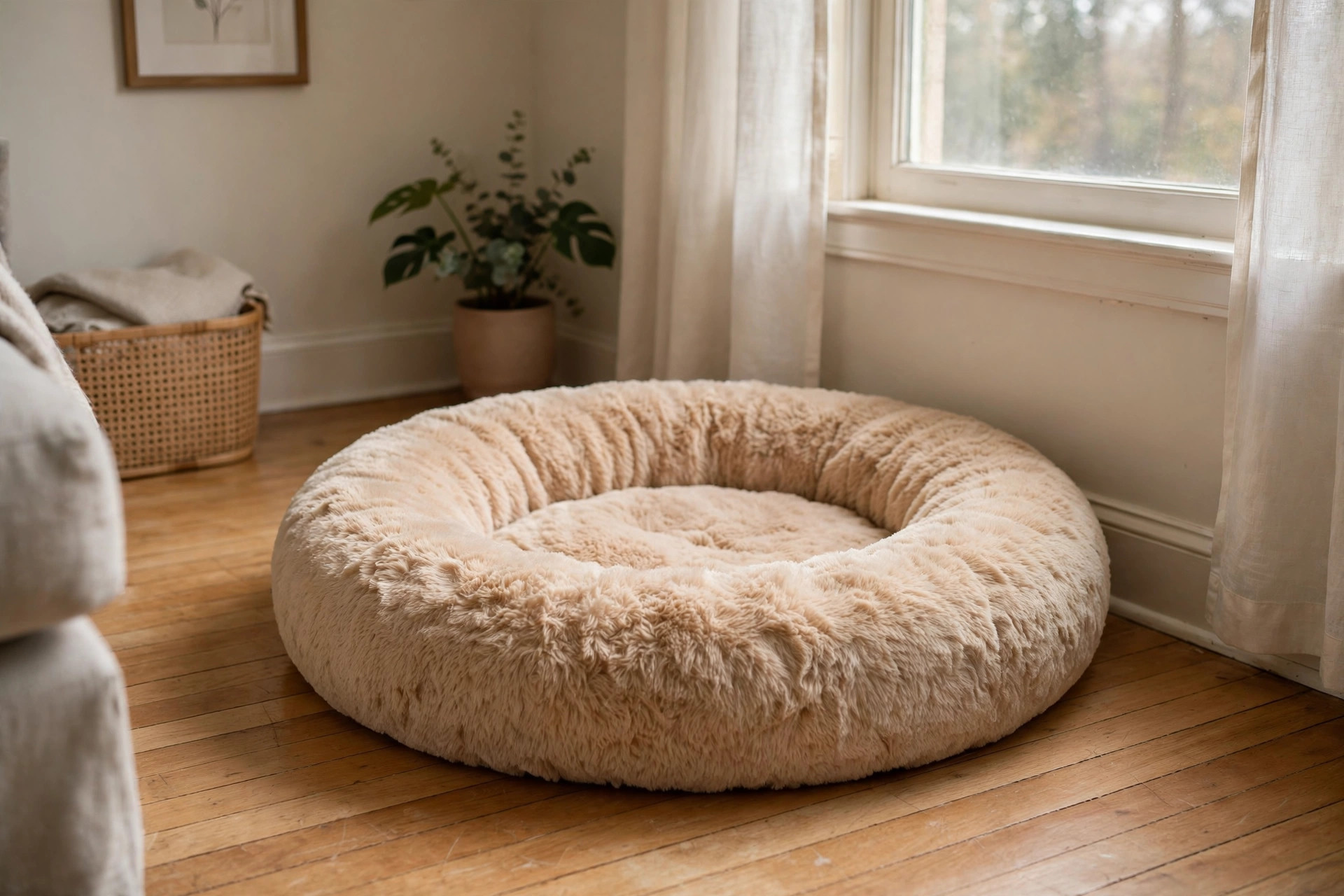
A calming bed does more than keep a dog off the cold floor. The deep center cradles the dog, and the rim gives it something to lean on. A round bed with high sides copies that feeling. The dog curls up, tucks its nose under its tail, and feels hidden from the world.
Veterinary behavior experts say that a steady routine helps anxious dogs. A bed becomes part of that routine. When the dog goes to its bed, it learns that good things happen there. Over days and weeks, the bed becomes a signal of safety. The ASPCA offers resources on helping adopted pets adjust, and a calm resting place is part of every good plan.
Rescue groups see this pattern often. A new dog paces the house at night and cannot settle. After a few weeks with a soft, enclosed bed in a quiet corner, the pacing slows. The dog starts to sleep through the night and wakes up calmer.
A calming bed also protects the dog’s body. Many rescue dogs are older, with thin coats and bony joints. A thick, padded bed keeps their elbows and hips off hard floors. Warmth matters too. A warm dog sleeps deeper, and a rested dog is less jumpy during the day.
What to Look For in a Calming Dog Bed: Best Calming Bed for Anxious Rescue Dogs
Not every soft bed is a calming bed. A flat pad may be soft, but it does not hug the dog. The best calming bed for anxious rescue dogs has a set of features that work together. Look for each of them before you buy.
Raised Rims and a Round Shape
The rim is the most important feature. Look for a round or oval bed with raised, padded sides. The dog should be able to curl into the middle and rest its chin on the edge. A full circle rim is best for dogs that like to curl. A bed with one low side works for dogs that like to stretch out and still feel enclosed.
Size That Fits the Dog
Measure your dog before you shop. Ask the dog to lie in its natural sleeping pose. Measure from nose to tail and add four to six inches. A bed that is too small forces the dog to hang off the edge. A bed that is too big fails to hug the dog. When in doubt, size up one step.
Sizes run from small for dogs under 25 pounds to extra large for dogs over 90 pounds. Rescue groups often do not know the exact breed mix, so measure the dog, not the label. The American Kennel Club publishes size charts that can help you match your dog to common bed sizes.
Fabric and Fill
The cover fabric should feel soft and warm. Faux fur and plush sherpa are common choices. They copy the feel of another dog’s coat. The fill should be thick and spring back when pressed. Cheap beds go flat in a week, while a good bed keeps its loft for months.
Some dogs chew when they are nervous. If your rescue dog chews fabric, look for a bed with a tough outer cover. Enrichment toys from the KONG Company can keep a nervous chewer busy, which saves the bed from damage.
Washable Covers
Rescue dogs have accidents. That is normal during the first weeks. A calming bed must be easy to wash. Look for a bed that is fully machine washable, or one with a removable zippered cover. Wash the bed before the dog arrives home. Later, add a worn t-shirt of yours. Your scent will help the dog feel close to you even when you are in another room.
Non-Slip Base
A bed that slides on a wood or tile floor will scare a nervous dog. One bad slide can make the dog avoid the bed for weeks. Look for a rubberized or textured base. Pet supply retailers like Chewy and Petco list base materials in their product details, so check before you order.
Types of Calming Beds
Calming beds come in several shapes. Watch how your rescue dog sleeps for a few nights, then match the bed to the habit.
Donut cuddle beds are round with high, soft rims all the way around. They are the classic calming bed and suit dogs that curl into a tight ball.
Bolster beds are square or rectangular with raised edges. They suit dogs that like to stretch out but still want a pillow for their head.
Cave beds have a hood or cover that the dog crawls inside. They suit very fearful dogs and small breeds that like to burrow. Make sure the opening is wide enough for easy entry.
Orthopedic calming beds combine a thick memory foam base with raised rims. They suit senior rescue dogs with sore joints.
Self-warming mats and pads reflect the dog’s own body heat. They are thin and can sit inside another bed. They suit short-coated dogs in cold homes.
If your dog spends time outside as well, a soft indoor bed is only half the answer. Our guide to the best outdoor dog kennel for large breeds in the USA covers shelter options for the yard, and a heated dog house for winter cold climates can keep a dog warm through cold nights.
Cost and Price Guide
Calming beds come at many price points. A basic donut bed for a small dog may cost 25 to 40 dollars. A mid-range bed with a washable cover and thick fill may cost 50 to 90 dollars. A large orthopedic calming bed may cost 100 to 180 dollars.
Price is not the only measure of value. A 30-dollar bed that goes flat in a month costs more over a year than an 80-dollar bed that lasts. Read product reviews from other rescue dog owners and look for comments about how long the bed kept its shape. Big retailers such as The Home Depot carry pet beds alongside home goods, which makes it easy to compare sizes in person.
How to Help Your Rescue Dog Settle In
The best bed in the world will not help if the dog is too scared to use it. New rescue dogs need time. Most need three days to decompress, three weeks to learn the routine, and three months to feel at home.
Place the bed in a quiet corner, away from front doors and busy hallways. A corner gives the dog two walls at its back, which feels safe. Pick a spot where the dog can see the room but is not in the middle of it.
Do not force the dog onto the bed. Place treats on the bed and walk away. Let the dog find them on its own. Praise the dog in a soft voice when it steps on the bed. Repeat this for several days and the dog will start to choose the bed by itself.
Keep a steady routine. Feed, walk, and settle the dog at the same times each day. Anxious dogs relax when they can predict what comes next. The Humane Society of the United States has guides on settling in adopted pets that stress the value of a calm, fixed schedule.
Add your scent. An old t-shirt you have worn for a day carries your smell. Lay it on the bed. Change it every few days at first. Later, the dog’s own scent will take over, and the bed will smell like home.
Some dogs need sound cover too. A quiet radio or a white noise machine near the bed can mask sudden sounds. Keep the volume low.
Care and Upkeep
A clean bed is a healthy bed. Wash the bed or its cover every one to two weeks, more often if the dog sheds a lot or has had an accident. Use a mild, fragrance-free detergent. Dry the bed fully before the dog uses it again. A damp bed can grow mildew.
Check the bed each month. Press the fill. If it stays flat and does not spring back, it is time to replace it. Check the seams too. A nervous dog may chew the edges, and loose threads can be a choking risk. The Spruce Pets publishes care guides for pet bedding that cover washing and repair tips.
Vacuum the bed between washes and shake it outside once a week. Fresh air keeps it from getting musty. If the bed has a foam core that cannot be washed, spot clean it with a damp cloth and let it air dry in the sun.
Safety Tips
Safety comes first with any pet product. Follow these rules to keep your rescue dog safe on its new bed.
Buy the right size. A bed that is too small can trap a large dog. A bed with a deep center can be hard for a very old dog to climb out of. Watch your dog use the bed for the first few days. Make sure it can get in and out with ease.
Keep the bed away from heat sources. Do not place it next to a space heater, a fireplace, or a hot air vent. Dogs can overheat. A cool, shaded corner is best.
Supervise chewers. Some anxious dogs chew fabric when stressed. If your dog tears the bed open, the loose fill can be a choking hazard. Remove a damaged bed at once and work on the chewing with training and safe chew toys. Vetstreet offers veterinary advice on destructive chewing and how to redirect it.
Check for small parts. Some beds have buttons, zippers, or tags that a dog can chew off. Remove tags before the first use and tuck any dangling zipper pull out of reach.
Wash new beds before use. Factory packaging can leave dust and chemical smells on the fabric. One wash makes the bed safer and more inviting. The American Humane organization notes that a clean, safe resting area is a basic part of good pet care.
Frequently Asked Questions
How long will it take my rescue dog to use the new bed? Most dogs try a new bed within a few days if treats and praise are used. Very fearful dogs may need two to three weeks. Let the dog set the pace. If the dog avoids the bed after a month, try a different spot in the house or a different bed shape.
Should the bed be in my bedroom or in another room? Either can work. Many rescue dogs sleep better near their new family. A bed in the bedroom lets the dog hear you breathe at night, and that sound is calming. If you prefer another room, pick a quiet one and keep the routine steady. Do not move the bed around. One fixed spot builds trust.
Can a calming bed replace anxiety medicine? No. A calming bed is a comfort tool, not a medical treatment. Dogs with severe anxiety may need help from a veterinarian. If your dog cannot sleep after several weeks in a calm home, ask your vet.
What is the best calming bed for a dog that chews? Look for a bed with a tough, chew-resistant cover and no loose parts. Give the dog safe chew toys so it has a better outlet. If the dog destroys every soft bed, try a raised cot-style bed with strong fabric. It has no soft fill to tear out.
How do I wash a calming bed that has no removable cover? Check the label first. Many one-piece beds can go in a large washing machine on a gentle cycle with cold water and mild soap. Air dry or tumble dry on low. Make sure it is fully dry inside before the dog sleeps on it.
Do calming beds really work, or is it just marketing? The raised rims and soft fill do help many dogs. Dogs feel safe in enclosed, den-like spots, and warmth and soft pressure lower stress. No bed can fix deep fear on its own. But as part of a calm home, a steady routine, and patient training, a calming bed makes a real difference.
A Final Word
The best calming bed for anxious rescue dogs is the one your dog chooses to sleep on. Start with a round, soft, washable bed in the right size. Place it in a quiet corner. Add treats, praise, and patience. Give your dog time to learn that this spot is safe. If you share your home with a cat too, our guide to the best cat tree for large cats sturdy tall can help you set up a calm space for every pet.
References
American Humane. (n.d.). Animal welfare and pet care resources. https://www.americanhumane.org American Kennel Club. (n.d.). Dog care and training resources. https://www.akc.org ASPCA. (n.d.). Pet care and animal welfare resources. https://www.aspca.org Chewy. (n.d.). Pet supplies. https://www.chewy.com KONG. (n.d.). Dog toys and travel products. https://www.kongcompany.com Petco. (n.d.). Pet supplies and services. https://www.petco.com The Home Depot. (n.d.). Home improvement products. https://www.homedepot.com The Humane Society of the United States. (n.d.). Animal protection and care. https://www.humanesociety.org The Spruce Pets. (n.d.). Pet care guides and product reviews. https://www.thesprucepets.com Vetstreet. (n.d.). Veterinary advice for pet owners. https://www.vetstreet.com
Was this guide helpful?

About Sarah Mitchell
The My Garden US editorial team writes practical, in-depth home and garden guides for American homeowners — tested advice, no fluff.
You May Also Like

Dog Car Seat Cover for Back Seat Protection: A Practical Guide
June 28, 2026 0 views
Best Catnip Toys for Indoor Cats Entertainment
July 23, 2026 0 views
A Practical Guide to the Cat Tunnel Collapsible for Play and Hiding
January 31, 2026 0 views