
Introduction
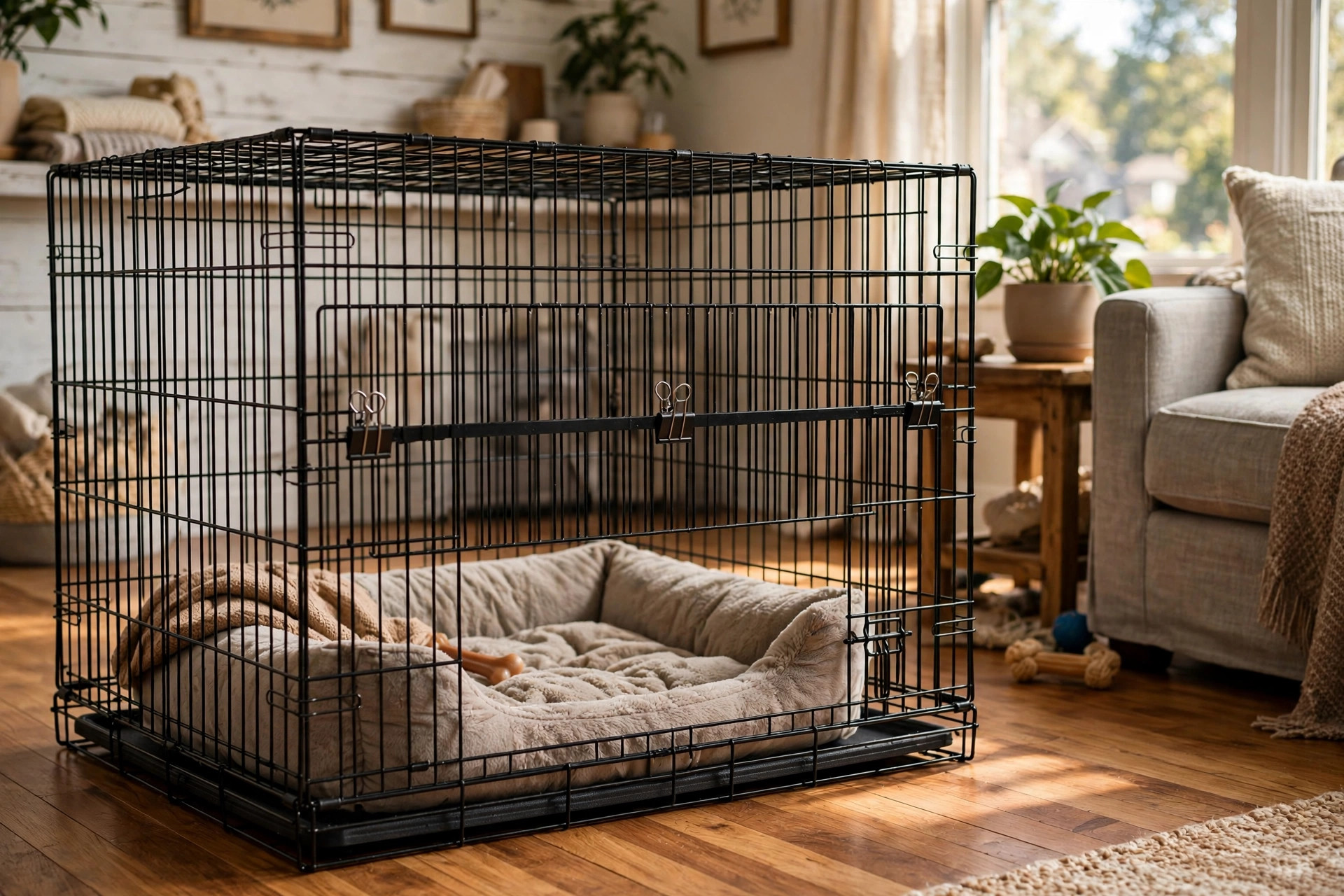
The best dog crate divider for growing puppies is a simple panel that changes the inside size of a dog crate. It sits across the crate and blocks off the extra room. A young puppy needs only a small space. The space must be large enough to stand, turn around, and lie down in comfort. It must not be much larger. Puppies dislike soiling their sleeping place. When the space is too large, the puppy may use one corner as a bathroom. The divider stops that problem. You move the panel back as the puppy grows. One crate can last from the first week home to full adult size. This guide explains why the panel matters, what to look for, the types you can buy, the cost, care, safety, and the questions most owners ask.
Why a Crate Divider Matters: Best Dog Crate Divider for Growing Puppies
Crate training works because dogs are den animals. A small, quiet space feels safe to a puppy. It calms the animal at night. It helps with house training during the day. The trouble begins when the crate is too large. A puppy in a big crate has room to sleep on one side and use the other side as a toilet. The training value is lost.
Many owners buy a crate sized for the adult dog. This is good planning. A large breed puppy can double in weight in a few months. Buying three crates in three sizes is costly and wasteful. The divider solves this. You buy the adult size once. You block off the extra space with the panel. The puppy gets a snug den that fits the body it has today. Each week or two, you shift the panel to make the space a little larger. The crate grows with the puppy.
A divider also helps anxious puppies. A large empty crate can feel too open. A smaller blocked-off space feels warmer and more secure. Many trainers suggest placing the crate in a quiet corner of the home. The divider keeps the sleeping end close to the door end, so the puppy settles faster. For owners who want a fuller picture of puppy care, groups such as the American Kennel Club publish crate-training guides that stress the value of correct sizing from the start.
How to Choose the Best Dog Crate Divider for Growing Puppies
Not every panel fits every crate. The first rule is to match the panel to the crate you own. Many crates use brand-specific panels. A panel made for one brand may not hook onto another. Measure the inside height and width of your crate. Compare those numbers to the panel listing before you buy.
Material comes next. Wire panels are the most common. They match wire crates. Air flows through them. The puppy can see the rest of the crate, which some owners like. Solid plastic panels block sight lines. Some puppies rest better when they cannot see through the wall. Fabric or mesh panels are light and quiet, but a chewing puppy can destroy them in one night.
Check how the panel attaches. Some panels slide into slots built into the crate walls. Others hook onto the wire with clips. A few tie on with zip ties or metal hooks. Slots are the easiest to move. Clips are common on wire crates and work well if they lock tight. The panel must not shift when the puppy leans on it. A panel that slides open by itself can trap a leg or let the puppy into the blocked space.
Look for smooth edges. Run your hand along the panel before you put it in the crate. There should be no sharp wire ends and no rough plastic burrs. The panel should be easy to clean. Accidents happen with puppies. A panel that wipes clean saves time.
Finally, think about adjustment steps. The best panels move in small steps. You want to open the space an inch or two at a time. Panels with wide fixed steps force you to give too much room at once. Small steps keep the den snug as the puppy grows.
Types and Options
Wire divider panels are the standard choice. They come with many wire crates as part of the box. If your crate did not include one, the maker usually sells the panel on its own. Pet supply shops carry them too. Retailers such as Chewy and PetSmart list divider panels by crate size, which makes matching simple.
Solid plastic panels suit plastic travel crates. These crates have smooth walls and slot grooves near the door end. The panel slides down into the grooves. Solid panels block light and drafts. Some owners prefer them for nervous puppies.
Mesh and fabric dividers exist for soft-sided crates. They attach with straps or Velcro. They are quiet when the puppy bumps them. They are not good for chewers. A puppy that bites through fabric will reach the blocked side, and then the fabric is trash.
Homemade options are possible but need care. Some owners cut a piece of plywood to fit. The wood must be sanded smooth and must fit tight so it cannot fall over. Cardboard is a poor choice because puppies chew it and it soaks up urine. If you build your own, check it daily.
When you set up the full puppy corner, it helps to think beyond the crate. A steady feeding routine supports house training, so many owners also look into an automatic pet feeder for dogs with camera. Keeping kibble fresh matters too, and an airtight bin helps — see our notes on the dog food storage bin with scoop airtight. Owners with outdoor space sometimes plan further ahead, for example with an outdoor chicken coop for backyard hens usa.
Cost and Price
Divider panels are not costly. A single wire panel usually runs from about eight dollars to about twenty-five dollars. The price depends on the crate size and the brand. Panels for very large crates cost a bit more. Solid plastic panels fall in the same range.
Many wire crates include the divider in the box at no extra charge. If you are buying a crate for a new puppy, check the listing. A crate that ships with a panel saves you a separate purchase. When you add the cost of the crate itself, a large wire crate with a panel often costs less than buying two or three smaller crates over the first year.
Replacement panels are easy to find. If a panel bends or rusts, you can buy one panel without buying a new crate. Watch for sales at large pet chains. Petco and Chewy often discount crate accessories in the spring puppy season.
Care and Upkeep
A divider panel needs little care. Wipe it down when you clean the crate. Warm water and mild soap are enough. Dry it well so wire panels do not rust. If you see rust spots, scrub them with a brush and check that the coating is still sound.
Check the attachment points each week. Clips can loosen. Hooks can bend. Zip ties can snap. Tighten or replace anything that looks weak. A firm panel is a safe panel. This is part of the same weekly habit as washing bedding and checking the crate latch.
Move the panel as the puppy grows. A good rule is to check the fit every week or two. The puppy should still be able to stand fully, turn in a circle, and stretch out on the side. When the puppy looks cramped, move the panel back one step. Do not rush. A little snug is better than too much room.
If the panel rattles, fix it. A rattling panel can scare a young puppy. A small piece of foam or a tightened clip usually stops the noise. Quiet crates make calmer puppies.
Safety
Safety comes first with any crate accessory. The panel must be stable. Test it with your hand before the puppy goes in. Push it. Lean on it. If it moves, fix the attachments. A panel that falls can startle the puppy or pinch a paw.
There must be no gaps at the edges. A gap between the panel and the crate wall can trap a small leg or a head. The panel should reach from the floor to the top of the crate. Puppies climb. A short panel invites the puppy to scramble over it and get stuck.
Watch for chewing. Some puppies chew wire. Chewing can chip the coating on cheap panels. The ASPCA advises owners to watch for swallowed pieces of any chewed item. If your puppy chews the panel hard, switch to a solid panel or a sturdier wire gauge. Remove any panel with broken wires or sharp points at once.
Never leave a collar on a crated puppy. Collars can catch on wire panels and hooks. Many veterinarians and trainers, including those writing for PetMD, repeat this warning in every crate-training guide. Take the collar off before the puppy goes in.
The puppy must always be able to stand, turn, and lie down. A space smaller than that is cruel and can harm growing joints. The divider is a tool to limit space, not to squeeze the animal. Supervise early sessions. Stay near the crate until the puppy is calm with the panel in place.
Frequently Asked Questions
How much space should I give my puppy behind the divider? Give just enough room to stand up fully, turn around, and lie down with legs stretched. If the puppy can walk several steps or play inside, the space is too large. Move the panel forward.
When should I move the divider back? Check every week or two. Puppies grow fast. When the puppy looks tight standing up, move the panel one step back. Large breeds may need a move every week. Small breeds grow more slowly.
Can I use a divider in a plastic crate? Yes. Many plastic crates have grooves for a panel. Buy the panel made for your crate model so it seats in the grooves. A loose board in a plastic crate can shift and is not safe.
What if my puppy chews the divider? First, make sure the puppy is tired and has a safe chew toy in the crate. A tired puppy chews less. If chewing continues, try a solid panel instead of wire. The Spruce Pets, at The Spruce Pets, notes that boredom drives most crate chewing, so exercise before crate time helps.
Do I need a divider if I buy a small crate first? You can start small and buy bigger crates later, but that costs more over time. One large crate with a divider is the cheaper path. It also keeps the puppy in a familiar den the whole time, which aids training.
How do I clean a divider panel? Remove it from the crate. Wash with warm water and mild soap. Rinse and dry fully. Check for rust, loose clips, and sharp edges while you clean. Home stores such as Home Depot carry small wire brushes that work well on rust spots.
A Short Final Word
The best dog crate divider for growing puppies is not a luxury. It is a basic tool of good crate training. It keeps the space right. It saves money on extra crates. It calms the puppy and speeds house training. Choose a panel that fits your crate, moves in small steps, and locks firm. Keep it clean and check it often. Move it as your puppy grows. Do these simple things, and the crate will serve your dog well from the first night home to full grown size. For general dog care standards, makers such as MidWest Homes for Pets publish sizing charts that pair well with the steps in this guide.
References
American Kennel Club. (n.d.). Dog care and training resources. https://www.akc.org ASPCA. (n.d.). Pet care and animal welfare resources. https://www.aspca.org Chewy. (n.d.). Pet supplies. https://www.chewy.com MidWest Homes for Pets. (n.d.). Dog crates and pet products. https://www.midwesthomes4pets.com Petco. (n.d.). Pet supplies and services. https://www.petco.com PetMD. (n.d.). Pet health information. https://www.petmd.com PetSmart. (n.d.). Pet supplies and services. https://www.petsmart.com The Home Depot. (n.d.). Home improvement products. https://www.homedepot.com The Spruce Pets. (n.d.). Pet care guides and product reviews. https://www.thesprucepets.com
Was this guide helpful?

About Lisa Anderson
The My Garden US editorial team writes practical, in-depth home and garden guides for American homeowners — tested advice, no fluff.
You May Also Like
Ferret Cage Multi Level for Active Ferrets: A Complete Buying Guide
July 10, 2026 0 views
Pet Stroller for Small Dogs and Cats Travel: A Complete Buyer’s Guide
September 18, 2026 0 views
Cat Door for Interior Door Installation Easy: A Simple Guide for Pet Owners
June 2, 2026 0 views