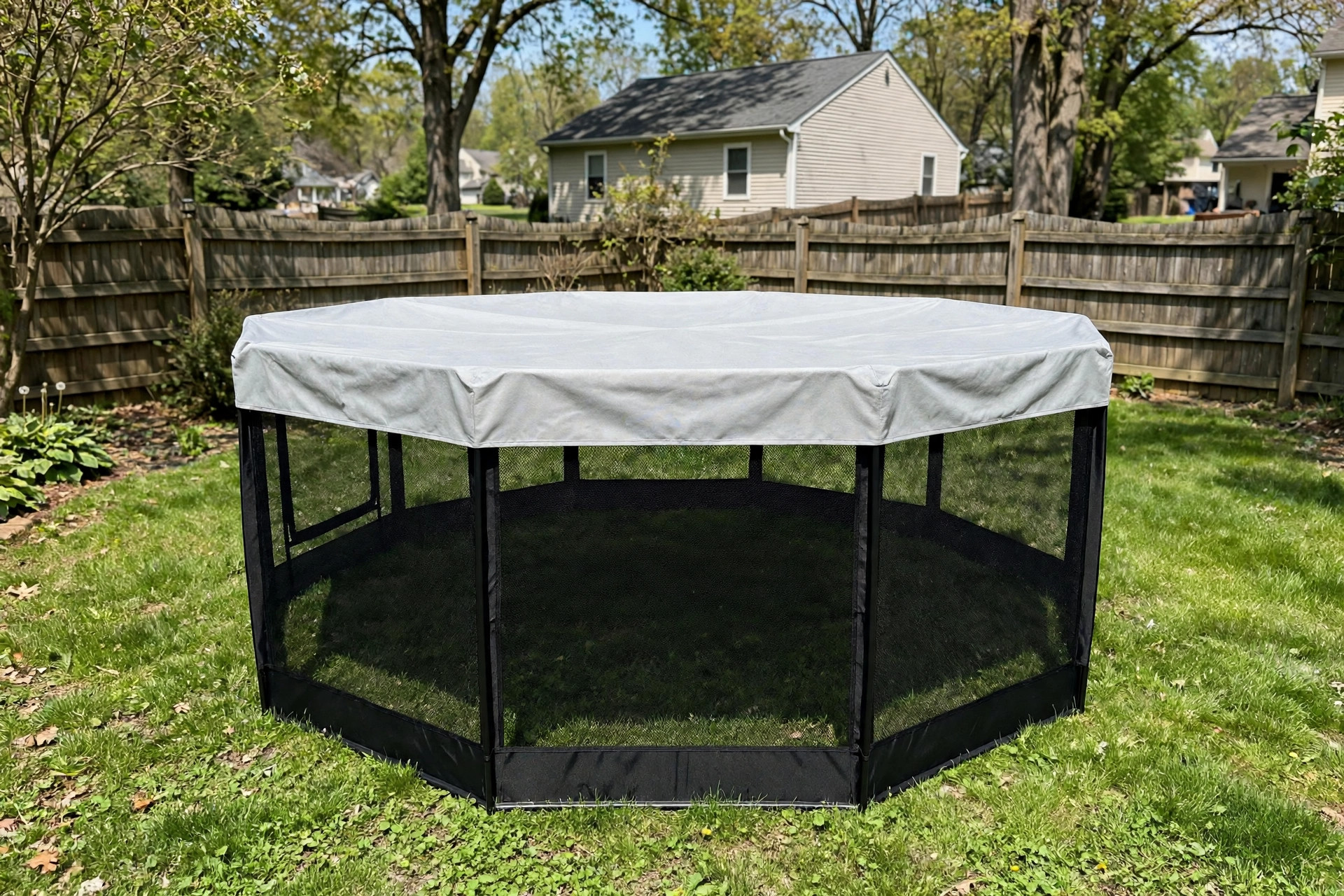

A pet playpen with cover for outdoor shade is one of the most useful tools a pet owner can keep in the yard. It gives your dog, cat, or rabbit a safe space to sit outside while you work in the garden or drink coffee on the patio. The playpen keeps the animal in one place. The cover blocks the sun. Together they answer a simple question: how can a pet enjoy the fresh air without heat or danger?
A pet left in a sunny corner will pant within minutes. A small dog tied to a tree can tangle its lead. A shaded playpen solves both problems at once. It is open, airy, and cool. The pet can see the yard and feel the breeze, but it cannot run into the street or eat something harmful.
This guide covers why shade is so important, how to pick the right size and fabric, the common types on the market, typical costs, cleaning and care, and safety rules. It also answers the questions buyers ask most often.
Why Shade Matters for Pets Outdoors
Animals feel heat faster than people think. Dogs and cats do not sweat the way humans do. They lose heat mainly through their paws and by panting. When the air is hot and the sun beats down, this system fails. A dog can develop heat stroke in less than fifteen minutes on a warm day. Small pets such as rabbits and guinea pigs are at even greater risk.
Shade changes the picture. A good cover can lower the temperature inside a playpen by ten degrees or more compared with open sun. That difference is often the line between a pleasant afternoon and a medical emergency. Shade also keeps the pet calm. Direct glare makes many animals restless. A shaded space feels like a den: cool, dim, and quiet. Animal welfare guidance from groups such as the ASPCA notes that cool, shaded rest areas are a basic need for outdoor pets, not a luxury.
There is one more benefit. A shaded playpen lets the owner relax too. You do not need to move the pen every few minutes to chase the shade line. You can set it down once and know the pet is covered all afternoon.
How to Choose the Right Playpen: Pet Playpen with Cover for Outdoor Shade
A good purchase starts with three questions. How big is your pet? Where will you use the pen? How long will the pet stay in it? The answers point you to the right size, cover fabric, and frame.
Size and Shape
Measure your pet first. The pen should be wide enough for the animal to stand, turn around, stretch out, and lie flat. A good rule is to add at least twelve inches to the pet’s full body length in every direction.
Height matters too. The walls should reach well above the pet’s head when it stands on its hind legs. Cats and athletic dogs can jump, so a taller pen with a full cover is safer.
Shape is a matter of taste and space. Octagonal pens are the most common and set up fast on lawns and patios. Square pens fit neatly into corners. Rectangular pens give long-bodied animals more room to walk.
Cover Material
The cover is the most important part. Look for fabric rated to block ultraviolet light, with a UPF rating of 30 or higher. Mesh covers are popular because they block the sun while letting air flow through. Solid canvas covers block more sun but can trap heat, so they work best when they sit high with open sides for airflow.
Water resistance is a bonus: a cover that sheds light rain means a sudden shower does not end the afternoon. Color matters too. Light colors reflect heat and stay cooler. A light gray, tan, or white cover keeps the space cooler than a dark one.
Frame and Build
The frame must hold the cover tight. A loose cover flaps in the wind and can sag onto the pet. Metal frames are stronger than plastic ones. Steel is heavier and more stable in wind. Aluminum is lighter and easier to carry.
Check how the pen folds. The best designs fold flat in under a minute with no tools. Look at the joints and hinges. They should feel solid, not wobbly. Mesh walls should be tight and even, with no loose threads a claw could catch.
Common Types of Playpens with Covers
Not all playpens work the same way. Knowing the types helps you skip models that do not fit your situation.
Mesh pop-up pens are the most popular. They unfold from a flat disc into an octagon in seconds. The walls are breathable mesh, and most come with a zip-on mesh top that gives full shade and keeps insects out. They are light, cheap, and easy to store. Their weakness is strength: a large, strong dog can push through the mesh. These pens suit small dogs, cats, and small animals best. Pet care guides such as The Spruce Pets often recommend pop-up pens for travel and short outdoor visits.
Metal exercise pens are heavier and tougher. They are made of steel panels that link together, with a separate fabric cover that drapes over the top. These pens can hold large dogs and stand up to wind and rough use. The downside is weight and setup time.
Wooden or wicker pens look nice on a patio. Most do not come with covers, so you must add a shade cloth or umbrella. They suit calm pets that will not chew the wood. They are a poor choice for puppies and rabbits, which chew everything.
Plastic panel pens sit in the middle. Panels of molded plastic snap together. They are light, easy to clean, and resist chewing better than wood. Many accept a fabric top. They work well for puppies and small animals. In strong sun, dark plastic can get hot, so pair these pens with a light-colored cover.
Tent-style pens look like small camping tents. They have a solid roof and mesh windows, giving the most complete shade of any type. They suit cats especially well, since cats like enclosed, den-like spaces. Some owners place a cat scratching lounge for large cats sturdy inside to keep the cat busy.
For rabbits and guinea pigs, any type works as long as the walls are tall enough and the floor is protected. A solid floor or a tarp under the pen keeps claws and teeth off the grass and stops the animal from digging out.
Cost and Price
Prices vary widely. Small mesh pop-up pens start around twenty-five dollars and suit kittens, small puppies, and guinea pigs. Mid-range pens run from sixty to one hundred fifty dollars. Large, heavy-duty pens with premium covers can cost two hundred dollars or more.
Size is the biggest price driver. Fabric quality comes next: a UPF-rated, water-repellent cover costs more to make than a plain polyester sheet, and it lasts longer. Well-known pet supply retailers such as Chewy and Petco carry pens across the full price range, which makes it easy to compare.
Think about cost per use. A sixty-dollar pen used three times a week for two summers costs less than a dollar per use. A twenty-five-dollar pen that tears in a month and must be replaced costs more in the end. Read buyer reviews and look for comments about the cover and the zippers, since those parts fail first.
Watch for extra costs. Some pens need ground stakes, which may be sold separately. A waterproof ground tarp is a useful add-on for damp grass. Some brands sell replacement covers for far less than a whole new pen.
Care and Upkeep
A playpen lasts years with basic care. The cover needs the most attention. Brush off dirt and leaves after each use. Once a month, wash the cover with mild soap and cool water. Never use bleach or strong cleaners, which break down UV coatings. Let the cover air dry fully before you fold it, or mildew will grow.
Check the mesh walls regularly for small tears and loose threads. A small tear can be patched with a needle and thread or a fabric repair patch. Fix tears early, since pets will work at weak spots until the hole grows.
Metal frames need a wipe-down now and then and should dry before storage to prevent rust. Plastic panels can be hosed off and left to dry in the sun.
Store the pen dry and out of direct sun when not in use. Sunlight breaks down fabric over time, even UV-rated fabric. A garage, shed, or closet is ideal. Veterinary advice sites such as PetMD remind owners that clean, dry equipment is part of basic pet hygiene.
Rotate the pen’s position on the lawn. Grass under a pen will yellow if the pen sits in one spot for weeks. Move it a few feet every few days to keep the lawn healthy.
Safety Tips
A playpen is safe only when it is used with care. Follow these rules every time.
Never leave a pet alone for long. A playpen is a rest spot, not a babysitter. Stay within sight and earshot. Pets can tip pens, chew through mesh, or dig under walls faster than owners expect. Breed clubs such as the AKC stress that even well-built enclosures need human supervision.
Provide water. Put a spill-proof water bowl inside the pen. Shade helps, but a pet in warm air still needs to drink.
Watch the temperature. If you feel hot in the shade, your pet feels hotter. On very hot days, keep outdoor time short or move the pet inside. Flat-faced breeds such as bulldogs and pugs overheat faster than other dogs. Rabbits and guinea pigs should come inside when the air passes eighty-five degrees.
Secure the pen. Stake it down or weigh the corners on windy days. A gust can lift a light pop-up pen with a small animal inside. Close all zippers and doors fully, and clip the cover on all sides so it cannot blow loose.
Check the ground. Clear sharp sticks, stones, and ant hills from under the pen. Make sure no toxic plants grow within reach. Common yard plants such as lilies, azaleas, and sago palms are poisonous to pets.
Keep insects in mind. Mesh covers keep out most flies and mosquitoes, which is one more reason to choose a full cover rather than an open top. In areas with ticks, check the pet after outdoor time.
Introduce the pen slowly. Let the pet explore the pen indoors first, with treats and praise. A pet that likes the pen will rest in it calmly. One or two short indoor sessions usually do the job.
Frequently Asked Questions
Can a pet playpen with cover for outdoor shade replace a crate? It can for daytime yard use, but not for everything. A crate is rigid and escape-proof, which makes it safer for travel. A playpen is lighter and more open, which makes it better for fresh air. Many owners keep both. For indoor mess control, some owners place a cat litter mat to trap litter tracking near the pen area.
What size playpen does my dog need? Measure the dog from nose to tail, then add at least twelve inches in each direction. A small dog under fifteen pounds is usually comfortable in a thirty-six-inch pen. A medium dog needs forty-two to forty-eight inches. Large dogs need fifty-four inches or more, and a metal exercise pen is usually the better pick for them.
Is a mesh cover enough shade, or do I need a solid cover? A good mesh cover blocks most of the sun while letting air move, and it is enough for most pets in mild to warm weather. In very hot climates, a solid cover over part of the pen gives deeper shade.
Can cats use an outdoor playpen? Yes, and many cats love it. Choose a pen with a full zip-on top, since cats climb. A tent-style pen often works best because it feels enclosed. Add a familiar blanket and a toy to help the cat settle. Some owners also use a best cat calming diffuser for multi cat homes indoors to keep overall stress low.
How do I stop the pen from blowing away? Use the ground stakes that come with the pen, or buy a set if yours did not include them. On patios where stakes will not work, set heavy plant pots against the outside corners. Take the cover off in strong wind if the pen starts to lift.
Can I leave the pen outside all the time? You can, but it will wear out faster. Sun, rain, and dew break down fabric and rust metal over time. If it must live outside, choose a metal frame with a heavy-duty cover and check it often for wear. Home and yard retailers such as The Home Depot sell replacement shade cloth that can extend the life of an aging cover.
A Short Final Word
A pet playpen with cover for outdoor shade is a small purchase that pays off every sunny day. It keeps your pet cool, calm, and safe while you enjoy the yard. Choose the right size, pick a cover with real UV protection, and set it up whenever the pet comes outside with you. Pet stores such as PetSmart and online shops carry options for every budget.
References
American Kennel Club. (n.d.). Dog care and training resources. https://www.akc.org ASPCA. (n.d.). Pet care and animal welfare resources. https://www.aspca.org Chewy. (n.d.). Pet supplies. https://www.chewy.com Petco. (n.d.). Pet supplies and services. https://www.petco.com PetMD. (n.d.). Pet health information. https://www.petmd.com PetSmart. (n.d.). Pet supplies and services. https://www.petsmart.com The Home Depot. (n.d.). Home improvement products. https://www.homedepot.com The Spruce Pets. (n.d.). Pet care guides and product reviews. https://www.thesprucepets.com
Was this guide helpful?

About Robert Taylor
The My Garden US editorial team writes practical, in-depth home and garden guides for American homeowners — tested advice, no fluff.
You May Also Like
A Practical Guide to a Heated Dog Bed for Garage and Outdoor Use
August 4, 2026 0 views
Dog Swimming Pool for Backyard Summer Fun
September 9, 2026 0 views
Dog Water Dispenser for Crate Attachment Travel: A Complete Guide
May 10, 2026 0 views