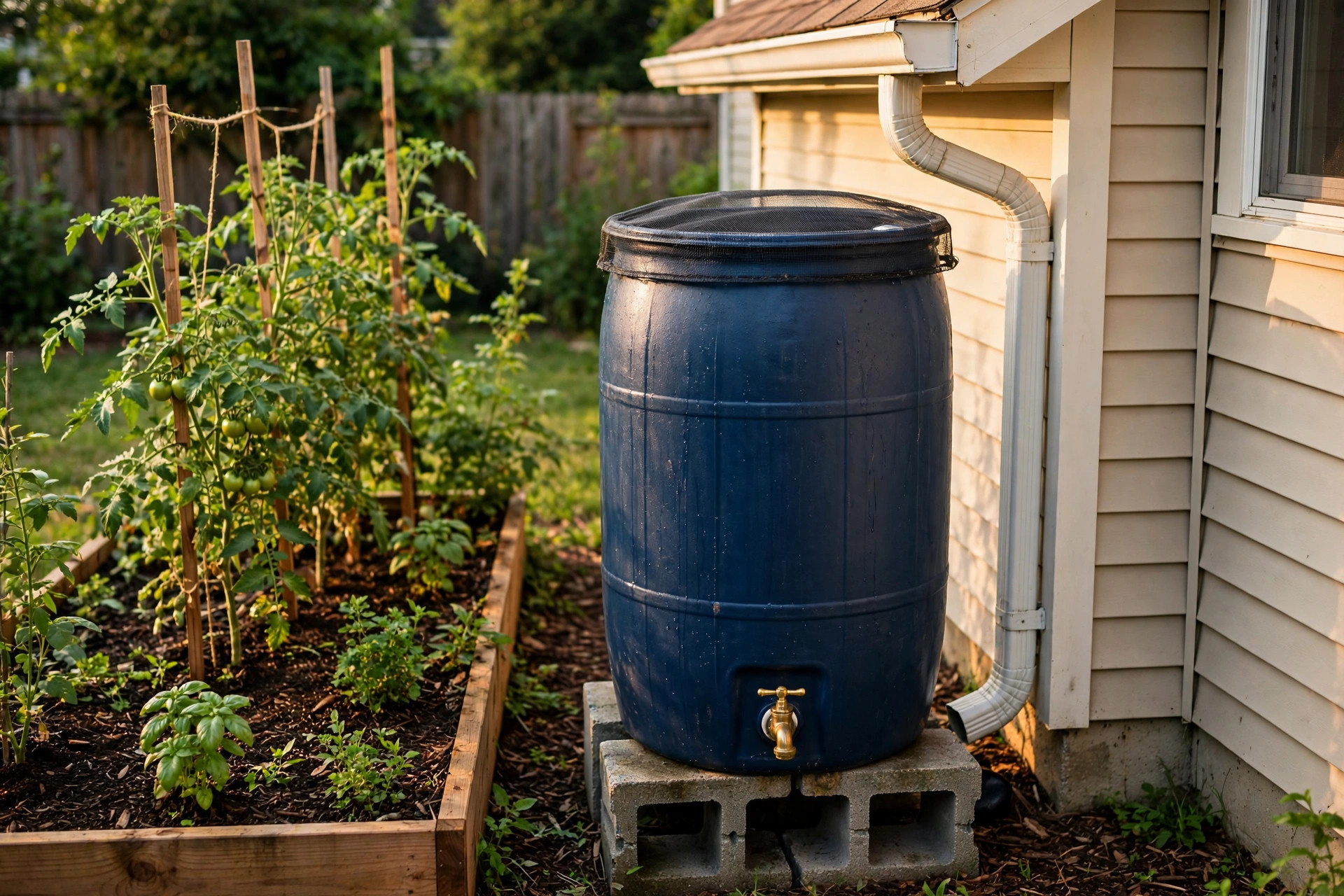
The best rain barrel for garden watering is a simple tool with a long history. A barrel sits under a downspout and catches rain as it falls from the roof. The stored water can then feed beds, borders, and containers all through the growing season. No pump is needed. Gravity does the work.
Rain barrels grew popular in American gardens in the late twentieth century. Drought years made people look for ways to cut water bills. Garden clubs and extension offices promoted barrels as a clean, cheap answer. Today they remain one of the easiest water-saving projects a homeowner can take on. This guide walks through why a barrel matters, how to choose one, what types exist, what they cost, and how to keep one working well.
Why a Rain Barrel Matters for Your Garden
Rain is better for plants than treated tap water. Municipal water often carries chlorine and fluoride. These are safe for people, but they can stress soil life over time. Rain is soft, slightly acidic, and free of salts. Gardeners who switch often notice lusher growth and richer soil.
A barrel also cuts the water bill. A single one-inch storm on a 1,000-square-foot roof can yield more than 600 gallons of runoff. That is enough to water a vegetable bed for weeks. The Environmental Protection Agency notes that outdoor watering makes up a large share of home water use in summer. Capturing rain trims that share.
There is a community benefit as well. Roof runoff rushes into storm drains and streams during heavy rain. It carries oil, fertilizer, and sediment with it. A barrel slows that flow. It holds back water and lets it soak into the ground through the garden instead. Many cities even offer rebates for barrel owners.
What to Look for When You Choose: Best Rain Barrel for Garden Watering
Not every barrel suits every home. A few points decide whether a barrel will serve you well or become a headache.
Size
Barrels come in sizes from 40 to over 100 gallons. A 55-gallon barrel is the common choice. It fits a standard downspout and holds a full storm’s worth for an average roof section. Larger homes or heavy watering needs call for two barrels linked together. One big barrel is simpler than two small ones, but two allow backup when one runs dry.
Material
Most barrels are made from food-grade plastic. These were once used to ship juice or syrup. They are sturdy, light, and safe for plants. Wooden barrels look handsome but rot faster and cost more. Metal drums can rust and may carry old paint or chemicals. For garden use, food-grade plastic is the sound choice.
Lid and Screen
A tight lid keeps children, pets, and debris out. A fine mesh screen on the inlet keeps out leaves and keeps mosquitoes from breeding. Some cheap barrels skip the screen. Do not buy one without it, or add your own.
Spigot and Overflow
The spigot should sit a few inches above the bottom. That leaves room for sediment to settle. Brass spigots last longer than plastic ones. An overflow port near the top is vital. It sends extra water away from the foundation during big storms.
Stand
A raised stand adds water pressure. Gravity gives about half a pound of pressure per foot of height. A barrel on a two-foot stand fills a watering can in reasonable time. Many buyers build a stand from cinder blocks. That works fine and costs little.
Types and Options
Rain barrels fall into a few clear groups. Each suits a different garden and budget.
Classic Drum Barrels
These are the plain workhorses. A blue or black 55-gallon drum with a lid, screen, and spigot. They are cheap and easy to find. They do the job with no fuss. Their only fault is looks. Paint or a wooden sleeve can dress them up.
Decorative Barrels
Some makers sell barrels shaped like urns, clay pots, or wooden casks. These cost two to three times more than plain drums. They blend into landscaping and please picky neighbors. The parts inside are much the same. If curb appeal matters, the extra cost may be worth it.
Linked Barrel Systems
Two or more barrels join with a hose kit. Rain fills the first, then flows into the next. This setup suits big gardens and dry climates. A linked pair of 55-gallon drums stores 110 gallons. That can carry a kitchen garden through a dry week. Homeowners with large raised beds often move to this setup after one season with a single barrel. If you plan to feed a drip irrigation kit for raised beds, extra volume helps.
Slim and Flat-Back Barrels
Some barrels have a flat side that hugs the house wall. Others are narrow to fit tight side yards. These save space but cost more per gallon. They suit small lots where a round drum would block a walkway.
Cost and Price
A plain 55-gallon rain barrel costs between 60 and 120 dollars at a garden center. Decorative models run 130 to 250 dollars. A linking kit for two barrels costs about 25 to 40 dollars. Cinder blocks for a stand add another 10 to 15 dollars.
Delivery matters for heavy items. A full 55-gallon barrel weighs over 450 pounds, but the empty shell is light. Most stores sell them empty. Online sellers ship them empty too. Check local hardware stores first. Many stock barrels in spring. The Home Depot and Lowe’s carry several models, and garden suppliers like Gardener’s Supply Company offer their own lines.
Rebates can cut the price in half. Many cities and water districts run rain barrel programs. Some give away barrels. Others offer a 25- or 50-dollar rebate. Call your local water utility before you buy. A five-minute call can save real money.
Compare the cost against the savings. If summer water bills run 40 dollars a month, a barrel can pay for itself in one season. Over five years, the savings are clear.
Setting Up Your Barrel
Setup takes an afternoon and a few hand tools. Pick a spot near the garden and close to a downspout. The ground must be flat and firm. A full barrel is heavy. It can sink into soft soil and tip.
Set the stand first. Cinder blocks in a square stack work well. Make sure the stand is level. Then lift the empty barrel onto it. Cut the downspout so it ends just above the barrel lid. Fit an elbow to guide water into the screen. Many gardeners add a diverter. This is a small fitting that sends the first dirty flush of water away and then fills the barrel. It keeps roof grit out of the stored water.
Connect the overflow hose. Run it at least four feet from the foundation. Point it toward a garden bed or a rain garden. This turns extra rain into extra watering.
Once the barrel is in place, wait for rain. After a good storm, open the spigot and fill a watering can. Test the flow. If it is slow, raise the stand a few inches.
Care and Upkeep
A rain barrel needs little care, but it needs some. In spring, rinse the inside with a garden hose. Scoop out any settled leaves. Check the screen for tears. A torn screen lets in mosquitoes.
During the growing season, watch the water level. A barrel empties faster than most owners expect. If you plan to run a soaker hose from the spigot, keep the barrel topped up. Soaker hoses need steady water to seep well.
Clean the spigot once a year. Sediment can clog it. A small brush clears the opening. If the barrel smells sour, drain it and scrub the walls with a mild baking soda wash. Rinse well before refilling.
In fall, drain the barrel before the first hard freeze. Water expands as it freezes. A frozen barrel can crack. Store the barrel upside down for winter, or keep it in a shed. Reconnect it in spring when frost danger passes.
Every few years, check the plastic for sun damage. Ultraviolet light makes plastic brittle. A barrel in full sun lasts fewer years than one in shade. A coat of outdoor paint adds protection and looks nicer too.
Safety
Safety is simple but worth noting. Always keep the lid on tight. A full barrel is a drowning risk for small children and pets. The screen should block mosquitoes. If you see larvae in the water, add a mosquito dunk. These are small tablets that kill larvae but stay safe for plants and pets.
Never drink water from a rain barrel. Roof runoff picks up bird droppings, shingle grit, and air pollution. It is fine for plants but not for people. Wash hands after handling barrel water, especially before eating.
Some states limit rain collection. Most states now allow it. A few still set rules on barrel size or number. Check your state rules with a quick search before you install. Garden sites like The Spruce and Bob Vila keep current lists of state rain barrel laws.
Keep the barrel stable. A tipped barrel can injure a child or crush plants. Bolt the stand to a wall if wind is a concern in your area.
How to Use Rain Barrel Water in the Garden
The simplest use is filling a watering can at the spigot. This suits small beds and containers. For larger beds, attach a garden hose to the spigot. Gravity will push water a short distance. A good garden hose for large yards works fine if the barrel stands high enough.
Some gardeners run soaker hoses from the barrel. This waters roots slowly with little waste. It works best with the barrel on a tall stand. Two feet of height gives enough pressure for a 25-foot soaker line. Longer lines may need a small pump.
Do not expect barrel pressure to match a faucet. Gravity flow is gentle. That is fine for most garden tasks. Deep watering of trees and beds goes well with a slow trickle left for an hour.
Water early in the morning or late in the evening. This cuts evaporation. It also helps leaves dry before night, which keeps disease down. Rain barrel water is cool. Let it sit in the can for a few minutes on hot days so it warms a little before it hits tender seedlings.
Frequently Asked Questions
How long does a rain barrel last?
A good plastic barrel lasts 10 to 20 years. Sun exposure is the main enemy. Barrels in shade last longest. Brass spigots and tight lids also extend life. Wooden barrels last five to eight years before they need resealing or repair.
Can I connect more than one barrel?
Yes. Linking kits join two or more barrels so they fill and drain as one. Place them side by side on level stands. Connect them near the top with a short hose. When the first fills, water flows into the second. This is the cheapest way to double storage.
Will a rain barrel freeze and crack?
It can if left full in winter. Always drain the barrel before hard freezes arrive. In mild climates, an insulated barrel may survive winter with water inside. In most of the country, draining is the safe rule. Family Handyman offers clear winter prep steps for outdoor water gear.
Does rain barrel water need treatment?
Not for garden use. Plants do well with untreated rain. If the water smells bad, drain and scrub the barrel. Some gardeners add a splash of vinegar to keep algae down. Avoid bleach. It harms soil life.
How much pressure does a rain barrel give?
About half a pound per foot of height above the spigot. A barrel on a two-foot stand gives roughly one pound of pressure. That is enough to fill cans and run short hoses. It is not enough for sprinklers. For strong flow, raise the stand or add a small pump.
Is a rain barrel worth it if I have a small garden?
Yes, for many owners. Even a small garden uses hundreds of gallons a summer. A barrel cuts the bill and gives plants better water. If space is tight, a slim flat-back barrel fits against the house. Garden tool makers like Fiskars and Corona Tools also note that simple water projects pair well with basic hand-tool care routines, and garden seed suppliers such as Burpee remind growers that steady watering is the key to strong seedlings.
A Short Final Word
The best rain barrel for garden watering is not the most expensive one. It is the one that fits your roof, your garden, and your budget. A plain drum on a block stand waters just as well as a fancy urn. What matters is a tight lid, a good screen, a solid spigot, and a safe overflow. Set it up in an afternoon, keep it clean, drain it in fall, and it will serve your garden for years. Consumer Reports testing guides can help compare models before you buy.
References
Bob Vila. (n.d.). Home improvement advice. https://www.bobvila.com Burpee. (n.d.). Seeds, plants, and gardening supplies. https://www.burpee.com Consumer Reports. (n.d.). Product reviews and ratings. https://www.consumerreports.org Corona Tools. (n.d.). Garden and landscape tools. https://www.corona-tools.com Family Handyman. (n.d.). DIY home repair and maintenance. https://www.familyhandyman.com Fiskars. (n.d.). Garden and cutting tools. https://www.fiskars.com Gardener’s Supply Company. (n.d.). Gardening tools and supplies. https://www.gardeners.com Lowe’s. (n.d.). Home improvement products. https://www.lowes.com The Home Depot. (n.d.). Home improvement products. https://www.homedepot.com The Spruce. (n.d.). Home and garden advice. https://www.thespruce.com U.S. Environmental Protection Agency. (n.d.). Protecting human health and the environment. https://www.epa.gov
Was this guide helpful?

About Sarah Mitchell
The My Garden US editorial team writes practical, in-depth home and garden guides for American homeowners — tested advice, no fluff.