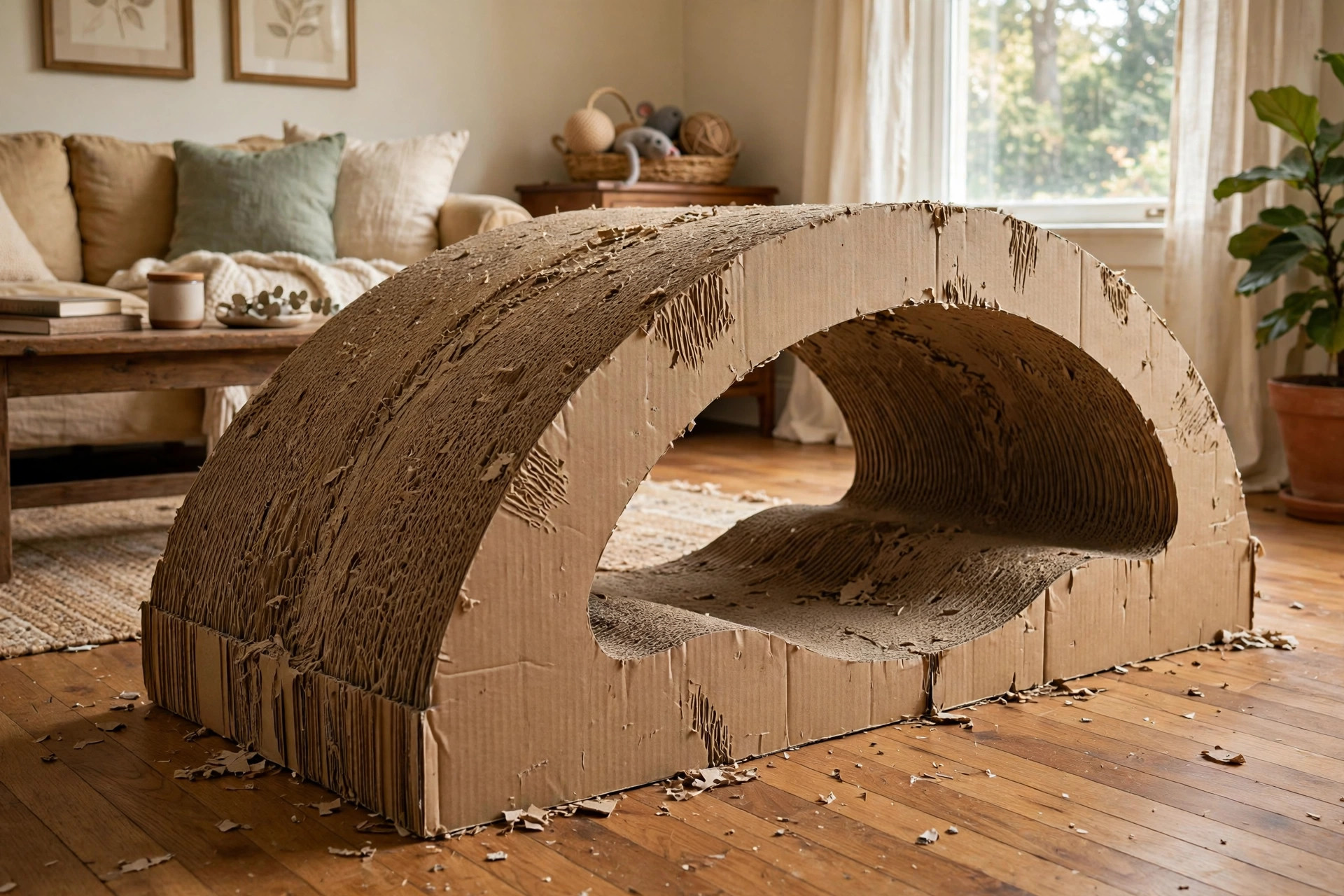

Big cats need more than small cats. A heavy cat puts more weight on a scratching pad. A tall cat needs more room to stretch. A cat scratching lounge for large cats sturdy enough to take this strain is worth every cent. It gives the animal one place to scratch, rest, and play. It keeps claws off the sofa, the rug, and the drapes.
A scratching lounge is simple. It is a low, curved bed with a scratching surface on top. The cat lies in the curve and scratches the sides. The shape feels safe. The sides hold the animal like a cradle. Most models are made of thick corrugated cardboard, wood, or sisal. When the lounge is built for large cats, the frame is thicker and the base is wider. The animal can lean on it without tipping it over.
Many owners of Maine Coons, Ragdolls, Norwegian Forest Cats, and large mixed breeds learn this lesson the hard way. A standard lounge folds or slides under a big cat. The cat stops using it. The owner has wasted money and the furniture suffers again. The answer is to buy a cat scratching lounge for large cats sturdy by design, not a small one that claims to fit all cats.
Why Large Cats Need a Sturdy Scratching Lounge
Scratching is not a bad habit. It is a natural act. Cats scratch to shed old claw sheaths, to mark their territory, and to stretch their backs and shoulders. A large cat scratches with more force. Its claws are longer and its body is heavier. A flimsy lounge breaks down in weeks. A sturdy one lasts for months or even years.
A lounge does two jobs at once. First, it is a scratching post laid low. The cat can scratch while standing or lying down. Second, it is a bed. Many big cats prefer to sleep in a curved cradle rather than on a flat cushion. The high sides give them something to lean against. This is why a cat scratching lounge for large cats sturdy construction matters so much. The lounge must hold the cat’s full weight, even when the cat flops down hard or launches off it in play.
There is another benefit. Big cats that scratch the right surface are calmer. Destructive scratching often comes from boredom or stress. When the cat has a large, satisfying surface of its own, the arm of the sofa loses its appeal. The ASPCA notes that cats need acceptable scratching outlets in the home, and a lounge made for their size answers that need well.
What to Look for When You Choose One: Cat Scratching Lounge for Large Cats Sturdy
Shopping for a lounge can be confusing. Many boxes carry the words large and sturdy but mean different things. The sections below explain what to check before you spend your money.
Size and Weight Capacity
Measure your cat before you buy. A large cat may be twenty inches long from nose to tail base and weigh fifteen to twenty five pounds. The lounge should be at least twenty four inches long and eighteen inches wide. The sleeping curve should be deep enough that the cat does not spill over the sides.
Check the weight rating on the box or the product page. Many lounges rate themselves for cats up to fifteen pounds. For a big cat you want a rating of twenty pounds or more. If no rating is printed, look at the thickness of the frame. A cat scratching lounge for large cats sturdy enough to trust usually has a frame at least two inches thick on a cardboard model, or solid wood panels on a wooden model.
Materials That Last
Cardboard is the most common material. Thick, dense corrugated cardboard resists claws and can be scratched for months before it needs replacement. Look for layers that are pressed tight, with no loose flaps. Some owners prefer wood or engineered board frames with replaceable scratching inserts. These cost more at first but last longer.
Sisal is another good choice. A lounge wrapped in sisal rope gives the cat a rough texture to dig into. Sisal holds up better than carpet under heavy claws. Carpet can snag and unravel, and long loops can catch a claw. If you choose a carpeted model, pick one with a tight, low pile.
Shape and Design
The classic lounge is a shallow arc, like a banana cut in half. Some models are round bowls with a scratching rim. Others are long chaise shapes. For a large cat, the arc and the chaise shapes work best because they give the animal room to stretch full length.
A wide, flat base keeps the lounge from tipping. Some lounges have rubber feet or a weighted bottom. These small details matter when a twenty pound cat leaps onto the edge. Veterinary sites like PetMD remind owners that falls from unstable furniture can injure cats, so a stable base is a safety feature, not a luxury.
Types of Cat Scratching Lounges
Once you know your cat’s size, you can pick a style. The main types are described below.
Curved Cardboard Lounges
These are the classic models. They are made from thick corrugated cardboard pressed into a curved shape. They are light, cheap, and cats love the texture. For a large cat, buy the extra large size from a maker that states a high weight limit. Some brands sell a cat tree for large cats alongside their lounges, and the same makers often size their lounges generously too.
The drawback is wear. A heavy cat will chew through cardboard faster than a small one. The good news is that replacement pads are cheap. Many owners keep two pads and swap them out.
Wooden Scratching Lounges
Wooden lounges have a solid frame, often plywood or pine, with a scratching insert on top. They look better in a living room than plain cardboard. They are heavier, so they do not slide across the floor. They cost more, usually two to four times the price of a cardboard model.
For a large cat this is often the best choice. The frame does not flex. The cat can scratch hard without rocking the lounge. Some wooden models come with replaceable sisal or cardboard inserts, so you keep the frame for years and only replace the wearing part. Guides at The Spruce Pets compare several wooden models and note how the solid frame suits heavy cats.
Carpeted and Sisal Lounges
These models are upholstered with carpet or wrapped in sisal rope over a board or foam base. They look like small pieces of furniture. They blend in with home decor. The risk is the carpet. A big cat’s claws can pull loops loose in a few weeks. Choose tight, low pile carpet or, better, sisal wrap.
Some of these lounges double as small beds with a padded center. A large cat may be too big for the padded center, so check the sleeping area measurements. A lounge that is only a scratching surface with no room to lie down is fine, but then it is not really a lounge. If you want a combined rest and scratch station, compare it with a tall cat scratching post for large cats to see which fits your space better.
Cost and Price Guide
Prices vary by material and size. A basic extra large cardboard lounge costs between fifteen and thirty dollars. These last a few months under a heavy cat. A wooden lounge with a replaceable insert costs between forty and ninety dollars. A large sisal wrapped model costs between fifty and one hundred twenty dollars.
Think in terms of cost per month. A twenty dollar cardboard lounge that lasts three months costs about seven dollars a month. A seventy dollar wooden lounge that lasts two years costs about three dollars a month. The sturdy option is often the cheaper one over time. This is another reason a cat scratching lounge for large cats sturdy build quality pays for itself.
Watch for sales at large pet retailers. Stores such as Petco and PetSmart run regular sales on cat furniture. Online sellers like Chewy and Walmart often list the same models at lower prices than local shops. Buying two cardboard refills at once can also cut the unit price.
Shipping matters for large models. An extra large lounge is a big box. Check the shipping cost before you order. Some retailers, including Tractor Supply and The Home Depot, let you order online and pick up in the store, which saves the shipping fee entirely.
Care and Upkeep
A lounge needs little care, but a few habits will make it last longer.
Vacuum the lounge once a week. Cardboard pads shed small bits as the cat scratches. A quick pass with a vacuum keeps the mess under control. For wooden frames, wipe the frame with a damp cloth now and then. Keep the lounge dry. Cardboard soaked with water turns soft and falls apart.
Sprinkle a little catnip on the scratching surface to draw the cat in at first. Many lounges ship with a small packet. Do not use too much. A light dusting once a week is enough. If the cat starts scratching the sofa instead, move the lounge next to the sofa for a few days. Cats often scratch right after waking, so place the lounge near the cat’s favorite sleeping spot.
Replace the scratching pad when it is worn flat. A pad with no texture left does not satisfy the cat. On cardboard models, flip the pad over if the design allows. You get a second life out of the same pad. On wooden models, swap in a fresh insert. Keep one spare on hand so the cat never goes a day without its scratching spot.
Check the frame every month. Tighten any screws on wooden models. Look for cracked boards or bent cardboard edges. A large cat can loosen hardware over time. A five minute check keeps the lounge safe.
Safety Tips for Big Cats
Safety starts with stability. Place the lounge on a flat surface, not on a thick rug that lets it rock. Push it against a wall if the cat tends to launch off it. Keep it away from stairs and high shelves where a tip could mean a fall.
Avoid lounges with small glued on toys, bells, or feathers if your cat chews things. A large cat can bite these off and swallow them. Choose a plain design. The scratching surface itself is the toy.
Check for exposed staples or sharp edges, especially on cheap cardboard models. Run your hand over the whole lounge before the cat uses it. If you feel a staple, pull it out with pliers. On wooden models, sand down any rough spots.
If the cat is very old or has joint pain, choose a low lounge with a gentle curve. A high sided bowl can be hard for an arthritic cat to climb into. A low chaise lets the cat step in easily. Owners who also use a cat tree for large cats sturdy and tall should place the lounge at the base of the tree so the cat can rest between climbs.
Keep the lounge clean of string, rubber bands, and small objects that the cat might bat under it and chew. This is simple housekeeping, but it prevents the most common accidents.
Frequently Asked Questions
How long does a cat scratching lounge for large cats sturdy models usually last?
A thick cardboard model lasts three to six months under a large cat. A wooden or solid frame model lasts one to three years, with insert replacements as needed. The cat’s weight and how hard it scratches decide the exact life.
Will my large cat actually use a lounge, or will it keep scratching the sofa?
Most cats switch to the lounge if it is placed well and introduced with catnip. Put it where the cat already scratches. Praise the cat when it uses the lounge. Never punish the cat for scratching. Punishment makes the cat anxious and the scratching worse.
What is the best material for a large cat’s scratching lounge?
Dense corrugated cardboard and sisal are the two best wearing surfaces. Wood frames give the best stability. Many owners buy a wooden frame with a replaceable cardboard or sisal insert, which combines long life with a replaceable wearing surface.
Can a scratching lounge hold a twenty five pound cat?
Only if it is rated for that weight. Look for a stated weight limit of twenty pounds or more, a wide base, and thick materials. If the maker gives no weight rating, assume the lounge is made for average size cats and keep looking.
Is a lounge better than a tall scratching post for a large cat?
They serve different needs. A lounge gives the cat a place to scratch while lying down and a bed in one piece. A tall post lets the cat stretch straight up, which big cats also need. Many owners of large cats buy both. An outdoor cat enclosure for safe garden roaming can also give an indoor cat more room to move and scratch in fresh air.
How do I stop the lounge from sliding on a hard floor?
Put a non slip mat or a small rug under it. Some lounges come with rubber feet. You can also buy stick on rubber pads at any hardware store. A lounge that stays put gets used more, because the cat trusts it.
A Final Word
A cat scratching lounge for large cats sturdy enough to hold a big, strong animal is one of the best buys a cat owner can make. It protects the furniture. It gives the cat a healthy outlet for a natural act. It doubles as a bed the cat will actually use. Buy for size and weight, not for looks alone. Check the weight rating. Pick dense materials. Keep the pad fresh. Your large cat will do the rest.
See American Kennel Club for more detail. See also Petco and PetSmart for further detail.
References
American Kennel Club. (n.d.). Dog care and training resources. https://www.akc.org ASPCA. (n.d.). Pet care and animal welfare resources. https://www.aspca.org Chewy. (n.d.). Pet supplies. https://www.chewy.com Petco. (n.d.). Pet supplies and services. https://www.petco.com PetMD. (n.d.). Pet health information. https://www.petmd.com PetSmart. (n.d.). Pet supplies and services. https://www.petsmart.com The Home Depot. (n.d.). Home improvement products. https://www.homedepot.com The Spruce Pets. (n.d.). Pet care guides and product reviews. https://www.thesprucepets.com
Was this guide helpful?

About Emily Rodriguez
The My Garden US editorial team writes practical, in-depth home and garden guides for American homeowners — tested advice, no fluff.
You May Also Like

Dog Booties for Hot Pavement Summer Walks
July 27, 2026 0 views
The Best Cat Tree for Maine Coon Large Breed Cats
September 27, 2026 0 views
Cat Litter Mat to Trap Litter Tracking: A Complete Guide
August 25, 2026 0 views