
Introduction
A large yard gives a dog room to run, play, and live well. It also gives the owner more ground to clean. Waste left on the grass is not only ugly. It can spread germs, attract flies, and burn the lawn. That is why finding the best dog poop scooper for large yard cleanup matters. The right tool makes a daily chore quick, clean, and simple.
This guide explains what to look for, which types work best on big lawns, what prices to expect, and how to keep the tool in good shape. It also answers common questions and notes simple safety steps. With the right scooper and a steady routine, even a large yard can stay clean with only a few minutes of work each day.
Why a Good Scooper Matters for a Large Yard: Best Dog Poop Scooper for Large Yard Cleanup
A small yard takes only a few steps to clean. A large yard takes much more walking. On a big lawn, a short or weak tool means sore backs and long work. A well-built scooper changes that. It lets you pick up waste without bending over each time. It covers more ground with fewer trips.
Dog waste is more than a smell problem. The ASPCA notes that pet waste can carry germs that harm people and pets. Rain can wash those germs into the soil and water. On a large yard, waste spreads over a wide area, so the risk grows. Regular pickup keeps the whole family safer.
Clean ground also helps the lawn. Dog waste left for days can kill grass and leave brown spots. A clean yard is better for bare feet, for children at play, and for guests. It also makes keeping your yard pest-free and healthy much easier, since waste attracts flies and other pests. A good scooper turns all of this into a short daily habit.
What to Look For When You Choose
Length comes first. For a large yard, choose a handle at least three feet long. Long handles save your back during a long walk across the lawn. Some models extend even farther. They are ideal when the yard is wide and the spots are far apart.
Grip strength comes next. The jaw or claw must close firmly around the waste. Weak springs drop waste and make a mess. Look for solid metal or strong plastic parts. Stainless steel parts last longer and do not rust in rain.
Weight matters too. A heavy tool tires your arm on a big lawn. Light aluminum or sturdy plastic works well. The tool should feel balanced, not top-heavy. Test the spring action if you can. It should open and close with a smooth, firm motion.
Bag attachment is another key point. Some scoopers hold a bag at the jaw. You can wrap the waste right away. This cuts smell and keeps your hands clean. For a large yard, a bag clip saves many trips back to the trash can.
Ease of cleaning is easy to forget. The scooper itself gets dirty. Pick one with smooth surfaces that rinse off fast. Removable heads are a plus. The American Kennel Club offers guidance on safe dog waste handling for owners, which is worth a read before you set your routine.
Finally, think about storage. Long tools need a hook or a bin. A set that comes with its own bin keeps everything in one place. A bin with a lid holds the smell down between trash days.
Types of Poop Scoopers
Claw and Spade Sets
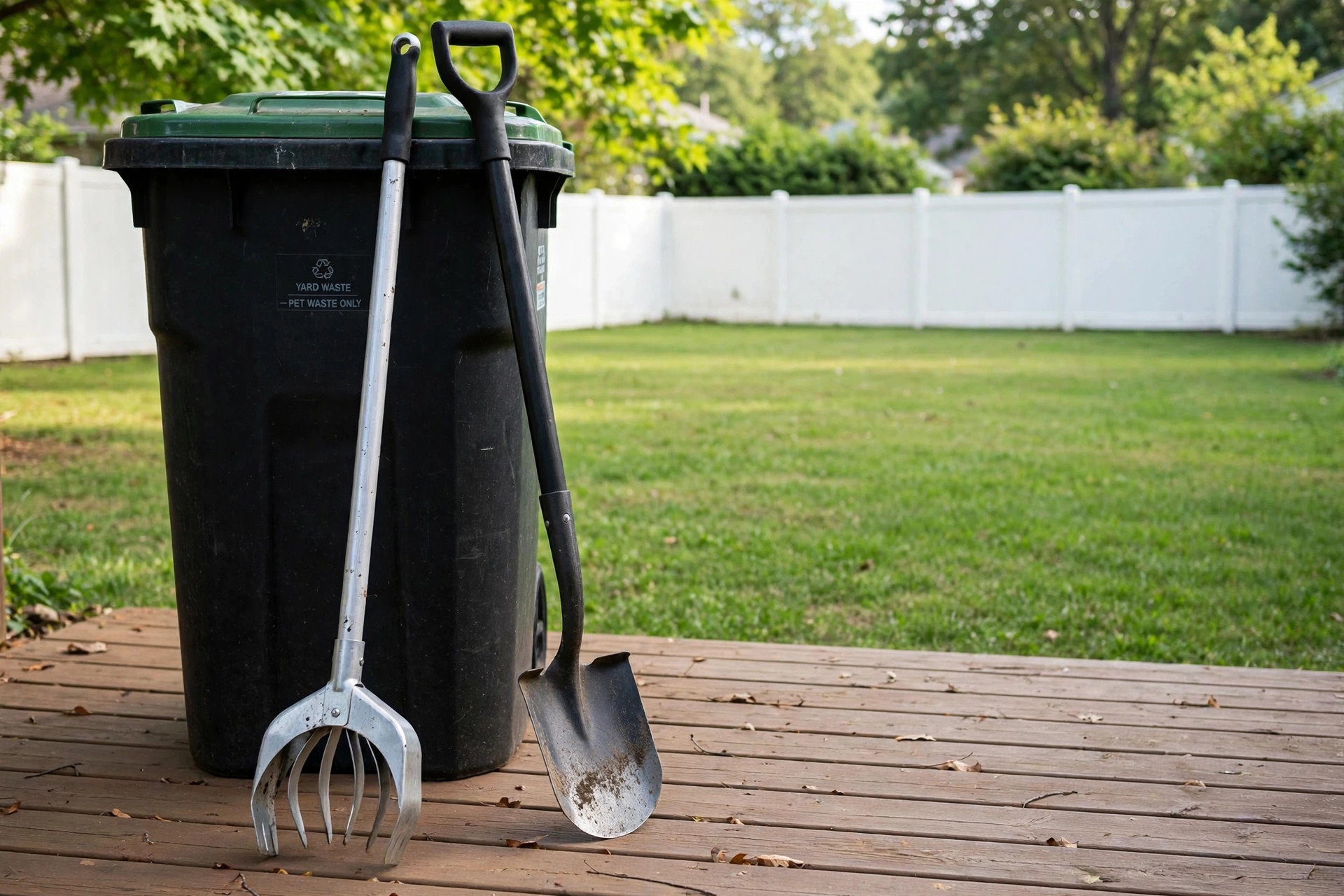
The claw and spade set is the most common choice. It has a claw scoop on a long handle and a small spade or rake. You hold the spade under the waste and close the claw over it. Sets often come with a bin for storage. They work well on grass and dirt. For a large yard, this style is a solid, low-cost pick. It is simple, and there are few parts to break.
Rake and Pan Sets
A rake and pan set uses a small rake to push waste into a flat pan. The pan often has teeth to grip the grass. These sets are light and quiet. They work well for small or firm waste. On a large lawn, they can feel slow because each load is small. Still, they cost little and are easy to clean. Many owners keep one as a backup tool.
Long-Handle Jaw Scoops
The long-handle jaw scoop looks like a grabber. You squeeze the handle, the jaw opens, and you release to close it. Many models work with one hand. This style is fast on big lawns. You can pick up waste from one spot after another without stopping. Jaw scoops made for large dogs have wide jaws that hold more. If you want the best dog poop scooper for large yard cleanup speed, this type is hard to beat.
Built-in Bag Scoops
Built-in bag scoops hold a small plastic bag over the jaw. When you close the jaw, the bag folds around the waste. You pull the bag free and tie it shut. Your hands never touch the mess. This style suits owners who want a clean, no-touch method. The trade-off is cost. You use one bag each time, so running costs add up. Still, for hygiene, it is a fine option.
Sets With Waste Bins
Some kits pair a scooper with a tall waste bin on wheels or with a long handle. You scoop and drop the waste into the bin as you walk. This cuts trips across a large yard. The bin often has a tight lid to lock in smell. These kits cost more, but they pay off in time saved. Stores like Home Depot, Lowe’s, Petco, and PetSmart carry several versions, so you can compare sizes in person.
Cost and Price
Prices run from low to high. A basic rake and pan set costs about five to fifteen dollars. A claw and spade set runs ten to twenty-five dollars. Long-handle jaw scoops range from fifteen to forty dollars, with wide-jaw models for large dogs at the top end. Built-in bag scoops cost twenty to fifty dollars, plus the ongoing cost of bags. Full kits with waste bins can run forty to one hundred dollars or more.
A higher price does not always mean a better tool. Reviews help. Sites like Chewy and The Spruce Pets list owner reviews and care guides that can point you to durable models. For a large yard, spend a bit more on a strong spring and a long handle. A cheap tool that breaks in a month costs more in the long run. Watch for deals in the spring, when many stores stock up on dog waste cleanup tools for big yards.
Bag costs add up over time. A large yard with two dogs can use ten or more bags a week. Buying bags in bulk boxes of 300 or more cuts the price per bag in half. Some owners use plain grocery bags to save money, but they tear more often. Purpose-made waste bags are thicker and tie shut with ease. Add the yearly bag cost to the tool price when you compare options. A simple jaw scoop with cheap bulk bags is often the lowest-cost setup for a big lawn.
Care and Upkeep
Rinse the scooper after each use or at the end of each day. A garden hose works fine. Warm water and mild dish soap cut the smell. Scrub the jaw and joints with a brush. Let the tool dry in the sun when you can. Sunlight helps kill germs and dry out moisture.
Check the spring and hinge once a month. Spray a little oil on moving parts if they squeak. Tighten any loose screws. Replace cracked plastic parts before they break in the yard. Store the scooper in a dry spot, such as a shed or garage. Hang it on a hook so the jaw does not sit in dirt.
If you use a waste bin, rinse it weekly. Sprinkle baking soda in the bottom to cut smell. Tie bags tight before you put them in the trash. Wash your hands well after each cleanup, even if you wore gloves. PetMD has plain-language guides on pet hygiene that are useful for new owners.
Keep a spare set of bags near the back door. When bags run out, people skip cleanup. A full stock keeps the habit alive. Some owners keep a second scooper by the side gate for quick jobs. Small steps like these keep a large yard clean all year.
Once a season, give the scooper a deep clean. Take apart the head if the maker allows it. Soak the parts in warm soapy water for ten minutes. Scrub the joints with an old toothbrush. Dry every part well before you put it back together. A yearly check of this kind can add years to the life of a good tool.
Safety
Wear gloves when you handle dog waste tools. Gloves keep germs off your skin. Wash your hands with soap after the work is done. Keep children away from the waste bin and the scooper. Store tools out of reach of small kids.
Watch where you step on a large yard. Wet grass can be slick. Wear shoes with good grip. In summer, clean up in the cooler hours to avoid heat stress. In winter, watch for ice under the snow.
Keep the scooper away from food areas. Do not use the same bucket or hose nozzle for the dog bowls. If your dog is sick, pick up waste right away and ask your vet about safe disposal. For long outings away from home, bring water for your dog on the trail and pack extra waste bags. Clean habits at home and on the road protect both your dog and your neighbors.
Frequently Asked Questions
How often should I clean a large yard?
Pick up waste at least once a day. Two or three large dogs may need two cleanups a day. Daily pickup keeps germs low and the lawn healthy. It also makes each job faster, since waste does not pile up.
Which type is best for a large yard?
A long-handle jaw scoop or a claw and spade set works best. Both let you work standing up and cover ground fast. A kit with a waste bin is ideal if the yard is very large. It cuts walking back and forth to the trash.
Do I need a special scooper for large dogs?
Yes, wider jaws help. A poop scooper for large dogs should have a jaw at least five inches wide. Strong springs matter too, since large waste is heavier. Check the size rating on the box before you buy.
Can dog waste go in the compost?
No. Home compost piles do not get hot enough to kill the germs in dog waste. Put waste in a tied bag in the trash. Some towns have pet waste compost programs. Check your local rules first.
How do I stop the yard from smelling?
Daily pickup is the best fix. Rinse the scooper and bin often. Baking soda in the bin helps. Some owners spray the lawn lightly with water after cleanup. Good drainage also helps, since standing water makes smells worse. Inside the house, a waterproof crate mat makes cleanup just as simple for indoor messes.
A Short Final Word
The best dog poop scooper for large yard cleanup is the one that fits your yard, your dog, and your hands. Look for a long handle, a firm grip, light weight, and easy cleaning. Set a daily routine and stick to it. A few minutes a day keeps a large yard clean, safe, and pleasant for the whole family. The Spruce offers more home and yard guides if you want to keep improving your outdoor space.
References
American Kennel Club. (n.d.). Dog care and training resources. https://www.akc.org ASPCA. (n.d.). Pet care and animal welfare resources. https://www.aspca.org Chewy. (n.d.). Pet supplies. https://www.chewy.com Lowe’s. (n.d.). Home improvement products. https://www.lowes.com Petco. (n.d.). Pet supplies and services. https://www.petco.com PetMD. (n.d.). Pet health information. https://www.petmd.com PetSmart. (n.d.). Pet supplies and services. https://www.petsmart.com The Home Depot. (n.d.). Home improvement products. https://www.homedepot.com The Spruce. (n.d.). Home and garden advice. https://www.thespruce.com The Spruce Pets. (n.d.). Pet care guides and product reviews. https://www.thesprucepets.com
Was this guide helpful?

About David Wilson
The My Garden US editorial team writes practical, in-depth home and garden guides for American homeowners — tested advice, no fluff.
You May Also Like
Pet Carrier for Cats Airline Approved Soft Sided: A Complete Travel Guide
January 10, 2026 0 views
Best Outdoor Dog Bed Waterproof for Patio: A Practical Guide
September 8, 2026 0 views
The Best Pet Fence Wireless for Stubborn Dogs: A Plain Guide
July 17, 2026 0 views