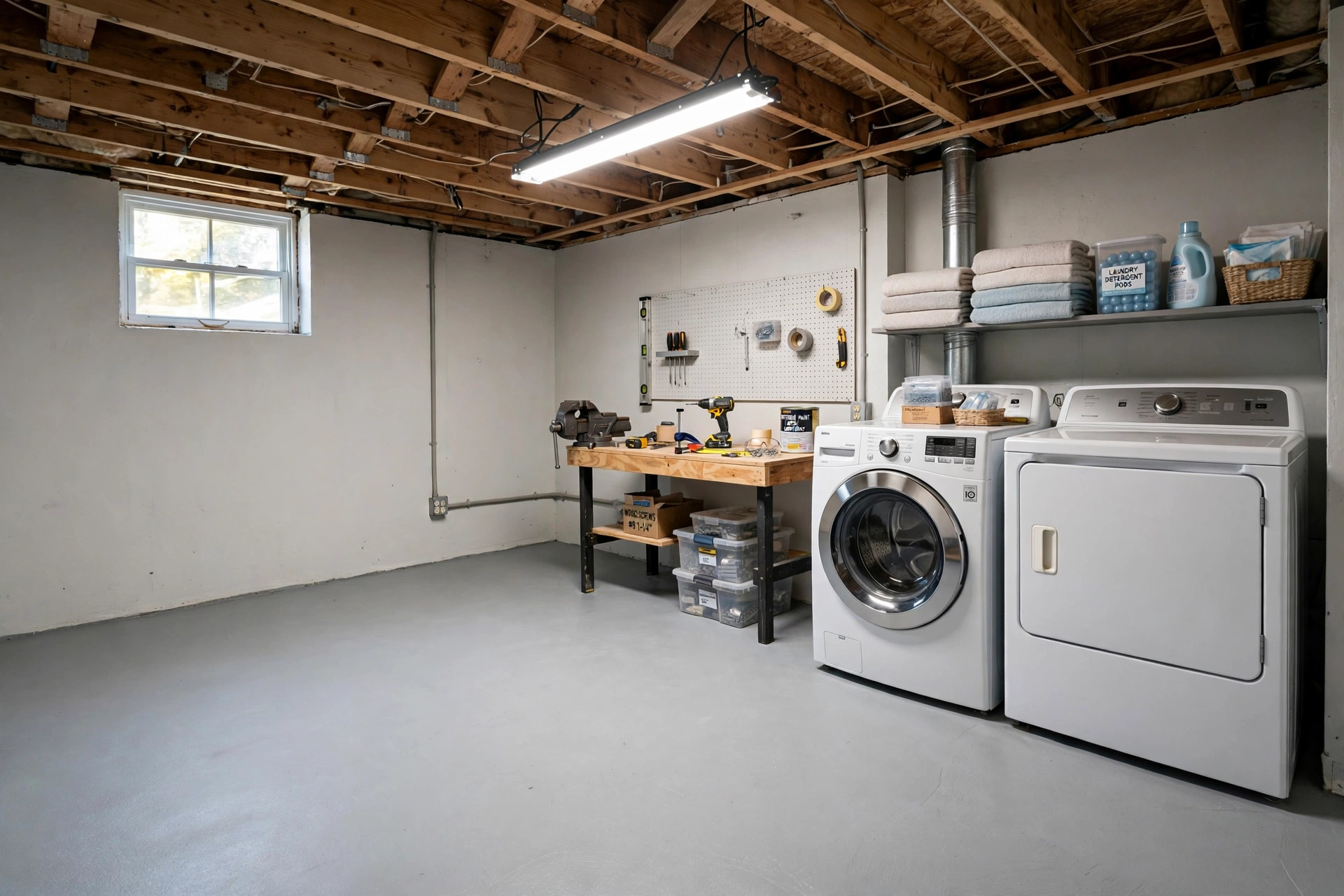

A bare basement floor is a gray slab that collects dust. It stains from spills. It feels cold and hard underfoot. It looks unfinished, and the whole room feels like a storage cave. Many home owners solve this with paint made for concrete. If you are reading concrete floor paint for basements reviews, you are already on the right track. The reviews hold real lessons from people who did the job and lived with the result. This guide gathers what those reviews say, adds plain facts, and walks you through the choice step by step.
Why Painted Basement Floors Matter
A basement is often the largest room a house has. It sits unused or half used because it feels rough and damp. Paint changes that. A good coat seals the concrete and keeps dust down. Dust from bare concrete drifts up the stairs and into the rest of the house. A painted floor cuts that drift to almost nothing.
Paint also brightens the room. Basements have small windows or none at all. Light gray or off-white paint reflects lamp light and makes the room feel twice as large. A simple change of color can make a laundry room feel clean and a play room feel cheerful.
There is a money angle too. A bare floor can stay damp in spots. Damp spots grow mold. Mold smells bad and can harm air quality. A moisture-blocking concrete paint holds back light dampness and gives the slab a washable skin. Spills wipe up with a mop instead of soaking in.
What the Reviews Say: Concrete Floor Paint for Basements Reviews
Readers of concrete floor paint for basements reviews report a few clear themes. First, surface prep decides the result more than the brand. Reviewers who skipped cleaning, etching, or priming often write that the paint peeled within a year. Reviewers who spent a full day on prep often write that the floor still looks good after three or four years.
Second, moisture matters more than most people expect. Many bad reviews are not really about bad paint. They are about water pushing up through the slab. Basements sit below grade, and ground water presses against concrete. The reviewers who tested their floors first, with a simple plastic sheet test, had far fewer problems.
Third, two thin coats beat one thick coat. Reviewers repeat this over and over. A thick coat skins over on top and stays soft below. Two thin coats cure hard and wear even. Most buyers also say to wait the full cure time before moving furniture back.
Fourth, color choice affects the look of wear. Mid-tone gray is the most forgiving color in the reviews. A glossy finish shows flaws in the concrete but hides scuffs. A satin finish hides flaws but can mark more easily.
How to Choose: What to Look For
Start with the state of your slab. Walk the floor and look for cracks, old paint, oil stains, and white powdery spots. The white powder is called efflorescence. It is mineral salt left by water moving through the concrete. Paint will not stick over it unless you scrub it off and fix the water source.
Look for the type of paint. For basement floors, the main choices are latex-based concrete paint, acrylic concrete paint, epoxy coatings, and concrete stain. Each has a job it does best. Match the product to how you use the room. A laundry room needs washability. A workshop needs chemical resistance.
Check the label for a few key claims. “For concrete and masonry” means the formula is made for a mineral surface. “Moisture resistant” matters in a below-grade room. “Alkali resistant” matters because damp concrete is alkaline and can attack ordinary paint. “One part” products are simpler than “two part” kits, which require mixing a resin and a hardener within a work window.
Look at coverage. Most concrete floor paints cover 250 to 400 square feet per gallon per coat. Measure your floor before you shop. A 500-square-foot basement will need about three to four gallons for two coats.
Smell and dry time matter too. Oil-based and epoxy products have strong fumes. You will need the basement windows open and a fan moving air. Latex and water-based products have a mild odor and clean up with water.
Types and Options
Latex Concrete Paint
Latex concrete paint is the simplest choice. It goes on with a roller, dries fast, and cleans up with water. It works well for dry basements that are used as living space. Reviews say it is easy for a first-time painter. Its weak point is wear. In a garage or a shop, hot tires and dropped tools can mark it. In a quiet room, it can last many years. For rooms where comfort and easy clean-up matter, some home owners pair painted floors with low voc interior paint brands usa reviews on the walls to keep indoor air fresh.
Acrylic Concrete Paint
Acrylic paint is tougher than plain latex. It resists scuffs better and holds its color under sunlight from a basement window or walkout door. Many porch and floor paints are acrylic. It is a middle path: tougher than latex, easier than epoxy. Reviewers often pick acrylic for basements that serve as play rooms or home offices.
Epoxy Coatings
Epoxy is the heavy duty choice. Two-part epoxy forms a hard film that resists oil, chemicals, and hot tires. The trade is labor. You must mix the two parts, work within the pot life, and keep the room well aired. Done right, it is the longest lasting option in the reviews. Done wrong, it peels in sheets. If you are still shopping for the whole room, sites like Home Depot and Lowes stock both epoxy kits and simple latex floor paint, which lets you compare prices side by side.
Concrete Stain
Stain is not paint at all. It soaks into the concrete and colors it from within. It never peels because there is no film to peel. Reviews of concrete stain for patio reviews usa show the same idea works indoors, though outdoor and indoor formulas differ. Stain shows the natural look of concrete, including cracks and patches. A clear sealer on top adds wear resistance.
Decorative Options
Some home owners add paint flakes into epoxy for a speckled look that hides dirt. Others use stencils to paint tile patterns on the slab. Plan the pattern on paper first. Tape lines on concrete are hard to keep straight, and a crooked border will bother you for years.
Cost and Price
Concrete floor paint is one of the cheapest floor upgrades a home can get. Latex concrete paint costs roughly 30 to 50 dollars per gallon. Acrylic runs 40 to 70 dollars per gallon. Two-part epoxy kits cost 60 to 120 dollars for a kit that covers a one-car garage area. Primer, if needed, adds 25 to 45 dollars per gallon. Etching solution, rollers, and tape add another 30 to 60 dollars to the job.
For a 400-square-foot basement, a DIY latex job often totals 150 to 300 dollars. An acrylic job runs 200 to 400 dollars. A two-part epoxy job runs 300 to 600 dollars.
Professional work costs much more. A painter may charge 3 to 8 dollars per square foot for a full prep-and-paint job, and epoxy specialists charge more. Many home owners do the prep themselves and hire out only the epoxy coat, which saves money while keeping the tough finish.
Reviews warn against picking on price alone. The cheapest paint on the shelf often has the weakest reviews for wear. The best value, according to reviewers, is a mid-priced paint from a known maker with strong moisture claims. Guides from This Old House and Bob Vila can help, since both sites explain what each formula does best.
Prep: The Step Reviews Say Matters Most
Every strong review has one thing in common: careful prep. Here is the sequence that works.
First, clear the room. Move everything out. Paint around boxes is paint done badly.
Second, sweep and vacuum. Get all loose dust and dirt.
Third, scrub oil and grease. Use a degreaser or trisodium phosphate substitute. Oil spots will block paint, and the paint will peel in a ring around each spot. Rinse well and let the floor dry.
Fourth, deal with old paint. If the floor has loose or flaking paint, scrape and sand it off. New paint cannot grip a failing layer.
Fifth, fix cracks. Fill hairline cracks with concrete crack filler. Let patches cure fully before painting.
Sixth, test for moisture. Tape a two-foot square of clear plastic to the floor and seal all four edges. Wait 24 to 48 hours. If water beads under the plastic, the slab has real moisture movement. Fix drainage outside first, or pick a product made for damp concrete.
Seventh, etch or prime as the label directs. Etching opens the surface so paint can grip. Primer seals the concrete and gives the topcoat a uniform base.
Eighth, paint in thin coats. Cut in the edges with a brush. Roll the field with a long-nap roller made for rough surfaces. Keep a wet edge so roller marks blend.
Ninth, cure. Keep foot traffic off for the time the label says. Wait longer before moving heavy furniture. Full hardness often takes a week.
Care and Upkeep
A painted basement floor asks for little. Sweep it weekly. Damp mop it monthly with a mild cleaner. Avoid harsh solvents on latex and acrylic paints.
Use felt pads under furniture legs. Dragging a couch across a painted floor will gouge any paint. In a workshop, put a rubber mat under the workbench and in front of tool chests.
Repaint high-traffic paths every few years. The path from the stairs to the washer is the first place paint wears thin. A quick touch-up with leftover paint from the same batch keeps the floor looking even. Save the label or write the color name on the can lid.
Watch for peeling early. A small peel caught in time can be scraped, sanded, primed, and touched up in an afternoon.
Safety
Basement painting has real safety concerns. Fumes are the first. Oil-based paints and epoxies give off strong vapors. Open every window and door. Run a fan that blows air out of the basement. Wear a respirator rated for organic vapors, not just a dust mask. If you feel dizzy or get a headache, leave the room at once.
Slippery floors are the second concern. Glossy paint on concrete is slick when wet. If the basement floor gets wet, add an anti-slip additive to the paint or choose a satin finish.
Lead is a third concern in older homes. Basements painted before 1978 may have lead paint. Test before you sand or scrape. If lead is present, follow the safe-work rules and consider hiring a certified firm.
Fire safety matters during the job. Keep paint, rags, and solvents away from the furnace and water heater. Store oily rags in a metal can with a lid.
For general how-to safety and step-by-step painting guidance, The Spruce and HGTV both run large home improvement libraries. Brand sites like Behr and Benjamin Moore post data sheets for each product that list dry times, coverage, and safety notes worth reading before you buy.
FAQ
How long does concrete floor paint last in a basement?
In a dry basement with good prep, latex or acrylic paint often lasts five to eight years. Epoxy can last ten years or more. Moisture is the great shortener. A damp slab can cut paint life to one or two years.
Can I paint over old concrete paint?
Yes, if the old paint is sound. Wash it, sand it dull, and fix any loose spots. If the old paint peels or bubbles, strip the failing areas first. New paint will only stick as well as the layer under it.
Do I need to etch the floor first?
Many products call for etching, and reviewers who etched report better adhesion. Etching uses a mild acid solution that roughs up smooth concrete. Some paints are made for unetched floors, but they still need a clean, dry, dull surface.
What is the best color for a basement floor?
Mid-tone gray is the most popular choice in the reviews. It hides dust, dirt, and scuffs better than light or dark colors. Light gray brightens a dark basement. Warm beige works in rooms meant to feel cozy.
Can I use regular wall paint on a concrete floor?
No. Wall paint is too soft for foot traffic. It will scuff, peel, and wear through in months. Use paint made for floors and concrete. The resins in floor paint are built to take shoes, furniture, and mopping.
How do I stop moisture from ruining the paint?
Start outside the house. Gutters must carry roof water away from the foundation. Soil should slope away from the house. Inside, a dehumidifier keeps the air dry. For the slab itself, use a paint rated for damp concrete, and never paint over active water movement.
A Short Final Word
Reading concrete floor paint for basements reviews is a smart first step, but the real lesson is simple. Prep the slab. Test for moisture. Pick the paint that fits the room. Put on two thin coats and give them time to cure. Do that, and a painted basement floor will serve you for years. It will stay cleaner, look brighter, and turn a forgotten room into one the family actually uses. A few gallons of paint and a free weekend are all it takes. If you are weighing paint against other wall finishes in the same remodel, our guide to best paint for closet doors usa reviews covers a smaller but similar decision process room by room.
References
Behr. (n.d.). Paints, primers, and stains. https://www.behr.com Benjamin Moore. (n.d.). Paints and stains. https://www.benjaminmoore.com Bob Vila. (n.d.). Home improvement advice. https://www.bobvila.com HGTV. (n.d.). Home and garden ideas. https://www.hgtv.com Lowe’s. (n.d.). Home improvement products. https://www.lowes.com The Home Depot. (n.d.). Home improvement products. https://www.homedepot.com The Spruce. (n.d.). Home and garden advice. https://www.thespruce.com This Old House. (n.d.). Home renovation guidance. https://www.thisoldhouse.com
Was this guide helpful?

About Jennifer Lee
The My Garden US editorial team writes practical, in-depth home and garden guides for American homeowners — tested advice, no fluff.
You May Also Like

Greige Paint Colors for Open Floor Plans: A Practical Guide
April 22, 2026 0 views
Picture Frame Molding Installation Cost USA: A Complete 2026 Price Guide
February 10, 2026 0 views
Interior House Painters Near Me Reviews: How to Read Them and Choose Well
August 10, 2026 0 views