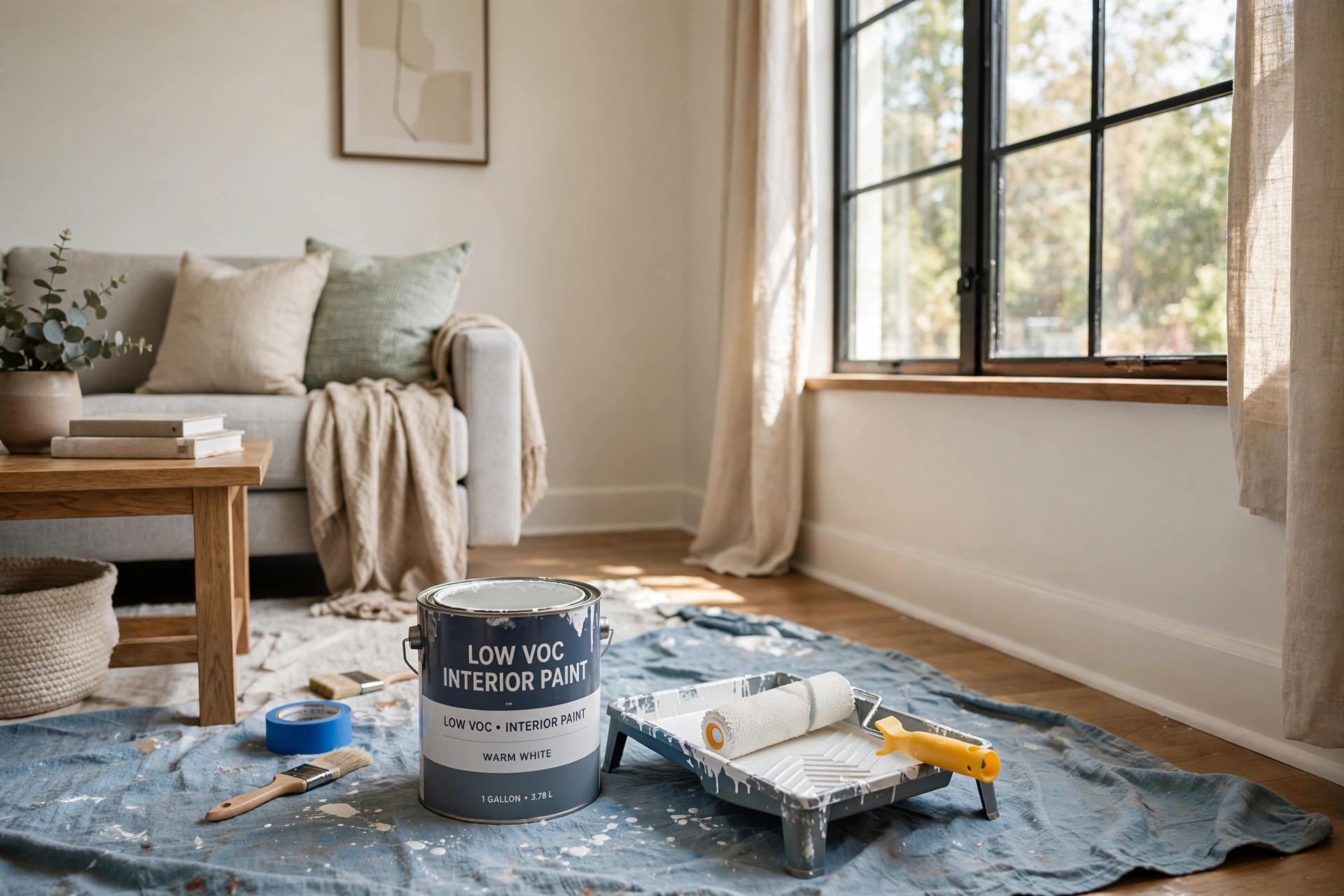

A New Standard for Paint
For many years, a fresh coat of paint meant days of strong smell. Windows stayed open. Heads ached. Families waited for the odor to fade. That picture is changing. A new generation of paints puts far fewer chemicals into the air. This article brings together low voc interior paint brands usa reviews so you can see which names earn trust from homeowners and painters across the country.
Low VOC interior paint brands cut back on volatile organic compounds. These compounds are the solvents that let old style paint flow and dry. They also give off fumes that can irritate eyes, noses, and throats. When a paint carries less of them, a room can be lived in sooner. Children, older people, and anyone with breathing trouble feel the gain most.
Interest has grown for a simple reason. People spend most of their hours inside their own homes. The air in a painted room should not be a source of worry. As one buying guide on The Spruce notes, paint buyers now ask about health labels as often as they ask about color. This review looks at the leading brands, the prices they carry, and the way their paints behave on the wall.
Why Low VOC Paint Matters: Low Voc Interior Paint Brands Usa Reviews
Cleaner Air Indoors
Indoor air can hold more pollutants than the air outside a house. New paint is a common source. Standard paints release fumes as they dry, and some keep releasing them for weeks. Low VOC paints cut this release by a wide margin. Many test near zero after a day of drying. That means a nursery, a bedroom, or a home office can be used again with less waiting.
Health and Comfort
The sharp smell of fresh paint is more than a bother. It signals chemicals at work. Short term exposure can bring headaches, dizziness, and sore throats. Long term exposure is linked to deeper problems. Painting advice from Bob Vila often reminds readers to ventilate well, and low VOC formulas make that job easier. Painters who use these paints day after day report fewer complaints from clients and from their own crews.
A Kind Choice for the House
Low VOC paints are also kinder to the house itself. They tend to yellow less in dark rooms and hold color well over time. Modern formulas close the old gap in durability. Where low VOC paint once meant a soft, easy to scuff finish, today it often matches or beats older formulas for wash and wear. Homeowners who repaint with Sherwin-Williams Harmony lines, for example, often report that the finish stands up to daily life as well as any standard paint.
How to Choose a Low VOC Interior Paint
Read the Label With Care
Terms on a can can confuse. “Low VOC” has no single legal limit in all states, but most makers aim under 50 grams per liter. “Zero VOC” usually means under 5 grams per liter. Watch for added colorants. Some paints start as zero VOC, then the tint added at the store pushes the level higher. Ask the paint desk to use low VOC colorants. Major retailers such as The Home Depot and Lowe’s list VOC content on product pages, which helps you compare before you drive to the store.
Match Sheen to the Room
Sheen shapes how paint looks and how it wears. Flat hides wall flaws but stains faster. Eggshell gives a soft glow and wipes down well. Satin and semi gloss suit trim, doors, and kitchens. Low VOC lines now offer the full range of sheens. Pick by room use, not by brand habit. A hallway that takes daily traffic needs more sheen than a guest bedroom.
Check Coverage and Hiding
Coverage is stated on the can, often around 350 to 400 square feet per gallon. Deep or bright colors may need a second coat. Reviews that praise one coat hiding are worth reading closely, because a second coat doubles both cost and drying fumes. Practical guidance from This Old House suggests testing a quart on a small section first. A real test on your own wall tells more than any ad.
Think About Color Early
Low VOC paints take tint as well as standard paints do. Still, choose your shade before you buy gallons. Warm whites and soft grays are popular because they suit many rooms and light levels. If you lean toward warm white tones, a guide to warm white paint colors from Benjamin Moore can help narrow the field before you visit the store.
The Main Types of Low VOC Interior Paint
Acrylic Latex Low VOC
This is the common workhorse. Acrylic latex formulas make up most low VOC lines on store shelves. They dry fast, clean up with soap and water, and hold color well. Almost every major brand sells a low VOC acrylic latex line. Reviews rate them strong on ease of use. A beginner can roll a wall with good results.
Zero VOC Paint
Zero VOC goes a step further. These paints aim for the lowest measurable emissions. They suit nurseries, schools, and homes where anyone has asthma or allergies. The trade off can be a slightly thinner body, though premium zero VOC lines have improved greatly. Behr and Benjamin Moore both sell zero VOC options that reviewers rate well for coverage and touch up.
Milk Paint and Mineral Paint
These are older style formulas made new again. Milk paint uses milk protein and lime. Mineral paint uses minerals that bond with the wall. Both are naturally low in VOCs. They give a matte, old world finish that suits furniture and accent walls. They cost more and ask for more skill. They are not the right pick for a whole house done in a weekend.
Specialty Low VOC Formulas
Some lines add odor removing technology. Others add mildew resistance for damp rooms. Bathrooms and basements gain most from these features. If you need extra protection in wet areas, see our roundup of mildew resistant bathroom paint reviews alongside the brand notes below.
Reviewed Brands: What American Homeowners Report
Benjamin Moore
Benjamin Moore earns some of the warmest reviews in the low VOC class. Its Natura line is certified asthma and allergy friendly, a claim few rivals make. The Ben line offers low VOC paint at a friendlier price. Reviewers praise the rich color and smooth roll on. Touch ups blend well, which matters for busy walls. The main knock is price, which sits at the high end of the market.
Sherwin-Williams
Sherwin-Williams Harmony is the brand’s zero VOC flagship. It carries anti microbial properties and formaldehyde reducing technology. Homeowners who repaint bedrooms and living rooms often name it their top pick for low odor. Coverage earns steady praise, with two coats standard over dark colors. Store staff earn good marks for help with color matching. Prices run high, though sales at company stores bring them down.
Behr
Behr Premium Plus is the budget hero of this group. Sold at The Home Depot, it offers zero VOC formulas at prices well under the premium brands. Consumer reviewers often rate it the best value for whole house repaints. One coat hiding gets mixed marks, so budget for two coats on bold color changes. For renters and flippers, the price to performance ratio is hard to beat.
ECOS Paints
ECOS builds its whole name on non toxic paint. It is a smaller American maker with a loyal following. Reviews from chemically sensitive buyers are glowing. The paint has almost no smell at application. Color selection is deep and can be matched to major brand shades. The cost is the highest here, and it ships from the maker rather than sitting on store shelves. Plan ahead for delivery time.
Clare
Clare is a newer direct to consumer brand. It sells zero VOC paint online with curated color palettes and peel and stick swatches. Young homeowners like the simple choices and the modern branding. Reviews praise the easy online ordering and the low odor. The trade off is that you cannot see gallons on a shelf before you buy. Swatches help, but they are small.
Cost and Price
Low VOC paint costs more than old style paint, but the gap has shrunk. Expect these rough ranges per gallon in the USA:
– Budget zero VOC lines such as Behr: 25 to 35 dollars. – Mid range low VOC lines: 40 to 55 dollars. – Premium zero VOC lines such as Benjamin Moore and Sherwin-Williams: 60 to 80 dollars. – Specialty non toxic brands such as ECOS: 65 to 90 dollars.
Labor is the larger share of any paint job. A painter may charge two to five dollars per square foot of wall for a full job. Paint itself is often less than a fifth of the total. That math makes a strong case for the better paint. If you want a full cost picture, our guide to interior painting cost per square foot in 2026 breaks down labor, prep, and materials room by room.
Buying tips help too. Watch for holiday sales at big retailers, which can cut premium paint prices by a third. Buy gallons, not quarts, once you commit to a color. A gallon almost always costs less per ounce. And do not skip primer on bare drywall or bold color changes. A good primer coat makes the top coat cover in fewer passes.
Care and Upkeep
Low VOC paint asks for the same care as any modern paint. Wait at least two weeks before washing a new wall. Paint feels dry in hours but cures over days. Early washing can leave marks that never blend away.
For daily care, use a soft damp cloth on scuffs. Mild soap works on tougher spots. Avoid harsh cleaners and rough pads, which dull the sheen. Eggshell and satin finishes forgive more than flat, so choose them in hallways and kitchens where hands and pets leave marks.
Touch up paint stores well if the can is sealed tight. Keep cans off cold concrete floors, which can rust the lids. Store them in a cool dry spot. Mark each can with the room and the color name. Future touch ups will match only if you know exactly what went on the wall. Design ideas from HGTV also note that keeping a record of color codes saves time when a room needs a refresh years later.
Safety
Low VOC does not mean zero risk. Read the label and follow it. Ventilate the room while you paint and while it dries. A window cracked open and a fan moving air do the job. Keep children and pets out of the room until the paint is dry to the touch, and out of a nursery until it has fully cured.
Wear a mask when sanding old paint, especially in homes built before 1978. Old paint may hold lead. Test kits are cheap and sold at every hardware store. If lead is present, do not sand or scrape without proper precautions. A licensed lead abatement pro is the safe path.
Store paint out of reach of children. Keep lids closed when you step away. Dispose of leftover paint through local hazardous waste programs. Many counties run free drop off days. Never pour paint down a drain or into the yard.
FAQ
What does low VOC mean on a paint can?
VOC stands for volatile organic compound. These are chemicals that turn to gas as paint dries. Low VOC means the paint holds far fewer of them than older formulas. Most low VOC interior paints stay under 50 grams per liter. Zero VOC paints stay near zero.
Is low VOC paint safe for a baby nursery?
Yes, zero VOC paint is a strong choice for nurseries. Paint well ahead of the due date if you can. Give the room several days of open window ventilation. Keep the crib away from the wall until the paint has fully cured. If anyone in the home has asthma or chemical sensitivity, zero VOC is the safest shelf option.
Does low VOC paint last as long as regular paint?
Modern low VOC paints last as well as standard paints. Premium lines match older formulas for scrub resistance and fade resistance. The key is prep work. Clean walls, fill holes, and prime bare spots. A rushed job fails early no matter what the can says.
Can I get any color in a low VOC formula?
Almost any color can be mixed in low VOC base paint. Ask for low VOC colorants so the tint does not add VOCs back in. Very deep and bright colors may need an extra coat. Test a sample board in your own light before you buy gallons.
Why does my low VOC paint still have some smell?
Even zero VOC paint has a mild paint smell while wet. Water, binders, and additives carry a scent as they dry. It should fade within a day in a ventilated room. If a strong smell lingers for days, check that the room has air flow and that the paint is not past its shelf date.
Is zero VOC paint worth the higher price?
For bedrooms, nurseries, and homes with sensitive people, most reviewers say yes. The price gap per gallon often runs ten to twenty dollars over standard paint. Spread across a room, that adds little to the total job. The cleaner air during and after painting is the payoff.
A Short Final Word
The best low VOC interior paint is the one that fits your room, your budget, and your health needs. Premium brands earn their reviews with rich color and easy touch up. Budget lines win on value for whole house jobs. Specialty makers serve those who need the cleanest air possible. Read the label, test a sample, ventilate well, and take your time with prep. A careful job with a good low VOC paint gives you a beautiful wall and air you can trust.
References
Behr. (n.d.). Paints, primers, and stains. https://www.behr.com Benjamin Moore. (n.d.). Paints and stains. https://www.benjaminmoore.com Bob Vila. (n.d.). Home improvement advice. https://www.bobvila.com HGTV. (n.d.). Home and garden ideas. https://www.hgtv.com Lowe’s. (n.d.). Home improvement products. https://www.lowes.com Sherwin-Williams. (n.d.). Paints and coatings. https://www.sherwin-williams.com The Home Depot. (n.d.). Home improvement products. https://www.homedepot.com The Spruce. (n.d.). Home and garden advice. https://www.thespruce.com This Old House. (n.d.). Home renovation guidance. https://www.thisoldhouse.com
Was this guide helpful?

About Robert Taylor
The My Garden US editorial team writes practical, in-depth home and garden guides for American homeowners — tested advice, no fluff.
You May Also Like

What Professional Drywall Repair Cost Near Me Means for Homeowners in 2026
January 5, 2026 0 views
Painting Brick House Pros and Cons USA: What Every Homeowner Should Know
February 7, 2026 0 views
Zero VOC Paint for Nursery Reviews USA: A Complete Guide for American Parents
January 20, 2026 0 views