A bathroom works better when small details are done well. This brushed towel holders buying guide usa shoppers can trust will walk you through the main choices you face at the store or online. You will learn what a brushed finish is, which types of holders fit which baths, how much you should expect to pay, and how to keep your new hardware looking good for years. Whether you are fixing up one guest bath or redoing a whole master suite, the advice below will help you buy with confidence.
Why Towel Holders Deserve Your Attention
A towel holder seems like a small thing. Yet it is one of the few items in a bathroom that you touch every single day. A cheap holder can wobble, rust, or pull loose from the wall within a year. A good one stays firm and looks fine for a decade or more.
Towel holders also shape the look of the room. They are jewelry for the bathroom. A brushed finish gives metal a soft, muted shine. It hides water spots and fingerprints better than polished chrome. That is why brushed towel holders have become a favorite in American homes. They look warm and modern at the same time, and they pair well with many faucet finishes.
Think about daily life too. A family of four uses many towels. Kids yank them off the bar. Guests need a clear place to hang theirs. A well-placed, sturdy holder makes the bathroom feel orderly. It also helps towels dry faster, which keeps them fresher between washes. For all these reasons, it pays to choose carefully.
What to Look for When You Shop: Brushed Towel Holders Buying Guide Usa
The Finish
“Brushed” means the metal was rubbed with fine abrasive to create tiny lines on the surface. This gives a soft glow instead of a mirror shine. You will see several brushed options on store shelves:
– Brushed nickel is the most common. It has a warm gray tone. – Brushed brass or gold adds a richer, warmer look. – Brushed bronze is darker and suits traditional rooms. – Brushed stainless steel is cooler in tone and resists rust well.
Pick a finish that matches or blends with your faucets and other hardware. Exact matches across brands are hard to find, so aim for the same family. If you are updating everything at once, look at a brushed nickel faucets buying guide to coordinate your new faucet with your towel bars.
Check how the finish was applied. Good holders use PVD coating or a thick plating process. These resist scratches and hold their color. Cheap paint-like coatings chip. Look at the product details on the maker’s site. Brands like Kohler and Moen list finish details clearly, and Delta Faucet explains how its finishes are tested.
The Metal Underneath
The base metal decides how long the holder lasts. Solid brass is the best choice. It does not rust and holds screws tightly. Zinc alloy is common in mid-price holders and works well indoors. Stainless steel is strong and good near showers where water splashes.
Avoid hollow plastic bars with a metallic coating. They dent and the coating peels. Lift the item in the store if you can. Weight is a fair sign of quality.
Size and Spacing
Standard towel bars come in 18-inch and 24-inch lengths. An 18-inch bar fits most baths and holds one bath towel folded once. A 24-inch bar gives more room and suits wide walls. Small powder rooms often use a towel ring instead of a bar.
Measure your wall space before you buy. Leave at least a few inches of clear space on each side of the bar. Make sure the towel will not brush against the toilet or the vanity. In tight baths, two smaller bars on one wall can work better than one long bar.
Mounting Style
Most towel bars attach with two wall brackets and screws. The screws should go into a wall stud or a strong anchor. Drywall alone will not hold a loaded towel bar for long.
Some holders use adhesive or suction mounts. These work for light hand towels in rentals where you cannot drill. They are not a good choice for heavy bath towels. If you rent, check your lease before you drill any holes.
Look for concealed mounting. This means the screws hide under a small cover plate. It looks cleaner and keeps dust off the screw heads. Good designs let you tighten the set screw from below with a small hex key.
Weight Capacity
A dry bath towel weighs little. A wet one is much heavier. A quality bar should hold at least 10 to 15 pounds without bending. Thick hotel-style towels are the real test. If your family uses heavy towels, choose solid brass bars with wide mounting plates.
Types of Brushed Towel Holders
Single Towel Bars
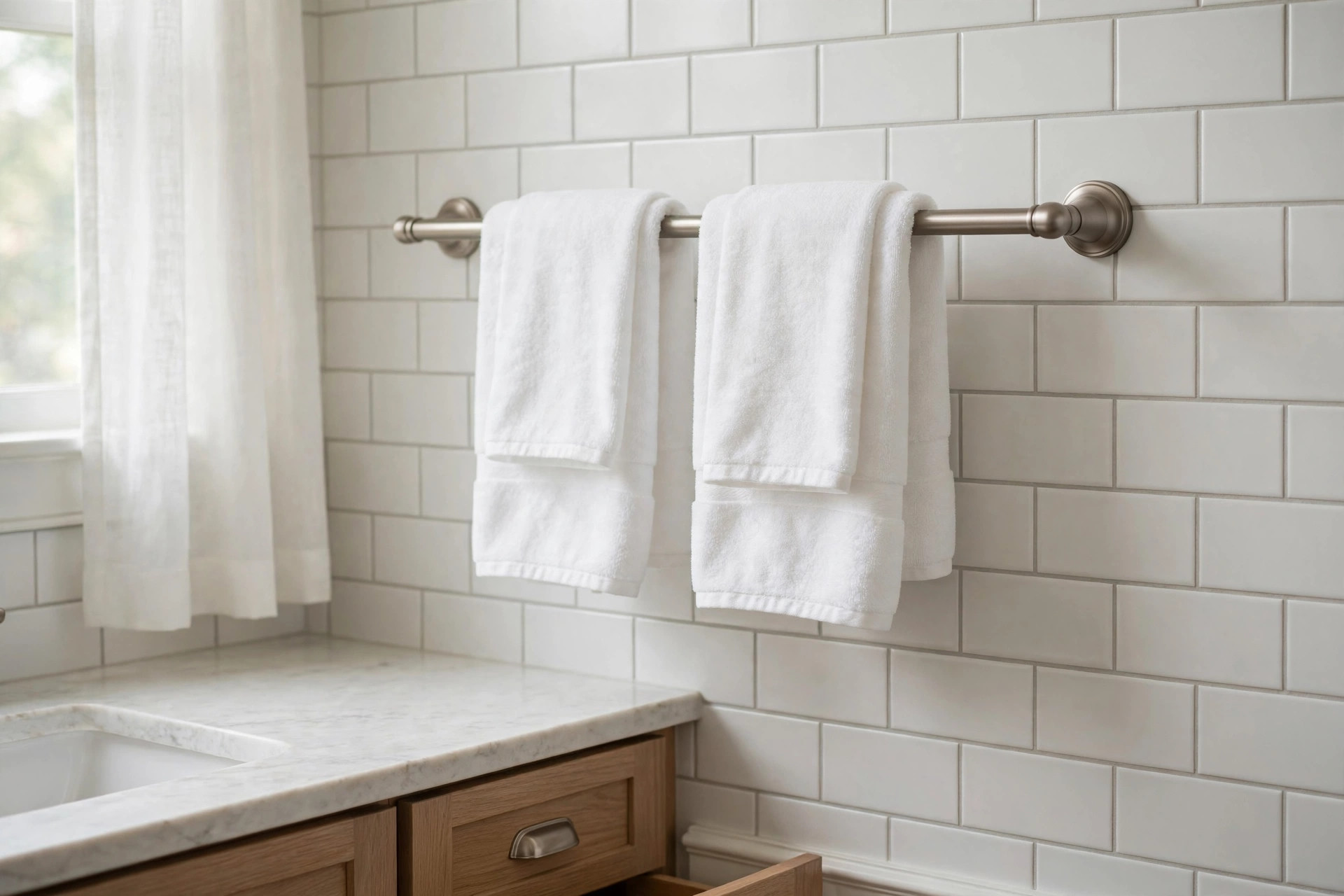
The classic choice. One horizontal bar between two posts. Best for bath towels. Available in many lengths. Simple and easy to install.
Double Towel Bars
Two parallel bars on one set of posts. They hold twice the towels in the same wall space. Good for shared family baths. Note that the inner bar gets less air flow, so towels dry a bit slower there.
Towel Rings
A ring, usually 6 to 8 inches across, on a single post. Best for hand towels near a sink. They take little wall space. Round and square rings are both common in brushed finishes.
Towel Hooks
Single or double hooks for robes and towels. Hooks hold the most weight for their size. They are easy to install and work well on the back of a door or on narrow wall sections.
Ladder and Freestanding Racks
Leaning ladder racks and standing racks hold several towels without wall mounting. They suit large baths and rentals. Make sure a leaning rack has a stable base so it does not tip.
Heated Holders
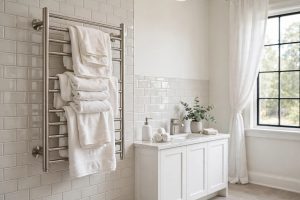
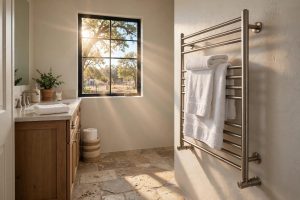
Electric towel warmers dry towels fast and add a touch of luxury. They come in wall-mount and freestanding styles. If a warm towel sounds good, read a bathroom towel warmers buying guide before you decide between a simple bar and a heated unit. Warmers cost more and need an outlet nearby.
Matching Your Holders to the Rest of the Bath
A bathroom looks calm when the metals agree. You do not need every item from one brand, but keep the finish family the same. Brushed nickel bars go well with brushed nickel faucets, shower trim, and cabinet pulls.
If you are planning a bigger update, look at the whole room at once. A new LED bathroom mirrors buying guide can help you pick a mirror that matches your hardware finish. Retailers like Home Depot and Lowe’s sell matching bath hardware sets, which take the guesswork out of coordination.
Think about style too. Straight, square posts suit modern baths. Rounded posts with gentle curves suit traditional rooms. Transitional styles split the difference and work almost anywhere.
Cost and Price in the USA
Towel holder prices vary widely. Here is what American shoppers can expect in 2026:
– Budget ($8–$20): Zinc or aluminum bars with basic brushed plating. Fine for a rental or a quick fix. Expect 2 to 5 years of good service. – Mid-range ($20–$60): Solid zinc or stainless bars with better finishes and concealed mounts. This is the sweet spot for most homes. Many carry a limited lifetime finish warranty. – Premium ($60–$150): Solid brass construction with PVD finishes. Brands such as American Standard and designer lines sit here. These often last 15 years or more.
A full set for one bath — two bars, a ring, and a hook — usually runs $60 to $200 at mid-range quality. Installation is extra if you hire help. A handyman often charges $50 to $100 per bath to mount a set.
Buying in a matching set can save money. Sets cost less per piece than single items. Check big retailers during holiday sales. Spring and fall often bring bath fixture discounts.
Installation Tips
You can install most towel bars yourself with basic tools. You will need a drill, a level, a pencil, and wall anchors or a stud finder.
1. Hold the bar at the height you want. Standard height is 48 inches from the floor to the center of the bar. 2. Mark the bracket spots with a pencil. Use a level so the bar sits straight. 3. Drill pilot holes. If you hit a stud, drive the screws straight in. If not, set a wall anchor first. 4. Mount the brackets, slide the bar in, and tighten the set screws.
Test the bar with a firm pull before you hang towels. If it moves, the anchors are not holding. Take it down and reset them. For tile walls, use a masonry bit and go slowly so the tile does not crack.
Guides at This Old House and Bob Vila show step-by-step bath hardware projects. HGTV offers style ideas for small baths, and The Spruce has clear how-to articles for renters who need no-drill options.
Care and Upkeep
Brushed finishes are easy to live with. The fine texture hides small marks. Follow these simple habits:
– Wipe weekly with a soft damp cloth. This stops soap and hard water from building up. – Use mild soap for sticky spots. Rinse and dry the metal after. – Skip harsh cleaners. Bleach, ammonia, and scouring pads can dull or strip the finish. Vinegar is fine for mineral spots if you rinse it off quickly. – Dry after cleaning. Water left standing can leave spots, even on good finishes. – Tighten screws yearly. A quick check with a hex key keeps bars firm.
Never use steel wool on a brushed finish. It will scratch the fine grain and change how the metal looks. Microfiber cloths are the safest choice.
Safety Notes
A towel holder is not a grab bar. This point matters. In a slip, people reach for anything fixed to the wall. A towel bar will pull out under body weight. That can cause a nasty fall.
If anyone in the home has balance problems, install real grab bars in the shower and near the toilet. Grab bars are rated for 250 pounds or more. Towel bars are not. Keep the two uses separate in your mind and in your bath.
Also watch sharp edges. Cheap stamped-metal posts can have rough edges. Run a finger along the post before you buy, or check return policies when you order online. Round all wall anchors flush so nothing sticks out behind the mounting plate.
Place bars where dripping towels will not land on electrical outlets. Keep at least a foot of clearance above outlets and switches.
Frequently Asked Questions
Do brushed towel holders rust?
Quality ones resist rust well. Solid brass and stainless steel do not rust. Zinc alloy holds up fine in a normal bath as long as the finish is intact. Rust usually starts where the finish is chipped or where water pools. Dry the bars after steamy showers and you will rarely see rust.
What is the difference between brushed nickel and brushed stainless?
Brushed nickel has a warm gray tone from nickel plating over brass or zinc. Brushed stainless is actual stainless steel with a cooler, bluer tone. Stainless resists corrosion a bit better near showers. Nickel matches more faucet lines. Either works well in most baths.
Can I mix brushed finishes with chrome or black fixtures?
You can, but do it on purpose. One brushed nickel bar in a chrome bath looks like a mistake. A planned mix — say black faucets with brushed brass accents — looks fine. Keep to two metal tones at most in one room.
How high should I mount a towel bar?
The common standard is 48 inches from the floor to the top of the bar. For kids’ baths, 36 inches works better. Above a vanity, leave at least 18 inches between the counter and the bar so towels clear the faucet.
Are expensive towel holders worth it?
For a bath you use daily, yes. A $50 solid brass bar outlasts three $12 bars and looks better the whole time. For a rarely used powder room, a budget bar is fine. Match the quality to how hard the bath gets used.
Can I install a towel bar on tile?
Yes. Use a masonry or glass-and-tile drill bit and drill slowly with light pressure. Place a small piece of tape over the spot to stop the bit from wandering. Set plastic anchors in the holes, then mount as usual. Take your time and the tile will not crack.
A Short Final Word
A towel holder is a small buy with a daily payoff. Choose solid metal, a brushed finish you like, and the right size for your wall. Mount it firmly into studs or good anchors. Wipe it down now and then. Do these simple things and your brushed towel holders will serve you quietly and well for many years.
References
American Standard. (n.d.). Bathroom and kitchen products. https://www.americanstandard.com Bob Vila. (n.d.). Home improvement advice. https://www.bobvila.com Delta Faucet. (n.d.). Kitchen and bathroom faucets. https://www.deltafaucet.com HGTV. (n.d.). Home and garden ideas. https://www.hgtv.com Kohler. (n.d.). Bathroom and kitchen fixtures. https://www.kohler.com Lowe’s. (n.d.). Home improvement products. https://www.lowes.com Moen. (n.d.). Faucets and plumbing fixtures. https://www.moen.com The Home Depot. (n.d.). Home improvement products. https://www.homedepot.com The Spruce. (n.d.). Home and garden advice. https://www.thespruce.com This Old House. (n.d.). Home renovation guidance. https://www.thisoldhouse.com
Was this guide helpful?

About Robert Taylor
The My Garden US editorial team writes practical, in-depth home and garden guides for American homeowners — tested advice, no fluff.