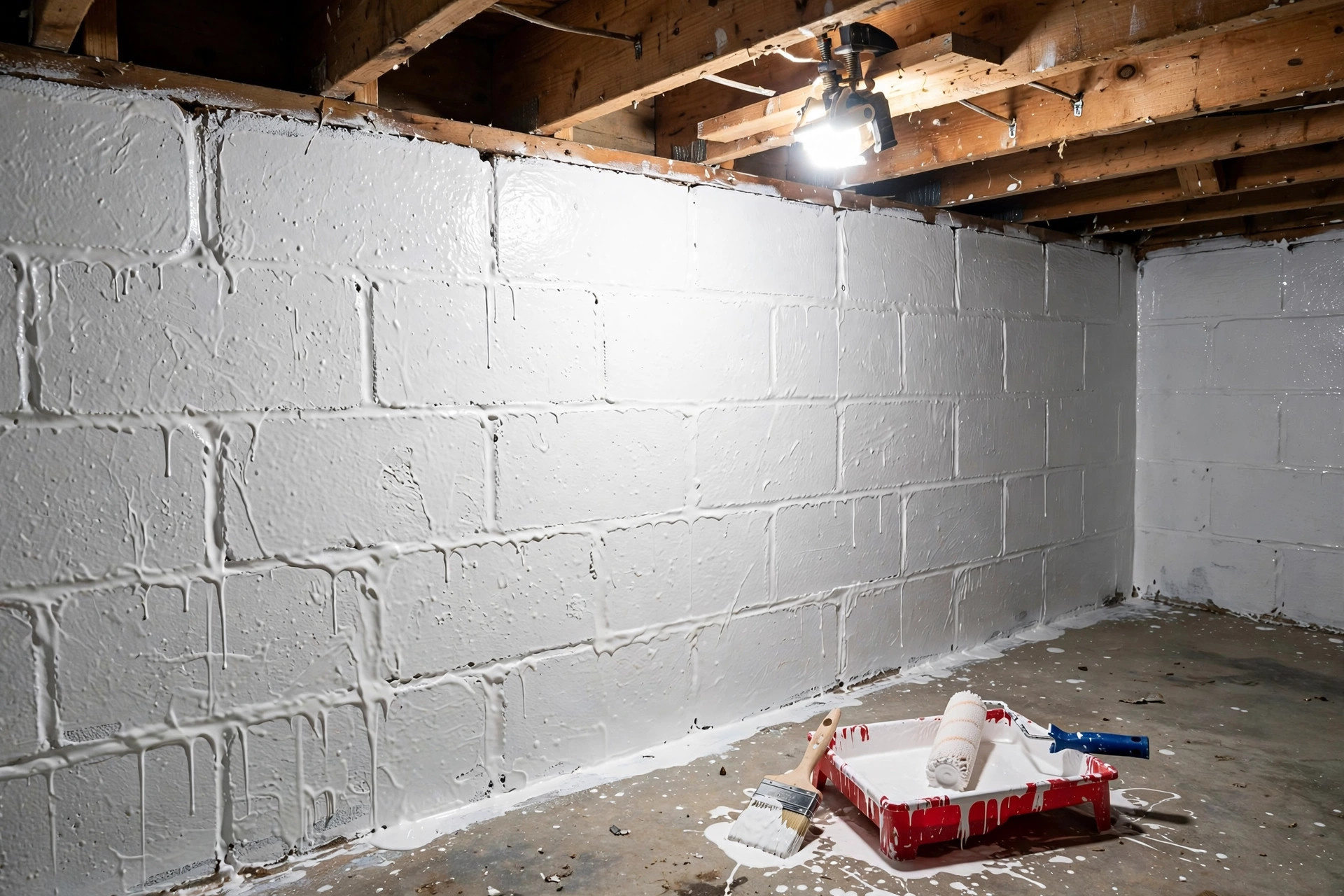

A damp basement is one of the most common troubles in American homes. Water seeps through concrete block walls, through small cracks, and up through the floor where the wall meets the slab. This guide on basement waterproofing paint reviews and cost will help you understand what these coatings can and cannot do, which products rate well with homeowners, and what you should expect to pay. The facts here come from reading many homeowner reviews, product guides from well known paint brands, and advice from home improvement experts.
Waterproofing paint is not the same as regular wall paint. It is a thick, masonry coating made with portland cement or acrylic resins that fills the small pores in concrete and block. When it is applied right, it blocks water under light pressure from pushing through. It will not fix a flooded basement or a broken drainage system, but it is a sound first step for walls that are damp rather than wet.
Why Basement Waterproofing Paint Matters
Most basements sit below grade, which means the walls touch damp soil. Rain and snowmelt soak the ground, and the water presses against the foundation. Concrete is hard, but it is full of tiny holes. Over time, water finds its way in. You may see dark stains on the walls, paint that peels off in sheets, white powdery crust called efflorescence, or a musty smell that never goes away.
That dampness is more than an eyesore. Stored boxes rot. Furniture molds. Tools rust. Mold spores drift upstairs and can bother people with allergies. Wood framing that stays wet can rot and weaken. Home guides note that a dry basement also feels warmer in winter, since damp air takes more heat to warm. For a modest cost, waterproofing paint gives your basement walls a first line of defense while you plan bigger fixes if you need them.
What It Can and Cannot Do
Waterproofing paint stops seepage: slow weeping through pores, damp spots after rain, and light moisture that leaves walls sweating. It does not stop leaks under real pressure, such as water that pours through a crack during a heavy storm. It also does not fix water that comes up through the floor. If water pools on your basement floor, the trouble is under the slab or in the drain system, and no paint will cure it. Be honest about your problem before you buy. Paint is the right fix for damp walls. A drainage system is the right fix for flowing water.
What to Look For When You Choose a Waterproofing Paint: Basement Waterproofing Paint Reviews and Cost
Interior or Exterior Grade
Some coatings are made for the inside of the wall, and some for the outside. Most products in home improvement stores are interior masonry coatings. They bond to the inner face of the wall and block water at the surface. True exterior waterproofing is a different job that often means digging down to the footing. For most do-it-yourself projects, an interior coating is what you buy. Check the label to confirm it is rated for below-grade use on the inside of foundation walls.
Coverage and Number of Coats
Coverage is stated in square feet per gallon. Most waterproofing paints cover 75 to 125 square feet per gallon per coat, far less than ordinary paint, because the coating goes on thick. Almost every product needs two coats for full protection. Measure your walls, multiply length by height, subtract doors and windows, and then double the result for two coats. Buy ten percent extra for touch-ups. Reviewers who run short often end up with a thin second coat, which is where failures start.
Vapor Permeability and Finish
Good coatings let trapped vapor escape while blocking liquid water. If a coating traps vapor completely, pressure can build up behind it and push it off the wall. Look for labels that mention vapor transmission or breathability. The finish is usually a flat, textured white or gray. Some lines offer tints, but most homeowners leave it white, which also brightens a dark basement.
Low Odor and Cleanup
Oil-based masonry coatings are strong smelling and need solvents for cleanup. Latex and acrylic formulas clean up with water and smell far less, which matters when you work in a closed basement. Check the label for low VOC content if anyone in the house is sensitive to fumes. Ventilation is still a must with any product.
Types and Options on the Market
There are three main families of waterproofing paint, and each has its fans.
Cement-based waterproofers are the old standard. They are dry powders that you mix with water into a thick slurry. They fill pores well and bond hard to clean masonry. Many homeowner reviews praise their long life on block walls. They are cheap per square foot but take real labor to mix and brush on.
Acrylic and latex masonry coatings come ready to use in a bucket. They brush or roll on like thick paint and stay flexible enough to bridge hairline cracks. National paint makers carry lines of this type, and reviewers like the easy cleanup. They cost more per gallon than cement mixes but save time.
Elastomeric waterproof coatings are the thickest of the three. They stretch as the wall moves slightly, which helps on walls with hairline cracks. They are often sold in five-gallon pails and applied with a heavy roller or sprayer. The price per gallon is the highest, but one heavy coat can do the work of two thin ones.
Within these families, shoppers often compare well-known product lines carried by large home centers. Review patterns are steady across brands: the products that win praise are the ones applied to clean, dry, well-prepared walls in two full coats. The one-star reviews almost always trace back to skipped prep work or to paint applied over an active leak. That is a useful lesson. The best product poorly applied will fail, and a mid-priced product well applied will hold.
Cost and Price Breakdown
Here is where reviews and receipts help most. Prices shift by region and store, but current ranges are steady.
Product cost. A one-gallon can of waterproofing paint runs from about 25 to 45 dollars. A five-gallon pail runs from about 90 to 180 dollars, which lowers the price per gallon. Cement-mix waterproofers are the cheapest, often 8 to 15 dollars per gallon of mixed material. Elastomeric coatings sit at the top of the range. For a typical 1,000-square-foot basement with walls about seven feet high, you will cover roughly 700 to 800 square feet of wall. At 100 square feet per gallon per coat and two coats, you need about 15 gallons, or three five-gallon pails. Product cost for the job lands between 300 and 550 dollars.
Prep supplies. Budget 50 to 150 dollars more for a wire brush, masonry cleaner or etching solution, a crack repair compound, caulk, painter’s tape, drop cloths, and a good roller with a thick nap. Efflorescence remover costs little and makes a real difference in how well the paint bonds.
Hiring a pro. If you hire a contractor to do the whole job, expect 3 to 7 dollars per square foot of wall, prep included. For the same 800 square feet, that is 2,400 to 5,600 dollars. The labor cost is high because prep is slow: cleaning, etching, repairing, and then two full coats with dry time between them.
The hidden costs. Waterproofing paint over a wall that leaks badly is money wasted. If you suspect a crack that carries water, a foundation contractor may charge 500 to 1,500 dollars to inject epoxy into one crack. An interior drain system with a sump pump can run 3,000 to 7,000 dollars. Those are bigger numbers, but they solve bigger problems. Paint is the right tool for damp walls, not for broken systems.
How to Apply It Right
Good results come from prep, not from the brand on the can. Follow this order.
First, fix the water from the outside. Make sure gutters run clear and downspouts carry water at least six feet from the foundation. Grade the soil so it slopes away from the house. These free or cheap steps cut the water pressure on the wall before any paint goes on.
Second, clean the walls. Brush off loose paint and dirt with a stiff wire brush. Scrub off the white efflorescence crust with a masonry cleaner, then rinse and let the wall dry fully. Paint bonds poorly to dust and salts. This step is the one most skipped and most regretted.
Third, repair cracks and holes. Fill hairline cracks with a masonry crack filler and patch holes with hydraulic cement. Let repairs cure as the label directs. Waterproofing paint bridges tiny pores, not open cracks.
Fourth, apply the first coat. Work the coating into the pores with a brush on block walls, since rollers can skip over the mortar joints. Keep the coat even and thick. Let it dry for the full time on the label, usually 24 hours, before the second coat.
Fifth, apply the second coat. Roll or brush it on at a right angle to the first coat so you cover every spot. Check for thin areas or pinholes as you go and touch them up while the paint is wet.
If your basement floor is bare concrete and damp too, a concrete floor paint for basements made for moisture can be a good companion step after the walls are done. And in rooms where damp air lingers, a mildew-resistant bathroom paint on drywall or ceiling areas adds a second layer of defense against mold stains.
Care and Upkeep
Once the coating cures, upkeep is simple. Check the walls once a year, in spring after the wet season. Look for blisters, peeling edges, or new damp spots. Small blisters can be scraped, cleaned, and touched up with leftover paint. Keep stored items a few inches off the floor and away from walls so air can move. A dehumidifier set to hold the room near 50 percent relative humidity takes a large load off the coating. If large areas start to peel after a few years, the cause is usually water pressure from outside, and it is time to look at gutters, grading, or drainage rather than a third coat of paint.
Safety
Read the label before you open the can. Wear gloves, eye protection, and a respirator rated for paint fumes, even with low-odor latex products. Ventilate the basement with a fan blowing air out a window or door. Keep children and pets out of the work area until the coating is fully dry. Oil-based products and solvents are flammable, so keep them away from furnaces, water heaters, and pilot lights. Dispose of leftover paint and rinse water according to your town’s rules. Home improvement advice sites remind readers that etching acids used in prep are caustic and need the same respect as the paint itself.
Frequently Asked Questions
How long does basement waterproofing paint last? On a well-prepared wall with normal soil moisture, a good coating lasts 7 to 15 years. Cement-based products often last the longest. Peeling sooner than five years usually points to prep problems or to water pressure the paint was never meant to hold back.
Can I paint over old waterproofing paint? Yes, if the old coat is sound. Scrape off anything loose, clean the surface, and apply a fresh coat of a compatible product. If the old paint is peeling in large sheets, strip it back to bare masonry first so the new coat bonds to the wall and not to a failing layer.
Does waterproofing paint work on painted walls? It works best on bare masonry. Regular latex wall paint on the surface can block the waterproofer from bonding to the pores. Strip old paint with a wire brush or chemical stripper, etch the surface, and then apply the waterproofing product to clean block or concrete.
Is one coat enough? No. Every major product calls for two coats. The first coat fills the pores, and the second builds the waterproof film. Single-coat jobs are the most common source of bad reviews, and they fail in the same spots every time: the mortar joints and the pinholes the first coat missed.
How much does it cost to waterproof a basement with paint? For a do-it-yourself job on a typical basement, plan 350 to 700 dollars for paint and supplies. A contractor will charge 3 to 7 dollars per square foot of wall. A paint manufacturer product page can help you estimate gallons, and home and garden programs often show real project budgets for context.
A Final Word
Basement waterproofing paint is a practical, low-cost way to tame damp walls. The reviews tell a clear story: pick a product rated for below-grade masonry, prepare the wall with care, apply two full coats, and fix the water outside first. For decorative walls upstairs where moisture is not the issue, lighter options such as limewash paint give texture without the heavy-duty sealer. Do the groundwork, and your basement walls will stay dry and bright for years.
References
Behr. (n.d.). Paints, primers, and stains. https://www.behr.com Benjamin Moore. (n.d.). Paints and stains. https://www.benjaminmoore.com Bob Vila. (n.d.). Home improvement advice. https://www.bobvila.com HGTV. (n.d.). Home and garden ideas. https://www.hgtv.com Lowe’s. (n.d.). Home improvement products. https://www.lowes.com Sherwin-Williams. (n.d.). Paints and coatings. https://www.sherwin-williams.com The Home Depot. (n.d.). Home improvement products. https://www.homedepot.com The Spruce. (n.d.). Home and garden advice. https://www.thespruce.com This Old House. (n.d.). Home renovation guidance. https://www.thisoldhouse.com
Was this guide helpful?

About Michael Thompson
The My Garden US editorial team writes practical, in-depth home and garden guides for American homeowners — tested advice, no fluff.
You May Also Like

Navy Blue Paint for Kitchen Island USA: A Complete Guide
March 17, 2026 0 views
Polyaspartic Garage Floor Coating Cost USA
August 24, 2026 0 views
Best Paint for Laminate Cabinets USA Reviews
September 5, 2026 0 views