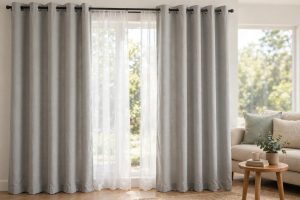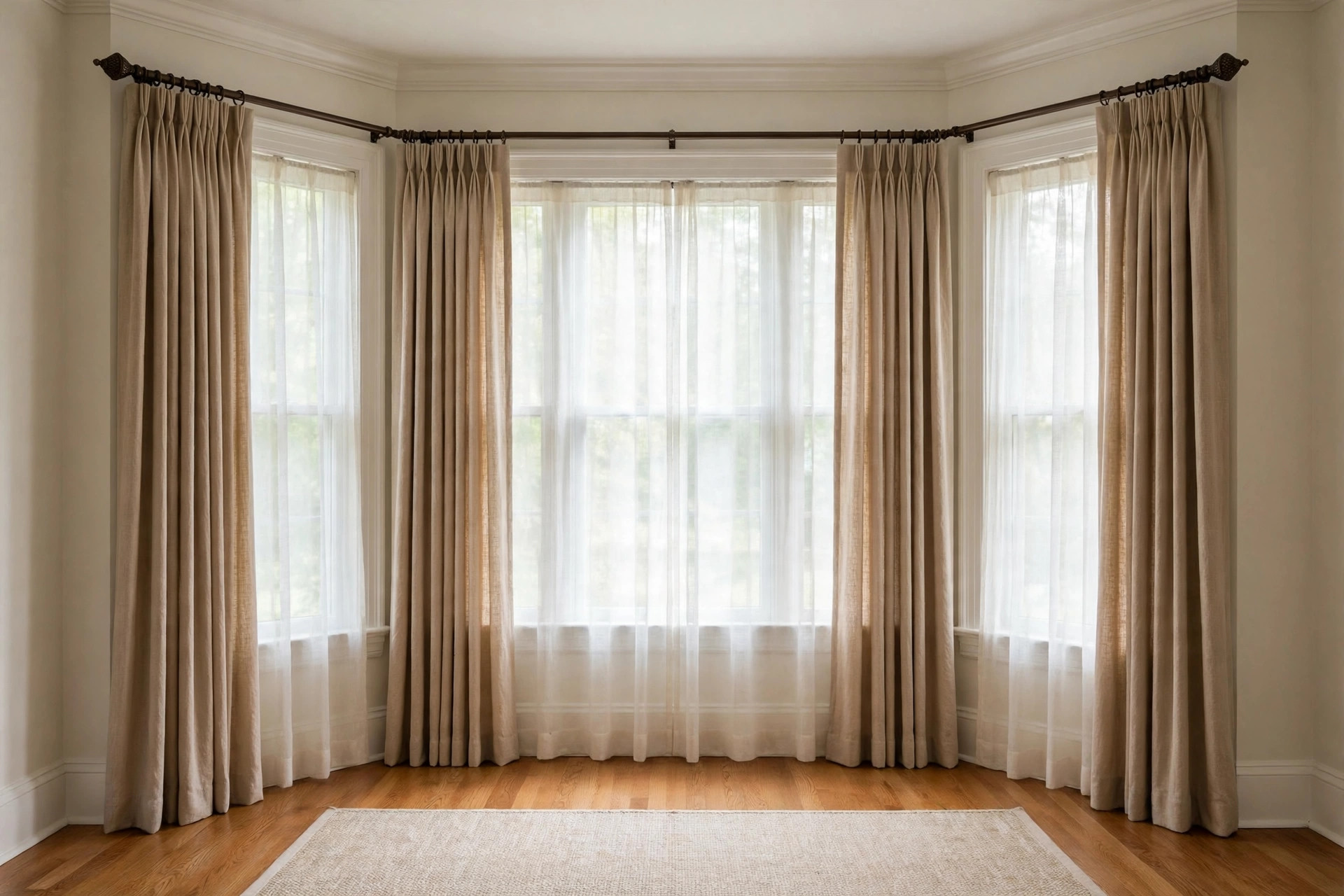

Many homeowners who search for premium custom drapery services near me want one thing: window treatments that fit exactly. Off the shelf panels leave gaps. They drag on the floor or hang too short. A good local workroom measures every window, sews the fabric to your size, and hangs the finished drapes. This guide explains what these services offer, how to choose one, what they cost, and how to care for the finished work.
Why Custom Drapery Services Matter
Ready made curtains come in fixed lengths. Windows do not. A tall window with a wide sill may need a 96 inch panel, while the shelf below holds only 84 inch panels. The result looks wrong from across the room.
Custom drapes solve this. A workroom cuts each panel to your window’s exact width and drop. The pleats hang even. The hem clears the floor by the same amount on every panel. The fabric has enough fullness to look rich when closed. These details are what make people call them premium.
Custom service also gives you fabric choices you cannot find in chain stores. You can pick a linen with a soft weave, a heavy velvet for a bedroom, or a light cotton for a kitchen. You can add a lining that blocks the sun or one that softens it. You can choose a trim, a fringe, or a band that matches your sofa.
Local service adds one more benefit. A person from the workroom comes to your home. He or she sees the light at noon and at dusk. He or she sees your furniture and your walls.
What Premium Custom Drapery Services Offer: Premium Custom Drapery Services near Me
A full service workroom does more than sew. The best shops, found through a search for premium custom drapery services near me, offer a set of services that walk you from a bare window to a finished room.
In home consultation. A designer visits with fabric books and shade cards. You talk through the style you want. She measures the windows and checks the wall above them for a rod or track.
Fabric and trim selection. You choose the face fabric, the lining, and any trim. Good shops show you how the fabric folds, how it holds a pleat, and how it looks against your wall paint.
Hardware. Many workrooms sell rods, tracks, rings, and brackets. They match the finish to your room. They mount the hardware so it holds the weight of lined drapes.
Installation. The crew hangs the drapes, steams the panels, and checks the hem line. They take away the packing and leave the room clean.
How to Choose a Local Service
Not every shop with a nice sign does good work. Use these steps to pick well.
Check the work in person
Ask to see finished panels. A strong shop has samples in the showroom or photos of real jobs. Look at the pleats. They should be even. Look at the lining. It should hang smooth with no pulls. Look at the hem. It should be straight.
Ask who sews the drapes
Some shops take your order and send it to a factory far away. Others cut and sew on site. Local sewing gives you better control. You can approve the fabric layout before it is cut. Ask where the sewing happens before you sign.
Read the contract terms
A clear contract lists the fabric, the lining, the fullness, the header style, and the finished size of each panel. It lists the hardware and the install date. It states the deposit and the final payment. If any of these items are missing, ask for them in writing.
Ask about lead time
Custom drapes take time. Most shops need four to eight weeks from order to install. Fabric may need to ship. The sewing bench may have a queue. If you need drapes for a holiday or a move in date, ask at the first visit whether the shop can meet it.
Compare more than price
A low quote may hide thin fabric, a cheap lining, or a short warranty. Ask each shop the same questions. Ask about fabric weight, lining type, and how the pleats are made. The shop that answers in full detail is often the better choice, even when the price is higher. Many homeowners compare a few local workrooms with design advice from HGTV before they decide.
Types of Custom Drapery Options
Custom does not mean one style. A workroom can sew many forms. These are the most common.
Pinch pleat drapes. The top of the panel is pinched into small groups of folds. This is the classic look for living rooms and dining rooms. For a closer look at this style, see best pinch pleat drapes with free shipping.
Grommet top drapes. Metal rings set into the top of the panel slide over a rod. This style suits modern rooms and slides open with one hand.
Rod pocket drapes. The rod passes through a sewn channel at the top. This gives a soft, gathered look. It suits country and farmhouse rooms.
Tab top drapes. Fabric loops hold the panel to the rod. The look is casual and handmade.
Ripple fold drapes. The panel rides on a track with a special tape. The folds fall in a smooth wave. This style suits wide glass doors and motorized tracks.
Each header changes how the fabric hangs and how much fullness you need. Your designer will show samples and explain which header fits your rod or track.
Fabrics, Linings, and Details
The fabric is the heart of the drape. Here are the main choices.
Cotton and linen. These natural fabrics breathe and fall in soft folds. They suit kitchens, sunrooms, and casual living rooms. Linen wrinkles a little, and most owners accept that as part of its charm.
Silk and faux silk. Silk has a rich sheen. Real silk fades in strong sun, so it needs a lining or a room that faces north. Faux silk looks much the same and holds up better in bright rooms.
Velvet. Heavy velvet blocks light and sound. It suits bedrooms and home theaters. It also shows dust, so plan to vacuum it with a brush head.
Sheers. Light voile panels soften light without blocking the view. Many homes layer sheers behind heavier drapes on a double rod.
Linings
A lining does three jobs. It protects the face fabric from the sun. It adds body so the folds hang well. It changes how much light passes through.
– Standard lining softens light and adds a finished back. – Blackout lining blocks nearly all light. It suits bedrooms and nurseries. – Thermal lining adds a layer of insulation against heat and cold.
Trims
A trim turns a plain panel into a finished one. Options include a band of contrast fabric at the bottom, a braid along the leading edge, or fringe on a formal panel. A small trim can tie the drapes to your pillows or rug. For rooms with a rustic feel, some owners pair simple trims with luxury farmhouse style curtains for southern states for a layered look.
Cost and Price
Custom drapery costs more than store panels. The price reflects skilled labor and better materials. A simple unlined pair in cotton may cost a few hundred dollars. A lined pair in a fine fabric with trim can run past one thousand dollars per window. Wide windows, tall ceilings, and motorized tracks add more.
Most shops quote per window. The quote should break out the fabric, the labor, the lining, the trim, the hardware, and the install. This lets you see where the money goes. It also lets you trim cost in smart places. You might keep a fine fabric but drop the trim. You might line only the south facing windows.
Fabric is the largest part of the bill. Designer fabrics from known mills cost more than plain goods. Ask the shop to show you options at two or three price points. You may find a mid priced fabric that looks as good as the top priced one once it is pleated and hung.
Get at least two quotes. Make sure each shop measured the same windows in the same way. A quote built on guesswork is worth little. Many stores such as Wayfair and Lowe’s also publish price ranges that help you check whether a quote is fair.
The Measuring and Fitting Process
A good fit starts with good measuring. Here is how most shops work.
1. The designer measures the window width at three points and uses the widest. Walls are not always square. 2. She measures the drop from the rod to the floor or sill at three points and uses the longest. 3. She checks the space above the window. A rod set higher makes the window look taller. 4. She checks the stack back. This is the space the panels fill when open. Wide drapes need room on each side.
After sewing, the installer hangs the panels and steams out the wrinkles. He checks that each hem sits at the same height. He trains the folds with a soft band for a day or two so the pleats set in place. You should walk the room and look at every window before the crew leaves. Small fixes are easy on install day and hard later.
If you want to learn the basics of measuring before the visit, guides at The Spruce walk through each step with clear drawings.
Care and Upkeep
Fine drapes last for years with simple care.
Dust often. Use a soft brush or a vacuum with an upholstery head. Work from top to bottom.
Rotate with the sun. Strong sun fades even lined panels over time. If one window takes the afternoon sun, a lining slows the fade. Sheers behind the main panels also help.
Clean as the label says. Many custom drapes need dry cleaning. Take the panels down yourself or ask the shop for a takedown service. Do not wash a lined panel at home unless the care tag allows it.
Rest the folds. Once a year, open and close the panels fully. This keeps the pleats from setting into a stiff shape.
Check the hardware. Rods can loosen as the house settles. Tighten brackets once a year. Oil a track with a dry spray if the carriers stick.
Outdoor shades and patio fabrics need different care, and owners with patios should read about best waterproof outdoor shades for first time homeowners for that setting.
Safety
Window treatments are safe when they are made and hung well, but a few rules matter.
Cord safety. Some drapes and shades use cords or bead chains. Long loops can trap small children. The Consumer Product Safety Commission warns that corded window coverings are a strangulation risk for young children. Ask your workroom for cordless headers or keep cords short, high, and tied with a cleat.
Fire safety. Keep fabric away from candles, fireplaces, and heaters. Heavy drapes near a heat source should follow the maker’s clearance rules.
Hardware strength. Lined drapes are heavy. Brackets must go into studs or use strong wall anchors. A falling rod can hurt a person and tear the wall. Your installer should test each bracket before hanging the panels.
Ladder safety. Tall windows need a tall ladder. A pro installer brings the right ladder and knows how to set it. Do not let anyone stand on a chair to reach a high rod.
Working With a Designer
Many custom shops pair you with a designer. This person is your guide through fabric books that hold hundreds of choices. A good designer listens first. She asks about your rooms, your budget, and your timeline. She brings a short list of fabrics that fit, not fifty that do not.
Bring her photos of your rooms and a few pictures of looks you like. Point at the exact detail you like: the trim, the fold, the length. The more she sees, the better she can match your taste.
FAQ
How long do premium custom drapes take?
Most orders take four to eight weeks. The time covers fabric shipping, cutting, sewing, and the install visit. Ask for a written date at the start.
How much should I budget per window?
Simple pairs start at a few hundred dollars. Lined pairs in fine fabric with trim often cost over one thousand dollars per window. Hardware and motorized tracks add more.
Can a local workroom match my paint color?
Yes, within reason. Bring a paint chip or a pillow to the consult. The designer can find fabrics and trims that sit well with your walls. Exact matches are rare, but close blends are common.
Do I need blackout lining?
You need it if light wakes you or if the room faces a bright street. Bedrooms and nurseries gain the most. Living rooms often do fine with a standard lining.
What if my windows are not the same size?
This is normal in older homes. The shop measures each window on its own and cuts each panel to fit. The finished drapes will look matched even when the windows are not.
How do I find the best shop in my town?
Ask friends for names. Read reviews that mention fit and install quality. Visit two or three showrooms and look at real work. A shop that shows its sewing with pride is a good sign.
A Short Final Word
Custom drapes are one of the few home buys that are made for your exact space. The fabric, the fit, and the hang all serve your windows and no one else’s. Take time to pick a shop with care. Choose a fabric you will love in five years, not just five weeks. When the panels go up and the folds fall even, the room will feel done. That is what premium custom drapery services near me are for.
References
Blinds.com. (n.d.). Window blinds, shades, and shutters. https://www.blinds.com Consumer Reports. (n.d.). Product reviews and ratings. https://www.consumerreports.org HGTV. (n.d.). Home and garden ideas. https://www.hgtv.com IKEA. (n.d.). Home furnishings. https://www.ikea.com Lowe’s. (n.d.). Home improvement products. https://www.lowes.com The Home Depot. (n.d.). Home improvement products. https://www.homedepot.com The Spruce. (n.d.). Home and garden advice. https://www.thespruce.com U.S. Consumer Product Safety Commission. (n.d.). Product safety information. https://www.cpsc.gov Wayfair. (n.d.). Furniture and home goods. https://www.wayfair.com
Was this guide helpful?

About Michael Thompson
The My Garden US editorial team writes practical, in-depth home and garden guides for American homeowners — tested advice, no fluff.
You May Also Like

Top Rated Shutter Installation Services for Homeowners: How to Choose the Right Company
February 13, 2026 0 views
Thermal Energy Efficient Window Treatments for Sale
June 16, 2026 0 views
Machine Washable Curtains Reviews and Buying Guide
April 24, 2026 0 views