
Introduction
A new home often comes with a porch, a deck, or a patio. These spaces are a joy in spring. They are less of a joy in hard rain or noon heat. The best waterproof outdoor shades for first time homeowners solve both problems at once. They block strong sun. They keep out driving rain. They give privacy from near neighbors. They let a young family use the outdoor space on many more days of the year.
New buyers face many choices at once. Paint, furniture, lawn care, and a long list of repairs all call for attention. Window coverings for the outside can feel like one more chore. This guide makes the task simple. It explains why waterproof shades matter, what to look for, which types exist, what they cost, and how to keep them safe and clean. Read it once and shop with calm.
Why Waterproof Outdoor Shades Matter: Best Waterproof Outdoor Shades for First Time Homeowners
Outdoor living space is part of the home. A patio that sits in blazing sun goes unused in summer. A porch that takes wind-driven rain collects wet cushions and muddy footprints. Shades change the use of the whole yard. They turn a hot slab into a shaded room. They turn a rain-washed deck into a dry spot for morning coffee.
Sun damage is a real cost. Ultraviolet light fades patio furniture, wood floors near doors, and outdoor rugs. It also makes deck boards hot and brittle. A good shade cuts most of that light. Rain is the other enemy. Waterproof fabric keeps the sitting area dry. It also protects the wall behind it from splash and stain. For new owners on a tight budget, these covers protect the money already spent on furniture.
There is also comfort. A shaded patio stays several degrees cooler. Air moves through many outdoor fabrics, so the space feels open, not closed. Many shades cut glare on phones and tablets. Evening meals get easier. Children can play outside without a burn. Guests linger longer. These small gains add up to a home that feels bigger than its walls.
How to Choose: What to Look For
Fabric and Waterproofing
The word waterproof needs care. Some products shed light rain but soak through in a storm. True waterproof shades have a sealed coating or a tight vinyl weave. Look for words like waterproof, not water resistant, on the label. Check the seams. Stitched seams can leak. Heat-sealed seams hold water out. Ask the seller how the fabric acts in heavy rain before you buy.
Fabric weight matters too. Heavy fabric blocks more sun and lasts longer in wind. Light fabric is easier to raise and lower. A midweight polyester or vinyl-coated fabric suits most first homes. Many buyers compare outdoor fabric options and weave guides to learn the difference between screen mesh and solid vinyl.
Size and Mounting
Measure twice. Measure the width of the opening at the top, middle, and bottom. Use the smallest of the three numbers. Measure the drop from the mounting point to the rail or floor. Most sellers cut to the eighth of an inch. A shade that is too wide will jam. A shade that is too short will leave a gap where rain blows in.
Mounting style changes the fit. Inside mounts sit within the frame and look neat. Outside mounts cover the whole opening and block more light. For porches with uneven trim, an outside mount is often the wiser pick. Check that you have solid wood or metal to hold the brackets. Drywall alone will not hold a heavy shade in wind.
Light Control and Airflow
Some shades block nearly all light. Some block about half and let air pass. The openness factor tells how much you can see through. A 5 percent openness gives strong privacy and shade but less breeze. A 10 to 14 percent openness feels airy and still cuts glare. For a west-facing patio that bakes in the afternoon, choose a lower openness. For a screened porch that needs breeze, choose a higher one.
Manual or Motorized
Hand-crank and pull-down shades cost less and have fewer parts to fail. They suit small porches. Motorized shades roll up with a button or remote. They help on tall openings where the crank is hard to reach. Solar-powered motors need no wiring. For a first home, a manual shade is often enough. Add motors later if the budget allows.
Types and Options
Roller Shades
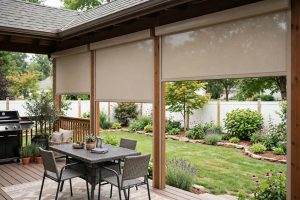
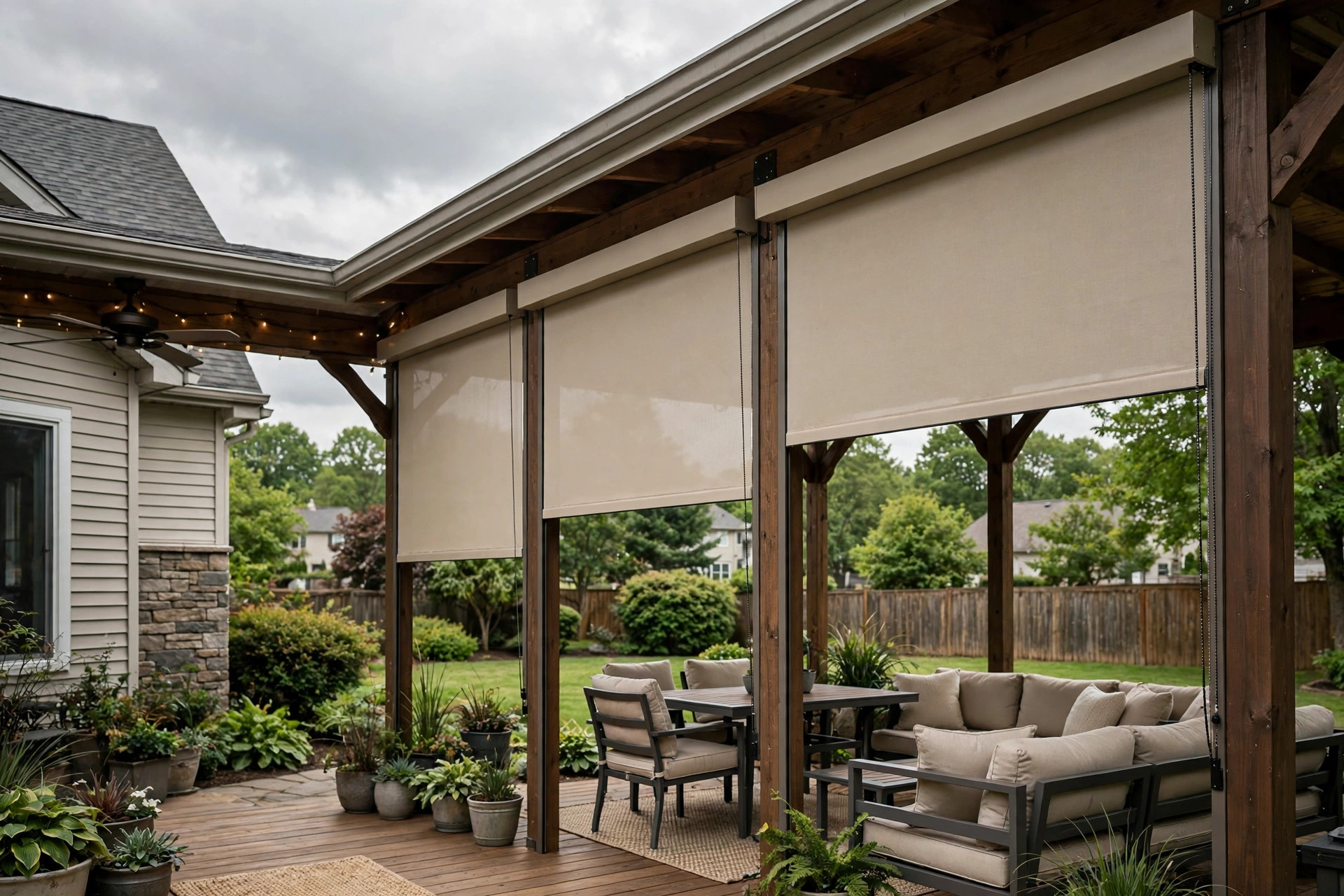
Exterior roller shades are the most common pick. A fabric panel rolls around a tube at the top. A bottom bar keeps it straight. Cables or tracks on the sides stop wind from swinging it. These shades fit porches, decks, pergolas, and gazebos. They roll away cleanly when you want full sun. Many new owners pair them with best outdoor patio curtains for sale for a layered look on wide openings.
Solar Screen Shades
Solar screens are woven mesh that blocks heat but keeps the view. They are not fully waterproof, so they suit covered porches more than open decks. Some brands sell a coated version that sheds rain. They come in many openness levels. They are a good middle choice when you want shade without darkness.
Vinyl and PVC Shades
Solid vinyl shades give full waterproofing. Rain runs off them. They give strong privacy at night when lights are on inside. They block airflow, so the patio may feel warm on still days. Clear vinyl windows can be sewn in to keep the view. These are a strong pick for hot tubs and outdoor kitchens.
Shade Sails and Fixed Panels
A shade sail is a fabric triangle stretched between posts. It is not a roller shade, but many first-time buyers use one for a large yard. Fixed panels mount flat under a pergola. Both give shade without moving parts. They need strong anchors and correct tilt so rain runs off. Many guides at home improvement project libraries show how posts and footings must be set for wind loads.
Panel Track Blinds
Wide sliding panels move on a track like closet doors. They cover large openings with fewer gaps. They work well on big patios with sliding glass doors behind them. They cost more than simple rollers. They give a clean, modern line that suits new builds.
Related choices matter here too. Shoppers often weigh affordable outdoor patio curtains with free shipping against roller shades. Curtains look soft but let rain through. Waterproof shades are the better pick where storms are common. In the South, many owners read best outdoor patio curtains for florida homes before they decide how much rain protection they need.
Cost and Price
Prices run wide. A small stock-size manual shade may cost under one hundred dollars. A custom waterproof roller for a wide porch often runs two to five hundred dollars per panel. Motorized units can reach one thousand dollars or more with install. Three panels for an average porch often total between six hundred and fifteen hundred dollars with basic hardware.
What moves the price? Size is first. Custom sizes cost more than stock. Fabric grade is second. Heavy vinyl and coated polyester cost more than plain mesh. Motors, wind sensors, and side tracks add cost. Professional measuring and install add a few hundred dollars more. Many first-time buyers save by measuring well and mounting the brackets themselves. The work needs a drill, a level, and an hour of care.
Shop with a budget band, not a fixed number. Write down the low number you hope to pay and the high number you can accept. Compare three sellers. Check return rules for custom cuts, since many are final sale. Look at warranty length on fabric and hardware. A five-year warranty on a mid-price shade beats a one-year warranty on a cheap one.
Care and Upkeep
Waterproof does not mean carefree. Dirt and pollen build up on any outdoor fabric. Wash the shade two or three times a year with a soft brush, mild soap, and cool water. Rinse fully. Let it dry open before rolling it up. A damp roll grows mildew in the tube. Never use bleach or harsh cleaners. They break down the waterproof coating.
Check the hardware each spring. Tighten bracket screws. Oil the crank gears lightly. Look at the bottom bar for dents. Look at side cables for fraying. Replace worn cords before they snap in wind. If a storm is forecast with high wind, roll the shades up. No fabric shade is made to fight a gale. Owners who follow seasonal home upkeep checklists tend to catch small wear before it becomes a tear.
Store cushions and rugs when shades are rolled up for long spells. Clean gutters above the mounting point so overflow does not pour onto the fabric. Trim branches that rub the shade. These small steps add years to the life of the panels.
Safety
Safety starts with cords. Loose cords can strangle small children and pets. Choose cordless or motorized shades when children play on the patio. If a shade has a cord, use the tension device that ships in the box. Mount it so the cord loop sits high and tight. The product safety agency gives clear rules on corded window coverings, and the same rules fit outdoor shades.
Wind is the second risk. A shade left down in a storm can tear free and fly. The bracket, the tube, or the bottom bar can strike a person. Roll shades up when winds rise. Use side tracks or cable guides on open decks. Never stand on a chair to reach a high shade. Use a stable ladder with a helper holding it.
Heat and fire need a note too. Keep grills and fire pits well away from fabric shades. Vinyl can melt or catch if flames touch it. Check the label for fire ratings. Keep the area under the shade clear of clutter so people can move fast in bad weather.
Frequently Asked Questions
Are waterproof outdoor shades truly waterproof?
Good ones are. They use vinyl-coated or sealed fabric with heat-sealed seams. Cheaper ones may only resist light rain. Read the label. Waterproof and water resistant are not the same claim. Ask for the fabric spec in writing.
Can I install them myself?
Most manual shades are a fair do-it-yourself job. You need a drill, a level, a tape measure, and basic care. The hard part is measuring well. If the opening is tall, wide, or high off the ground, hire a pro. A bad mount fails in the first storm.
How long do they last?
A mid-grade shade lasts five to eight years with care. Cheap mesh may last three. Heavy vinyl with good hardware can pass ten. Sun is the main killer. Wash them, roll them up in storms, and store them open-dry to stretch their life.
Do they block the view?
It depends on the fabric. Solid vinyl blocks the view fully. Mesh screens keep much of it. A 10 percent openness screen shows the yard clearly in daylight. At night, with patio lights on, neighbors can see in. Plan lighting with that in mind.
Will they keep the patio cooler?
Yes. A shade on the sunny side can drop the felt temperature by several degrees. Mesh types cool by blocking direct rays while air moves through. Solid vinyl cools by shade alone but traps more heat. For the hottest walls, mesh with low openness works best.
What is the best pick for a first home on a budget?
Start with two or three stock-size manual roller shades in coated polyester. Cover the worst sun side first. Add side tracks if wind is common. Spend what you save on good brackets and a careful measure. Upgrade to motors later if you love the result.
Final Word
A first home teaches fast lessons about sun, rain, and wind. The best waterproof outdoor shades for first time homeowners are not the priciest ones. They are the ones that fit well, shed real rain, and get rolled up before storms. Measure with care. Pick honest waterproof fabric. Mount to solid framing. Keep cords safe for children. Wash the panels each season. Do these things and the patio becomes a true room of the house, dry in the rain and cool in the heat, for many years to come.
For more background, see Wayfair, The Home Depot, and HGTV.
References
Blinds.com. (n.d.). Window blinds, shades, and shutters. https://www.blinds.com Bob Vila. (n.d.). Home improvement advice. https://www.bobvila.com HGTV. (n.d.). Home and garden ideas. https://www.hgtv.com The Home Depot. (n.d.). Home improvement products. https://www.homedepot.com The Spruce. (n.d.). Home and garden advice. https://www.thespruce.com This Old House. (n.d.). Home renovation guidance. https://www.thisoldhouse.com U.S. Consumer Product Safety Commission. (n.d.). Product safety information. https://www.cpsc.gov Wayfair. (n.d.). Furniture and home goods. https://www.wayfair.com
Was this guide helpful?

About Michael Thompson
The My Garden US editorial team writes practical, in-depth home and garden guides for American homeowners — tested advice, no fluff.
You May Also Like
Premium Zebra Dual Layer Shades Buying Guide
September 2, 2026 0 views
Premium Curtain Cleaning Services Near Me: A Practical Guide
April 15, 2026 0 views
Noise Reducing Bay Window Curtain Rods for Sale: A Plain Guide for Quieter Rooms
September 20, 2026 0 views