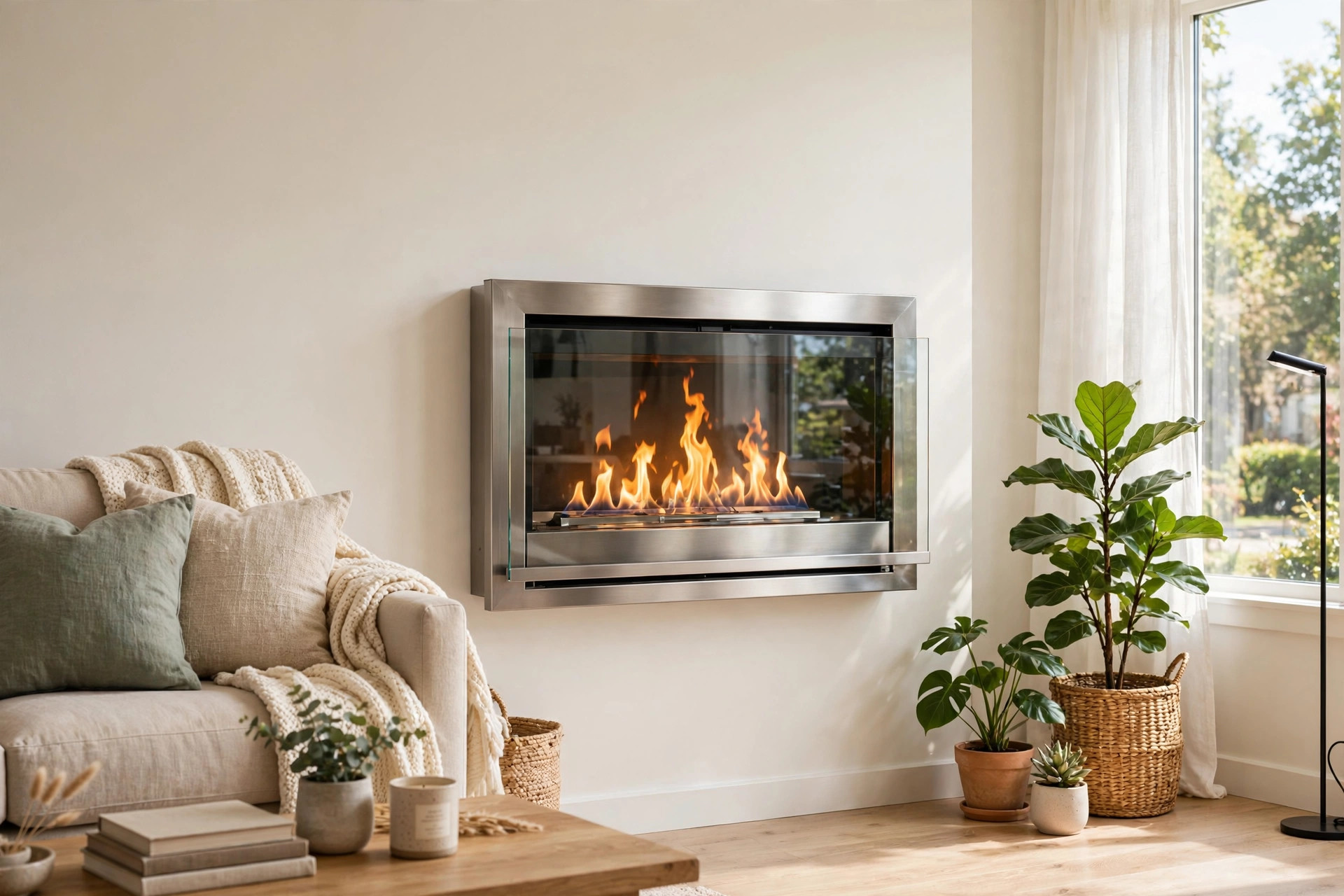

Many homes in the southern states were built without a chimney. Winters in Texas, Florida, Georgia, the Carolinas, Louisiana, Alabama, and Mississippi are short and mild. A full wood fireplace is more work than most families need. The search for the top rated ethanol wall fireplaces for southern states starts with this simple fact. People want the look and feel of a real flame, but they want it without a flue, without gas pipes, and without a big building project. A wall-mounted ethanol fireplace meets that need. It hangs on the wall like a picture. It burns liquid bioethanol fuel. It gives off a real flame and a gentle warmth. This guide explains how these units work, what to look for, what they cost, and how to use them with care.
Why Wall-Mounted Ethanol Fireplaces Suit Southern Homes
Southern homes have their own habits. Central heat runs on most winter days. Nights can drop into the forties, and a cool evening on the porch or in the living room calls for a little extra comfort. A wall ethanol unit fits this pattern well. It is a spot heater for one room, not a whole-house system. You light it when you want the mood of a fire, and you put it out when the night is done.
Renters and condo owners gain the most. Many apartment leases forbid wood burning. Gas fireplaces need a gas line and a vent, which most rentals do not have. An ethanol unit needs neither. You mount a bracket on the wall, set the burner in place, and you are done. Shoppers who are weighing fuel types may also read our guide to the best direct vent gas fireplaces for california apartments to see how vented gas compares with ventless ethanol.
Heat output is modest, and that is fine for the South. A typical wall unit puts out between 2,000 and 8,000 BTUs. That warms a small to mid-size room by a few degrees. It will not replace a furnace on a cold snap. But in New Orleans or Tampa, where the coldest nights are rare, a few degrees and a living flame are all a family wants.
Cost of entry is low compared with a built-in fireplace. A masonry fireplace can cost ten thousand dollars or more. A quality wall-mounted ethanol unit often costs between two hundred and twelve hundred dollars. There is no chimney sweep to pay and no gas fitter to hire. For a second home, a lake cabin, or a sunroom, that math is hard to beat.
How to Choose a Top Rated Ethanol Wall Fireplace: Top Rated Ethanol Wall Fireplaces for Southern States
Start with the wall itself. The unit hangs from a steel bracket that bolts into studs or masonry. Drywall alone will not hold it. A filled burner and steel body can weigh thirty to sixty pounds. Check the manual for the exact weight and for the clearances it demands. Most makers ask for at least three feet of clear space above the flame and two feet to each side. Curtains, shelves, and art must stay outside that zone.
Heat Output and Room Size
Look at the BTU rating on the spec sheet. A small burner of about one liter gives roughly 2,000 to 3,000 BTUs. A large burner of three liters can reach 7,000 to 8,000 BTUs. As a rule, 20 BTUs per square foot will lift a room a few degrees. A 300-square-foot den needs about 6,000 BTUs for a clear effect. Measure your room before you shop. The guides at The Spruce remind readers that a fireplace should fit the scale of the room, and an oversized flame in a small room is a poor choice.
Ventless does not mean airless. Ethanol burns clean, but it still uses oxygen and gives off water vapor and a small amount of carbon dioxide. Keep a window cracked or a door ajar when the unit burns for more than an hour. Makers of ventless units, including brands listed on Napoleon, stress fresh air in the room during use.
Burner Size and Burn Time
Burn time matters more than most buyers think. A one-liter burner runs about three to four hours on a full fill. A three-liter burner can run six to eight hours. If you want the fire lit through a whole evening of guests, pick the larger burner. Adjustable burners let you open the flame wide or turn it low. A low flame stretches the fuel and softens the heat. Stainless steel burners last longer than thin tin ones. Look for a burner box with a sliding damper and a snuffer lid that comes with the unit.
Build quality shows in the details. The wall plate should be thick steel with a heat shield on the back. Glass panels on the front and sides keep hands away from the flame and cut drafts. Tempered glass is the standard. The finish should be a high-heat powder coat, not plain paint. If you are dressing the wall around the unit, our article on fireplace glass doors reviews and buying guide covers glass safety ratings that apply to ethanol fronts as well.
Types of Ethanol Wall Fireplaces
Wall-mounted ethanol fireplaces come in a few clear styles. Each suits a different room and taste.
Recessed units sit inside the wall cavity. The face is flush with the drywall, which gives a clean, built-in look. They need a framed opening and a non-combustible liner, so setup takes more work. They suit new builds and full remodels.
Surface-mount units hang on a bracket like a flat panel. They project four to eight inches from the wall. They are the most common type and the easiest to fit. Most top rated models in this class are surface mount.
See-through units have glass on two sides and mount on a half wall or room divider. They give a flame view from two rooms at once. They need open space on both sides, so they fit lofts and open plans.
Curved and round units use a bent steel body or a drum shape. They soften the look of a square room. Heat output is the same as a flat unit of the same burner size.
Outdoor-rated units carry seals and stainless bodies that stand up to rain and salt air. They suit covered patios in coastal states like Florida and South Carolina. Never use an indoor-only unit outside, even under a roof.
Fuel is the same across types. Use only liquid bioethanol made for fireplaces. Never use gasoline, kerosene, or rubbing alcohol. Buy fuel labeled for ventless fireplaces, and store it in its sealed can away from the unit.
Cost and Price of Ethanol Wall Fireplaces
Prices run in clear bands. Small one-burner wall units from lesser-known brands sell for one hundred fifty to three hundred fifty dollars. Mid-range units with tempered glass, a steel heat shield, and a two-liter burner sell for four hundred to eight hundred dollars. Premium units from known hearth brands, such as those shown on Heatilator, sell for nine hundred to two thousand dollars. Recessed models cost more because the frame kit and liner add to the price. Ratings from Consumer Reports can help you compare build quality across brands before you buy.
Fuel cost is the running cost to watch. A liter of fireplace ethanol sells for eight to fifteen dollars at stores like The Home Depot and Lowe’s. A two-liter burner at a mid flame uses about half a liter per hour. A four-hour evening then costs eight to fifteen dollars in fuel. That is more per hour than natural gas, but southern users run the unit for mood on mild nights, not for daily heat. Over a season of fifty evenings, fuel may run four hundred to seven hundred fifty dollars.
Watch for hidden costs. Some cities ask for a permit for any open flame device, even ventless. A wall anchor kit for masonry may add twenty dollars. A spare snuffer tool and a long lighter add a few dollars more. Shipping on a sixty-pound steel unit can add forty to eighty dollars if the seller does not offer free freight.
To dress the wall and mantel around your new unit, you may also like our piece on top rated electric fireplace mantels for american homes, which covers clearances and styling that carry over to ethanol setups.
Care and Upkeep
An ethanol fireplace asks for little care, but it asks for it every time. Wipe the steel body with a soft dry cloth when it is cool. Soot is rare with good fuel, but cheap fuel can leave light marks on glass. Clean glass with a damp cloth and a drop of dish soap, then dry it. The care guides at Family Handyman give the same advice for all hearth gear: small checks, done often, stop big faults.
Empty the burner if you will not use the unit for a month or more. Ethanol left in an open burner takes up water from the air, which can make the next lighting sputter. Pour unused fuel back into its sealed can through a funnel. Check the burner box twice a year for dents or rust.
Keep spare fuel in a cool place away from sun. A garage shelf or a utility closet works. Keep the cans upright and sealed. Do not store fuel in the same cabinet as the fireplace tools. Keep a small fire extinguisher rated for liquid fires within ten feet of the unit. A dry chemical ABC extinguisher is the right type.
Safety Rules for Ethanol Fireplaces
Real flame demands real rules. Follow these every time.
First, never add fuel to a burning or hot burner. Wait at least fifteen to twenty minutes after the flame is out. Pouring fuel into a hot burner can flash into fire outside the box. This is the most common cause of ethanol fireplace harm, and it is fully preventable.
Second, fill the burner only to the marked line. Overfilling lets fuel spill when you move the burner. Use a funnel and a steady hand. Wipe up any spill with a damp cloth before you light.
Third, light with a long fireplace lighter or a long match. Keep your face and hands back from the burner opening. Light at arm’s length.
Fourth, keep children and pets at least three feet away. A glass front helps, but the glass gets hot. Teach the house rule early: the fireplace wall is a no-touch zone when the flame is lit and for an hour after.
Fifth, never leave the unit burning in an empty house or while you sleep. Put the flame out with the snuffer lid, not by blowing. Blowing can throw burning fuel.
Sixth, watch local rules. Some states and cities limit ventless fuel-burning devices in bedrooms or small rooms. Florida and Texas codes differ by county, so check with the local fire marshal before you mount the unit in a bedroom. The U.S. Consumer Product Safety Commission keeps general guidance on open-flame home products, and the EPA notes that all fuel burning changes indoor air, so fresh air matters.
Seventh, keep the unit away from drafts. A ceiling fan on high or a vent blowing across the flame can push heat sideways onto the wall. Turn fans to low when the fireplace burns.
Frequently Asked Questions
Do ethanol wall fireplaces need a chimney or vent? No. They burn bioethanol, which needs no flue. The flame gives off heat, water vapor, and a small amount of carbon dioxide. You still want some fresh air in the room during long burns.
How much heat does a wall ethanol fireplace give? Most give 2,000 to 8,000 BTUs, based on burner size. That warms one room by a few degrees. It suits mild southern winters. It will not heat a whole house.
Is an ethanol fireplace safe in a home with kids? It can be, with strict rules. Mount it high enough that small hands cannot reach it. Use a model with a glass front. Never leave it burning alone with children in the room. An hour of cool-down time applies after the flame is out.
What does ethanol fuel cost per month? A liter costs eight to fifteen dollars. A two-liter burner at a mid flame uses about half a liter per hour. Four evenings a week at three hours each runs about one hundred to two hundred dollars a month in fuel. Most southern owners burn less than that.
Can I mount an ethanol fireplace on any wall? The bracket must bolt into studs, brick, or block. Plain drywall will not hold the weight. Keep the clearances in the manual, often three feet above and two feet to the sides. The setup tips at This Old House cover wall mounting for heavy hearth units step by step.
Do they work during a power outage? Yes. There are no electric parts. A match or lighter starts the flame. That makes them handy in storm season, when southern states lose power to hurricanes. Still, never use one as the main heat source in an outage.
A Final Word
The top rated ethanol wall fireplaces for southern states share a few traits. A sturdy steel body. A stainless burner with a damper. Tempered glass on the front. Clear manuals with honest BTU numbers. Pick the size that fits your room, mount it to structure, and treat the flame with respect. Do that, and you will have a warm glow on cool southern nights for years.
References
Consumer Reports. (n.d.). Product reviews and ratings. https://www.consumerreports.org Family Handyman. (n.d.). DIY home repair and maintenance. https://www.familyhandyman.com Heatilator. (n.d.). Fireplaces and fireplace products. https://www.heatilator.com Lowe’s. (n.d.). Home improvement products. https://www.lowes.com Napoleon. (n.d.). Fireplaces, grills, and heating products. https://www.napoleon.com The Home Depot. (n.d.). Home improvement products. https://www.homedepot.com The Spruce. (n.d.). Home and garden advice. https://www.thespruce.com This Old House. (n.d.). Home renovation guidance. https://www.thisoldhouse.com U.S. Consumer Product Safety Commission. (n.d.). Product safety information. https://www.cpsc.gov U.S. Environmental Protection Agency. (n.d.). Protecting human health and the environment. https://www.epa.gov
Was this guide helpful?

About Emily Rodriguez
The My Garden US editorial team writes practical, in-depth home and garden guides for American homeowners — tested advice, no fluff.
You May Also Like
EPA Certified Chimney Inspection Services for Homeowners
May 10, 2026 0 views
Best Wood Burning Stoves Buying Guide: How to Pick the Right Stove
July 14, 2026 0 views
Affordable Fireplace Tool Sets for Sale: A Simple Buying Guide
April 5, 2026 0 views