
Many office workers end the day with a stiff neck. Hours at a desk take a toll on the body. The head drifts forward. The shoulders rise. The muscles along the neck and upper back grow tight. An ergonomic neck pillow for office chair headrest is a small accessory made to fight this problem. It attaches to the headrest of a chair and gives the head and neck a soft place to rest. This guide explains what these pillows do, how to pick one, what they cost, and how to keep one in good shape.
Why Neck Support at a Desk Matters
Good posture at a desk is hard to keep. The monitor sits still. The chair supports the back. But the head weighs about ten to twelve pounds. The neck muscles carry that weight all day. When the head moves forward even an inch or two, the strain on the neck grows.
A chair headrest is there to support the head. Many office chairs have tall backs with headrests built in. Some headrests are simple curved pads. They may sit too high or too low for the user. An ergonomic neck pillow fills the gap between the head and the headrest. It gives the neck a gentle curve to lean on. This helps the spine hold a more natural line.
Neck strain from desk work often shows up as dull pain at the base of the skull. Some people feel tightness between the shoulder blades. Others get tension headaches late in the day. These signs point to the neck doing too much work. Better support can reduce the load. A pillow will not fix every problem. It can make long days more bearable. Pairing it with a best office chair for long hours home office setup gives the whole body a better base.
Office ergonomics research has long held that the head should sit over the shoulders, not in front of them. Guides from furniture makers like Herman Miller and Steelcase stress neutral posture at the desk. Their seating guides describe how head and neck alignment affects comfort through the day. A neck pillow is one small part of that larger picture. Desk height, monitor height, and chair adjustment matter too.
What to Look for When Choosing One: Ergonomic Neck Pillow for Office Chair Headrest
Not all neck pillows suit an office chair headrest. Travel pillows made for airplanes are shaped for sleeping upright. They often lack a way to attach to a chair. Look for a pillow built for desk chairs.
Fit and Attachment
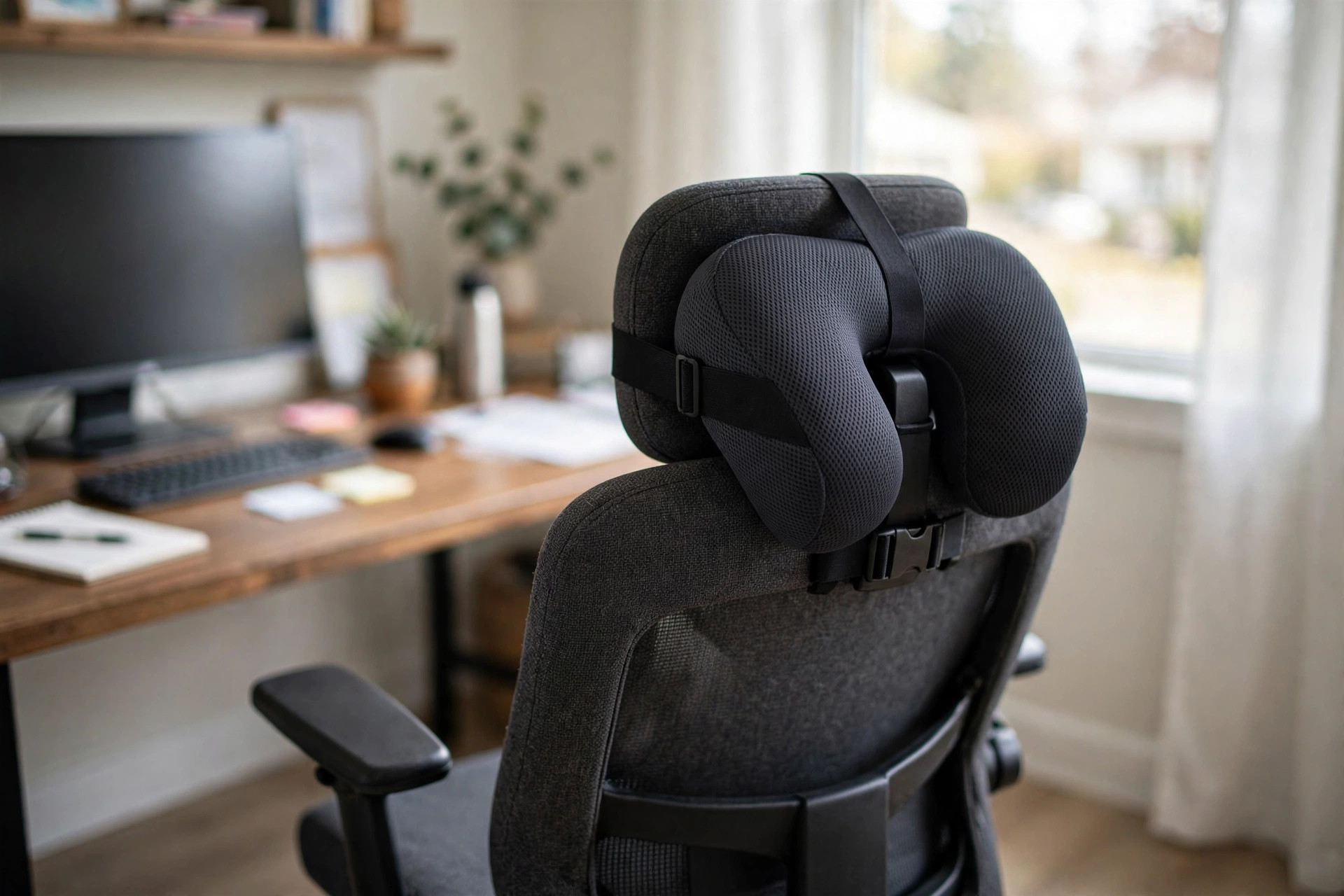
The first thing to check is how the pillow attaches. Common designs use elastic straps that wrap around the headrest. Some use adjustable buckles or Velcro straps. The strap should hold the pillow firm so it does not slide. Measure the width and height of the headrest before buying. A pillow made for a wide headrest may not sit right on a narrow one.
Fill Material
Memory foam is the most common fill. It molds to the shape of the neck and spreads pressure across a wider area. Some pillows use a slow-rebound foam that returns to shape after use. Others use fiberfill or microbeads. Memory foam gives firmer, more even support. Fiberfill feels softer but flattens with time. Microbeads shift around and may not hold the neck in place.
Shape and Size
Ergonomic neck pillows come in several shapes. U-shaped pillows cradle the sides of the neck. Curved or contoured pillows follow the natural curve behind the neck. Some are simple cylinders. Others are flat pads with a raised center. A contoured shape suits most people because it supports the neck without pushing the head forward. The pillow should be thick enough to close the gap between the neck and the headrest. It should not be so thick that it forces the chin toward the chest.
Cover and Comfort
The cover touches the skin for hours. Breathable fabric helps in warm rooms. Mesh panels let air move through the pillow. Some covers use cooling fabric that feels cool to the touch. Look for a removable cover that can be washed. A pillow that cannot be cleaned will wear out faster.
Adjustability
Height adjustment matters. People are different heights. A pillow that can move up or down on its straps fits more users. Some pillows also tilt. Tilt control lets the user set the angle that feels best. Test the strap range before settling on one model.
Types and Options
The market holds several broad types of ergonomic neck pillows for office chair headrests. Each suits a different need.
Strap-on headrest pillows. These are the most common type. They fasten to an existing headrest with straps. They work with most standard office chairs. Prices are low. They are easy to move from one chair to another.
Integrated replacement headrests. Some makers sell headrests that replace the one that came with the chair. These often fit certain chair brands or models. They can offer better support than a strap-on pad. They cost more. Check that the replacement fits the chair model before ordering.
Lumbar-and-neck sets. Some sets include both a neck pillow and a lower back roll. The two pieces work together. The back roll supports the lower spine. The neck pillow supports the head. A set can improve the whole seated posture at once.
Cooling-gel pillows. These have a layer of gel under the fabric. The gel pulls heat away from the skin. They suit people who run warm at their desk. The support is much like a standard memory foam pillow.
Inflatable pillows. These use air instead of foam. The user blows them up to the desired firmness. They are light and easy to carry. They do not last as long as foam pillows. The air chamber can leak over time.
Shoppers comparing options will find reviews on sites like Wirecutter and PCMag, which test office accessories alongside desks and chairs. Retailers such as Wayfair and IKEA list many models with buyer ratings that show how each pillow holds up in daily use.
Cost and Price
Prices for an ergonomic neck pillow for office chair headrest fall into clear bands. Simple strap-on models made of fiberfill cost between ten and twenty dollars. Memory foam models with straps cost between twenty and forty dollars. Contoured pillows with adjustable straps and washable covers run from thirty to sixty dollars. Replacement headrests built for specific chairs cost between fifty and one hundred dollars or more.
The fill and the strap system drive most of the price difference. A pillow with slow-rebound foam and wide adjustable straps costs more than a plain fiberfill pad. Brand name adds to the price as well. A well-known ergonomic brand charges more than a generic maker.
Value matters more than price alone. A twenty-five dollar pillow that keeps its shape for two years is a better buy than a twelve dollar pillow that flattens in three months. Read buyer reviews about durability. Look for comments about the foam holding up after months of daily use.
Shipping and returns matter too. Buy from a seller with a fair return policy. A pillow may feel fine for ten minutes and fail after a full workday. A thirty-day return window lets the user test it in real use. Large home goods stores often stock these pillows, and shopping guides on The Spruce compare models across price bands to help buyers spend wisely.
Care and Upkeep
A neck pillow needs little care. A few simple habits keep it fresh and firm.
Remove and wash the cover on a regular schedule. Most covers can go in a washing machine on a gentle cycle. Let the cover air dry. High heat in a dryer can shrink the fabric. If the pillow has no removable cover, wipe the surface with a damp cloth and mild soap.
Air out the foam now and then. Memory foam can pick up odors from a warm room. Place the pillow near an open window for a few hours. Do not put memory foam in the washing machine. Water can break down the foam cells.
Check the straps every few months. Elastic straps stretch with time. A loose strap lets the pillow slip down the headrest. Tighten or replace the straps as needed. Some makers sell replacement strap sets.
Replace the pillow when the foam stops springing back. Press a thumb into the foam and let go. Good foam returns to shape in a few seconds. Dead foam keeps the dent. A flat pillow no longer supports the neck. Most quality pillows last one to three years of daily use.
Safety
Neck pillows are simple products. A few safety points still apply.
The pillow should support the neck, not bend it. If the head feels pushed forward after adding the pillow, the pillow is too thick or set too low. Move it up or choose a thinner model. A pillow that forces the chin down can make neck pain worse.
Keep straps away from the neck. Straps should wrap around the headrest only. They should not dangle where they could catch on clothing or a headset cord.
People with neck injuries should be careful. A pillow is not a medical device. It does not treat herniated discs, pinched nerves, or whiplash. Anyone with ongoing neck pain should talk to a doctor or a physical therapist. Ergonomic guides from UPLIFT Desk note that accessories support good posture but do not replace professional care for injuries.
Check for skin irritation. Some people react to latex foam or certain fabrics. If the skin behind the neck gets red or itchy, try a different fill or a cotton cover. Wash the cover before first use to remove factory residue.
FAQ
Will a neck pillow fit any office chair?
Most strap-on pillows fit standard office chairs with a separate headrest. Chairs with very wide, very narrow, or built-in headrests may not accept them. Measure the headrest and compare it to the pillow’s strap range before buying.
Can I use a travel neck pillow on my office chair?
A travel pillow can work in a pinch. But travel pillows are shaped for sleeping, not for typing at a desk. They often lack straps to hold them in place. A pillow made for office chairs stays put and keeps the right angle for desk work.
How long should I use the pillow each day?
Use it whenever sitting at the desk. The pillow supports the head during typing, reading, and calls. Stand up and move around at least once an hour. No pillow replaces regular movement.
Does a neck pillow help with headaches?
It may help with tension headaches caused by poor neck posture. Better support can ease the muscle strain that feeds these headaches. It will not help headaches with other causes, such as migraines or vision problems. See a doctor for headaches that persist.
What is the best fill for an office neck pillow?
Memory foam suits most users. It holds the neck in a steady position and spreads pressure well. Slow-rebound foam keeps its shape longer than fiberfill. People who sleep warm may prefer a model with mesh panels or a cooling cover.
Should I buy a pillow or a new chair?
A pillow can improve an okay chair. It cannot fix a chair with no lumbar support, a broken tilt, or a seat that is too deep. If the chair itself is the problem, a better chair is the smarter buy. Guides on home office setups from Apartment Therapy often rank the chair first among desk upgrades, with accessories like footrests and neck pillows as the next step. An ergonomic footrest for under desk at home and the best laptop stand for standing desk posture round out a comfortable station.
A Short Final Word
An ergonomic neck pillow for office chair headrest is a modest buy with a clear job. It gives the head a place to rest. It keeps the neck in a kinder line through long hours. Pick one that fits the headrest, uses quality foam, and has a washable cover. Set the height so the head rests back without tilting forward. Used with a good chair, a raised screen, and regular breaks, it can make the workday easier on the neck. Independent testing sites like Consumer Reports remind buyers to weigh comfort claims against real-world durability before spending, which is sound advice for any office accessory.
References
Apartment Therapy. (n.d.). Home design ideas and inspiration. https://www.apartmenttherapy.com Consumer Reports. (n.d.). Product reviews and ratings. https://www.consumerreports.org Herman Miller. (n.d.). Office furniture and ergonomic seating. https://www.hermanmiller.com IKEA. (n.d.). Home furnishings. https://www.ikea.com PCMag. (n.d.). Technology product reviews. https://www.pcmag.com Steelcase. (n.d.). Office furniture and workplace research. https://www.steelcase.com The Spruce. (n.d.). Home and garden advice. https://www.thespruce.com UPLIFT Desk. (n.d.). Standing desks and ergonomic office furniture. https://www.uplift-desk.com Wayfair. (n.d.). Furniture and home goods. https://www.wayfair.com Wirecutter. (n.d.). Product reviews from The New York Times. https://www.nytimes.com/wirecutter
Was this guide helpful?

About Emily Rodriguez
The My Garden US editorial team writes practical, in-depth home and garden guides for American homeowners — tested advice, no fluff.
You May Also Like
Ergonomic Standing Desk Converter with Keyboard Tray: A Complete Buyer’s Guide
May 30, 2026 0 views
Best Cable Clips for Desk Wire Management
September 27, 2026 0 views
Ergonomic Laptop Riser for Standing Desk Height: What to Know Before You Buy
July 23, 2026 0 views