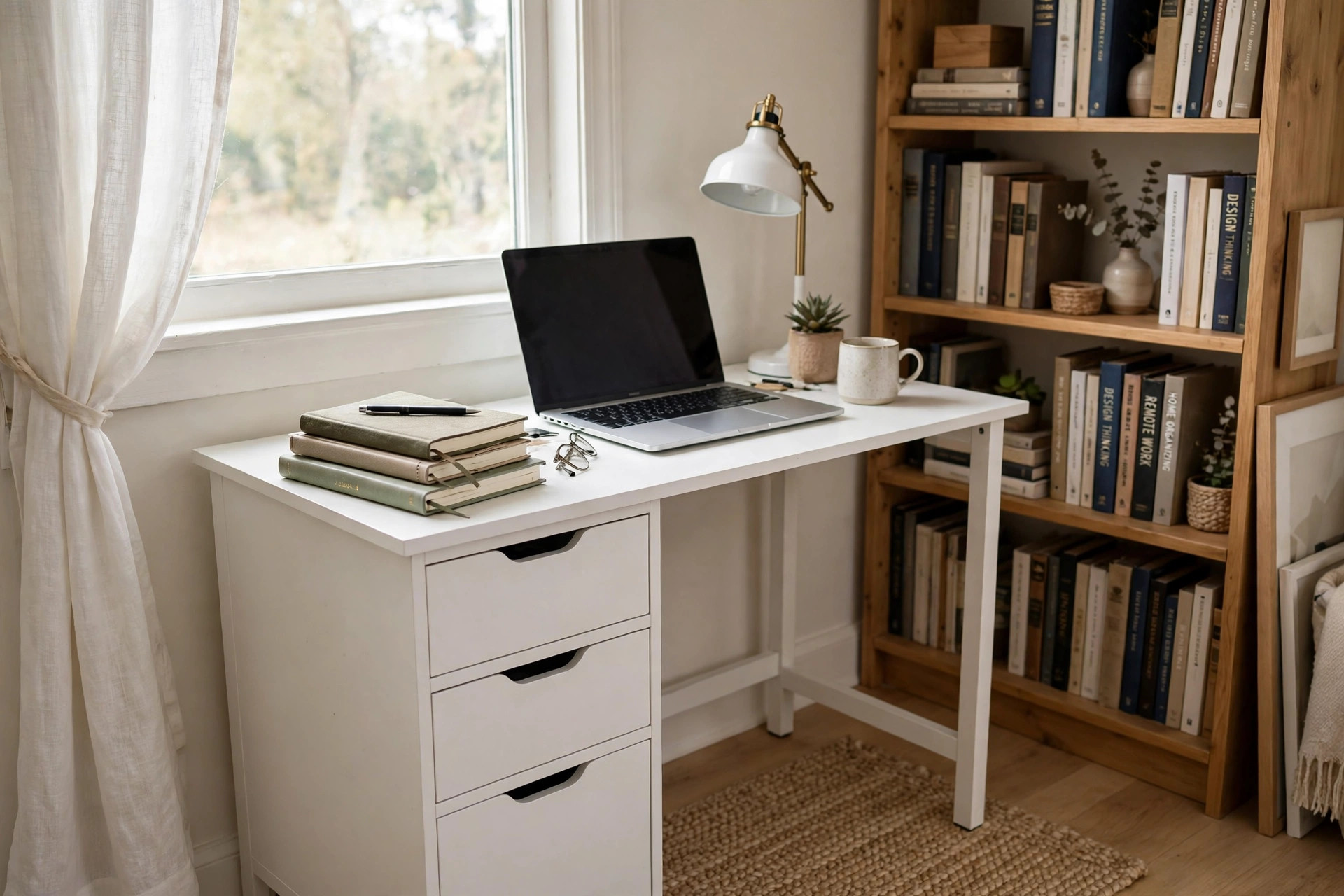

A small office desk with storage drawers white is one of the simplest ways to build a home office in a tight space. Many people now work from a corner of a bedroom, a hallway nook, or a small apartment living room. A big executive desk will not fit there. A small white desk with drawers solves both problems at once. It gives you a work surface, and it gives you closed storage under it. The white finish keeps a small room feeling open and bright instead of crowded.
This guide explains why this kind of desk matters, how to choose one, the main types on the market, what you should expect to pay, how to care for it, and how to use it safely. Whether you work from home full time or only need a spot for bills and school work, the advice below will help you buy with confidence.
Why It Matters
A Small Desk Changes a Small Room
Space is the first thing most buyers think about. A desk that is 40 to 48 inches wide fits along most walls and under most windows. It leaves room for a chair, a door to open, and a person to walk past. A desk that is too deep, on the other hand, eats floor space fast. A depth of 20 to 24 inches is enough for a laptop, a lamp, and a notebook. Anything deeper pushes you too far from the wall and makes the room feel cramped.
Color matters in a small room too. Dark wood can look heavy in a space of 80 square feet. White reflects light and fades into the wall. The room feels larger than it is. This is one reason white desks have stayed popular for small home offices year after year.
Drawers Save the Workday
Drawers turn a desk into a workstation. Without them, the desk top becomes the storage area. Pens, chargers, tax folders, and sticky notes spread across the surface until there is no room left to work. With drawers, each of these things has a home. One shallow drawer holds pens and small tools. One deeper drawer holds files, a printer, or a stack of notebooks.
Many buyers at big furniture retailers start their search with storage in mind. They know from experience that a desk without drawers looks clean on day one and messy by day thirty. Two or three drawers are the sweet spot for most people. More than that can make the desk bulky. Fewer than that can leave you short of space.
How to Choose: Small Office Desk with Storage Drawers White
Measure First
Measure before you shop. Write down the width of the wall where the desk will stand. Note the location of outlets, windows, and doors. Leave at least 30 inches of clearance behind the desk for the chair to pull out. Leave at least 36 inches of walking space in front of a door.
Measure the chair too. A chair with arms needs about 25 inches of width under the desk. A chair without arms needs less. The knee space under the desk should be at least 24 inches wide and 25 inches high for comfortable sitting. If the drawers sit on the right side, a right-handed person will find them easy to reach. Left-hand drawers suit left-handed workers better.
Check Drawer Quality
Not all drawers are equal. Open and close each drawer in the store, or read the product details with care online. Look for drawers that run on metal slides rather than bare wood tracks. Metal slides glide smoothly and hold more weight. Ball-bearing slides are the best common type.
Check the drawer depth. A file drawer should be at least 12 inches deep to hold letter-size folders front to back. A pencil drawer only needs 2 or 3 inches of height. Solid drawer boxes last longer than thin fiberboard ones.
Pick the Right Finish
A white desk can be painted wood, laminate over particle board, or powder-coated metal. Each finish has its own strengths. Painted wood looks warm and classic. It can be touched up with a small brush if it chips. Laminate resists scratches and wipes clean with ease. It is the most common finish on budget desks. Powder-coated metal is very tough.
Watch out for glare. A glossy white top can bounce light from a window straight into your eyes. A matte or satin finish is kinder to the eyes during long workdays. If you sit facing a window, a matte top is the safer choice.
Think About the Chair
A desk is only half of a workstation. The chair matters just as much. A chair that is too tall will push your shoulders up. A chair that is too low will bend your neck down. Your elbows should rest at about 90 degrees when your hands are on the keyboard. Your feet should rest flat on the floor.
If you use a plain wooden chair, an ergonomic seat cushion for a wooden office chair can add comfort without the cost of a new chair. Experts at companies like Steelcase have studied seating for decades, and their research points to the same basics: support the lower back, keep the feet flat, and change position often.
Types and Options
Writing Desks With Drawers
The classic writing desk has a flat top and two or three shallow drawers under it. It is light, simple, and easy to fit into a bedroom or living room. Most are 42 to 48 inches wide. They suit laptops and light paperwork. They are not the best choice if you need a desktop computer tower, a printer, and deep file storage all at once.
Corner Desks
A corner desk uses space that often goes to waste. The L-shape gives you two work surfaces: one for the computer and one for writing or a printer. Many corner desks include drawers on one side. The trade-off is that they are harder to move and need a true 90-degree corner.
Desks With a Keyboard Tray
Some small desks add a pull-out tray under the top. A compact desk with a keyboard tray for a small room frees up the main surface for a monitor, papers, and a lamp. The tray should be wide enough for both the keyboard and the mouse. It should also lock in place when pulled out so it does not slide back while you type.
Sit-Stand Desks
Height-adjustable desks let you sit for part of the day and stand for the rest. Standing for some of the day can ease back pain for people who sit for long hours. Standing desk makers like Uplift Desk offer small models with drawers, though they cost more than fixed desks. A sit-stand desk needs extra thought about cable length, since the cords must reach the outlet at both heights.
Wall-Mounted and Fold-Down Desks
In a very small room, a fold-down desk can be the answer. It mounts to the wall and folds flat when not in use. Some models include small drawers or shelves. They work well in studio apartments and dorm rooms. They hold less weight than a standing desk, so they suit laptops rather than heavy desktop setups. Shoppers browsing IKEA will find several compact wall-mounted options in this style.
Cost and Price
Prices for a small white desk with drawers vary widely. A simple laminate model from a big-box store often costs between 80 and 150 dollars. These desks look good and work well for light daily use. They may not survive many moves.
A mid-range desk with solid wood or sturdy engineered wood costs between 150 and 350 dollars. Drawers on metal slides are common at this price. The finish resists wear better. This is the range where most home office buyers land.
A high-end desk from a maker like Herman Miller can cost 500 dollars or more. You pay for better materials, stronger joinery, and a longer warranty. Such a desk can last twenty years or more. For a full-time home office, the cost per year of use is often lower than it looks.
Watch for hidden costs. Assembly can take one to two hours. Some sellers charge extra for delivery or for hauling away the box. A cable tray, a desk lamp, and a monitor stand may add another 50 to 100 dollars to the total setup. Guides at The Spruce often remind readers to budget for these small extras before they buy.
Care and Upkeep
Weekly Cleaning
White desks show dust and marks more than dark desks do. Wipe the top once a week with a soft, damp cloth. Use a mild soap if you see marks. Avoid harsh cleaners, bleach, and rough pads. They can dull the finish or leave scratches that catch the light.
Dry the surface after wiping. Water left standing on a laminate edge can seep in and cause swelling over time. A coaster under a coffee mug and a pad under a hot laptop help a great deal.
Drawer Maintenance
Empty the drawers twice a year and wipe them out. Dust and paper clips gather in the corners. Check the slides while the drawer is out. A drop of silicone lubricant on a sticky metal slide will make it glide again. Do not use oil, which can stain paper.
Tighten any loose screws you find. Desks loosen over time, especially if they are moved. A wobbly desk puts extra stress on the drawer slides. Five minutes with a screwdriver once a year keeps the whole desk solid.
Protecting the Finish
Keep the desk out of direct sun if you can. Strong sunlight can yellow a white finish over the years. A curtain or a blind on a south-facing window is enough. If the desk sits near a heater vent, leave a few inches of space so hot air does not dry out the finish.
Safety
A small desk is light, and light furniture can tip. Place the heaviest items, like a printer or a stack of files, in the lowest drawer. This keeps the center of gravity low. If the desk feels tippy, fasten it to the wall with an anti-tip strap or bracket. This step is very important in homes with small children who may climb.
Do not overload the drawers. Most desk drawers are rated for 15 to 25 pounds each. A drawer stuffed with books can break its slides or pull the desk forward. Spread heavy items across drawers instead of packing them into one.
Cable safety matters too. Run cords behind the desk, not across the floor where feet can catch them. A simple cable tray under the top keeps chargers and power strips off the floor. Unplug the power strip before you reach behind the desk to move cables.
If you mount a heavy monitor on a stand, check that the desk top is thick enough to hold the clamp. Thin tops can crack under a heavy arm. An adjustable monitor arm for a heavy 34 inch monitor needs a sturdy surface, so test the desk top before you trust it with an expensive screen. Review sites like Wirecutter and PCMag publish detailed tests of monitor arms and stands that can help you choose one that matches your desk.
FAQ
What size desk fits a small home office?
A desk 40 to 48 inches wide and 20 to 24 inches deep fits most small offices. Measure your wall first. Leave 30 inches behind the desk for the chair and 36 inches of walking space in front of doors. In a room under 100 square feet, a 42-inch desk is often the best fit.
Are white desks hard to keep clean?
White desks show dust and marks more than dark ones, but they are not hard to clean. A weekly wipe with a damp cloth and mild soap keeps the finish bright. Coasters and desk pads prevent most stains. Matte finishes hide fingerprints better than glossy ones.
How many drawers does a home office desk need?
Two to three drawers suit most people. Use one shallow drawer for pens and small tools. Use one deep drawer for files or a printer. More drawers add bulk and weight. If you need more storage, a small rolling cabinet beside the desk is a better choice than a bigger desk.
Can a small desk hold two monitors?
Yes, if the desk is at least 48 inches wide and the top is sturdy. Two 24-inch monitors fit side by side on a 48-inch desk. A dual monitor arm saves surface space by lifting both screens off the desk.
Is a sit-stand desk worth the extra cost?
It can be, for people who sit for eight hours or more a day. Standing for part of the day may ease back and neck pain. A small sit-stand desk with drawers costs more than a fixed desk and needs care with cable length. If you only work from home part time, a fixed desk with a good chair is often enough.
How long should a good desk last?
A budget laminate desk lasts about three to five years of daily use. A mid-range desk with good slides lasts eight to twelve years. A high-end solid wood desk can last twenty years or more. Regular cleaning, tightened screws, and drawer care will stretch the life of any desk.
Final Word
A small office desk with storage drawers in white is a quiet workhorse. It asks little space and gives back order, comfort, and a bright place to think. Measure your room, check the drawers, pick a finish that suits your light, and set it up with care. Done well, this small piece of furniture can carry your workday for many years.
References
Herman Miller. (n.d.). Office furniture and ergonomic seating. https://www.hermanmiller.com IKEA. (n.d.). Home furnishings. https://www.ikea.com PCMag. (n.d.). Technology product reviews. https://www.pcmag.com Steelcase. (n.d.). Office furniture and workplace research. https://www.steelcase.com The Spruce. (n.d.). Home and garden advice. https://www.thespruce.com UPLIFT Desk. (n.d.). Standing desks and ergonomic office furniture. https://www.uplift-desk.com Wayfair. (n.d.). Furniture and home goods. https://www.wayfair.com Wirecutter. (n.d.). Product reviews from The New York Times. https://www.nytimes.com/wirecutter
Was this guide helpful?

About Jennifer Lee
The My Garden US editorial team writes practical, in-depth home and garden guides for American homeowners — tested advice, no fluff.
You May Also Like

Best Task Lighting for Home Office Desk Setup
June 14, 2026 0 views
Ergonomic Office Chair Mesh Back with Lumbar: A Complete Guide
September 11, 2026 0 views
Ergonomic Neck Pillow for Office Chair Headrest: A Plain Guide for Desk Workers
May 8, 2026 0 views