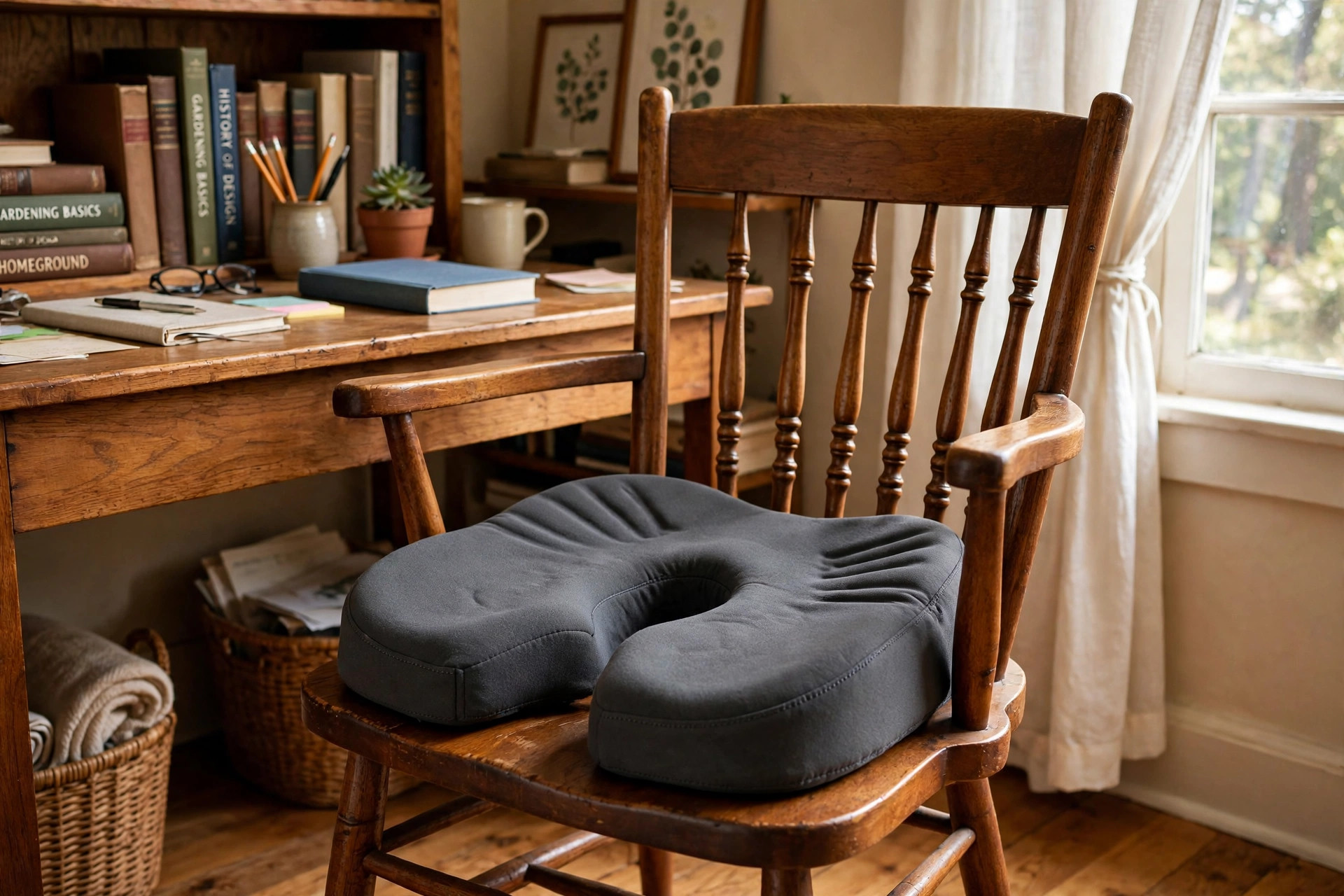

Many people work at a wooden desk chair. It looks fine. It lasts for years. It matches the furniture. But after an hour or two, the seat feels hard. The legs ache. The lower back starts to complain. An ergonomic seat cushion for wooden office chair use is one of the simplest fixes in the home office. It costs little. It needs no tools. It sits on the chair and changes the whole day.
This guide explains the problem in plain terms. It shows what makes a cushion truly ergonomic. It compares the main types. It lists prices you can expect to pay. It tells you how to keep the cushion clean. And it answers the questions buyers ask most often. If you sit for long hours at a hard wooden chair, this is for you.
Why a Hard Wooden Seat Wears You Down
A wooden chair seat is flat and stiff. Your body is not. When you sit on a hard surface, your weight rests on two small bones at the base of the pelvis. Doctors call them the sit bones. On a wooden seat, all your pressure goes through these two small points. Blood flow slows in the legs. The tailbone presses into the hard wood. Muscles in the back work harder to hold you up.
Most people respond by slouching. They slide forward in the chair. They lean to one side. This takes pressure off the sore spots for a short time. But poor posture brings its own troubles. The neck bends forward. The shoulders round. The lower back curves the wrong way. By the end of the day, the whole body feels tired.
A wooden office chair also lacks the curve that good chairs have. Modern office chairs tilt the seat slightly. They support the thighs. They let the knees sit at a right angle. A plain wooden chair does none of this. The seat is often too high or too deep. The edge can press into the back of the thighs and cut off circulation.
A cushion helps in three ways. First, it spreads your weight over a wider area. This lowers the pressure on the sit bones. Second, it lifts you slightly and softens the seat edge, which helps blood flow to the legs. Third, a shaped cushion can tilt the pelvis forward a little, which keeps the spine closer to its natural curve. None of this is magic. It is simple body mechanics.
How to Choose an Ergonomic Seat Cushion: Ergonomic Seat Cushion for Wooden Office Chair
Not every cushion deserves the word ergonomic. A flat pillow may feel soft at first. But soft alone does not support the body. Look for shape, material, and fit.
Support and Shape
The shape of the cushion matters more than its softness. A good cushion has a raised back edge or a contoured surface. This guides the hips into a healthy position. Some cushions have a U-shaped cutout at the back. This is called a coccyx cutout. It removes pressure from the tailbone. People who sit for six or more hours a day often find this shape the most comfortable.
Wedge cushions are thicker at the back than at the front. They tilt the pelvis forward. This reduces the tendency to slouch. For wooden chairs, which often encourage sliding forward, a mild wedge works well.
The cushion should be wide enough to hold both hips. It should be deep enough to support most of the thigh. If it is too small, you will sit partly on wood and partly on cushion. That defeats the purpose. Measure your chair seat before you buy. Most adult cushions measure between 16 and 18 inches wide.
Foam and Fill
The filling decides how the cushion behaves over time. Memory foam is the most common choice. It molds to your shape when it warms up. It spreads pressure well. But cheap memory foam goes flat within months. Look for high-density foam. Denser foam keeps its shape longer.
Gel cushions stay cool. They do not trap heat the way foam can. This matters if you run warm or your office gets hot. Gel is often paired with foam in a two-layer design. The gel sits on top for comfort, and the foam below gives support.
Some cushions use latex or buckwheat hulls. Latex springs back fast and resists heat. Buckwheat hulls are firm and adjustable. You can add or remove hulls to change the feel. These natural options cost more. They also last longer than cheap foam.
Avoid cushions filled only with polyester fiber. Fiber feels soft in the store. It packs down fast under daily weight. Within weeks, you are nearly sitting on the wooden seat again.
Size and Thickness
Thickness between two and four inches suits most adults. Thinner cushions may not add enough padding on hard wood. Thicker cushions can lift you too high. Then your feet dangle or your knees press into the desk edge. The best test is simple. Sit on the cushion and check that your feet rest flat on the floor. Your knees should bend at roughly a right angle.
If your wooden chair is already high, choose a thinner cushion. If the chair is low, a thicker cushion can help your legs reach a better angle. Some people add a footrest when a cushion changes their sitting height. A quiet keyboard for shared home office space pairs well with a settled, comfortable desk setup, keeping noise down while you work in comfort.
Cover and Strap
The cover should breathe. Cotton and mesh covers let air move. Vinyl and leather-like covers look neat but trap sweat. A removable, washable cover is worth the extra cost. Desk chairs collect dust and crumbs. You will want to wash the cover every month or two.
Many cushions come with straps or a non-slip base. Straps tie around the chair back or seat. A non-slip base uses rubber dots to grip the wood. Wooden seats are smooth. Without some grip, the cushion slides as you shift. This is a small feature that makes a large difference in daily use.
Types of Seat Cushions
Memory Foam Cushions
These are the best-selling type. A memory foam seat cushion for hard chair use molds to the body. Good ones have a firm base layer so you do not sink through to the wood. Prices are modest. Quality varies widely. Read reviews that mention use after several months, not just first impressions.
Gel and Gel-Foam Cushions
Gel cushions feel cool from the first sit. They spread heat away from the body. Many combine a gel layer with a foam base. They cost more than plain foam. They suit warm rooms and people who dislike the warm hug of memory foam.
Coccyx Cutout Cushions
These have a U-shaped gap at the back. The tailbone hangs free with no pressure on it. Doctors often suggest this shape for people with tailbone pain. On a hard wooden chair, where every bump goes straight to the bone, this design brings real relief. Some users need a few days to get used to the gap. Most keep the cushion after that.
Wedge Cushions
Thicker at the back, thinner at the front. The wedge nudges the hips forward. This straightens the lower back. It helps people who catch themselves slouching by mid-morning. Choose a gentle slope. A steep wedge can push you forward off the chair.
Combination and Lumbar Sets
Some sets pair a seat cushion with a small lumbar roll for the lower back. If your wooden chair has a straight, hard backrest, the extra piece helps. It fills the gap between the chair back and your spine. Buyers who want a fuller upgrade sometimes look at home office acoustic panels to reduce echo as well, since comfort and a calm workspace go together.
Cost and Price
An ergonomic seat cushion for wooden office chair use does not need to cost much. Basic foam cushions sell for 15 to 30 dollars. Mid-range memory foam or gel models run 30 to 60 dollars. Premium designs with dense foam, cooling gel, and washable covers reach 60 to 100 dollars.
Price often tracks foam density and cover quality. A 20-dollar cushion may feel fine for a month. A 50-dollar cushion with dense foam can last two or three years of daily use. Divide the price by the months of use. The better cushion usually costs less per month.
Watch for extras that add real value. A washable cover is worth paying for. Straps or a non-slip base are worth paying for. A brand name alone is not. Many store-brand cushions use the same foam as famous labels.
Retailers such as IKEA and Wayfair carry wide ranges of chair cushions at many price points. Office specialists like Herman Miller and Steelcase sell higher-end seating accessories built for long workdays. Sit-stand brands such as Uplift Desk also offer ergonomic accessories that pair with their desks.
Care and Upkeep
A seat cushion lasts longer with simple care. Remove the cover and wash it as the label directs. Most cotton and mesh covers go through a gentle machine cycle. Air dry them. Heat from a dryer can shrink the cover or damage elastic.
Keep the foam insert dry. Do not machine wash memory foam. Spot clean stains with a damp cloth and mild soap. Let the foam air dry fully before you put the cover back on. Trapped dampness leads to odor.
Rotate the cushion now and then. Sitting in the same spot every day wears one area faster. Flipping the cushion front to back evens out the wear. If the cushion came with straps, check them every few months. Straps loosen with use.
Foam loses its spring over time. When the cushion stays flat after you stand up, the foam is spent. Most mid-range cushions last one to three years of daily office use. High-density foam lasts longer. Cheap foam may last less than a year. Plan on replacement as a normal cost of a comfortable office.
Sunlight breaks down foam and fades covers. Do not leave the cushion in a sunny window for long stretches. Dust it or vacuum it with a soft brush head when you clean the office. Small habits keep it fresh for its full life.
Safety
Seat cushions are simple products, but a few safety points matter. Make sure the cushion does not raise you so high that your feet cannot reach the floor. Dangling feet cut off circulation in the legs. If a thick cushion lifts you too far, use a footrest or choose a thinner model.
Check that the cushion stays put. A cushion that slides on a smooth wooden seat can shift suddenly when you stand up or sit down. This can cause a slip. Non-slip bases and straps exist for this reason. Use them.
Do not stack two or three cushions to fix a bad chair. A tall stack is unstable. It can tip. One good cushion at the right height is safer than a pile.
People with back injuries or chronic pain should talk to a doctor or physical therapist. A cushion helps comfort. It is not a medical treatment. What works for one person may not suit another. Professional advice matters when pain is involved. Review sites like PCMag and Wirecutter test home office gear in depth and can help you compare options, while The Spruce offers plain buying guides for home products.
Frequently Asked Questions
Will a cushion really help on a hard wooden office chair?
Yes, in most cases. The cushion spreads your weight, softens pressure points, and improves your sitting angle. It will not turn a wooden chair into a luxury task chair. But most people notice less soreness within the first week. Give your body a few days to adjust to the new support.
What is the best thickness for a wooden chair cushion?
Two to four inches suits most adults. The right test is your posture. Sit on the cushion with your feet flat on the floor and your knees near a right angle. If your feet dangle, the cushion is too thick or your chair is too high. If you still feel the wood through it, the cushion is too thin or too soft.
Is memory foam or gel better for long workdays?
Both work well. Memory foam molds to your shape and spreads pressure. Gel stays cooler and suits warm rooms. Many long-hour workers prefer a gel-topped foam cushion. It gives the molding feel of foam without the heat buildup. Try to match the material to your room and your body.
How do I stop the cushion from sliding on the wooden seat?
Look for a cushion with a non-slip rubber base, straps that tie to the chair, or both. A thin non-slip shelf liner under the cushion also works. It costs very little. Cut it to the size of the cushion. Replace it when it loses its grip.
Do I need the coccyx cutout shape?
You need it if your tailbone hurts when you sit. The U-shaped gap removes pressure from the tailbone. If your tailbone does not hurt, a plain contoured cushion is fine. Some people buy the cutout shape anyway for extra relief. It causes no harm either way.
Can a seat cushion fix my posture?
It helps, but it is not the whole answer. A cushion improves your seat angle and pressure. Good posture also needs the right desk height, a screen at eye level, and breaks to stand and move. Think of the cushion as one part of a comfortable setup. Cable clutter can also distract from a tidy desk, and a home office cable raceway for wall mounted tv keeps wires out of the way while you focus on sitting well.
A Final Word
A wooden office chair can serve you for decades. It does not have to hurt you. An ergonomic seat cushion for wooden office chair comfort is a small buy with a large daily payoff. Choose a contoured shape. Pick dense foam or a gel blend. Make sure it fits the seat and stays in place. Wash the cover. Replace the cushion when the foam gives out. Your back, your legs, and your long workdays will thank you.
References
Herman Miller. (n.d.). Office furniture and ergonomic seating. https://www.hermanmiller.com IKEA. (n.d.). Home furnishings. https://www.ikea.com PCMag. (n.d.). Technology product reviews. https://www.pcmag.com Steelcase. (n.d.). Office furniture and workplace research. https://www.steelcase.com The Spruce. (n.d.). Home and garden advice. https://www.thespruce.com UPLIFT Desk. (n.d.). Standing desks and ergonomic office furniture. https://www.uplift-desk.com Wayfair. (n.d.). Furniture and home goods. https://www.wayfair.com Wirecutter. (n.d.). Product reviews from The New York Times. https://www.nytimes.com/wirecutter
Was this guide helpful?

About Sarah Mitchell
The My Garden US editorial team writes practical, in-depth home and garden guides for American homeowners — tested advice, no fluff.
You May Also Like

Ergonomic Gaming Chair for Home Office Work
September 22, 2026 0 views
Best Home Office Desk for Crafters and Sewing: A Practical Guide
June 1, 2026 0 views
Wall Mounted Desk Shelf Above Computer Monitor: A Simple Buying Guide
September 26, 2026 0 views