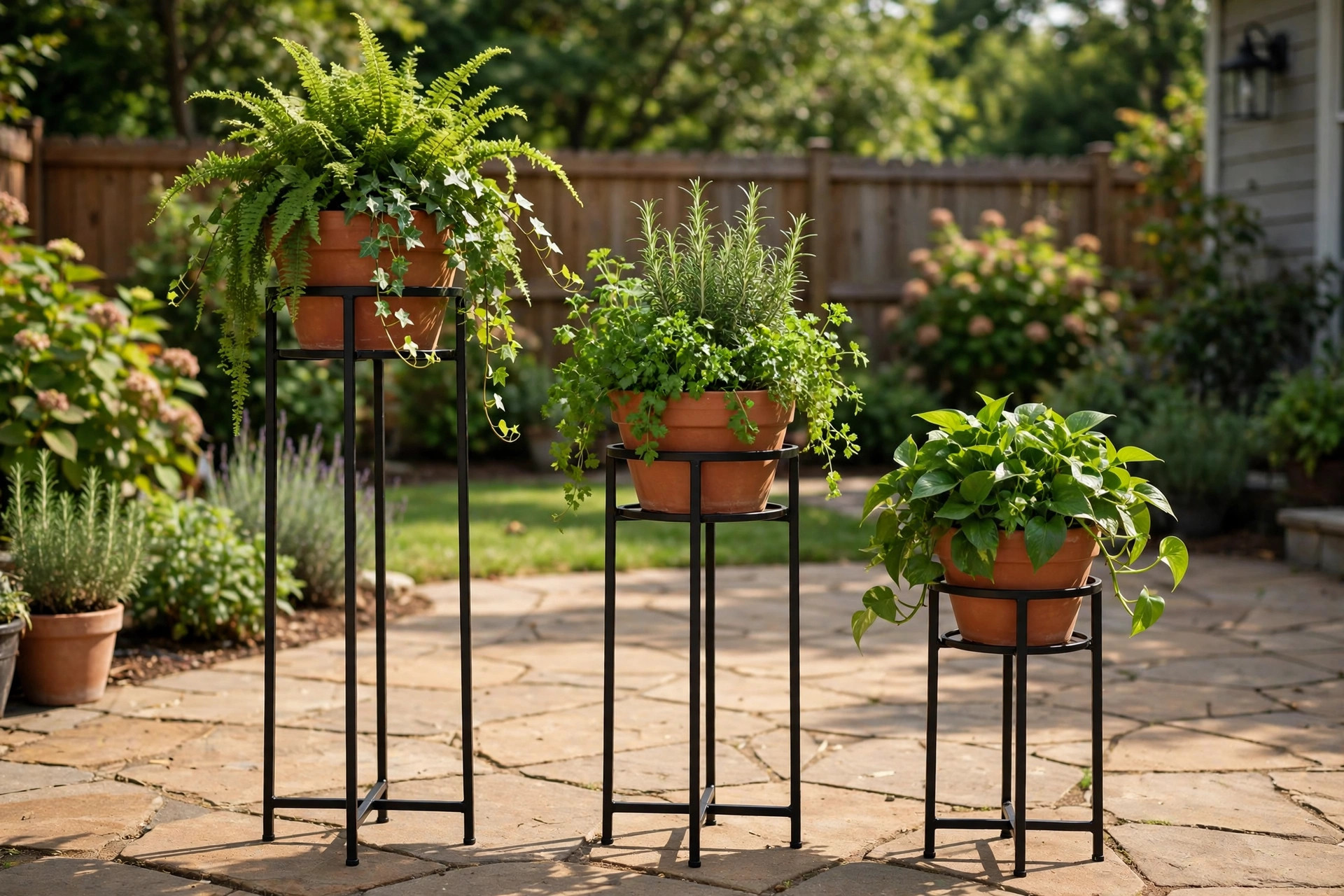
Many patios in the United States are small. A slab of concrete by the back door. A narrow balcony over the street. A strip of deck off the kitchen. An outdoor planter stand set of three fits these places well. It gives you three spots for pots where one spot sat before. The plants rise off the ground in steps, so each one gets light and air.
The idea is simple. Instead of buying three single stands at three different times, you buy one matched set. The stands share a style and a finish. They look planned, not thrown together. This short guide explains why the set works, what to look for when you shop, what kinds you can buy, what it costs, and how to keep it standing for years.
Why a Set of Three Works
Three stands at three heights make a stair-step display. The tallest stand holds the biggest pot in the back. The middle stand holds a medium pot. The short stand holds a small pot in front. Seen from across the yard, the group reads as one arrangement.
The set saves floor space. Three pots on the ground take three wide footprints. Three stands stacked in height take about the same floor space as one pot. On a small balcony, this matters. Many people who look for outdoor furniture for small balcony ideas find that lifting plants off the ground is the first step to making a small space feel larger.
There is another gain. Plants at ground level fight with grass, weeds, and pets. A stand puts the leaves up where the air moves. Water drains out of the pots instead of pooling under them. The pot bottoms do not stain the deck. In damp climates, lifting pots off the ground also keeps wood decks from staying wet under planters.
Sets also cost less than three separate buys. A maker who sells three stands together can pack them in one box and charge one shipping fee. That saving shows up in the price you pay.
What to Look for When You Buy: Outdoor Planter Stand Set of Three
Start with the pots you already own. Measure the widest point of each pot, rim included. Compare that number to the shelf size of each stand. A pot should rest with at least an inch of shelf showing on all sides. If the pot hangs over the edge, the stand will look wrong and tip more easily.
Check the weight limit. A filled pot is heavy. Soil weighs more than most people guess. A ten-inch pot full of wet soil can weigh thirty pounds or more. Look for a stated weight limit per shelf. A good set holds at least twenty-five pounds on the tallest shelf and more on the lower ones. If the seller gives no number, take that as a warning.
Drainage is the next point. Good planter stands leave gaps between slats or use open frames so water falls through. A solid tray top holds water and rots the pot and the stand. Some sets ship with small trays to catch drips on a deck. Trays are fine if you empty them after rain.
Look at the feet. Stands that sit on a patio slab need feet that will not scratch concrete or deck boards. Rubber or plastic caps do this job. They also keep metal feet from rusting where they touch wet ground.
Check how the stand goes together. The best sets need no tools, or one simple wrench. Read the assembly notes before you buy. A stand that takes an hour to build with small bolts will not feel like a bargain when you are done.
Finally, think about winter. In cold states, many gardeners bring pots inside and store the stands. A set that folds flat takes little room in a shed. If you want more ideas on this point, read our guide to patio furniture storage ideas for winter.
Also look at how the stands are packed. A set that ships in one flat box is easy to carry from the store or the porch. Three loose stands from a flea market may need two trips. Small details like this matter on delivery day.
Types and Materials
Most outdoor planter stand sets fall into a few groups.
Wrought iron sets are the classic choice. They are heavy, strong, and last for years with a little care. Iron suits formal yards and cottage gardens alike. The weak point is rust at joints and feet. A yearly coat of rust paint keeps them sound.
Wood sets look warm and natural. Cedar and teak resist rot better than pine. A wooden stand should be screwed, not stapled, at the joints. Wood needs oil or sealer once a year. Untreated wood will gray and split in two seasons.
Bamboo sets are light and cheap. They suit covered porches and balconies better than open yards. Bamboo stands fold easily and store well. They are not built for heavy pots.
Folding metal sets are made for small spaces. The stands fold like a step ladder and stack in a corner when not in use. They are often sold as a three tier plant stand outdoor set with one ladder frame rather than three separate stands. This style suits renters who move often.
Corner stands and ladder shelves are close cousins of the set of three. A ladder shelf is one frame with three fixed shelves. It is simpler to move but harder to rearrange. A true set of three gives you three separate pieces you can spread out or group as you like.
When you compare finishes, look for powder coating on metal. Powder coat is a dry paint baked onto the steel. It resists chips and rain far better than plain spray paint. For product testing and ratings of outdoor metal goods, sources like Consumer Reports publish useful buying advice.
Cost and Price
A basic three-piece metal stand set sells for about fifteen to thirty dollars. These sets work for light pots and herbs. The metal is thin and the paint is plain.
A mid-range set runs thirty to seventy-five dollars. This is where most buyers should look. The steel is thicker, the coating is better, and each shelf holds real weight. Cedar sets often sit in this range too.
Premium sets cost seventy-five to one hundred fifty dollars or more. These use heavy iron, teak, or hand-welded frames. They are built to stay outside year after year.
Watch for hidden costs. Some sets need assembly tools you do not own. Some ship with paint that needs touch-up in the first year. A cheap set that rusts in one season costs more than a mid-range set that lasts ten.
Sales change the math. Garden centers mark patio goods down in late summer, often by a third or more. If you can wait until August, a mid-range set may sell at a budget price. Online stores run spring sales too, but read the shipping terms. A heavy iron set may carry a high freight charge that wipes out the discount.
Think about cost per year, not just the price tag. A thirty-dollar set that lasts two years costs fifteen dollars a year. An eighty-dollar set that lasts ten years costs eight dollars a year. The dearer buy is often the cheaper one in the long run.
Large retailers such as IKEA and Wayfair carry wide ranges of metal plant stand set outdoor styles, so prices are easy to compare in one place.
Care and Upkeep
A planter stand lasts as long as its weakest joint. Wipe the stands down in spring before you load them with pots. Look for rust spots, loose screws, and cracked welds. Tighten what you can and touch up paint where it has chipped.
Keep water moving. Do not let trays stay full for days. Empty them after heavy rain. If a stand sits on soil instead of stone, move it now and then so the feet do not sink and rust.
Oil wooden stands once a year. Use teak oil or a clear deck sealer made for outdoor wood. Do this in dry weather so the oil soaks in. Skip the oil, and the wood will dry out and split.
Bring stands under cover in winter if you can. Metal survives cold but rusts faster with freeze and thaw cycles. Wood survives cold but splits when wet wood freezes. A shed, garage, or even a covered porch makes a big difference.
Rotate the pots once a month. The side of a stand that faces the house stays damp longer than the side that faces the sun. Turning the whole set now and then spreads the wear.
At night, low light can make a simple stand display look warm and finished. A few solar patio lights for ambiance placed near the stands cost little and need no wiring.
Safety
A tall stand with a heavy pot is a lever. Put the heaviest pot on the lowest stand, not the tallest. Keep the set away from walkways where a bump could knock it over.
Anchor stands in windy spots. A stand on a balcony rail line can catch wind like a sail. Move the set to a sheltered corner before storms. If the stands are light, lay the pots on their sides during high wind.
Check weight when you water. Dry soil is light. Wet soil is heavy. A stand that feels steady on a dry day can feel shaky after a deep watering. If it sways, lower the pots or lighten the soil mix with perlite.
Keep stands clear of grill heat and fire pit sparks. Heat dries out wooden stands and can warp plastic pots on the shelves.
Frequently Asked Questions
Can an outdoor planter stand set of three hold large pots? It depends on the set. Most budget sets are sized for pots up to eight or ten inches. Mid-range and premium sets often hold twelve-inch pots on each shelf. Always check the shelf width and the weight limit before you buy. When in doubt, buy the sturdier set.
Is it better to buy a set of three or three single stands? A set costs less and looks matched. Three single stands let you mix styles and sizes. If you want a planned look with no fuss, buy the set. If you want full control over each piece, buy singles.
Will metal stands rust outside? Bare metal will. Powder-coated steel and wrought iron with good paint resist rust for years. Check the feet and joints each spring. Touch up chips with rust paint before they spread.
Can I use these stands indoors? Yes, but add drip trays under every pot. Outdoor stands have open frames that let water fall straight through. Inside the house, that water lands on your floor. Trays solve the problem.
Do I need to anchor the stands to the ground? On a calm patio, no. On an open deck or balcony in a windy area, yes. Use sandbags or brackets, or simply move the set to a sheltered wall before storms arrive.
How do I clean the stands? Wash metal stands with warm water and mild soap, then rinse and dry. Scrub wooden stands with a soft brush and let them dry fully before oiling. Avoid pressure washers, which strip paint and force water into joints.
A Short Final Word
An outdoor planter stand set of three is one of the simplest buys in the garden. It costs little, needs little care, and changes how a small patio looks and works. Measure your pots, check the weight limits, pick a material that suits your weather, and keep the paint or oil fresh. Do that, and the set will carry your plants well for many seasons.
References
Consumer Reports. (n.d.). Product reviews and buying guides. https://www.consumerreports.org IKEA. (n.d.). Furniture and home furnishings. https://www.ikea.com Wayfair. (n.d.). Home furnishings and outdoor furniture. https://www.wayfair.com
Was this guide helpful?

About Jennifer Lee
The My Garden US editorial team writes practical, in-depth home and garden guides for American homeowners — tested advice, no fluff.