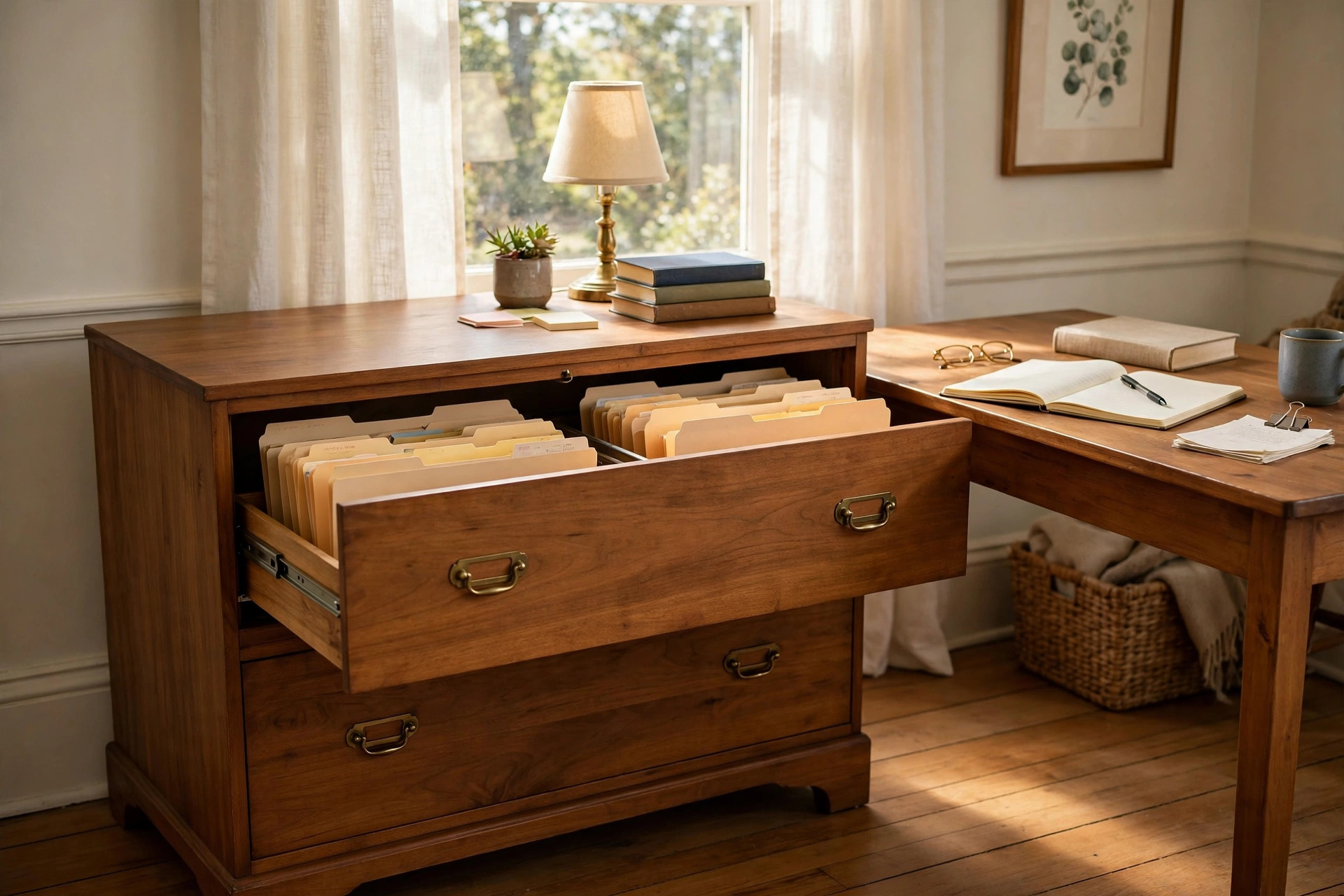

A home office filing cabinet lateral two drawer is one of the simplest ways to bring order to a home workroom. It is a wide, low cabinet with two side by side drawers. Each drawer holds files in rows that run left to right. This design lets you see and reach many folders at once. It also gives you a flat top that works as extra space for a printer, a lamp, or a stack of books.
Many people who work from home pile papers on desks, chairs, and floors. Tax forms mix with bills. Contracts hide under mail. A two drawer lateral file cabinet for home office use puts an end to that pile. It keeps each kind of paper in its own folder, each folder in its own drawer, and each drawer locked when you are done for the day.
This guide walks through why the cabinet matters, how to choose one, the main types, typical cost, care, and safety. It closes with answers to common questions.
Why a Two Drawer Lateral Filing Cabinet Matters
A home office is small. Most rooms used for work are spare bedrooms, corners of living rooms, or finished basements. Space is short. A lateral cabinet uses that space well. It is wider than it is tall, so it slides under a window or along a wall without taking over the room. It can even sit beside your desk and serve as a side table.
The wide drawers are the main draw. A vertical cabinet stacks narrow drawers on top of each other. A lateral cabinet spreads each drawer wide. You can line up a full row of hanging folders across the front. You see folder tabs at a glance. You do not dig through a deep stack of papers to find one bill. For people who keep both letter and legal size paper, the wide drawer holds either with ease.
There is also the matter of weight. Two drawers full of paper are heavy. A good home office filing cabinet lateral two drawer rides on steel slides that carry that weight. The drawers open smooth and close with a firm push. Cheap cabinets wobble. Good ones stay square for years.
Order brings calm. When papers have a place, the mind rests. You stop hunting for lost forms. You answer a call about a bill and pull the file in seconds. Over a year, that saved time adds up to real hours.
How to Choose the Right Cabinet: Home Office Filing Cabinet Lateral Two Drawer
Choosing a cabinet is not hard, but a few checks save regret later.
Measure Your Space
Start with a tape measure. Note the width, depth, and height of the spot where the cabinet will stand. Leave two inches of air on each side for the drawers to slide past walls or furniture. Leave clear space in front for a full drawer to open. A wide drawer needs room to come out toward you.
Also check the path to the room. A lateral cabinet is wide and heavy. Make sure it fits through doors and around stair turns before you order one. Many buyers forget this step and learn it the hard way.
Check Drawer Depth and Paper Size
Look at the inside depth of each drawer. Most two drawer models take letter size files hung front to back or side to side. Many also take legal size files when the hanging rails are set wider. If you keep legal contracts or long forms, confirm the drawer depth before you buy.
The drawers should hold hanging folders on steel rails. Loose folders slide and tip. Hanging folders stay upright and keep papers neat. Some cabinets ship with the rails loose in the box. Plan a few minutes to set them in place.
Lock and Security
A lock matters when the cabinet holds tax records, bank papers, or client files. Most two drawer lateral cabinets include a central lock. One key turns and both drawers lock at once. Keep the key in a safe place, not taped under the top drawer where a guest might find it.
If you share the house with roommates or children, a lock is not a luxury. It is a basic guard. A lateral filing cabinet with lock gives you peace when you leave the office door open.
Weight Capacity
Ask how much weight each drawer can hold. A drawer packed with paper can weigh forty pounds or more. Good slides carry that load without sagging. Full extension slides let the drawer come all the way out so you can reach folders at the back. Lesser slides stop short and hide the last few folders.
Materials and Finish
Metal cabinets are the classic choice. Steel bodies resist dents and fire better than wood. They come in putty, gray, black, and white. Wood cabinets look warmer. A wood lateral file cabinet home office model can match a desk or bookshelf. Wood veneer over engineered board costs less than solid wood and looks fine in most rooms.
Match the finish to your room. A black steel cabinet fits a modern setup. A cherry wood finish fits a traditional study. The cabinet will sit in your sight for years, so pick a look you like.
Types of Two Drawer Lateral Cabinets
Stores carry several kinds. Each suits a different need.
Metal two drawer filing cabinet. The office standard. Steel body, steel drawers, powder coat finish. Tough and plain. It suits a garage office or a basement workroom. It resists bumps from chairs and boxes.
Wood two drawer lateral cabinet. Made of veneer or laminate over engineered wood. It looks like furniture rather than office gear. It suits a study or a bedroom office where looks count. It costs more than plain metal.
Mobile lateral cabinet. A short cabinet on casters. It rolls under a desk or out of the way. It holds fewer files than a full size model, but it works well in tight rooms.
Fire resistant cabinet. Some models add insulation between steel walls. They guard papers against heat for a set time. They weigh more and cost more. People who keep deeds, wills, or birth records at home may want one.
Designer cabinet. Brands known for office design make lateral cabinets that look like fine furniture. Herman Miller and Steelcase both offer storage lines that match their desks and chairs. These cost the most but last the longest.
When you plan the room, think about the desk too. A home office desk with built in power outlets pairs well with a lateral cabinet, since cords stay out of the paper drawers. A home office desk mat leather for writing can protect the desk top next to the cabinet. In a room shared with another worker, an adjustable desk divider for shared home office keeps each person’s papers apart.
What a Two Drawer Lateral Filing Cabinet Costs
Prices vary by material and brand. A basic metal two drawer lateral cabinet often sells for one hundred to two hundred fifty dollars. These come from office supply stores and large home stores. Office Depot and Staples stock several models at this level.
A wood or wood look cabinet runs two hundred fifty to six hundred dollars. Finish quality and drawer slides drive the price. Solid wood or designer brands can pass one thousand dollars.
Used cabinets are a fair deal. Offices close and sell furniture cheap. Check that the drawers slide true and the lock works. A used steel cabinet often lasts longer than a new cheap one. Look for rust along the bottom edge and test each drawer with weight in it.
Delivery adds cost. A two drawer lateral cabinet can weigh sixty to ninety pounds. Many sellers charge for threshold or room delivery. If you buy online from Wayfair or IKEA, read the shipping terms before you check out. Some flat pack models save on shipping but need an hour of assembly.
Think of the cost per year. A good cabinet lasts fifteen years or more. A two hundred dollar cabinet then costs about thirteen dollars a year. That is a small price for dry, safe, ordered papers.
Care and Upkeep
A filing cabinet asks little, but a little care keeps it working.
Keep it dry. Steel rusts in damp basements. Wood swells. If the office sits in a damp room, run a dehumidifier or set the cabinet on small blocks off the floor. Wipe spills at once.
Oil the slides once a year. Pull each drawer out, wipe the steel slides with a dry cloth, and add a drop of light machine oil to each track. Work the drawer in and out. The glide should feel smooth and quiet.
Do not overload. Hang folders in rows with small gaps. Packed drawers tear folder tabs and strain slides. If a drawer groans, take paper out until it moves free.
Dust the top weekly. The flat top gathers dust fast, and dust works into drawer seams. A damp cloth does the job. For wood finishes, use a polish made for wood veneer.
Check the lock twice a year. Turn the key and test both drawers. If the key sticks, a puff of graphite powder in the lock frees it. Do not force a stuck key. Forcing can snap the key off in the lock.
Keep papers off the floor of the drawer. Hanging folders should hang from the rails. Papers stacked loose at the bottom jam the drawer and hide from view.
Safety at Home
A loaded cabinet can tip if one drawer opens too far while the other stays shut. Good cabinets include an anti tip device. Only one drawer opens at a time. Check that this feature works when the cabinet arrives. Open one drawer, then try the other. It should stay shut.
Anchor tall loads to the wall. A two drawer lateral model is low and wide, so it rarely tips, but an anchor strap adds safety in homes with small children who climb. The U.S. Consumer Product Safety Commission offers guidance on anchoring heavy furniture.
Keep heavy files low. Put the fullest, heaviest folders in the bottom drawer. This lowers the center of gravity and keeps the cabinet steady when the top drawer opens.
Lock the cabinet when children visit. Small hands open drawers and pull papers out. A locked cabinet guards both the papers and the child.
Mind sharp edges on cheap metal models. Run a hand along drawer edges after assembly. File down any burr with fine sandpaper or cover it with edge trim.
Place the cabinet away from heat vents and direct sun. Heat dries wood and fades finishes. Sun bleaches one side of the cabinet and leaves the other dark.
Frequently Asked Questions
How many folders fit in a two drawer lateral cabinet? A standard wide drawer holds about two to three inches of hanging folders per linear inch of rail. Most two drawer models hold forty to sixty letter size folders per drawer. Legal size folders take more room, so the count drops by a third.
Can a lateral filing cabinet hold a printer on top? Yes, in most cases. The flat top of a two drawer lateral cabinet carries fifty to one hundred pounds. A home printer weighs twenty to forty pounds. Center the printer on the top and leave room for paper to feed. For setup ideas, The Spruce shows many home office layouts.
Do I need letter or legal size drawers? Letter size fits most home papers: bills, tax forms, and letters. Legal size fits contracts and some court forms. If you keep both, buy a cabinet whose rails adjust to both sizes. Measure your longest paper before you shop.
Is assembly hard? Steel cabinets often ship assembled. Wood models may need assembly. Plan thirty to sixty minutes with a screwdriver. Two people make the work easy, since panels are wide. UPLIFT Desk and similar makers post clear assembly videos for their storage lines.
How do I stop drawers from slamming? Some cabinets include soft close slides. If yours does not, add stick on felt pads where the drawer front meets the frame. The pads hush the close and guard the finish.
Where can I read reviews before I buy? Consumer Reports tests office furniture for build quality. Wirecutter and PCMag both review home office gear and often cover storage picks.
A Final Word
A home office filing cabinet lateral two drawer is a quiet workhorse. It does not flash or beep. It holds your papers in neat rows, locks them safe, and gives you back your desk. Pick a size that fits your room, a finish that fits your eye, and slides that carry real weight. Oil the tracks once a year and keep the drawers dry. Do that, and the cabinet will serve you for a decade or more. Your papers will be where you left them, every time.
References
Consumer Reports. (n.d.). Product reviews and ratings. https://www.consumerreports.org Herman Miller. (n.d.). Office furniture and ergonomic seating. https://www.hermanmiller.com IKEA. (n.d.). Home furnishings. https://www.ikea.com Office Depot. (n.d.). Office supplies and furniture. https://www.officedepot.com PCMag. (n.d.). Technology product reviews. https://www.pcmag.com Staples. (n.d.). Office supplies and furniture. https://www.staples.com Steelcase. (n.d.). Office furniture and workplace research. https://www.steelcase.com The Spruce. (n.d.). Home and garden advice. https://www.thespruce.com U.S. Consumer Product Safety Commission. (n.d.). Product safety information. https://www.cpsc.gov UPLIFT Desk. (n.d.). Standing desks and ergonomic office furniture. https://www.uplift-desk.com Wayfair. (n.d.). Furniture and home goods. https://www.wayfair.com Wirecutter. (n.d.). Product reviews from The New York Times. https://www.nytimes.com/wirecutter
Was this guide helpful?

About Emily Rodriguez
The My Garden US editorial team writes practical, in-depth home and garden guides for American homeowners — tested advice, no fluff.
You May Also Like

Best Desk Accessories Set for New Home Office: A Complete Guide
August 13, 2026 0 views
Best Pen Cup Holder for Office Desk Organization
February 5, 2026 0 views
Best Whiteboard Calendar for Home Office Wall
July 27, 2026 0 views