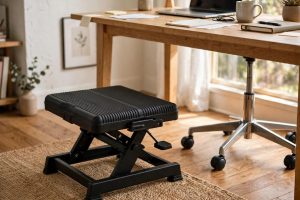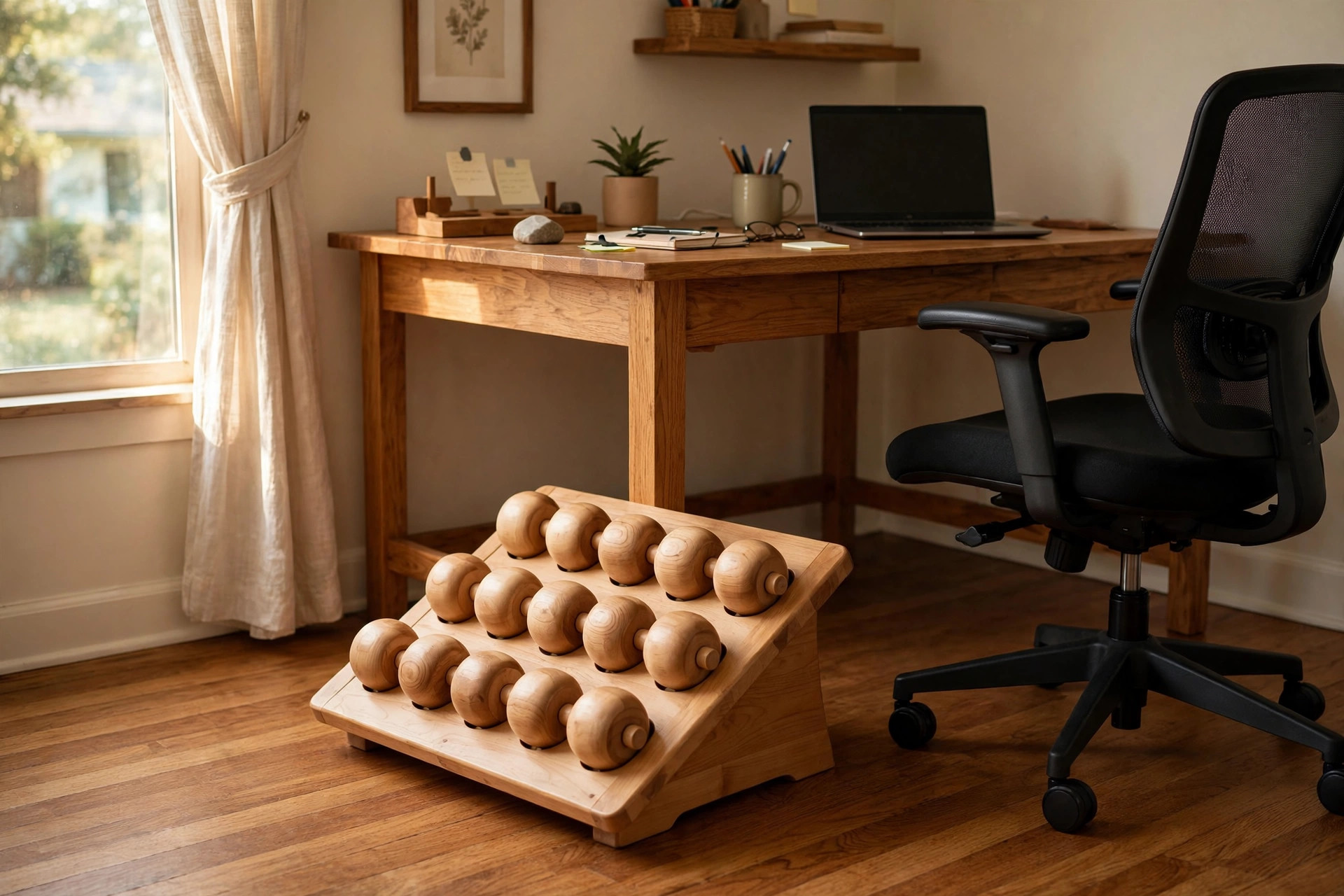

Long hours at a desk ask a great deal of the body. The neck stiffens. The shoulders rise. The lower back grows tired. Yet the feet, which bear the full weight of the legs through the day, are often the last part of the body to receive any help. An ergonomic footrest with massage rollers under desk answers this quiet neglect. It lifts the feet to a healthier angle. It rolls small ridges against the soles. And it asks nothing of the user but a few minutes of passive rest. This guide explains what the device does, how to choose one, and how to keep it in good order.
Why an Ergonomic Footrest With Massage Rollers Under Desk Matters
Most office chairs hold the seat at a height that leaves shorter workers with dangling feet. When feet dangle, the edge of the chair presses into the back of the thigh. Blood flow slows. The feet grow cold and numb. Over months, this small pressure can feed into back pain and restless legs.
A footrest breaks the pattern. It gives the feet a firm place to land. The angle of the knees opens slightly. The hips settle back into the chair. Posture improves without thought. Readers who pair a footrest with a good chair often report that their afternoon fatigue arrives later and with less force. A best ergonomic office desk chair for back pain and a footrest make a sensible team.
The massage rollers add a second benefit. Each roller turns as the foot slides across it. The small ridges press into the arch and the heel. This gentle pressure wakes the muscles of the sole and can ease the dull ache that comes from sitting still for hours. It is not a substitute for a walk, but it keeps the feet active while the hands stay at the keyboard. Sources such as the workspace guides at IKEA and the ergonomic furniture pages at Herman Miller both treat the footrest as a small but real part of a healthy desk setup.
What to Look For When Choosing One: Ergonomic Footrest with Massage Rollers under Desk
Platform Size and Angle
The platform must fit the shoes it will hold. A footrest meant for two feet side by side should measure at least fifteen inches wide. Depth of nine to eleven inches suits most feet. Height adjustment matters even more than size. A good rest offers two or three height settings, or a tilt that changes the angle of the sole. Flat platforms suit people who want simple support. Tilted platforms suit people who rock their feet while they think.
Roller Design
Rollers come in wood, plastic, and textured rubber. Wooden rollers give a firm, smooth roll and last for years. Rubber rollers grip the sole and feel more like a massage. Some rests mix fixed ridges with free-spinning rollers. The choice comes down to comfort. A shopper who dislikes strong pressure should pick smooth rollers. A shopper who enjoys a deep rub should pick ridged ones.
Base Stability
The base must not slide. Many models carry rubber pads or a non-slip bottom. On hard floors this is enough. On carpet, a heavier rest stays put better than a light one. Before buying, check the weight of the unit. A rest under two pounds will wander on a smooth floor. A rest of three to five pounds tends to stay where it is put. The accessory pages at UPLIFT Desk show how makers describe base design, and the home office advice at The Spruce covers placement under real desks.
Materials and Cleanliness
Fabric covers feel warm but gather dust. Mesh covers breathe in summer but are hard to wash. Wood and hard plastic wipe clean in seconds. A footrest lives near shoes and floor dust, so easy cleaning is a genuine virtue. Pick a surface that can be wiped with a damp cloth once a week.
Types of Footrests With Massage Rollers
The market holds several shapes, and each suits a different worker.
Flat board with fixed ridges. This is the simplest kind. A wooden or plastic board carries rows of static bumps or short rollers. It costs little and needs no care. It suits workers who want basic support with a mild foot rub.
Tilt-adjustable rest with spinning rollers. This kind offers two or three angle settings and rollers that spin freely. It costs more but gives the feet more work to do. It suits workers who shift position often through the day.
Curved or half-cylinder rest. This shape rolls under the feet and encourages rocking. It gives the ankles more motion. Some users find the rocking motion helps them focus. It needs more floor space than a flat board.
Padded rest with a roller strip. A soft pad supports the feet while a narrow strip of rollers runs down the center. This suits workers with sensitive soles who still want the massage effect.
Shoppers can compare similar under-desk aids at Wayfair and Steelcase, where filter options let buyers sort by material and price.
Cost and Price
Prices for an ergonomic footrest with massage rollers under desk fall into three bands.
Simple wooden or plastic models cost between fifteen and thirty dollars. These do the basic job well. They carry fixed rollers, a stable base, and little else.
Mid-range models cost between thirty and sixty dollars. These add height adjustment, tilt settings, and better rollers. Most home workers land in this band and stay satisfied for years.
Premium models cost between sixty and one hundred twenty dollars. These may use memory foam, larger platforms, or premium wood. Some include removable roller bars for cleaning. The extra cost buys comfort, not a new function.
Used rests sometimes appear at office supply stores, but the price gap is small enough that most buyers do better with a new unit. Check the return policy before buying, since comfort is hard to judge from a photo. The buying guides at Wirecutter and PCMag often review desk accessories by category, which can help set a fair price expectation.
How to Set It Up Under the Desk
Placement matters. Push the footrest back until the knees form an angle of about one hundred degrees. This is slightly more open than a right angle, and it takes pressure off the lower back. The feet should reach the rollers without stretching. If the thighs press up against the desk, the chair is too high or the rest is too thick.
Roll the feet slowly across the rollers for a few minutes each hour. Start with light pressure. Some workers use the rollers only in the afternoon, when their feet feel heaviest. Others leave their feet on the rest all day and roll only when they think of it. There is no strict rule. The body will say when it has had enough.
Pairing helps. A footrest works best when the rest of the desk is in order. A best laptop stand for standing desk posture lifts the screen to eye level. A plain ergonomic footrest for under desk at home style rest may suit a second work area, such as a reading chair. Small tools, each doing one job well, add up to a calm work space.
Care and Upkeep
A footrest asks little. Wipe the rollers and platform with a damp cloth once a week. Floor dust collects fast near shoes, and a clean surface feels better underfoot. If the rollers turn on axles, a drop of household oil on each end once a year keeps them spinning free. Do not soak wooden models in water. Wood swells and cracks when it dries.
Check the base pads twice a year. Rubber feet wear down and lose grip. Replacement pads cost little and stick on with adhesive. A rest that slides is a rest that will be pushed aside and forgotten, so keep the grip fresh.
Store the rest under the desk when it is not in use. Most models are flat enough to slide beneath a chair. Keeping it in place, though, builds the habit. A footrest that stays in position gets used. One that sits in a closet does not.
Safety
The footrest is a gentle device, but a few points deserve care.
People with diabetes or poor circulation in the feet should speak with a doctor before using massage rollers. Pressure on the soles can bruise fragile skin, and numb feet may not report the damage.
People with plantar fasciitis should start slowly. Light rolling can ease the morning stiffness in the heel, but hard pressure on a sore spot can make it worse. Short sessions of two or three minutes are a safer start than long ones.
Keep the rest clear of cables. Power cords under a desk love to tangle around a footrest. Route cables along the wall or through a cable tray so the feet move freely.
Finally, remember that no accessory replaces movement. Stand up once an hour. Walk to the kitchen. Stretch the calves against a wall. The footrest supports the feet while you sit, but sitting itself still needs its breaks.
Frequently Asked Questions
Does an ergonomic footrest with massage rollers under desk really help posture? It helps in a modest, honest way. By lifting the feet, it opens the knee angle and lets the hips settle back in the chair. This reduces the slouch that dangling feet encourage. It works best as part of a sound setup, with the screen at eye level and the chair at the right height.
Can I use it with shoes on? Yes. Most rollers are firm enough to work through shoes. The massage feels stronger in socks or bare feet, since nothing blocks the rollers. Hard-soled work boots blunt the effect, but they do not harm the device.
Will the rollers wear out? Wooden and hard plastic rollers last for many years of daily use. Rubber rollers can soften over time but rarely fail. The moving parts are simple, and there is little to break. A quality rest should serve five years or more with basic care.
Is a massage roller footrest better than a plain footrest? It depends on the user. A plain rest costs less and gives the same lift. A roller rest adds the foot massage, which some users find pleasant and others ignore. Buyers who already own an ergonomic footrest for under desk at home and want more from it may welcome the upgrade. Buyers on a tight budget lose little by choosing plain.
Can it help with cold feet in winter? A little. Keeping the feet off a cold floor helps, and the rolling motion moves blood through the soles. Warm socks and a rug under the rest help more. The rollers are a comfort aid, not a heater.
Does it work under a standing desk? It works best when the desk is lowered for sitting. Some workers place the rest near the desk for seated breaks. For standing work, other tools fit better, such as a balance board or an anti-fatigue mat.
A Short Final Word
The ergonomic footrest with massage rollers under desk is a small purchase with an honest return. It lifts tired feet. It rolls away some of the stiffness of the day. It asks for almost no care. In a home office full of big decisions about chairs, desks, and screens, it is one of the easiest choices a worker can make. Pick a stable model, place it well, and let the feet do their quiet work.
References
Herman Miller. (n.d.). Office furniture and ergonomic seating. https://www.hermanmiller.com IKEA. (n.d.). Home furnishings. https://www.ikea.com PCMag. (n.d.). Technology product reviews. https://www.pcmag.com Steelcase. (n.d.). Office furniture and workplace research. https://www.steelcase.com The Spruce. (n.d.). Home and garden advice. https://www.thespruce.com UPLIFT Desk. (n.d.). Standing desks and ergonomic office furniture. https://www.uplift-desk.com Wayfair. (n.d.). Furniture and home goods. https://www.wayfair.com Wirecutter. (n.d.). Product reviews from The New York Times. https://www.nytimes.com/wirecutter
Was this guide helpful?

About James Carter
The My Garden US editorial team writes practical, in-depth home and garden guides for American homeowners — tested advice, no fluff.
You May Also Like
Home Office Monitor Stand With USB Hub: What to Know Before You Buy
March 28, 2026 0 views
Small Desk with Built In Bookshelf for Students: A Guide for Small Rooms
September 17, 2026 0 views
Compact Treadmill Desk for Walking While Working: A Plain Guide
March 30, 2026 0 views