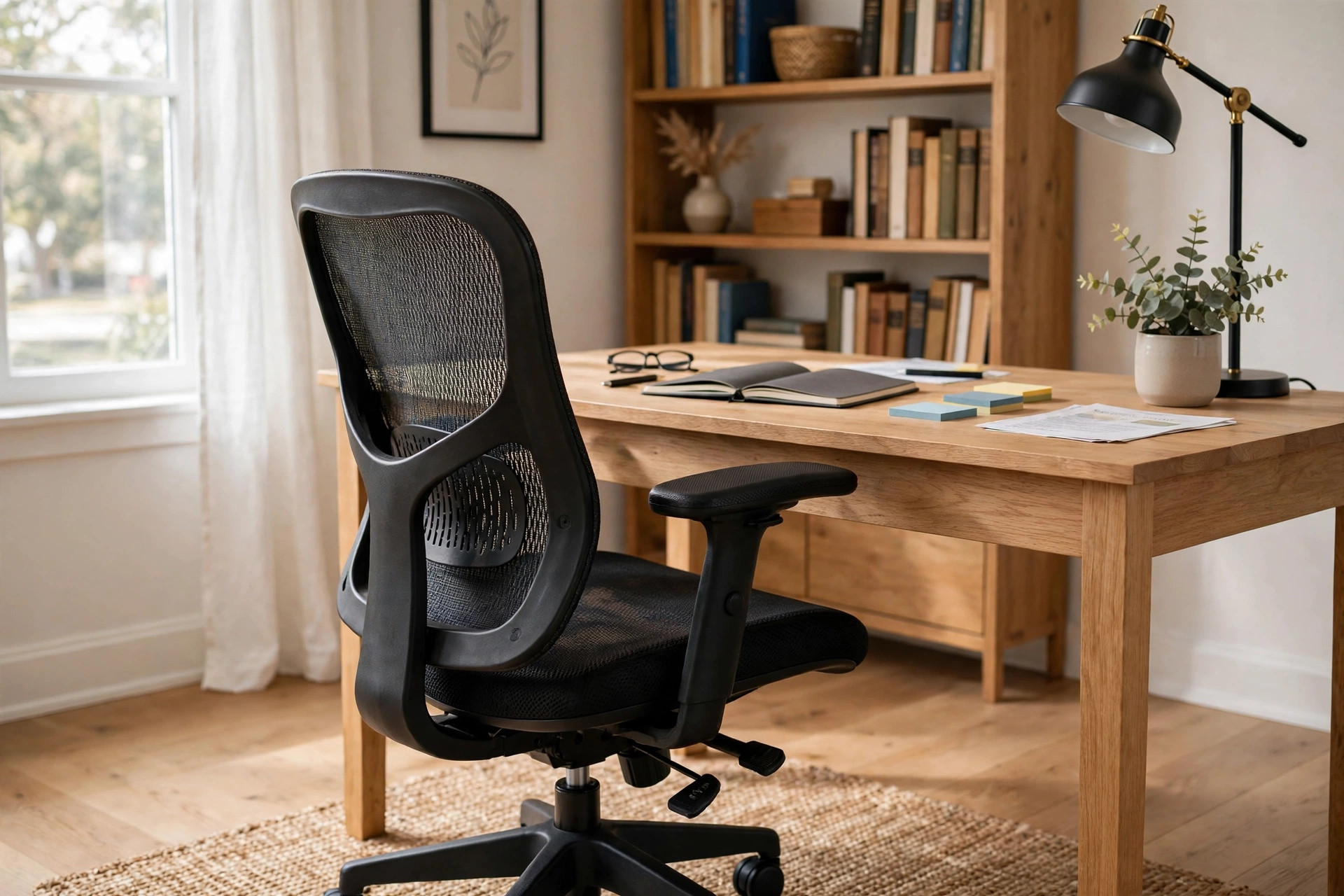

A home office chair with breathable mesh seat is a chair made for desk work at home. The seat uses woven mesh fabric stretched over a frame. Air moves through the mesh. Heat does not build up the way it does with foam or leather. This guide explains how such chairs work, what to look for when you shop, what they cost, and how to keep them in good shape for years.
Why a Breathable Mesh Seat Matters
Most people sit for many hours each day. Work calls, reports, and email all keep a person in one spot. A standard padded seat traps heat under the legs. By the afternoon, the seat feels warm and sticky. A mesh seat lets air pass through. The body stays cooler. Small comforts like this matter over an eight-hour day.
Breathability also helps with posture. A cool seat makes a person less likely to shift and slouch. When you stay still in a good position, the back and neck take less strain. Ergonomics experts often rank airflow high on the list of features for a home office chair, next to lumbar support and seat depth.
Mesh seats also fit the home office trend. Many home workers started with a dining chair or a couch. Those seats were never made for desk work. A purpose-built chair is a step up. The mesh design looks modern too, which suits a spare room or a corner office that shares space with family life.
Warm weather makes the case stronger. Homes without central air get hot in summer. A padded seat adds to the heat. Mesh does not. In warm climates, workers often name breathability as the single feature they would not give up.
How to Choose the Right Chair: Home Office Chair with Breathable Mesh Seat
Shopping for a chair is easier when you know the parts that matter. Start with the seat itself, then the back, then the adjustments.
Seat Size and Depth
Seat width should clear your hips with an inch or two to spare on each side. Most adult seats run 18 to 21 inches wide. Seat depth is the distance from the front edge to the backrest. Aim for two to three fingers of space between the front edge and the back of your knees. A seat that is too deep presses into the legs and cuts circulation. A seat that is too shallow leaves the thighs without support.
Many mesh chairs use a sliding seat pan. This is a seat that moves forward or back. It helps tall and short users find the right fit on the same chair. Check for it when you compare models.
Back Support
The backrest should touch the lower back in its natural curve. Good chairs build this support into the frame. Some let you move the lumbar pad up and down. The mesh back is common on these chairs too. It bends with the spine and gives steady support without pushing too hard.
If you read our guide on the best ergonomic office desk chair for back pain, you will know that lumbar support is the first line of defense against an aching back. A mesh seat pairs well with a mesh back for full-body airflow.
Armrests and Adjustments
Armrests should hold the arms so the shoulders can rest. The elbows should sit near a right angle while you type. The best armrests move in three ways: up and down, forward and back, and side to side. Fixed armrests can bump into a desk and force a poor posture.
Look for these standard adjustments as well:
– Seat height. The feet should rest flat on the floor with the thighs level. – Tilt tension. The chair should recline with mild effort, not fight you and not fall back too fast. – Tilt lock. A lock holds the chair upright or in a reclined position when you want it still. – Swivel. A smooth base makes it easy to reach files and printers.
For long sessions, the best office chair for long hours home office will have most or all of these controls. If a chair lacks them, you will feel the gap by the end of the week.
Frame and Base
The frame of a mesh chair is usually aluminum or reinforced nylon. Aluminum is strong and light. A five-star base with casters rolls on carpet and hard floors alike. Check the weight rating. Most home office chairs carry 250 to 300 pounds. Heavier users should look for models rated higher.
Types of Mesh Office Chairs
Mesh office chairs come in several styles. Each suits a different kind of worker and a different budget.
Task chairs. These are the standard choice. They have a mesh seat, a mesh back, and basic adjustments. They fit most home offices and most budgets.
Executive mesh chairs. These are larger, with high backs and padded headrests. Some use mesh on the back and cushions on the seat. They suit workers who want a formal look for video calls.
Drafting chairs. These sit higher for tall desks and drafting tables. They add a foot ring for support. Artists and engineers use them most.
Kneeling and specialty chairs. These are not mesh, but they serve the same purpose: better posture at a desk. They are worth knowing about if a standard chair does not fit your body.
Big and tall chairs. These use wider seats and stronger frames. The mesh on these models is woven tighter to hold the extra load.
If you share your office with family, see also our notes on chairs made for long use in a home office shared by many people across the week.
Cost and Price
A home office chair with breathable mesh seat can cost anywhere from under 100 dollars to over 1,000 dollars. Price tracks with build quality and brand name.
Under 200 dollars. This is the busy part of the market. Many chairs here offer a mesh seat, basic tilt, and fixed or simple armrests. An ergonomic mesh office chair under 200 dollars can serve a home office well if you test the fit and read reviews first. Quality varies, so check the warranty and the return policy.
200 to 500 dollars. Chairs in this range add adjustable lumbar support, better mesh, and smoother mechanics. The frame feels sturdier. Most remote workers land here.
500 dollars and above. Premium chairs come from names known for ergonomic design. The mesh is tighter and more even. The adjustments are finer. These chairs often carry 10 to 12 year warranties.
When you judge price, think in cost per year. A 400-dollar chair that lasts 10 years costs 40 dollars a year. A 120-dollar chair that fails in two years costs more over time and leaves you shopping again.
Retailers such as Wayfair and IKEA carry wide ranges across these price bands. Review sites like Wirecutter and PCMag test chairs side by side and publish clear winners.
Prices move through the year. Holiday sales and back-to-school season often bring discounts of 20 percent or more. If you can wait for a sale, you can often buy a mid-range chair for a budget price.
Care and Upkeep
Mesh is easy to care for, but it still needs attention. Dust and lint gather in the weave. Vacuum the seat with a soft brush attachment once a month. For spills, blot with a damp cloth and mild soap. Do not soak the mesh. Let it air dry fully before use.
Check the screws twice a year. Casters pick up hair and thread, which slows the roll. Pull the casters out and clear the stems if they stick. Wipe the frame with a dry cloth.
Direct sun fades fabric over time. If your chair sits by a window, turn it or use a shade during the brightest hours. Heat also weakens some plastics, so keep the chair away from radiators and space heaters.
A well-kept mesh chair can last 8 to 12 years. The mesh itself rarely tears before the base or the gas cylinder wears out. Replacement casters and cylinders are cheap and easy to find. The guides at The Spruce show simple fixes for common chair problems.
Safety
Chairs are simple products, but they still carry risks. Follow these rules.
– Do not stand on the chair. Office chairs tip. Use a step stool for high shelves. – Check the weight limit. Overloading the base can crack the frame. – Keep children away from the moving parts. The tilt mechanism and gas cylinder can pinch fingers. – Lock the tilt when you lean back far. An unlocked chair can slide out from under you on smooth floors. – Use the right casters for your floor. Hard casters on tile can shoot across the room. Soft casters grip better.
If a chair wobbles, rocks side to side, or drops height on its own, stop using it. A sinking seat means the gas cylinder is failing. A cracked base is a sign the chair is done. The safety tips at Steelcase and Herman Miller cover proper chair use in plain terms.
Frequently Asked Questions
Is a mesh seat better than a padded seat? It depends on your needs. Mesh stays cool and keeps its shape for years. Padded seats feel softer at first but can trap heat and flatten over time. People who run warm or work long hours often prefer mesh. People who want a plush feel often prefer padding.
Will the mesh stretch out or sag? Quality mesh holds tension for many years. Cheap mesh can sag at the center where the body weight sits. Buy from a maker with a strong warranty, and the seat should stay firm. If sag appears, some makers replace the mesh under warranty.
Can a mesh chair help back pain? A chair alone cannot cure back pain, but good support helps. A mesh chair with proper lumbar support keeps the spine in a neutral position. Pair it with a good desk height and regular breaks. See our piece on the best ergonomic office desk chair for back pain for more on seating and pain.
How long does a mesh office chair last? A good one lasts 8 to 12 years with normal use. Budget models often last 3 to 5 years. The warranty length is a fair hint at how long the maker expects it to hold up.
Do mesh chairs work for tall or heavy people? Yes, but pick a model rated for your weight and with a deeper seat. Big and tall mesh chairs use stronger frames and tighter mesh. Measure your needs before you order.
Are assembly instructions hard to follow? Most mesh chairs ship with clear steps and take 20 to 40 minutes to build. Keep the Allen key that comes in the box. If a part seems wrong, call the maker before you force it. UPLIFT Desk and similar makers post video guides that make assembly easier.
Final Word
A home office chair with breathable mesh seat is a sound buy for anyone who works at a desk for hours each day. It keeps you cool, it holds its shape, and it costs less over time than a cheap chair you replace again and again. Measure your space, test the fit, and choose the adjustments that match how you work. Your back will thank you for the care.
References
Herman Miller. (n.d.). Office furniture and ergonomic seating. https://www.hermanmiller.com IKEA. (n.d.). Home furnishings. https://www.ikea.com PCMag. (n.d.). Technology product reviews. https://www.pcmag.com Steelcase. (n.d.). Office furniture and workplace research. https://www.steelcase.com The Spruce. (n.d.). Home and garden advice. https://www.thespruce.com UPLIFT Desk. (n.d.). Standing desks and ergonomic office furniture. https://www.uplift-desk.com Wayfair. (n.d.). Furniture and home goods. https://www.wayfair.com Wirecutter. (n.d.). Product reviews from The New York Times. https://www.nytimes.com/wirecutter
Was this guide helpful?

About Michael Thompson
The My Garden US editorial team writes practical, in-depth home and garden guides for American homeowners — tested advice, no fluff.
You May Also Like

Adjustable Desk Divider for Shared Home Office: A Practical Guide
January 1, 2026 0 views
Adjustable Monitor Arm for Heavy 34 Inch Monitor: A Buyer’s Guide
February 2, 2026 0 views
Home Office Door Lock for Private Workspace
July 20, 2026 0 views