
Any winter in America brings the same question to the kitchen table: should we replace the old furnace? The debate over high efficiency furnace pros cons usa homeowners discuss each fall is worth careful study. A high efficiency furnace turns 90 to 98 percent of its fuel into heat. A standard furnace turns only 80 to 90 percent into heat. The rest leaves through the chimney as wasted warmth. That gap sounds small on paper. In dollars, it can mean hundreds saved or spent each year. This guide sets out the pros and cons in plain words. It covers how these units work, what they cost, how they are kept in good order, and what risks to watch for. By the end, you will be able to judge whether a high efficiency model fits your house, your climate, and your budget.
Why a High Efficiency Furnace Matters
Fuel Prices Keep Rising
Natural gas and propane prices move up and down with the seasons. Over the past forty years, the long trend has been upward. A furnace that wastes less fuel protects the household budget against future price jumps. When fuel is cheap, the savings feel small. When fuel turns dear, the savings grow large. This is the main reason most buyers give for the upgrade.
Comfort Is Not Just About Heat
Older furnaces run in short, hot bursts. They blast heat, shut off, and let the house cool. The rooms near the furnace feel warm. The far rooms feel cold. Many high efficiency furnaces use two-stage or modulating burners. These run longer at lower power. They keep room temperatures steady. They also push air longer through the filter. That means cleaner air and fewer cold spots.
The House Stays Quieter
A single-stage furnace starts and stops with a loud rush. A modulating high efficiency unit often runs at low speed most of the day. The sound is closer to a hum than a roar. Homeowners with the furnace near bedrooms notice the change at once.
How a High Efficiency Furnace Works: High Efficiency Furnace Pros Cons Usa
The AFUE Rating
Every furnace sold in America carries an AFUE number. AFUE stands for Annual Fuel Utilization Efficiency. It tells how much fuel becomes heat over a full heating season. Standard furnaces rate 80 to 83 percent. High efficiency furnaces rate 90 to 98 percent. An AFUE of 96 means 96 cents of each fuel dollar becomes heat in your home.
Two Heat Exchangers Instead of One
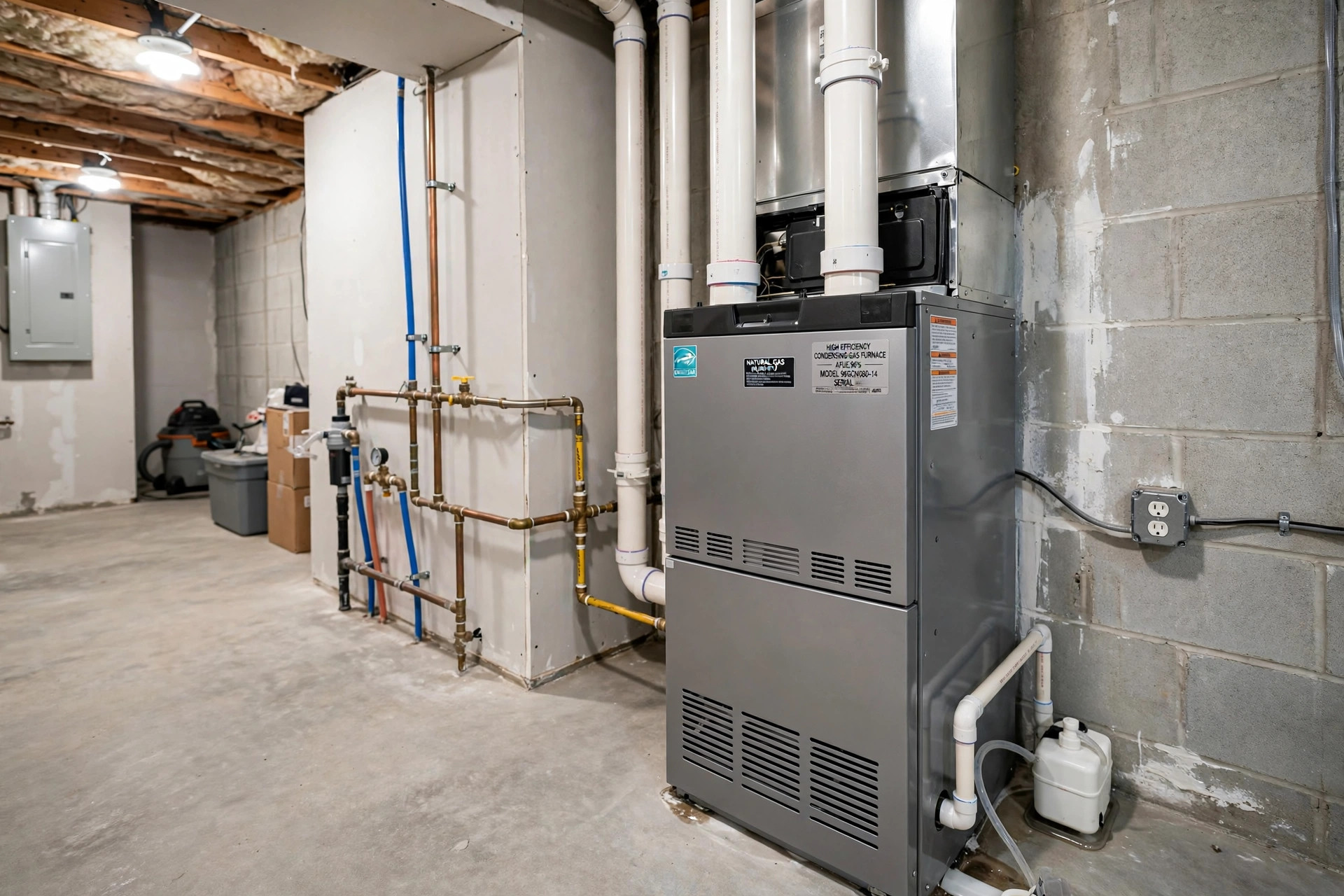
The secret is simple. A high efficiency furnace adds a second heat exchanger. Hot gases pass through the first one, then through the second. The second exchanger cools the gases so far that water vapor in the gas condenses into liquid. This condensation releases extra heat. That heat goes into your rooms instead of up the chimney.
Sealed Combustion and PVC Venting
Because so little heat escapes, the exhaust is cool enough to leave through plastic PVC pipe. Standard furnaces need a metal chimney to carry hot gases safely. Sealed combustion also pulls air from outside the house. It does not use indoor air for the flame. This keeps the burn cleaner and safer.
Types and Options on the Market
Single-Stage, Two-Stage, and Modulating
Single-stage high efficiency furnaces are the simplest kind. They run at full power or off. Two-stage units run at about 65 percent power most of the time and full power on the coldest days. Modulating units change their flame in small steps, from 40 percent to 100 percent. Modulating units cost more. They also give the most even comfort.
Gas, Oil, and Propane Models
Most high efficiency furnaces burn natural gas. Oil furnaces can reach high efficiency too, but they top out near 90 percent. Propane furnaces match gas furnaces in design. Check local fuel prices before you pick. The cheapest fuel in your town may not be the cheapest fuel in the next town.
Sizing the Unit to the House
A furnace must match the size of the house. Too small, and the house stays cold. Too big, and the unit short-cycles. Short cycling wears parts out early. A good contractor runs a load calculation before quoting. This math counts windows, insulation, and climate zone. If you are weighing furnace replacement cost near me 2026, insist on this calculation in the quote.
The Pros in Detail
Lower Fuel Bills
This is the biggest pro. A jump from 80 percent to 95 percent efficiency cuts the heating part of the gas bill by about 15 percent. On a $1,800 annual heating bill, that is roughly $270 saved each year. Savings grow in cold states like Minnesota and Maine. They shrink in mild states like Florida and southern Texas.
Rebates and Tax Credits
The United States government and many utilities offer rebates for high efficiency heating equipment. The ENERGY STAR program lists qualified models and current incentives. A rebate can shave hundreds of dollars off the install price. Keep your receipts and model numbers. The claim forms are simple but strict.
Longer Equipment Life
High efficiency furnaces run longer and gentler than old units. Gentle running puts less stress on the heat exchanger. Many of these units last 18 to 22 years with regular care. That is several years more than a basic furnace that short-cycles through its life.
Better Indoor Air Quality
Longer blower runs push more air through the filter. Dust, pollen, and pet dander get trapped instead of floating in the rooms. Some models hold thicker media filters that catch fine particles. Allergy sufferers often report clearer air in winter.
Higher Home Value
Buyers in 2026 read energy labels closely. A new high efficiency furnace shows up on home inspection reports as a plus. Appraisers note it. In cold markets, it can help a sale move faster.
The Cons in Detail
The Price Tag Is Higher
A high efficiency furnace costs $1,500 to $3,000 more than a standard model at install time. Total installed prices often run $4,500 to $9,000 depending on size and region. The savings pay the difference back over time. But the payback period can run 7 to 12 years in mild climates. If you plan to sell the house in three years, the math may not work in your favor.
Installation Is More Complex
The unit needs a condensate drain line for the water it pulls from the exhaust. It needs PVC vent pipes routed through a side wall. Older homes may lack a good path for these pipes. Retrofitting can add hundreds of dollars to the job. Chimney-liner savings partly offset this, since no liner work is needed.
More Parts Can Mean More Repairs
Two heat exchangers, inducer fans, pressure switches, and drain traps add parts to the machine. More parts mean more chances for a small failure. Condensate drains can clog. Pressure switches can fail. Repairs tend to cost more than repairs on a simple standard furnace. A solid warranty matters more here.
It Needs Electricity to Run
High efficiency furnaces draw more electric power for their fans and controls. The electric cost is small next to the fuel savings. Still, in a power outage, the furnace cannot run at all. A standard furnace with a simple millivolt control might keep working without power. This is a real con for homes in storm country.
Water Damage Risk From Condensate
The unit makes several gallons of water per day in winter. If the drain clogs or freezes, water can spill onto the floor. A condensate pump with a safety switch shuts the unit down before flooding. Ask your installer to add one. It is cheap insurance.
Cost and Price Breakdown
Equipment Cost by Efficiency Level
A 92 percent AFUE furnace is the entry point to high efficiency. A 96 percent model costs a few hundred dollars more. A 98 percent modulating model costs the most. Each step up saves a little more fuel. Each step up also costs more up front. Most contractors say the 95 to 96 percent range gives the best value for most homes.
Labor and Materials
Labor is often half the total bill. The job takes a full day for two workers. New vent piping, gas line work, electrical wiring, and the condensate drain add material costs. Permits run $50 to $300 in most towns. Get three written quotes. Compare the model numbers, not just the bottom line.
What Owners Report Paying
Nationwide surveys show most American homeowners pay between $5,000 and $8,500 for a full high efficiency furnace install. Homes with complex venting needs pay more. Simple replacements in open basements pay less. You can read owner reports and contractor guides at This Old House to see how prices vary by region.
How to Choose the Right Model
Check the Climate Zone
High efficiency pays fastest where winters are long. The upper Midwest, New England, and the mountain states see the best returns. In the deep South, winters are short. The savings may never cover the extra cost. Match the equipment to the weather, not to the sales pitch.
Read the Brand Reviews
Brand quality varies. Some names earn praise for quiet burners and strong warranties. Others draw complaints about failed control boards. Guides at Consumer Reports rate reliability by brand. For a look at current leaders, see our roundup of best gas furnace brands 2026 reviews usa.
Compare Warranties
Look for a 10-year parts warranty and a 20-year or lifetime heat exchanger warranty. Registration is often required within 60 days of install. Set a reminder. An unregistered unit may drop to a 5-year parts warranty by default.
Ask About the Blower Motor
Variable-speed ECM blower motors use far less electricity than old PSC motors. They also run quieter. Most modulating furnaces include one. On two-stage units, it is often an option worth the extra money.
Care and Upkeep
Change the Filter on Schedule
Check the filter monthly in heating season. Replace it when it looks gray or feels clogged. A dirty filter starves the furnace of air. The unit runs hotter than it should. Heat exchangers can crack under the strain.
Keep the Condensate Line Clear
Pour a cup of white vinegar through the condensate trap each fall. This kills the slime that causes clogs. Make sure the line drains to a floor drain or pump, not onto the floor. In cold basements, insulate the drain line so it cannot freeze.
Book a Yearly Tune-Up
A fall furnace tune-up covers the burner, the flame sensor, the blower, and the safety controls. The technician checks gas pressure and carbon monoxide levels. The visit costs $80 to $150 in most markets. It catches small problems before January cold finds them. For a season checklist, see our guide on furnace maintenance checklist for fall usa.
Keep Vents and Returns Open
Do not block supply registers with rugs or furniture. Keep return grilles dusted. The furnace needs free airflow to run at its rated efficiency. A blocked return can cut efficiency by several points.
Safety Notes
Carbon Monoxide
Any gas furnace can make carbon monoxide if it malfunctions. Place a CO detector on each floor of the home. Test them when you test smoke alarms. If a detector sounds, leave the house and call the fire department. The U.S. Department of Energy offers plain guidance on safe heating practices.
Gas Leaks
Learn the rotten-egg smell of added odorant in natural gas. If you smell it near the furnace, do not flip switches. Leave the house. Call the gas company from outside. This rule applies to every gas appliance, not just furnaces.
Keep the Area Clear
Store nothing within three feet of the furnace. Paint, solvents, and cleaners belong in another room. Their fumes can corrode the heat exchanger. The install manual states the clearance in inches. Follow it exactly.
Professional Install Only
Furnace install touches gas lines, high voltage, and exhaust venting. Mistakes can be fatal. Hire a licensed contractor. Check the license with your state board. For tips on finding skilled tradespeople, Family Handyman publishes contractor guides each year.
FAQ
Is a high efficiency furnace worth it in a mild climate?
Often not. If your heating season lasts only two or three months, the fuel savings are small. A standard 80 percent furnace may be the wiser buy. Spend the savings on attic insulation instead. Insulation cuts bills in every season.
How long does a high efficiency furnace last?
Most last 18 to 22 years with yearly service. Neglected units fail sooner. The heat exchanger usually carries the longest warranty. Keep the filter clean and the drain clear, and the unit reaches its full life.
Can I vent a high efficiency furnace through my old chimney?
No. The cool exhaust would condense inside a masonry chimney and damage it. These units vent through PVC pipe out a side wall. The old chimney can be retired or capped. Your installer will plan the new vent route.
Do high efficiency furnaces work with smart thermostats?
Yes, in most cases. Two-stage and modulating units pair well with smart thermostats that support multi-stage heat. Check the wiring before you buy. Some older thermostat wires lack the extra conductors needed. A technician can add a wire in most homes.
What is the payback period on the extra cost?
In cold climates, 5 to 8 years is common. In moderate climates, 8 to 12 years. These figures assume current gas prices and a jump from 80 to 95 percent AFUE. Rebates shorten the period. Rising fuel prices shorten it too.
Should I pair a high efficiency furnace with a heat pump?
A dual-fuel setup is worth a look. The heat pump handles mild weather at low cost. The furnace takes over on bitter days. This combo cuts fuel use further. To compare the two machines head to head, read our heat pump vs furnace cost comparison usa guide.
A Short Final Word
The high efficiency furnace pros cons usa debate comes down to three facts. The pros are real: lower fuel bills, steadier comfort, quieter runs, and cleaner air. The cons are real too: a higher price, a trickier install, and parts that need watchful care. In a cold climate with plans to stay in the home, the upgrade usually wins. In a warm climate or a short-term home, the standard furnace often wins. Study your climate, your fuel prices, and your budget. Then choose with a clear head. For brand background as you shop, Carrier and Goodman both publish detailed product guides on their sites.
References
Carrier. (n.d.). Heating and cooling systems. https://www.carrier.com Consumer Reports. (n.d.). Product reviews and ratings. https://www.consumerreports.org ENERGY STAR. (n.d.). Energy efficient products. https://www.energystar.gov Family Handyman. (n.d.). DIY home repair and maintenance. https://www.familyhandyman.com Goodman. (n.d.). Heating and cooling equipment. https://www.goodmanmfg.com Lennox. (n.d.). Heating and cooling systems. https://www.lennox.com Rheem. (n.d.). Heating, cooling, and water heating. https://www.rheem.com This Old House. (n.d.). Home renovation guidance. https://www.thisoldhouse.com Trane. (n.d.). Heating and air conditioning. https://www.trane.com U.S. Department of Energy. (n.d.). Energy efficiency and renewable energy. https://www.energy.gov
Was this guide helpful?

About Robert Taylor
The My Garden US editorial team writes practical, in-depth home and garden guides for American homeowners — tested advice, no fluff.
You May Also Like
How to Find Air Duct Leaks USA Guide
June 5, 2026 0 views
Daikin vs Mitsubishi Mini Split Reviews USA: Which Ductless System Should You Buy
August 22, 2026 0 views
Range Hood CFM Calculator for Gas Stove: Size Your Ventilation Right
August 5, 2026 0 views