
Few things change the feel of a room like a fire. But real fires need a chimney, fuel, and constant care. That is where the water vapor fireplace enters the picture. This guide on water vapor fireplace pros cons reviews usa gives a plain and honest look at the idea: how these units work, what owners like, what they do not like, and what they cost. By the end, you should know whether one is right for your home.
What Is a Water Vapor Fireplace?
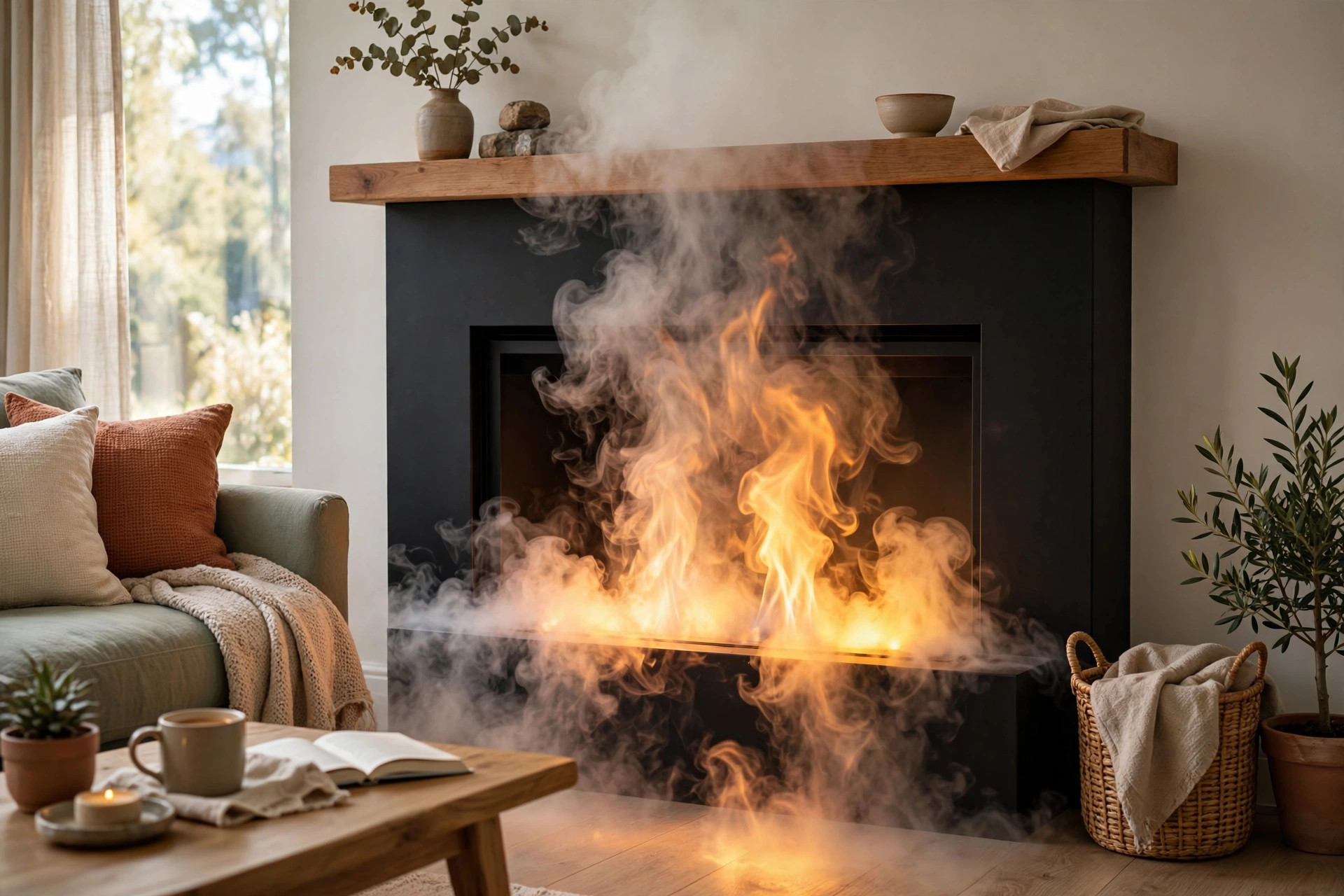
A water vapor fireplace is a device that makes artificial flames from light and fine water mist. Inside the unit, an ultrasonic device turns ordinary water into a cool fog. LED lights shine up through this fog. The result looks like real flames rising and dancing. Some models add a small heater and a crackling sound to complete the effect.
The key point is simple. There is no real fire. Nothing burns. No gas flows. No wood is consumed. The flames are an illusion made of mist and light. That is why these units are also called steam fireplaces or 3D flame fireplaces.
A water vapor fireplace looks most like a real fire when viewed from the front. The mist rises in thin streams, and the light paints each stream orange, yellow, and red. Many owners say guests reach out to touch the flame, only to find cool mist on their fingers.
The Pros of a Water Vapor Fireplace: Water Vapor Fireplace Pros Cons Reviews Usa
The list of advantages is long. Homeowners across the country mention the same points again and again in their reviews.
No vent or chimney is needed. This is the biggest selling point. A wood fire or a gas fire needs a safe path for smoke or fumes to leave the house. A water vapor fireplace needs nothing of the sort. You can place it in a condo, an apartment, or a room with no chimney. This opens up fireplace looks to millions of homes that could never have one before.
Safe to touch. The flames are cool mist. Children and pets can get close without burn risk. Many families choose these units for this reason alone.
Easy to install. Most units are freestanding or wall mounted. You set them in place, fill the water tank, and plug them in. There is no mason, no gas line, and no building permit in most cases. A built-in model may need a cabinet or a frame, but the work is simple carpentry.
Realistic flame look. Reviews often praise the flame effect. From a few feet away, the dancing mist looks much like a real fire. The best models add color, height control, and a bed of glowing fake embers that sell the illusion.
Low running cost for looks. Running the flame effect alone costs very little. Water is cheap. Electricity for the mist and lights is small. If you want the room to look cozy all evening, you can do it for pennies.
Works all year. A wood fire is too much in July. A water vapor fireplace gives the look of fire without the heat. You can enjoy the glow on a summer evening without warming the room.
No mess. Wood fires leave ash, soot, and smoke stains. Gas fires need service. A water vapor fireplace leaves no ash and no soot. The only upkeep is filling the water tank and an occasional wipe.
The Cons of a Water Vapor Fireplace
No product is perfect, and honest reviews point out the weak spots too. Here are the main complaints from water vapor fireplace pros cons reviews usa discussions.
It does not heat like a real fire. The flame effect gives no heat at all. The built-in heater, if the model has one, is a small electric element. It warms a small room slowly. It cannot replace a furnace or even a strong space heater. If you want real warmth, look elsewhere.
The illusion has limits. Up close, you can see that the flames are mist. In bright light, the effect looks weaker. In a dark room, it looks best. Some buyers expect it to fool everyone at all times, and they feel let down.
Water tank needs filling. Most units run for four to eight hours on one tank of water. Then you must refill it. If you forget, the flames stop.
Mist can affect the room. The unit puts water vapor into the air. In a dry winter house, this is often welcome. In a damp basement or a humid climate, it can add unwanted moisture.
Sound may annoy. Some models are nearly silent. Others make a faint hum or gurgle from the ultrasonic device. Light sleepers notice it. Read reviews for the exact model before you buy.
Price is high for what it does. A good water vapor fireplace costs more than a simple electric log set. You pay for the flame technology.
Hard water causes trouble. Tap water leaves mineral scale in the tank and the mist maker. This shortens the life of the unit. Makers suggest distilled or filtered water. That adds a small ongoing cost and chore.
What Homeowners Say: Reviews Across the USA
American owners tend to be happy when they buy for the right reason. People who want looks and mood give high marks. People who want heat give low marks.
Common praise includes the flame realism, the safety around kids, and the freedom from vents. Owners say visitors do not believe the flames are fake until they touch them.
Common complaints include the short tank time, the faint noise, and the letdown over heat. A few owners report that the mist maker wears out after a year or two of heavy use and needs replacement.
The middle ground is large. Most reviewers call these units a luxury look, not a heating tool. When judged as decor, they win. When judged as heaters, they lose. Set your hopes on the decor side and you are likely to be pleased.
How to Choose: What to Look For
Shopping for a water vapor fireplace is easier when you know what matters. Keep this checklist in mind.
Flame quality. Look at video of the exact model in a normal room, not a showroom. Check that the flames rise high enough and that the colors look natural.
Tank size and run time. A bigger tank means fewer refills. For an evening of use, look for at least six hours of run time.
Heater or no heater. Some models have a built-in electric heater with a fan. It adds cost, power use, and noise. If you only want the look, skip the heater and save money.
Noise level. Check reviews for words like hum, buzz, or gurgle. The best units are quiet enough to forget. Avoid models with repeated noise complaints.
Size and fit. Measure your space. Freestanding cassettes come in widths from one foot to several feet. Make sure the unit fits before you order.
Water quality needs. Read the manual summary before buying. If it demands distilled water only, plan for that chore. Models with a filter or a scale collector are easier to live with.
Warranty and parts. The mist maker is a wear part. A good warranty covers it for at least a year. Check that replacement parts are easy to buy.
Types and Options
Water vapor fireplaces come in a few main forms. Each suits a different room.
Freestanding cassette. This is the most common type. It is a long, low box that sits in a hearth opening, a cabinet, or a custom frame. You see only the flame bed. These are popular for built-in wall projects.
Wall-mounted unit. These hang on the wall like a picture. They are slim and modern. They suit apartments and small rooms where floor space is tight.
Furniture style. Some models come built into a TV stand or a console. These resemble a linear electric fireplace for the living room, but the flames are made of mist. They are easy to place and move.
For comparison, a standard electric fireplace insert uses glowing logs and LED light but no mist. Its flame is flatter and less lifelike, but it needs no water and runs longer without care. A ventless gas fireplace gives real heat and real flame but needs gas and careful attention to air quality.
Cost and Price
Prices vary widely. Small plug-in cassettes start around a few hundred dollars. Mid-range built-in units run from about one thousand to three thousand dollars. Large designer models with plumbing and smart controls can cost five thousand dollars or more.
Installation adds to the total. A freestanding unit may need no install cost at all. A built-in unit needs a frame, electrical work, and sometimes a water line. Plan a few hundred to a couple thousand dollars for that work, depending on your project.
Running costs are modest. The flame effect alone uses little power. Filling the tank with tap water costs almost nothing, though makers push distilled water to protect the mist maker. If you run the heater, expect the power draw of a small space heater, around 1,500 watts on high. The U.S. Department of Energy offers general guidance on home heating costs and efficiency at energy.gov, and energystar.gov lists efficient heating products for reference.
Compared with a gas fireplace, a water vapor unit costs more up front for a similar size but needs no gas line and no yearly chimney check. For a full breakdown of heating system costs, sites like thisoldhouse.com and familyhandyman.com publish homeowner guides.
Care and Upkeep
Care is simple but regular. The main job is the water tank. Empty it, rinse it, and refill it with clean water as the maker directs. Do not let water sit for weeks. Stale water grows film and smells.
Wipe the mist maker and the water tray often. Mineral scale is the enemy. If your area has hard water, use distilled or filtered water. A little white vinegar on a soft cloth removes light scale, but check the manual first.
Dust the LED strip and the air vents. Once a year, check the power cord and plug for wear. Replace the mist maker when the flames grow thin. Many makers sell the part, and the swap takes minutes.
Safety
A water vapor fireplace is one of the safest fireplace options. There is no real flame, no gas, and no carbon monoxide from combustion. The surface stays cool to the touch. That makes it a strong pick for homes with small children or pets.
Still, use common sense. Keep the power cord where no one trips on it. Do not place the unit where it can be knocked into a bathtub or a sink. Water and electricity do not mix. Do not open the case while it is plugged in.
If your model has a heater, treat it like any space heater. Keep curtains, paper, and furniture at least three feet from the warm air outlet. Never leave the heater running when you leave the house. Major makers of heating equipment, such as carrier.com, trane.com, lennox.com, goodmanmfg.com, and rheem.com, all stress the same point in their safety guides: electric heaters need clear space and supervision.
Watch the moisture. In a small, closed room, hours of mist can raise humidity. If windows fog up, open a door or run the unit for shorter periods. This is rarely a problem in large rooms.
Buy from a known maker and look for a UL or ETL safety mark on the label. Independent review sites such as consumerreports.org and home guides at thespruce.com can help you check a model before you buy.
Frequently Asked Questions
Do water vapor fireplaces give off real heat? The flame effect gives no heat. It is cool mist and light. Models with a built-in heater give the warmth of a small space heater. They suit a small room. They cannot heat a whole house.
How much water do they use? A typical tank holds enough for four to eight hours of flames. That is roughly a quart to a gallon of water per evening of use.
Can I use tap water? You can, but makers prefer distilled or filtered water. Tap water leaves mineral scale that shortens the life of the mist maker. In hard-water areas, distilled water is worth the small cost.
Are they safe around children and pets? Yes. The flames are cool and safe to touch. There is no real fire and no hot glass. Keep the cord out of reach and do not let children open the water tank.
Do they need a vent or a chimney? No. Nothing burns, so there are no fumes to vent. You can install one almost anywhere with an outlet. This is the main reason people choose them.
How long does the mist maker last? With clean water and regular care, one to three years of normal use is common. Heavy daily use wears it faster. Replacement parts are sold by most makers.
A Short Final Word
A water vapor fireplace is a beautiful illusion. It gives the dance of flames with none of the smoke, ash, or chimney work of a real fire. It is safe and simple to install. It is not a heater, and it asks for regular refills and clean water to stay at its best.
If you want mood and style, the reviews say you will likely be happy. If you want warmth, spend your money on real heating instead.
References
Carrier. (n.d.). Heating and cooling systems. https://www.carrier.com Consumer Reports. (n.d.). Product reviews and ratings. https://www.consumerreports.org ENERGY STAR. (n.d.). Energy efficient products. https://www.energystar.gov Family Handyman. (n.d.). DIY home repair and maintenance. https://www.familyhandyman.com Goodman. (n.d.). Heating and cooling equipment. https://www.goodmanmfg.com Lennox. (n.d.). Heating and cooling systems. https://www.lennox.com Rheem. (n.d.). Heating, cooling, and water heating. https://www.rheem.com The Spruce. (n.d.). Home and garden advice. https://www.thespruce.com This Old House. (n.d.). Home renovation guidance. https://www.thisoldhouse.com Trane. (n.d.). Heating and air conditioning. https://www.trane.com U.S. Department of Energy. (n.d.). Energy efficiency and renewable energy. https://www.energy.gov
Was this guide helpful?

About David Wilson
The My Garden US editorial team writes practical, in-depth home and garden guides for American homeowners — tested advice, no fluff.
You May Also Like
How to Find Air Duct Leaks USA Guide
June 5, 2026 0 views
How Much Does an Outdoor Wood Boiler Cost Installed in the USA?
October 5, 2026 1 views
How Often to Service Furnace: A Complete USA Guide for Homeowners
August 26, 2026 0 views