
A good water supply is the heart of every home. For the millions of American families who draw their water from a private well, the quality of that water rests in their own hands. This best well water filtration system reviews usa guide walks through the main choices, costs, and care steps so a homeowner can make a sound decision with full confidence.
Why Well Water Needs Filtration
Water from a private well does not pass through a city plant. It comes straight from the ground, and it carries what the ground puts into it. Sand and silt can cloud it. Iron can stain sinks and leave a metal taste. Hard minerals leave white scale on faucets and shorten the life of appliances. In some areas, bacteria or other living germs can be present.
A filtration system works like a guard at the door. It catches or removes the unwanted parts before the water reaches the kitchen tap or the shower. Many well owners use a single filter, but most good setups use a chain of two or three parts, each doing one job well.
What To Look For In A Well Water Filtration System: Best Well Water Filtration System Reviews Usa
Reviews of well water systems in the USA point to the same basic features again and again. Use this list when you compare units.
Test Your Water First
Before you buy anything, test the water. A lab test tells you the level of iron, hardness, pH, sediment, and bacteria. Many county health offices offer low-cost test kits. A system chosen without a test is a guess, and guesses waste money.
Flow Rate
Flow rate is measured in gallons per minute. A small home may be fine with 8 to 10 gallons per minute. A larger home with several baths may need 12 or more. If the system is too small, showers grow weak when a faucet is opened.
Filter Stages
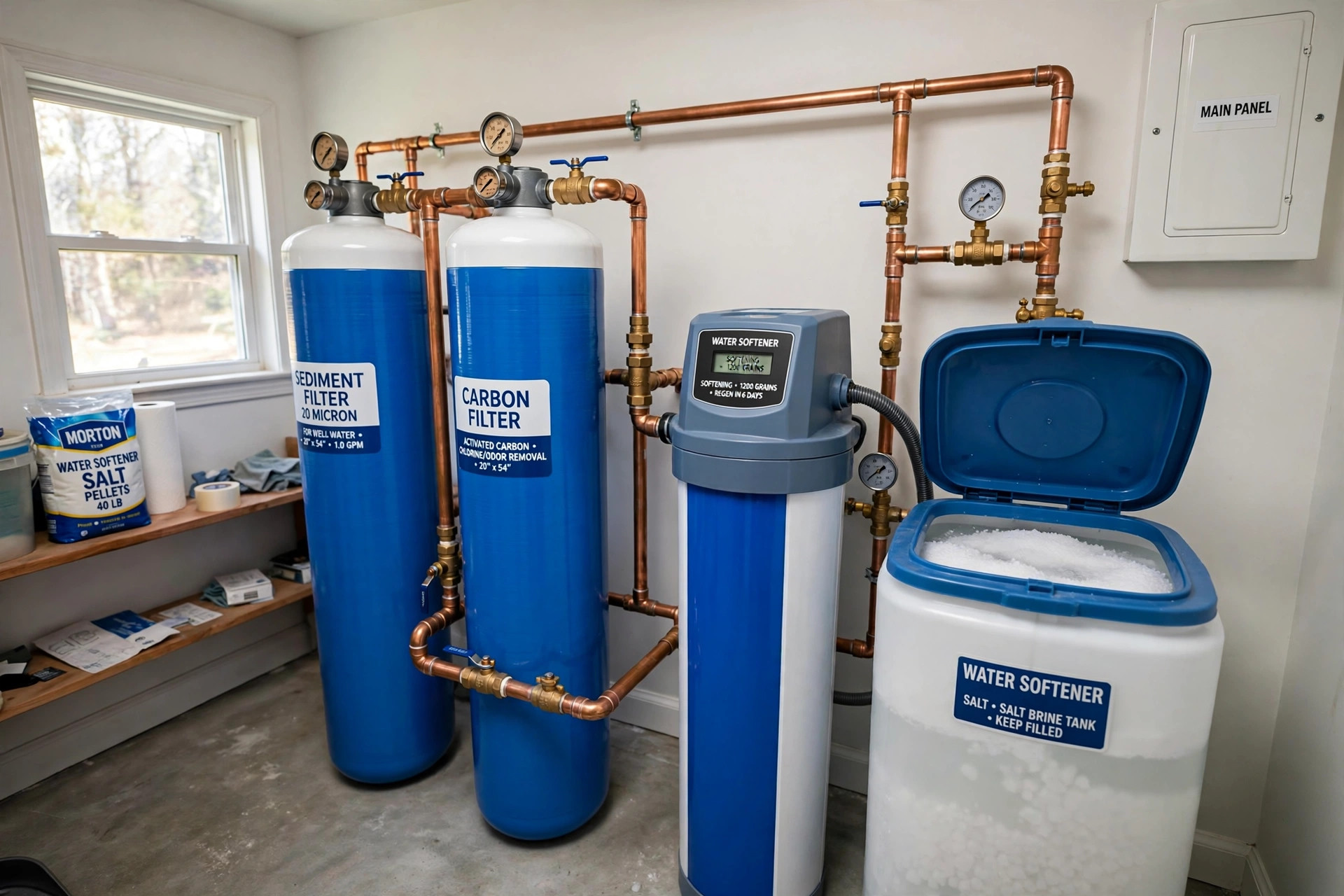
One stage is rarely enough for well water. A common chain is a sediment filter first, then a carbon or specialty filter, then a softener or ultraviolet light. Each stage has a clear job, and together they cover the main problems of well water.
Ease Of Care
Filters need new cartridges. Softeners need salt. Lamps in ultraviolet units need change once a year. Pick a system whose care steps you are willing to do. A simple system that gets cared for beats a fine one that is ignored.
Types Of Well Water Filtration Systems
Not every well needs the same tools. Here are the main types you will see in reviews across the USA.
Sediment Filters
Sediment filters are the first line of defense. They catch sand, silt, and rust flakes. They are low in cost and easy to change. Every well system should have one, even if it is only a coarse 20-micron pre-filter. Homeowners comparing best sediment filter for well water usa options often start here.
Iron And Specialty Filters
Iron is one of the most common well water problems in the USA. It stains laundry and fixtures a rusty orange. Air injection iron filters and manganese greensand filters are made for this job. They need a backwash step to flush out what they catch.
Carbon Filters
Carbon filters remove chlorine-like tastes, odors, and many chemicals. For wells, they are often placed after the sediment filter. Whole-house carbon units can be large tanks that need little care. Many readers also look at best whole house water filter system usa when they want one unit for the full home.
Water Softeners
Hard water is water rich in calcium and magnesium. It leaves scale in pipes and on glass doors. A water softener swaps those minerals for sodium or potassium. Soft water cleans better and helps appliances last longer. Well owners with high hardness often pair a softener with a filter. See best water softener for well water usa for more on this choice.
Reverse Osmosis Units
Reverse osmosis pushes water through a very fine membrane. It removes a wide range of dissolved solids, including lead, nitrates, and arsenic. Because it is slow, it is usually placed under the kitchen sink for drinking and cooking water only.
Ultraviolet Light Units
Ultraviolet light kills bacteria and viruses without chemicals. It is often the last step in a well system. The water must be clear first, because cloudy water blocks the light. A sediment and carbon filter before the lamp keeps it working well.
How Reviews Rank The Best Systems
When you read best well water filtration system reviews usa articles and buyer reports, a few names and design styles come up again and again.
What The Top-Rated Systems Share
The best-reviewed systems are built for the whole house, not a single tap. They use large tanks or cartridges that last months, not weeks. They backwash on their own to clean the filter media. They carry clear manuals and fair warranties of three to ten years.
Many reviewers praise units that pair an air-injection iron filter with a softener and a final ultraviolet lamp. This three-part chain covers sediment, iron, hardness, taste, and germs. It costs more at first, but it answers the most common well problems in one setup.
Check The Media And Tank Size
A second point that strong reviews share is generous tank size. A 10-inch by 54-inch tank holds more filter media than a 9-inch by 48-inch tank, so it can treat more water between backwashes. Small systems that serve a big house get tired fast. Reviewers often note that upsizing by one tank size was the best money they spent.
Read The Warranty Like A Contract
A clear warranty is a sign of a serious maker. Look for tanks with a warranty of five to ten years and valves with three to five years. The warranty should be written in plain words and list what is covered. Some makers ask for a pro install to keep the warranty valid, so read the fine print before you drill a single hole.
What To Avoid
Reviews also warn against units that are too small for the home. A small cartridge that clogs every two weeks is a poor buy. Also beware of systems with no clear warranty or with parts that are hard to find. If you cannot buy a new cartridge in five years, the system has no future.
Shoppers can compare parts and prices at Home Depot and Lowe’s, which both carry a wide range of well water equipment. Maker sites such as Aquasana, Moen, Delta Faucet, and Kohler show full lines with spec sheets and manuals.
Cost And Price Of Well Water Filtration Systems
Price is a big part of every review. Here is what American homeowners can expect to pay.
Basic Sediment And Carbon Units
A simple whole-house sediment and carbon filter costs from about 100 to 400 dollars for the unit. Cartridges cost 20 to 60 dollars each and may need change every three to six months. A handy owner can install it in an afternoon.
Iron Filters And Softeners
An iron filter or a water softener usually costs 600 to 2,000 dollars for the unit. Professional installation adds 300 to 800 dollars. Salt for a softener costs about 5 to 8 dollars a bag, and most homes use one bag a month.
Ultraviolet Light Units
A good whole-house ultraviolet unit costs 400 to 900 dollars. The lamp costs 80 to 150 dollars and should be changed once a year. The quartz sleeve that holds the lamp needs a wipe or change each year as well.
Full Three-Part Systems
A complete system with sediment filter, iron filter or softener, and ultraviolet light often runs 2,500 to 5,000 dollars installed. That sounds like a lot, but it can be less than years of bottled water and far less than a new well pump damaged by iron or scale.
For free guidance on what well water may contain, the EPA offers plain facts on private wells and testing. How-to sites like This Old House and Family Handyman show step-by-step install tips for handy owners.
Care And Upkeep
A filtration system is not a thing you buy and forget. It needs steady, simple care.
– Change sediment cartridges on schedule, usually every three months. – Check the pressure gauge. A big drop means a clogged cartridge. – Keep salt in the softener brine tank, and clean the tank once a year. – Change the ultraviolet lamp once a year, even if it still glows. Old lamps lose their power. – Flush and sanitize the system once a year with a mild bleach rinse, following the manual. – Test the water once a year to be sure the system still does its job.
Write the care dates on a card taped to the tank. Simple records keep a system working for many years.
Winter And Storm Checks
Well owners in cold states should check the filter area when winter comes. Tanks and pipes in an unheated shed can freeze and crack. Wrap exposed pipes with insulation and keep the room above freezing. After a power outage, check the softener clock. Many older valves lose the time of day and then backwash at the wrong hour, which can foul the media.
Know When To Call A Pro
Most care is simple, but some signs call for a pro. If iron stains return after a backwash, the media may be spent. If the softener uses salt but the water still tests hard, the resin bed may need a clean or a change. If the ultraviolet alarm sounds, the lamp or sensor may have failed. A service call once in a while is far cheaper than a new system.
Safety Notes For Well Owners
Clean water is a health matter, not just a comfort. A few safety points deserve care.
– Test for bacteria at least once a year, and any time the water changes color, taste, or smell. – After floods or heavy storms, test before you drink. Ground water can shift. – A softener adds a small amount of sodium. People on strict low-salt diets should ask a doctor, or use potassium in the softener. – Reverse osmosis water is very pure. Some owners add a remineralizing cartridge for taste. – If a test shows lead, arsenic, or nitrates above safe levels, act at once. These call for the right specialty filter, not just a basic unit.
Frequently Asked Questions
What is the best well water filtration system for a home in the USA?
There is no single best for every home. The best system is the one that matches your water test. Most well homes do well with a sediment filter, an iron filter or softener, and an ultraviolet lamp. Read several best well water filtration system reviews usa roundups, then match the parts to your test results.
How much does a whole house well water filter cost installed?
A basic whole-house filter costs 100 to 400 dollars plus simple install. A full system with iron filter, softener, and ultraviolet light often runs 2,500 to 5,000 dollars with professional installation.
Do I need a water softener if I have a well?
Only if your water is hard. A test will show hardness in grains per gallon. Above about 7 grains per gallon, most owners choose a softener to protect pipes, fixtures, and appliances.
How often should I change well water filter cartridges?
Sediment cartridges usually last three months. Carbon cartridges last three to six months, or longer for large tanks. Check the pressure gauge and the maker’s guide. When flow drops, change the cartridge.
Does a well water filter remove bacteria?
Sediment and carbon filters do not kill bacteria. For germs, use an ultraviolet light unit or a proper chlorination step. Always pair disinfection with a pre-filter so the water is clear.
Can I install a well water filtration system myself?
Many owners install basic cartridge filters on their own. Larger iron filters, softeners, and ultraviolet units are often best left to a pro, since they tie into the main line and may need a drain and power.
A Final Word
A private well is a gift, but it asks the owner to be the water plant. The best well water filtration system reviews usa guides all point to the same path: test the water, pick the right chain of filters, size it for the home, and keep up with simple care. Do that, and the water from every tap can be clear, safe, and good to drink for years to come.
References
Aquasana. (n.d.). Water filtration systems. https://www.aquasana.com Delta Faucet. (n.d.). Kitchen and bathroom faucets. https://www.deltafaucet.com Family Handyman. (n.d.). DIY home repair and maintenance. https://www.familyhandyman.com Kohler. (n.d.). Bathroom and kitchen fixtures. https://www.kohler.com Lowe’s. (n.d.). Home improvement products. https://www.lowes.com Moen. (n.d.). Faucets and plumbing fixtures. https://www.moen.com The Home Depot. (n.d.). Home improvement products. https://www.homedepot.com This Old House. (n.d.). Home renovation guidance. https://www.thisoldhouse.com U.S. Environmental Protection Agency. (n.d.). Protecting human health and the environment. https://www.epa.gov
Was this guide helpful?

About Robert Taylor
The My Garden US editorial team writes practical, in-depth home and garden guides for American homeowners — tested advice, no fluff.
You May Also Like
Best Water Softener for Well Water USA: A Complete Buyer Guide
May 24, 2026 0 views
Best Countertop Water Filter Reviews 2026
September 14, 2026 0 views
Gas Tankless Water Heater Installation Cost USA: What Homeowners Pay
July 10, 2026 0 views