If your home runs on well water, you already know the truth of it. The water can look fine one week and cloudy the next. Grit gathers in the bottom of the tub. A fine layer of sand settles in the toilet tank. Aerators on the taps clog every few months. Finding the best sediment filter for well water USA families can buy is often the first step toward cleaner pipes and longer-lasting fixtures. A good sediment filter does not change the taste of your water. It does one job, and it does it well. It takes dirt out before the water reaches the rest of your home.
This guide walks through the subject in plain terms. It covers why sediment matters, how the filters work, what to look for when you shop, what you can expect to pay, and how to keep the unit in good shape year after year.
Why Sediment Is a Problem in Well Water
City water passes through a treatment plant. Well water does not. It rises from the ground carrying whatever the ground gives it. Sand, silt, clay, and rust particles are common. A new well may throw off fine drilling mud for months. An older well may start pulling sand if the screen at the bottom wears down. Heavy rain can stir the aquifer and send a pulse of silt into the system.
Sediment by itself is not always a health risk. The Environmental Protection Agency keeps watch over drinking water safety, and its drinking water resources note that private well owners are responsible for testing their own supply. But sediment causes plenty of practical harm. It wears out pump seals and valve seats. It clogs faucet screens and showerheads. It shortens the life of water heaters and washing machines. It also makes other treatment harder. A softener or a UV lamp cannot do its best work in cloudy water. Taking the grit out first is standard practice.
Many families find that a whole house water filter system works best when a sediment stage sits at the front of the line. That first stage protects everything behind it. You can read more about that idea in our guide to whole house water filter systems for American homes.
How a Sediment Filter Works: Best Sediment Filter for Well Water Usa
A sediment filter is a mechanical strainer. Water passes through a fine barrier. Dirt stays behind. Clean water moves on. Nothing is added to the water, and nothing chemical takes place.
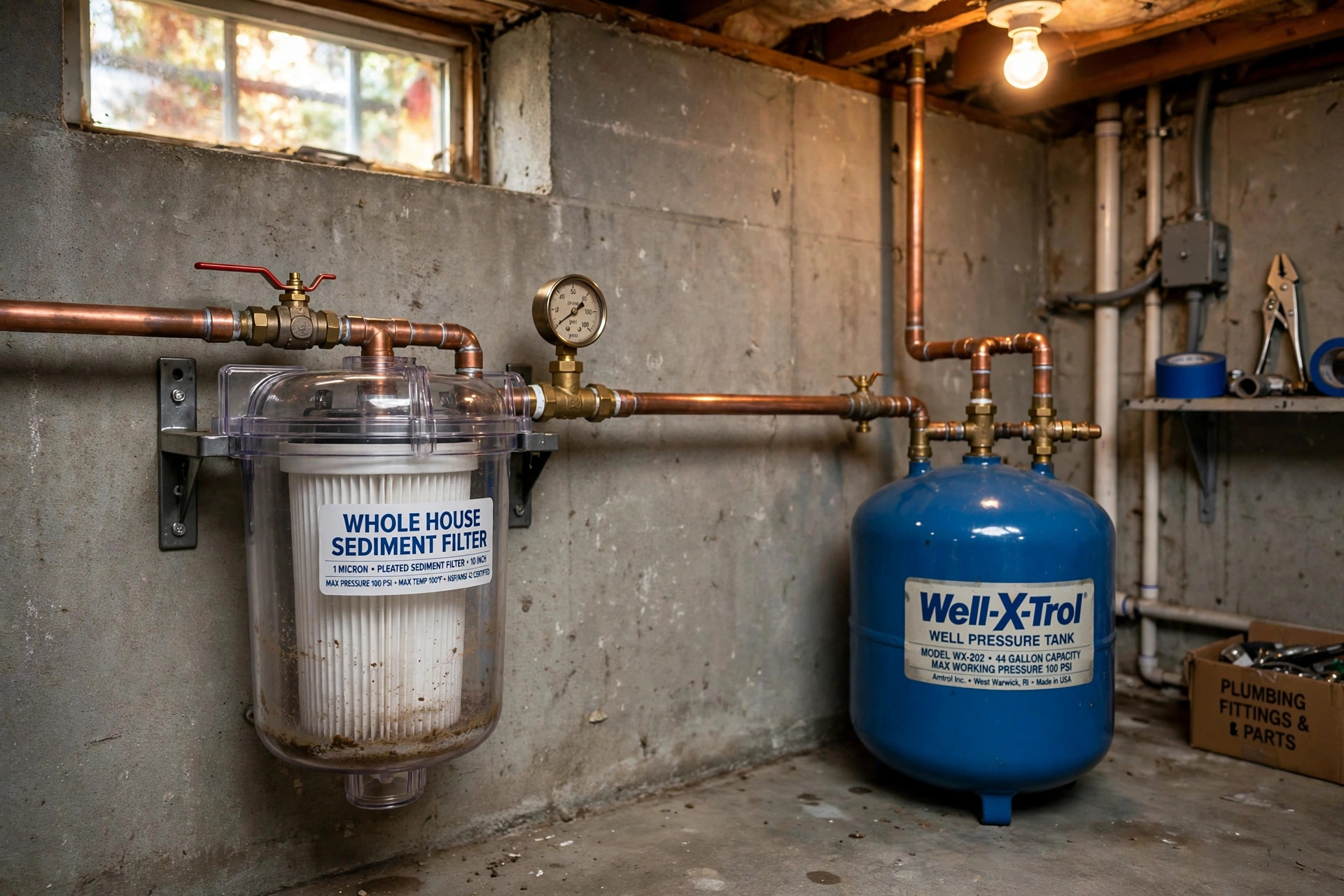
Most units for well water sit on the main line where it enters the house. This is called a point-of-entry setup. Every tap, shower, and appliance gets filtered water. Some homes use smaller filters at a single tap, but a single-tap unit will not protect the pipes or the water heater. For well water, the whole house approach is the usual choice.
The key number on any sediment filter is the micron rating. A micron is one millionth of a meter. A 50-micron filter catches visible sand. A 20-micron filter catches fine silt. A 5-micron filter catches very fine particles, and a 1-micron filter catches nearly everything you can see and much that you cannot. The smaller the number, the finer the filter. But a finer filter also clogs faster and slows the flow more. Many well owners start with a coarser filter, then add a finer stage behind it.
What to Look for When You Choose a Sediment Filter
Shopping for a well water sediment filter for home use is easier when you know the four points that matter most.
Micron Rating
Test your water first, or at least look at it. If you can see sand grains, a 50- or 100-micron spin-down filter may be enough as a first stage. If the water looks cloudy but shows no visible grit, aim for 20 microns. If you want polished water for a second stage, 5 microns or 1 micron is the range. Do not jump straight to 1 micron on a dirty well. The cartridge will clog in days and water pressure will drop across the house.
Flow Rate
Check the filter’s rated flow in gallons per minute. A small home may need 8 to 12 gallons per minute at peak times. A larger home with several baths may need 15 to 20. Pick a unit rated above your peak demand. Independent testing groups such as Consumer Reports publish water filter ratings that can help you compare flow and capacity claims between models.
Housing Size and Cartridge Life
Filter housings come in sizes like 10 inch and 20 inch, slim and big blue. Bigger housings hold bigger cartridges. Bigger cartridges last longer and drop less pressure. On a well with heavy sediment, a standard 10-inch cartridge may last only a month. A 20-inch big blue cartridge on the same well might last three months. Larger is almost always the better buy for well water.
Build Quality and Parts
Look for a solid sump, a good O-ring seal, and a pressure relief button. Clear sumps let you see when the cartridge is dirty. Opaque blue sumps block light and slow algae growth. Either works. Make sure replacement cartridges are easy to find at major retailers like Home Depot or Lowe’s, so you are not stuck hunting for a rare size years from now.
Types of Sediment Filters for Well Water
Three main types serve well water homes in the United States. Each has its place.
Spin-Down Filters
A spin-down filter uses a reusable screen, often 50 or 100 microns. Water spins inside the housing, and heavy particles fall to the bottom. You open a small valve at the base to flush the dirt out. No cartridge to buy. No tools needed. Spin-down units are excellent first-stage filters on wells that throw sand. They catch the big stuff so the finer cartridge behind them lasts longer.
Cartridge Filters
These are the workhorses. A pleated or spun cartridge sits inside a sealed housing. Pleated cartridges offer more surface area and last longer. Spun poly cartridges are cheap and disposable. Cartridge filters come in many micron ratings, so you can stack them: 50 microns first, then 20, then 5. Home improvement writers at Family Handyman often show this staged setup in their water filtration projects, because it is the most forgiving way to handle a dirty well.
Backwashing Filters
A backwashing sediment filter cleans itself. On a timer, it reverses the flow and flushes trapped dirt down the drain. There is no cartridge to change. These units cost more up front and need a drain nearby and a power outlet. For wells with constant heavy sediment, they can be worth it. The trade-off is complexity. More parts mean more that can fail, and repairs need a steady hand or a professional.
Cost and Price
A simple single-stage cartridge housing with a first cartridge costs about 40 to 100 dollars. A 20-inch big blue setup runs 100 to 250 dollars. A spin-down pre-filter adds 60 to 150 dollars. A backwashing unit starts near 600 dollars and can pass 1,500 dollars for larger homes.
Replacement cartridges cost 10 to 40 dollars each, depending on size and micron rating. On a clean well, a cartridge may last six months. On a dirty well, it may last six weeks. Budget for four to eight cartridges a year until you learn your well’s habits.
Professional installation adds to the bill. If you want a full picture of labor and parts, see our breakdown of what a whole house sediment filter installation costs. A handy homeowner can install a basic housing with common plumbing tools. Sweating copper or working with PEX near the main line is not a beginner job, though. If your plumbing skills are limited, hire a plumber. A bad joint on the main line can flood a basement.
Care and Upkeep
A sediment filter is simple to maintain, but it does need attention.
Check the cartridge every month for the first year. Note how dirty it gets and how fast. This tells you your real change schedule. Mark the date on the housing with a grease pencil each time you swap the cartridge.
Shut off the water and release the pressure before you open the housing. The relief button on top lets the pressure out. Have a bucket ready. The sump will hold water. Rinse the sump, check the O-ring for cracks, and apply a thin film of food-grade silicone grease to the ring. Do not overtighten the sump. Hand tight plus a small turn is enough.
For spin-down filters, open the flush valve weekly, or more often after storms. Watch what comes out. If the flush water runs clear quickly, your well is behaving. If it stays brown for minutes, the well may need attention from a well contractor.
Keep spare cartridges on the shelf. Running without a cartridge while you wait for a delivery leaves your pipes unprotected. Guides at This Old House and Bob Vila both stress the same habit: stock spares before you need them.
Safety
Sediment filters are safe by nature. They add nothing to the water. Still, a few cautions apply.
First, a sediment filter is not a purifier. It does not remove bacteria, viruses, lead, or dissolved chemicals. If your water test shows iron bacteria or coliform, you need disinfection too. Iron in well water is a separate problem with its own fixes, covered in our look at iron filters for well water.
Second, a clogged filter can cut pressure or, in rare cases, let the housing crack from stress. Change cartridges on schedule. Never leave a cartridge in place for years.
Third, stagnant water in a filter housing can grow bacteria in warm weather. If you leave the house for weeks, flush the system well when you return. The Spruce offers clear explainers on whole house filter upkeep that cover this point in more detail.
Fourth, protect the unit from freezing. Most housings sit in basements or crawl spaces. If yours is in an unheated space, insulate the pipes or add heat tape before winter.
Frequently Asked Questions
Do I need a water test before buying a sediment filter?
Yes. A basic well water test costs 30 to 150 dollars through a local lab or health department. It tells you how much sediment you have and whether iron, hardness, or bacteria are also present. Buying blind often means buying twice.
What micron size is best for well water sediment?
Most well owners do well with a staged approach: 50 microns first, then 20 or 5. If you must pick one, 20 microns is a common middle ground. It catches most visible sediment without clogging too fast.
Will a sediment filter fix orange stains in my sinks?
No. Orange stains come from dissolved iron, not sediment. A sediment filter catches rust particles, but dissolved iron passes right through. You need an iron treatment system for the stains.
How often should I change the cartridge?
Watch the pressure and the cartridge color. A common rule is every three to six months. Dirty wells may need monthly changes. When water pressure drops across the house, the cartridge is overdue.
Can I install a sediment filter myself?
Many homeowners can. You need to cut into the main water line, add shutoff valves, and mount the housing. If you are comfortable with basic plumbing, it is a half-day job. If not, a plumber usually charges for one to three hours of labor.
Does a sediment filter help with a water softener?
Yes. Sediment wears out softener resin and clogs its valves. Putting a sediment filter ahead of the softener is standard practice. Softener makers and plumbing brands like Moen and Delta Faucet design their fixtures to last longer with clean water feeding them.
A Final Word
The best sediment filter for well water USA homeowners can choose is the one that fits the well. Start with a water test. Size the unit for your peak flow. Stage from coarse to fine. Keep spare cartridges on hand. Do these simple things, and your pipes, fixtures, and appliances will thank you for years.
References
Bob Vila. (n.d.). Home improvement advice. https://www.bobvila.com Consumer Reports. (n.d.). Product reviews and ratings. https://www.consumerreports.org Delta Faucet. (n.d.). Kitchen and bathroom faucets. https://www.deltafaucet.com Family Handyman. (n.d.). DIY home repair and maintenance. https://www.familyhandyman.com Lowe’s. (n.d.). Home improvement products. https://www.lowes.com Moen. (n.d.). Faucets and plumbing fixtures. https://www.moen.com The Home Depot. (n.d.). Home improvement products. https://www.homedepot.com The Spruce. (n.d.). Home and garden advice. https://www.thespruce.com This Old House. (n.d.). Home renovation guidance. https://www.thisoldhouse.com U.S. Environmental Protection Agency. (n.d.). Protecting human health and the environment. https://www.epa.gov
Was this guide helpful?

About Lisa Anderson
The My Garden US editorial team writes practical, in-depth home and garden guides for American homeowners — tested advice, no fluff.