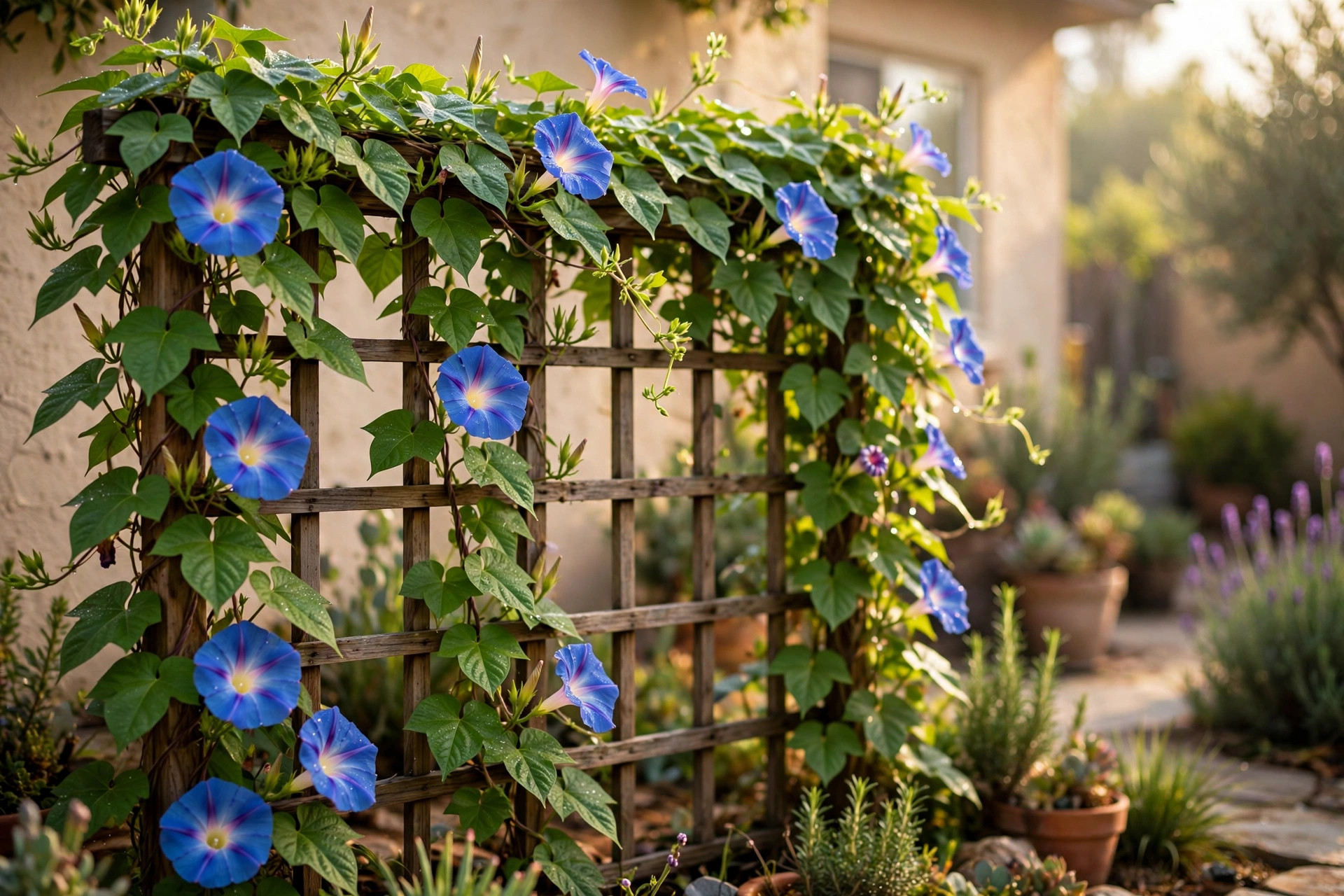

California is a fine place to grow morning glories. The sun is strong. The days are warm. Few flowers give so much color for so little money and work. If you are new to morning glory seeds, California homes offer nearly ideal ground for these fast vines.
Morning glory seeds rank among the easiest flower seeds to start. The seed is large. The seedling is tough. The vine grows fast. Within weeks of sowing, the plant can cover a fence or trellis. By mid summer, trumpet shaped blooms open each morning and fade by noon. This daily show lasts for months.
This guide walks you through the whole process: how to choose seed, when to sow, how to plant, and how to keep the vine healthy. You will also learn the safety points that matter for homes with children and pets. Every part of this guide serves one reader: a California home owner who wants bright blooms with plain, honest work.
Why Morning Glories Suit California Homes
California weather fits the morning glory life cycle. These plants come from warm parts of the world. They like heat. They like sun. They dislike cold, wet soil. Most of California gives them exactly what they want from spring through fall.
The vines handle dry spells once their roots settle. This matters in a state where summer water can be dear. A morning glory vine with deep roots can go days between waterings in many coastal and inland yards. In hot inland valleys, a little extra water keeps the blooms large and steady.
Morning glories are also cheap cover for bare spots. A fence, a bare wall, an ugly shed — the vine covers them all in one season. Many gardeners plant them to shade a hot patio or to screen a view. The flowers open in the cool of the morning and close before the heat of the day, which is a pleasant rhythm for a breakfast patio.
For renters, the plant is a gift. Sow the seed in a large pot with a trellis. The vine stays put for the season. Long time seed houses such as Burpee and Park Seed sell these packets in stores and catalogs across the country, with clear growing notes on each one.
How to Choose Morning Glory Seeds: Morning Glory Seeds California Homes Usa
Good results start with good seed. Most packets on the shelf will grow. Still, a little care at the store pays off in better blooms.
Read the Seed Packet
A seed packet holds the key facts. Read it before you buy. Look for the variety name first. Common types include Heavenly Blue, Grandpa Ott, and Scarlett O Hara. Each has its own color and size.
Check the germination rate on the packet. Fresh seed sprouts better than old seed. Buy packets marked for the current or next year. The packet should also state the days to bloom, often 60 to 90 days. Count back from your first frost to pick a type that will bloom in time. Planting calendars from almanac publishers list frost dates by zip code, which makes this math easy.
Look at the seed treatment note. Many seed companies coat flower seed with a fungicide. The packet will say so in small print. Treated seed is fine for the garden, but it is not safe for people or animals to eat. Keep such packets away from children.
Pick the Right Type for Your Yard
Not all morning glories act the same. Some grow 8 feet tall. Some reach 15 feet or more. Match the vine to the space.
For a small fence or balcony pot, choose a compact type. For a tall fence or an arbor, choose a strong climber. If you want night blooms, add moonflower seed to the order. Moonflowers are close cousins of morning glories. Their white blooms open at dusk and scent the air. Many seed sellers list them side by side.
Buy from a seller you trust. Seed catalogs from companies like Gurney’s list germination times and growing zones for each type, so you can match the seed to your part of California before you order. Our morning glory seeds buying guide covers the packet details in more depth, and our notes on where to buy morning glory seeds in the USA can help you compare stores.
Types and Options for California Gardens
The morning glory family is wide. A few types stand out for California homes.
Heavenly Blue is the classic. Its sky blue blooms with white throats are the ones most people picture. The vine is strong and climbs 10 to 15 feet. It blooms best in full sun and warm nights.
Grandpa Ott is a darker choice. The blooms are deep purple blue with a red star at the center. It grows well and reseeds itself. Once you plant it, you may see it return each year from dropped seed.
Scarlett O Hara brings red to the mix. The blooms are a rich cherry red. It is a good match for a yard that already has many blue and white flowers.
Moonflower is the night shift of the family. The large white blooms open in the evening and close by mid morning. A mix of morning glories and moonflowers gives a trellis flowers around the clock.
California also has its own native kin. The beach morning glory grows wild along the coast. It is a low, spreading plant with pink or white blooms. Native plant nurseries sometimes carry it. It suits a natural or coastal garden better than a formal bed.
Plant breeders keep adding new types. Trialed varieties from Proven Winners often come with notes on heat tolerance, which is useful for inland California. Garden advice sites such as Gardening Know How also keep lists of which types do best in hot, dry yards.
When and How to Sow Morning Glory Seeds
Timing matters more than technique. Sow too early, and cold soil rots the seed. Sow at the right time, and the seed all but grows itself.
Wait until the soil is warm: in most of California, this means late April through June. The air should feel warm day and night, with nights above 50 degrees. In cool coastal zones, wait until June; in warm inland zones, May is fine.
Morning glory seed has a hard coat. Nicking the coat speeds sprouting. Rub each seed lightly with a file or sandpaper until you see a pale spot. Then soak the seed in warm water overnight. Plant the swollen seed the next day. This old trick can cut germination time in half.
Sow the seed where the vine will grow. Morning glories dislike transplanting. Their roots do not like to be moved. Push each seed about half an inch deep in the soil. Space seeds 6 to 12 inches apart. Water the bed well.
Set the support at planting time. A trellis, fence, string, or wire works. The vine finds the support on its own. The tendrils twine around anything thin. Avoid smooth metal poles, which the vine cannot grip.
For a pot, use a container at least 12 inches wide and deep, filled with potting mix. Sink a small trellis in the pot. Sow three to five seeds, then thin to the strongest two or three. Water pots more often than beds, since pots dry fast in California heat.
Step by step seed sowing guides from The Spruce show photos of each stage, from nicking the coat to the first true leaves. Research pages from the National Institute of Food and Agriculture also cover direct sowing for warm season annuals.
Cost and Price
Morning glories are among the cheapest flowers you can grow. A standard packet holds 15 to 50 seeds and costs a few dollars. One packet can fill a long fence.
Large or bulk packets cost more per packet but less per seed. If you have a big fence, a bulk packet makes sense. Some sellers offer mixes with several colors in one packet, which saves you from buying three packets.
Plants sold in pots at a nursery cost far more. A gallon pot of morning glory may cost ten times the price of a seed packet. The nursery plant gives a head start of a few weeks. For most gardeners, the seed is the better buy. Nursery growers such as Monrovia and White Flower Farm publish care sheets for the vines they sell, with watering notes by region, which can help you plan the true cost of the season.
Care and Upkeep Through the Season
Once the seed sprouts, the work is light. Water, sun, and a little patience do most of the job.
Water deeply but not often, letting the top inch of soil dry between waterings. In sandy California soil, this may mean watering twice a week in summer; in clay soil, once a week may be enough. Potted vines need water daily in hot weather.
Give the vine full sun. Six or more hours of direct sun each day brings the most blooms. In the hottest inland valleys, a little afternoon shade is fine. Too much shade gives long stems and few flowers.
Go easy on fertilizer. Rich soil grows leaves, not flowers. If your soil is poor, work in compost at planting time. After that, feed lightly or not at all. A vine that grows slowly often blooms better than one that grows too fast. Removing faded flowers is not required, but it keeps the trellis neat and can stretch the bloom season.
Watch for reseeding. Morning glories drop seed that sprouts next spring. In a mild California winter, this self sowing can be strong. Pull young seedlings where you do not want them. Do not let the vine spread into wild areas, where it can crowd out native plants.
In fall, the vine dies with the first cold nights. Pull the dead stems from the trellis and compost them if they are free of disease. Save seed from your best blooms for next year: let a few pods dry on the vine, then store the seed in a cool, dry place.
Safety Notes for Homes With Children and Pets
Morning glories are beautiful, but they are not harmless. Every gardener should know the risks.
The seeds are the danger. Morning glory seeds contain compounds that are toxic if eaten. They are listed as toxic to dogs, cats, and horses by animal poison control groups. Children should never eat the seeds. Keep seed packets on a high shelf.
Many commercial seed packets are also treated with fungicide. Treated seed has a colored coating, often pink or blue. The coating protects the seed in the soil. It is not safe to eat. Wash your hands after handling treated seed.
The leaves and stems are less of a worry, but pets that chew plants should be kept away. If a dog or cat eats a large amount of seed, call your veterinarian or an animal poison hot line at once. Quick action matters.
In California, check local rules before planting near open space. Morning glories can reseed with force in mild climates. Some cities and counties ask gardeners to keep them out of natural areas. A quick look at the local rules saves trouble later.
Frequently Asked Questions
How long do morning glory seeds take to sprout? With nicking and soaking, most seed sprouts in 5 to 10 days in warm soil. Without those steps, it can take two to three weeks. Cold soil slows everything. If nothing shows after three weeks, the soil was likely too cold or too wet.
Can I start morning glory seeds indoors? You can, but direct sowing is better. The roots dislike moving. If you must start indoors, use peat pots that go into the ground whole. Start only two to three weeks before the last frost. Move the pots out when nights stay warm.
Do morning glories come back every year in California? The vine itself is an annual and dies in winter. But dropped seed often sprouts the next spring. In frost free parts of California, this self sowing can feel like a perennial bed. Pull extra seedlings to keep the bed in bounds.
How much sun do morning glory seeds need to grow well? Give the plants full sun, six or more hours a day. Blooms open in morning light and close by afternoon. A spot that gets morning sun and light afternoon shade works well in the hottest inland areas.
Are morning glories invasive in California? They can reseed strongly in mild climates. They are not listed among the worst invaders, but they can escape gardens near open space. Keep them in the yard. Pull seedlings that appear where you do not want them. Do not plant them next to wild land.
What grows well with morning glories? Many gardeners pair them with wildflower mixes for a cottage look; see our notes on wildflower seed mixes for California homes for companion ideas. Sunflowers also make a good partner, with tall stems the vine can climb.
A Short Final Word
Morning glory seeds give California homes a fast, cheap path to color. Pick a type you like. Wait for warm soil. Nick and soak the seed. Give the vine sun and a trellis. Keep the seed away from children and pets. That is the whole craft.
The blooms will open each morning, bright and brief, from summer into fall. Few garden tasks repay so well for so little work. Sow a packet this spring, and see for yourself.
References
Burpee. (n.d.). Seeds, plants, and gardening supplies. https://www.burpee.com Gardening Know How. (n.d.). Gardening guides and plant care. https://www.gardeningknowhow.com Gurney’s Seed & Nursery Co. (n.d.). Seeds, plants, and garden supplies. https://www.gurneys.com Monrovia. (n.d.). Plants for home gardens. https://www.monrovia.com National Institute of Food and Agriculture. (n.d.). Agricultural research and extension. https://www.nifa.usda.gov Park Seed. (n.d.). Seeds, plants, and gardening supplies. https://www.parkseed.com Proven Winners. (n.d.). Plants and gardening inspiration. https://www.provenwinners.com The Old Farmer’s Almanac. (n.d.). Gardening calendars and advice. https://www.almanac.com The Spruce. (n.d.). Home and garden advice. https://www.thespruce.com White Flower Farm. (n.d.). Plants, bulbs, and garden supplies. https://www.whiteflowerfarm.com
Was this guide helpful?

About James Carter
The My Garden US editorial team writes practical, in-depth home and garden guides for American homeowners — tested advice, no fluff.
You May Also Like
Succulent Variety Packs Deals Near Me: A Full Buying Guide
June 2, 2026 0 views
Tulip Bulbs Fall: Where to Buy in the USA
January 22, 2026 0 views
A Native Grass Seed American Homes Guide: How to Choose, Plant, and Keep a Native Lawn
August 19, 2026 0 views