
Why Leaves Are a Real Problem
Every fall, trees drop their leaves. A big yard can be buried in a few short weeks. Raking takes hours. Bagging takes more hours. The best cordless leaf vacuum mulcher turns this hard work into a short job. It sucks up leaves and chops them into small pieces. The small pieces fit into far fewer bags. That saves time and money.
Leaves left on grass cause harm. A thick layer blocks the sun. It traps water against the ground. Grass under wet leaves turns yellow and dies. Mold and fungus grow in damp spots. Pests hide in the leaf cover. Clean lawns stay healthy through the winter. A cordless tool makes this job simple.
Cordless machines run on batteries. There is no cord to drag behind you. You can walk all over the yard. You can reach far corners. You can work on slopes and under bushes. There is no engine to feed with gas. There is no oil to mix. Push a button and the machine starts.
What a Leaf Vacuum Mulcher Does: Best Cordless Leaf Vacuum Mulcher
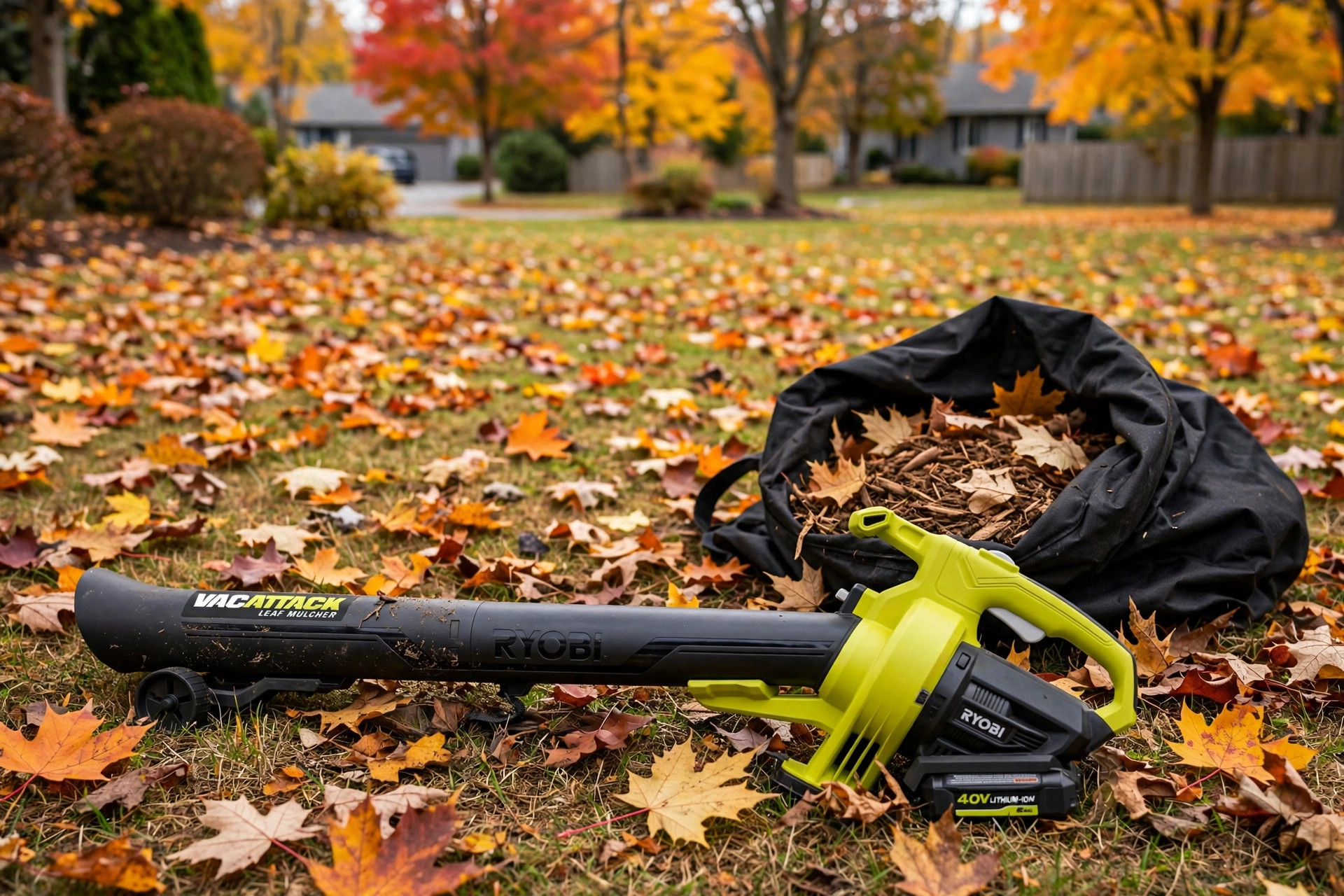
A leaf vacuum pulls leaves into a tube with strong suction. Inside the machine, a metal blade spins fast. The blade shreds the leaves into fine bits. The bits land in a cloth or plastic bag. The bag sits on the back of the machine.
The mulch ratio tells you how much the machine shrinks the leaves. A ratio of 10 to 1 means ten bags of leaves become one bag of mulch. A ratio of 16 to 1 shrinks them even more. High ratios mean fewer trips to the curb. They mean fewer bags to buy.
Most machines also work as blowers. Flip a switch or change a tube. Then the machine blows leaves into piles instead of sucking them up. This two-in-one design is common. It saves the cost of a second tool.
Why Cordless Beats Corded
Corded tools have one big flaw. The cord. It tangles in bushes. It trips you on wet grass. It limits how far you can walk from the house. You need long extension cords for big yards. The cords get cut by blades and wheels. Cordless tools free you from all of this. A charged battery goes anywhere in the yard. You can work around trees, fences, and garden beds with no cord to snag. This freedom is the main reason buyers now pick cordless models over corded ones.
What to Look For When You Shop
Battery Power
Battery voltage is the first number to check. Most cordless models use 40 volt or 56 volt batteries. Some use 60 volt or 80 volt packs. Higher voltage often means stronger suction. But voltage alone does not tell the whole story. Motor design matters too.
Look at the air speed. It is listed in miles per hour. Good models move air at 150 to 200 miles per hour in blower mode. Suction mode runs slower but still strong. Air volume is listed in cubic feet per minute. A volume of 400 to 500 is strong for most home yards.
Run Time
Batteries run for a set time. Most last 20 to 45 minutes per charge. Thick wet leaves drain a battery faster than dry leaves. Check if the pack can be swapped fast. Two batteries let you work while one charges. Some brands share batteries across tools. If you own a battery powered hedge trimmer from the same brand, the pack may fit your new leaf tool. That saves a good deal of money.
Bag Size
Bag size is listed in gallons or bushels. Bags from 1.2 to 2 bushels are common. Bigger bags hold more mulch. You stop less often to empty them. Big bags also weigh more when full. A full bag of shredded leaves can weigh 15 pounds or more. Test the weight in your hands before you buy.
Mulch Ratio
The mulch ratio decides how much the machine shrinks the leaves. Entry models shred at about 10 to 1. Better models reach 16 to 1 or 17 to 1. Higher is better for yards with many trees. You buy fewer bags. You carry less weight to the curb.
Weight and Balance
Carrying a heavy machine gets old fast. Check the tool weight with the battery in place. Many good models weigh 9 to 12 pounds. The bag adds more weight when full. A shoulder strap helps spread the load. A strap that can be adjusted fits most body types.
Noise
Cordless machines are quieter than gas models. Still, they make noise. Sound levels run from 60 to 75 decibels. Quieter models are kinder to neighbors. They are kinder to your own ears. Many towns set quiet hours. A quieter machine can be used early in the day.
Types and Options
Handheld Models
Handheld models are the most common. You carry the whole machine. The bag hangs from the tube. These are best for small and medium yards. They weigh the least. They cost the least. Most homeowners choose this style.
Wheeled Models
Wheeled models roll on two wheels. The engine and bag sit on a cart. You push it like a mower. These suit big yards. They weigh more but you do not lift them. They often have bigger bags. A leaf vacuum for large yards is often this wheeled style.
Backpack Models
Backpack models hang on your back. The weight sits on your shoulders and hips. These are made for long work days. They are rare in cordless form. Most are gas powered. If your yard is huge, a wheeled model may serve you better.
Blower-Only Models
Some machines only blow. They do not suck or shred. These are cheaper and lighter. But you still must bag the leaves by hand. For the price of a few bags and one weekend of raking, a vacuum mulcher pays for itself in time saved.
Cost and Price
Cordless leaf vacuum mulchers cost between 100 and 400 dollars. Entry models sell for 100 to 180 dollars. These suit small yards with light leaf fall. They often come with one battery and a charger.
Mid-range models sell for 180 to 300 dollars. These have stronger motors and better mulch ratios. They often include a larger bag. Many come with a battery that fits other tools in the same brand line.
High-end models sell for 300 to 400 dollars and more. These use 60 volt or 80 volt systems. They have the best suction and the longest run times. They suit homes with many large trees. If you face heavy leaf fall each year, the higher price can be worth it.
Watch for extra costs. A spare battery can cost 60 to 150 dollars. Extra bags cost 10 to 25 dollars each. Bags wear out after a season or two of hard use. Buy the tool, one spare battery, and one spare bag. That kit covers most homes.
Shop around for deals. Fall is the peak season. Prices are highest from September to November. Spring sales often cut prices. Tool brands like Toro and Deere run sales through their dealer networks. Online stores also drop prices after the leaf season ends. End-of-year clearance bins hold some of the best deals. You may find last year’s model for much less than the new one. The changes from year to year are often small.
Care and Upkeep
Cordless machines need little care. Still, a few habits keep them running for years.
Empty the bag before it is packed tight. A full bag strains the motor. Shake leaves loose from the cloth now and then. Wash cloth bags with a hose at the end of the season. Let them dry in the sun before storage.
Clean the intake tube after each use. Sticks and twigs can wedge inside. Pull them out by hand with the battery removed. Check the shredder blade once a year. Dull blades shred less well. Most blades can be sharpened or swapped with simple tools.
Store batteries in a cool dry place. Do not leave them in a hot garage all summer. Charge them to about half full for long storage. Most brands sell chargers that cut off when the pack is full.
Check the screws and clamps now and then. Use shakes them loose. Tighten what is loose. Wipe the vents clean. Dust blocks air flow and heats the motor. These small steps add years to the life of the tool. Makers such as Briggs & Stratton publish care guides that follow the same simple steps.
Safety
Safety comes first with any power tool. Read the manual before the first use. Wear safety glasses. Small sticks can fly out of the tube. Wear gloves to protect your hands. Wear closed shoes. Wet leaves are slick underfoot.
Keep the battery out while you clear jams. Never put your hand near the shredder blade. Even a slow blade can cut deep. Unplug the battery before you change tubes or bags.
Do not vacuum gravel or stones. They can shoot out at speed. Keep pets and small children away from the work area. Do not use the machine in heavy rain. Batteries and water do not mix.
Take breaks. A full bag is heavy. Lift with your legs, not your back. If your arm gets tired, rest. Rushing leads to slips and sprains.
Frequently Asked Questions
Can a cordless leaf vacuum mulcher handle wet leaves?
It can, but with care. Wet leaves are heavy. They clog tubes faster. They drain the battery faster. Work in thin layers. Do not push big wet piles into the tube. Let the machine take small bites. Dry leaves shred much better than wet ones.
How long does the battery last on a single charge?
Most packs run 20 to 45 minutes. Thick leaves shorten the time. Eco mode stretches it. A second battery doubles your work time. Charge time is usually 30 to 90 minutes. Fast chargers cut this time in half.
Is a vacuum mulcher better than a rake?
For most yards, yes. A rake costs less but takes far longer. A vacuum mulcher sucks, shreds, and bags in one pass. It is kinder to backs and shoulders. People with large yards save hours each fall. People with small yards may still prefer a rake for light work.
What do I do with the shredded leaves?
Shredded leaves make fine mulch. Spread them on flower beds. They break down and feed the soil. Add them to a compost pile. They rot fast when shredded. Many towns pick up bagged leaves at the curb. Check local rules before you pile bags on the street.
Do I need a separate blower too?
Probably not. Most cordless vacuum mulchers switch to blower mode. The change takes a minute. Blow leaves into piles first. Then switch to vacuum mode and suck up the piles. This two-step method is fast. It keeps the battery from running down too soon.
Can I use the same battery in other tools?
Often yes. Many brands build one battery line for many tools. Your leaf vacuum, your string trimmer for thick weeds, and your mower may share one pack. Check the voltage and the brand. Match the brand and the volt class. This is one of the best ways to save money on cordless yard tools.
A Short Final Word
Fall leaves are a fact of life for most homeowners. The best cordless leaf vacuum mulcher makes the job short and simple. Pick a model with good suction, a fair run time, and a high mulch ratio. Care for it well. It will serve you for many falls to come.
References
Toro. (n.d.). Lawn and garden equipment. https://www.toro.com John Deere. (n.d.). Home and lawn equipment. https://www.deere.com Briggs & Stratton. (n.d.). Outdoor power products. https://www.briggsandstratton.com
Was this guide helpful?

About Robert Taylor
The My Garden US editorial team writes practical, in-depth home and garden guides for American homeowners — tested advice, no fluff.
You May Also Like

How to Get an Affordable Lawn Sprinkler Installation Cost Estimate
July 1, 2026 3 views
Affordable Retaining Wall Builders Near Me: How to Find Good Help at a Fair Price
April 29, 2026 0 views
How to Kill Clover Without Killing Grass
April 7, 2026 0 views