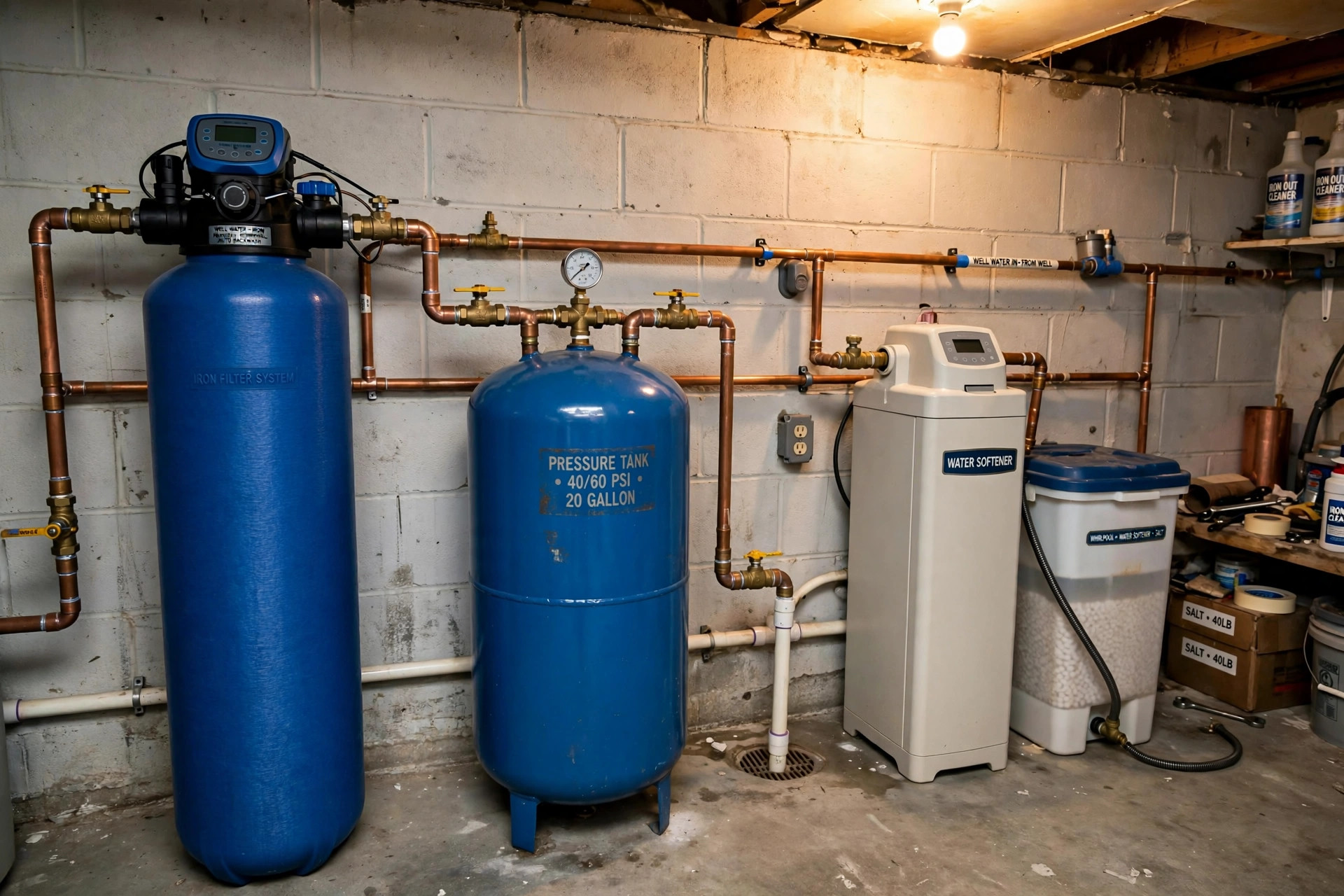

A reader who types iron filter for well water reviews usa into a search box is usually standing in a laundry room and staring at a sink. The sink may show a rust ring. The tub may show an orange tint. The coffee may taste like a coin. Across much of rural America, this is a common morning. Private wells serve millions of homes, and iron is one of the most common things found in that water. This article gathers what homeowners, installers, and product testers tend to say in reviews, and it puts that material in plain order. It covers why iron causes trouble, how to read a review with care, the main types of systems, typical costs, upkeep, and safety. The goal is simple: help a homeowner buy once and buy right.
Why Iron in Well Water Deserves Attention
Iron is a natural mineral. It sits in rock and soil. Well water passes through that rock and soil. On the way, it picks up iron. This is ordinary geology. The federal government sets a secondary standard for iron in drinking water at 0.3 parts per million. That standard is about taste, color, and staining. It is not a health limit. Still, few people enjoy iron at higher levels.
What does iron do in a home? It stains fixtures. Toilets, tubs, and sinks take on a rusty color. White laundry turns yellow or tan. The water may look clear when it leaves the tap and then turn brown or orange after it sits in a glass. This happens because clear dissolved iron meets air and changes form. It also changes taste. Water can taste metallic. None of this means the water is unsafe by itself. It does mean the water is unpleasant, and over time it can harm plumbing, appliances, and water heaters. Reviews often start at this point: a homeowner writes that they were tired of stains and bad taste, so they bought a filter.
How to Read an Iron Filter Review Without Being Misled: Iron Filter for Well Water Reviews Usa
Reviews are useful. They are also uneven. A five-star review may come from a person with mild iron. A one-star review may come from a person who bought the wrong kind of system. The keyword phrase iron filter for well water reviews usa returns a mix of both. The following rules help a reader sort the good from the thin.
Test the water first
The single most common lesson in reviews is this: test before buying. Iron levels matter. A test also shows pH, hardness, manganese, and sulfur. These details decide which system can work. Many reviewers report that a filter failed for them because their iron level was far above the rating on the box. A lab test of well water costs little and gives a number for iron in parts per million. The EPA water quality standards page explains why testing matters and what the secondary limits mean. A homeowner who knows the numbers can match them to a system rating.
Match the review to your water
Not all iron is the same. Reviews rarely say this in plain terms, so it helps to know the three common forms. Ferrous iron is dissolved and clear. It is the form that turns orange after it sits. Ferric iron is already oxidized. It shows up as visible rust particles and sediment. Bacterial iron comes from iron bacteria, which form a slimy film and give a swampy smell. A simple filter catches particles. Dissolved iron needs oxidation or special media first. When a review says “it did nothing for my water,” the usual cause is a mismatch: the system was built for one form of iron and the well had another.
Watch for the details reviewers leave out
Strong reviews name the iron level, the well depth, the pH, and how long the unit has run. Weak reviews say only “works great” or “waste of money.” Also watch the date. A review written two weeks after install says little about a system meant to last a decade. The most trusted reviews are updates: “six months later,” “two years later.” Those updates describe media life, backwash cycles, and service calls.
Types of Iron Filters on the American Market
American makers sell several designs. Each fits a different water profile. Understanding the types makes reviews easier to read.
Air injection oxidation systems
These units pull air into the tank. The air turns dissolved iron into particles. A bed of media then catches the particles. At set times the unit backwashes, which flushes the trapped iron to drain. Reviewers like that these systems use no chemicals and add no salt. They work well on moderate iron levels, often up to about 7 to 10 parts per million, depending on the maker. They need a drain nearby and a backwash cycle that runs at night.
Manganese greensand systems
Greensand is an older method. The media is coated with manganese oxide. It oxidizes iron and filters it in one bed. These units often need a chemical feed, such as potassium permanganate or chlorine, to recharge the bed. Reviews praise their strength on high iron. Reviews also note the upkeep: chemical tanks need refills, and the media wears down over years. For a homeowner who wants a set-and-forget unit, this is not the pick. For a well with heavy iron, it remains a workhorse.
Catalytic media systems: Birm and Filox
Birm is a light media that acts as a catalyst. It speeds the oxidation of iron without chemicals. It works best when pH is above a certain level and iron is moderate. Filox is a heavier, stronger media. It handles higher iron and works across a wider pH range. Reviewers often compare the two. Birm gets praise for low upkeep and low cost. Filox gets praise for raw performance. Filox needs stronger backwash flow, which matters for wells with weak pumps. This is the kind of detail that separates a good review from a useless one.
Combination units with softening
Some homes have iron plus hard water. Makers sell units that combine iron filtration with softening in one or two tanks. Reviews of these units often mention the water softener installation cost topic, since softeners are a common add-on. A softener alone can remove small amounts of ferrous iron, usually up to 2 or 3 parts per million. Above that, resin fouls and the softener suffers. Reviewers warn against using a softener as the only defense against heavy iron.
Sediment pre-filters and cartridge units
For low iron, some homeowners use simple cartridge filters. A 5-micron or 20-micron cartridge catches ferric particles. Reviews are mixed. Cartridges are cheap to buy and easy to change. They clog fast on heavy iron. Reviewers with low iron call them a fine first step. Reviewers with high iron call them a chore. As a rule, cartridges treat the symptom, not the cause. They pair well with a larger system but rarely replace one.
Cost and Price: What Homeowners Actually Pay
Prices in reviews fall into bands. A basic whole-house iron filter tank system often runs from about 800 to 2,500 dollars for the unit alone. Air injection units sit in the middle of that band. Greensand and high-capacity catalytic units run higher. Installation adds several hundred to a few thousand dollars, depending on plumbing work, electrical needs, and local labor rates.
Reviewers talk about total cost, not just the sticker. A unit that needs a 300-dollar media change every three years costs more over a decade than the price tag suggests. A unit with no chemical feed and no salt costs less to run.
It helps to compare the whole project with related work. Many homeowners research the best whole house water filter system at the same time, since an iron filter often joins a larger treatment train. Others compare with reverse osmosis system under sink reviews for drinking water at one tap. Iron filters treat the whole house. Reverse osmosis polishes drinking water at the sink. They solve different problems and often work as a pair.
Where do people buy? Big retailers carry many units. Shoppers compare specs on Home Depot and Lowe’s, where reviews from verified buyers sit next to the product. Specialty water stores sell higher-end units with local service. Online water treatment shops offer phone support and sizing help. Reviewers often say the seller mattered as much as the brand: good sizing advice before the sale and real support after it.
Care and Upkeep After the Truck Leaves
An iron filter is not a toaster. It needs care. Reviews that praise long service life almost always mention upkeep. The main tasks are simple.
First, watch the backwash. Most whole-house units clean themselves on a timer. The backwash needs a working drain and enough water pressure. If the drain clogs or the pump weakens, the bed loads up with iron and performance drops.
Second, mind the media. Catalytic media lasts years but not forever. Birm often runs five to eight years. Filox can run longer. Greensand needs recharging and eventual replacement. When water quality slips after years of good service, tired media is the usual cause. Makers like Aquasana and others publish media life ratings that reviewers quote.
Third, keep up with pre-filters. A sediment cartridge ahead of the main tank protects the media. Change it on schedule. A clogged pre-filter starves the unit of flow and can fool an owner into blaming the main system.
Fourth, test yearly. A yearly lab test shows whether iron is still at zero after treatment. It is cheap insurance. Several reviewers describe catching a worn-out bed early because a yearly test flagged a small rise in iron.
The Family Handyman and This Old House sites carry plain-language guides to water treatment upkeep that many reviewers cite.
Safety Notes
Iron filters are safe when installed right. A few points deserve care. Backwash water carries concentrated iron to the drain. Local rules may limit where that drain can go, especially with septic systems. Check local code before routing a drain line. Chemical-feed systems use oxidizers that need safe storage away from children and pets. Electrical parts near water need proper grounding and, where code requires it, a ground-fault circuit. If the well has bacteria, an iron filter does not disinfect. Iron bacteria and coliform are different problems. A filter that removes iron can still pass germs. Test for bacteria separately and treat it with proper disinfection. The EPA guidance on private wells is a sound starting point for any well owner.
Also note the fixture side. Iron stains are ugly but the filter solves the source. Old stains in toilets and tubs may need a rust remover made for porcelain. Makers of bath fixtures such as Moen, Delta Faucet, and Kohler publish care guides for their finishes. Harsh acids can damage a finish, so a gentle product made for rust is the safer pick.
Frequently Asked Questions
Do iron filters remove the rotten egg smell? Sometimes. That smell is usually hydrogen sulfide gas. Air injection systems strip some of it out along with iron. Catalytic media can reduce it. But a strong sulfur problem may need its own treatment, such as a dedicated aeration or carbon unit. Test for both before buying.
Will an iron filter help with hard water? Only a little. Some iron units reduce a small amount of hardness. They are not softeners. If spots on glassware and stiff laundry persist after the iron is gone, hardness is the likely cause. Many owners add a softener after the iron filter. Size the softener for the home, not for the iron.
How long does an iron filter last? The tank and valve often last ten to fifteen years. The media inside lasts less. Expect five to ten years from most catalytic media, less from greensand that needs chemical recharging. Ask the seller for the media life rating in writing.
Can I install an iron filter myself? A handy homeowner can install a basic unit. The work needs pipe cutting, fittings, a drain line, and sometimes a new outlet. Reviews split on this. Confident do-it-yourself owners report smooth installs over a weekend. If the well pump is marginal or the plumbing is old, a pro install is money well spent.
Does an iron filter waste a lot of water? Backwashing uses water. A typical cycle may use 50 to 150 gallons, a few times a week. For most wells this is fine. For low-yield wells it matters. Reviewers on weak wells sometimes choose units with less frequent backwash or add storage. Ask the maker for the backwash volume before buying.
Is filtered well water safe to drink? An iron filter improves taste and clarity. It does not make unsafe water safe. Wells can carry bacteria, nitrates, arsenic, or other hazards that no iron filter removes. A full lab panel, not just an iron test, answers the safety question. Many owners pair whole-house iron treatment with a drinking-water unit at the kitchen sink.
A Short Final Word
The pattern in iron filter for well water reviews usa is steady. Owners who test first, size the unit to the test, and keep up with simple care tend to write happy updates years later. Owners who buy on price alone, skip the test, or ignore the backwash tend to write warnings. The equipment works. The method matters more than the brand. Test the water. Match the system to the iron. Count the running cost, not just the price tag. Do those three things and the odds of a good review, your own, rise sharply.
References
Aquasana. (n.d.). Water filtration systems. https://www.aquasana.com Delta Faucet. (n.d.). Kitchen and bathroom faucets. https://www.deltafaucet.com Family Handyman. (n.d.). DIY home repair and maintenance. https://www.familyhandyman.com Kohler. (n.d.). Bathroom and kitchen fixtures. https://www.kohler.com Lowe’s. (n.d.). Home improvement products. https://www.lowes.com Moen. (n.d.). Faucets and plumbing fixtures. https://www.moen.com The Home Depot. (n.d.). Home improvement products. https://www.homedepot.com This Old House. (n.d.). Home renovation guidance. https://www.thisoldhouse.com U.S. Environmental Protection Agency. (n.d.). Protecting human health and the environment. https://www.epa.gov
Was this guide helpful?

About James Carter
The My Garden US editorial team writes practical, in-depth home and garden guides for American homeowners — tested advice, no fluff.
You May Also Like

Pressure Assisted Toilet Pros Cons USA: What Every Homeowner Should Know
May 30, 2026 0 views
Reverse Osmosis System Under Sink Reviews USA: What American Buyers Report
February 7, 2026 0 views
Whole House Sediment Filter Installation Cost: What You Pay and Why
February 13, 2026 0 views