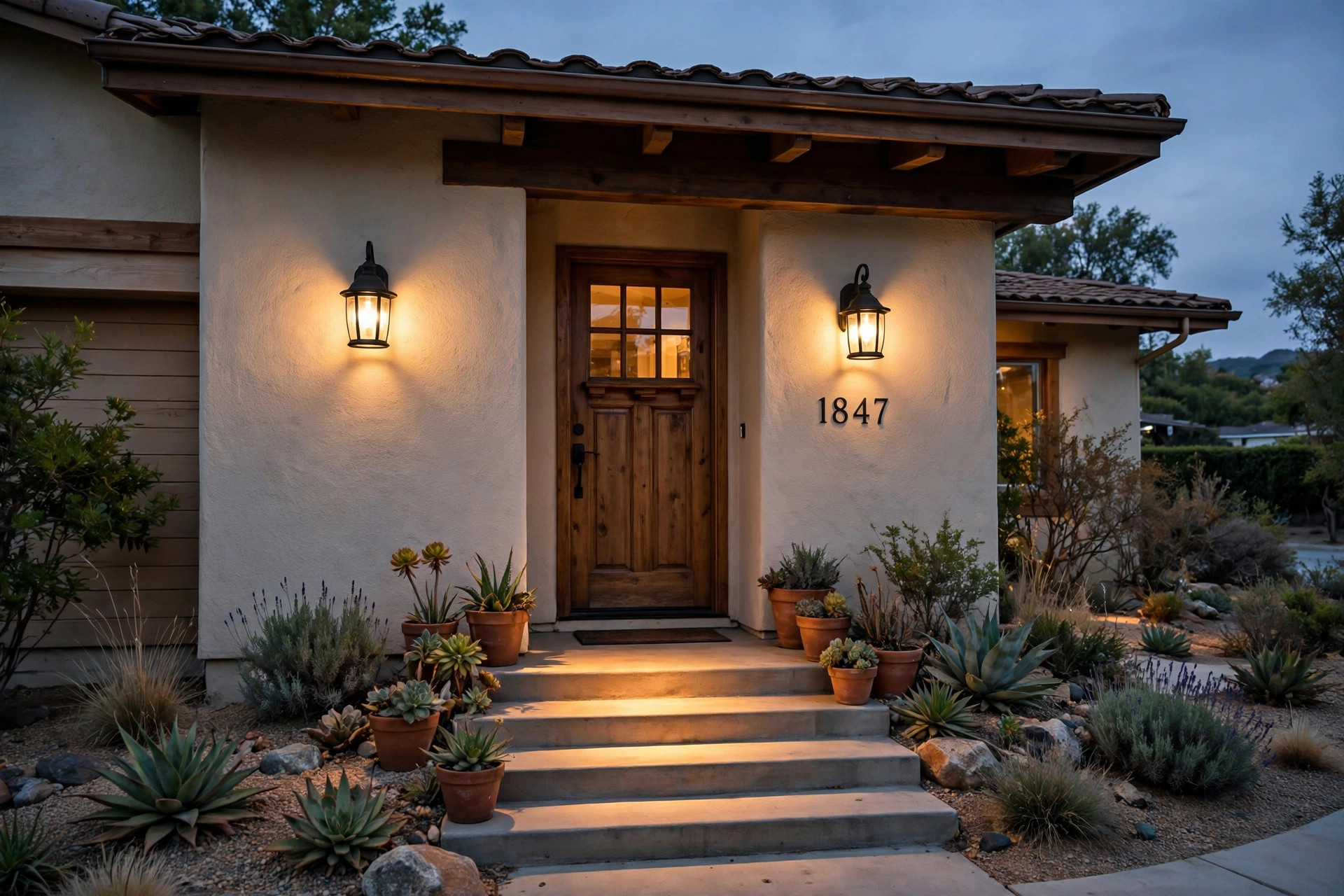

A front door in the dark is a small problem that a good lamp can fix. In California, where evenings are mild and people spend time on porches and patios, outdoor wall lanterns california homes usa buyers choose with care. A lantern by the door gives light, keeps the step safe, and makes the house look cared for. This guide explains what these lanterns are, why they suit California homes, how to pick one, what they cost, and how to keep them working for years.
Why Outdoor Wall Lanterns Matter in California Homes
California homes sit in a mild climate. People eat outside, walk to the door late, and greet guests on the porch. A dark entrance is not only unwelcome. It is also a risk. A missed step or a lost key can turn into a fall or a long wait in the dark.
Outdoor wall lanterns fix this. They mount on the wall beside the door, on the garage, or along the patio. They give a steady pool of light where people walk. They also add style. A lantern with a warm glow makes stucco walls, wood siding, and brick fronts look warm and calm. Many California homes, from ranch houses to Spanish-style villas, look their best with lanterns that match their lines.
There is one more reason. A lit house looks lived in. Thieves prefer dark houses. A lantern that burns each night near the door makes a home look watched. For this reason, motion flood lights buying guide pages often sit next to lantern guides, and many owners use both.
What to Look for When You Choose: Outdoor Wall Lanterns California Homes Usa
Buying a lantern is simple when you know what to check. The points below cover the main ones.
Style and Finish
Lanterns come in many styles. The most common are carriage lanterns, coach lanterns, and mission styles. Carriage lanterns have a glass box frame. Coach lanterns are tall and narrow. Mission styles are square and simple, with clean lines that suit modern California homes.
The finish matters as much as the shape. Black and bronze finishes hide dust and suit most houses. Brushed nickel and silver look modern. Copper and brass age over time and can look rich on a Spanish-style home. Pick a finish that matches your door hardware and house numbers. A lamp that clashes with the rest of the trim will draw the eye for the wrong reason.
Light Source
Most new lanterns use LED bulbs. LEDs use little power, last for years, and come in warm tones that suit porches. Old-style bulbs still exist, but they burn out fast and use more power. If you want low cost and long life, choose LED. Review sites such as Consumer Reports test outdoor bulbs and show how they hold up in heat and rain.
Size and Scale
A small lantern on a big wall looks lost. A huge lantern beside a small door looks wrong. A simple rule works well. For a door about three feet wide, a lantern about one third the height of the door fits best. That means a lantern around 12 to 18 inches tall for a standard door. For double doors or wide garage walls, go larger, or use two lanterns side by side. Measure your space before you buy. Sketching the outline on paper and taping it to the wall can save a bad choice.
Wet Rating
An outdoor lantern must survive rain. Look for a wet rating on the box. A damp rating is only for covered porches. A wet rating means the lantern can take direct rain. In California, where winter storms can be strong, a wet-rated lantern is the safe pick for any wall that is not fully covered. Lamps Plus and Lumens list these ratings on each product page, which makes shopping easier.
Types of Outdoor Wall Lanterns
Lanterns differ by how they get power and how they turn on. The main types are below.
Wired Electric Lanterns
Wired lanterns connect to the home wiring. An electrician or a skilled owner can wire them to the wall box. They are the most steady choice. They turn on with a wall switch or a timer, and they never run out of charge. If your wall already has a light box by the door, a wired lantern is the natural swap. Big stores like Home Depot and Lowe’s carry a wide range of wired models in stock.
Solar Lanterns
Solar lanterns charge by day and glow by night. They need no wire and no electrician. They suit walls far from the house wiring, such as garden walls or fences. In sunny California, solar lanterns charge well. In shaded spots or during long cloudy weeks, they can dim early. If you pick solar, place the panel where it sees full sun for most of the day.
Motion Sensor Lanterns
A motion sensor lantern turns on when it sees movement. It saves power and startles unwanted visitors. It is a good pick for side doors, garages, and dark corners of the yard. Some models let you set how long the light stays on and how far the sensor reaches. If you want more detail on this style, see the outdoor wall lanterns buying guide.
How Lanterns Fit California Building Rules
California cares about energy and light pollution. Many cities ask for dark-sky friendly fixtures. That means the lantern should aim light down, not up into the sky. Shields and downward bulbs help. The state also supports low-energy bulbs. ENERGY STAR lists certified outdoor fixtures that meet strict power rules. Buying an ENERGY STAR lantern can also help with local building codes in new work or remodels. Check your city rules before you wire new fixtures, since some areas have their own outdoor lighting laws.
Cost and Price
Outdoor wall lanterns cover a wide price range. A simple solar lantern can cost under twenty dollars. A mid-range wired lantern from a known brand often costs between sixty and one hundred fifty dollars. Designer or solid copper lanterns can cost three hundred dollars or more per lamp.
Bulbs add a small cost. LED bulbs for these fixtures cost a few dollars each and last for years. Wiring by an electrician can cost one hundred to three hundred dollars per fixture, based on the work needed. If you are replacing an old lantern with a new one in the same box, you can often do it yourself and save that cost. Stores such as Home Depot sell basic tools and wire nuts if you choose the DIY route.
Over time, the running cost is small. An LED lantern that burns five hours a night costs only a few dollars a year in power. This is why LED is now the standard choice. The U.S. Department of Energy at energy.gov explains how LED outdoor lights cut power use in plain terms.
Installing Your Lantern
Putting up a wired lantern takes about an hour for most people with basic tools. First, turn off the power at the breaker. Test the wires with a voltage tester to be sure. Remove the old fixture. Connect the new wires to the house wires with wire nuts, black to black and white to white. Ground the green or bare wire. Push the wires into the box, mount the lantern plate, and seal the top edge with outdoor caulk so rain cannot run behind it. Guides from This Old House walk through each step with photos.
If you are unsure about wiring, call an electrician. A wrong wire can trip a breaker or cause a fire. The cost of an hour of an electrician is small next to the cost of a mistake.
Care and Upkeep
Outdoor lanterns need little care, but a little care goes far. Wipe the glass twice a year so dust does not dim the light. Tighten screws after storms, since wind can shake them loose. Check the caulk seal once a year and renew it when it cracks. In coastal California, salt air can eat metal finishes. Rinse lanterns with fresh water now and then if you live near the sea. Replace LED bulbs when they fade. This simple routine can keep a lantern working for ten years or more.
For solar lanterns, clean the small solar panel with a damp cloth each month. A dirty panel charges poorly. Replace the small rechargeable battery every one or two years if the light dims early.
Safety
Safety with lanterns is mostly common sense, but it bears stating. Always cut power before you touch wiring. Use only bulbs that fit the wattage limit on the fixture. A bulb that is too strong can melt the housing. Keep paper, leaves, and cloth away from the lantern, since bulbs give off some heat. Check that the lantern is firmly mounted. A loose lantern can fall and break the glass.
Outdoor lights also involve child and pet safety. Mount lanterns high enough that small children cannot reach the glass. The U.S. Consumer Product Safety Commission at cpsc.gov notes that damaged outdoor fixtures can expose live wires, so replace any cracked housing at once.
Lighting the Whole Yard
A lantern by the door is a start, not the end. Many owners add more lights along paths and patios once they see how good one lantern looks. Soft path lights guide guests to the door. A few string lights over the patio make summer nights pleasant. For paths, read the patio string lights buying guide. For more on planning outdoor light layouts, The Spruce has plain guides that cover spacing and bulb warmth.
Frequently Asked Questions
How many lanterns do I need by my front door? One lantern on each side of the door looks balanced and gives even light. For a single narrow door, one lantern on the side of the door handle works. For double doors, use two. For a wide garage wall, space lanterns every eight to ten feet.
What bulb warmth is best for a porch? Warm white, around 2700 Kelvin, suits porches best. It looks like old lamp light and feels welcoming. Cool white looks harsh on a house front and can wash out wall color. Philips marks bulb warmth clearly on its outdoor bulb boxes.
Do I need an electrician to replace a lantern? If a wired box already exists, most owners can swap the fixture themselves. If there is no wiring, you need an electrician or a solar lantern. Always turn off the breaker first.
Will a solar lantern work in a shaded spot? Not well. Solar lanterns need strong sun to charge. In shade, they may glow for only an hour or two after dark. For shaded walls, choose a wired lantern instead.
Are smart lanterns worth it? Smart lanterns can dim, change warmth, or turn on by phone. They cost more and need a home network. They are worth it if you want timers and remote control without extra wiring. Simple timer switches cost less and do the same basic job.
How do I keep lanterns clean in dusty areas? Wipe the glass with a damp cloth every few months. In dusty inland California, dust can cut light by a third. A quick wipe takes minutes and makes a clear difference.
A Final Word
Outdoor wall lanterns california homes usa shoppers want a lamp that lights the door, suits the house, and lasts through sun and storm. Pick a wet-rated lantern in a size and finish that fit your home. Choose LED for low cost and long life. Wire it with care, or pick solar for spots without wires. Keep the glass clean and the seal tight. With these simple steps, a pair of lanterns can make a California home safer, warmer, and more welcoming for many years.
References
Consumer Reports. (n.d.). Product reviews and ratings. https://www.consumerreports.org ENERGY STAR. (n.d.). Energy efficient products. https://www.energystar.gov Lamps Plus. (n.d.). Lighting and home decor. https://www.lampsplus.com Lowe’s. (n.d.). Home improvement products. https://www.lowes.com Lumens. (n.d.). Lighting and ceiling fans. https://www.lumens.com Philips. (n.d.). Lighting products. https://www.philips.com The Home Depot. (n.d.). Home improvement products. https://www.homedepot.com The Spruce. (n.d.). Home and garden advice. https://www.thespruce.com This Old House. (n.d.). Home renovation guidance. https://www.thisoldhouse.com U.S. Consumer Product Safety Commission. (n.d.). Product safety information. https://www.cpsc.gov U.S. Department of Energy. (n.d.). Energy efficiency and renewable energy. https://www.energy.gov
Was this guide helpful?

About David Wilson
The My Garden US editorial team writes practical, in-depth home and garden guides for American homeowners — tested advice, no fluff.
You May Also Like
Sensor Porch Lights California Homes USA: A Practical Buying Guide
May 7, 2026 0 views
Patio String Lights Texas Homes USA: A Practical Buying and Care Guide
July 6, 2026 0 views
Solar Path Lights Reviews Buying Guide USA
March 10, 2026 0 views