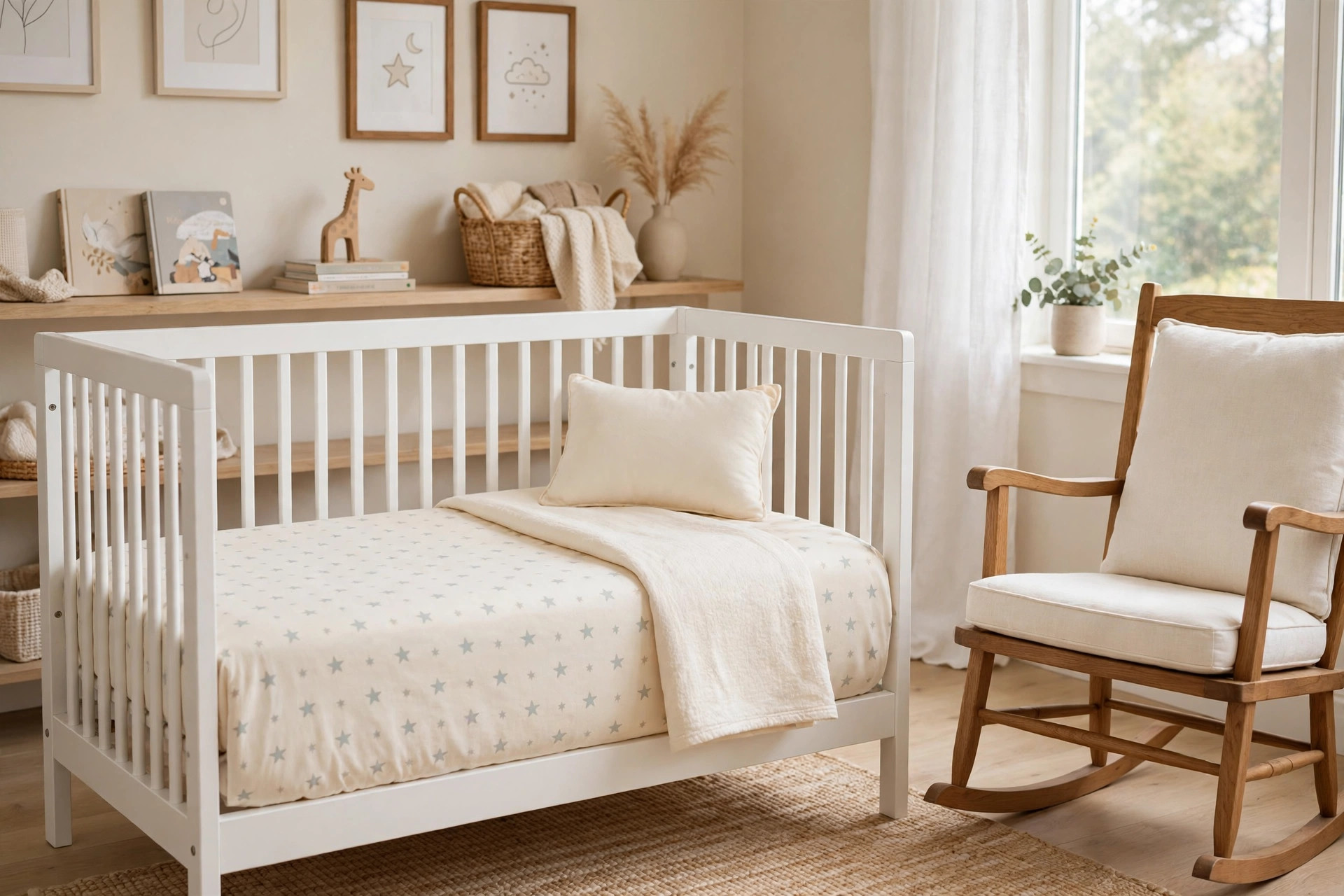

A toddler bedding set with pillow for crib sounds like a simple purchase. You find a set you like, you put it on the crib, and the child sleeps. In practice, a few small choices matter a great deal. Size, fabric, and safety rules decide whether the bedding is soft and safe or loose and risky. This guide walks through the whole subject in plain language. It explains why bedding matters for a toddler, what to look for in the store, the types you can buy, what it costs, how to care for it, and the safety rules that doctors and consumer safety groups repeat again and again.
Why It Matters
A toddler spends ten to twelve hours a day in the crib. That is more time than anywhere else in the house. Good bedding helps the child sleep well, and good sleep helps the child grow well.
Toddlers are more sensitive to their surroundings than adults. A sheet that bunches up can wake them. A pillow that is too high can push the neck out of line. Fabric that traps heat can make them sweat and wake up crying. Small problems at bedtime turn into long nights for the whole family.
Bedding also sets the tone of the nursery. Soft colors and simple patterns calm a restless child. A busy room with loud prints can overstimulate a two-year-old at exactly the hour when calm matters most. Parents who plan the nursery wall clock for silent baby sleep often plan the bedding at the same time, and for the same reason. Every detail in the room works together to say one thing: it is time to rest.
Then there is the question of value. A good set lasts through spills, washings, and the day the child moves to a bigger bed. A cheap set can fade, shrink, and lose its shape in three months. Buying once, with care, saves money and trouble later.
What to Look For When You Buy: Toddler Bedding Set with Pillow for Crib
Size and Fit
Crib mattresses in the United States follow a standard size. The mattress measures about 52 inches long and 27.5 inches wide. A fitted sheet made for this size should hug the mattress with no extra cloth. When you lift the mattress, the sheet should stay in place. If the sheet slides or the corners pop off, it is too big, and loose fabric in a crib is never a good thing.
A toddler bedding set with pillow for crib often includes a fitted sheet, a small pillow, and sometimes a light blanket or a comforter. Check the label before you buy. The sheet should say it fits a standard crib mattress. The pillow should be small and flat. A full-size adult pillow has no place in a crib. Many guides on toddler and crib bedding sizes list exact measurements, and it helps to measure your own mattress with a tape before you shop.
Fabric
Cotton is the most common fabric for toddler bedding. It is soft, it breathes, and it washes well. Look for pure cotton or a cotton blend. Muslin is another good choice. It is light, airy, and it gets softer with each wash.
Flannel suits cold nights. Jersey knit feels like a soft T-shirt and stretches over the mattress without pulling. Avoid fabrics that feel slick, scratchy, or coated. A child who dislikes the feel of the sheet will tell you at two in the morning.
Check the weave as well as the fiber. Percale feels crisp and cool. Sateen feels smooth and warm. Either works. What matters is that the cloth feels gentle against a small cheek.
Dyes and Chemicals
Babies and toddlers chew on bedding. They rub their faces into it. Choose sets that are certified free of harmful chemicals. Look for labels like OEKO-TEX Standard 100 or GOTS for organic cotton. These labels mean the cloth has been tested for substances that could harm a child.
Wash every new set before the first use. Two wash cycles remove most of the finishing chemicals from the factory. This small step costs nothing and adds real safety.
Types and Options
The Basic Three-Piece Set
Most sets include a fitted sheet, a toddler pillow, and a flat sheet or light coverlet. This is the standard choice and the easiest to care for. It covers the main needs and nothing more.
The Complete Nursery Set
Larger sets add a crib skirt, a diaper stacker, and window valance. These extras dress the room. They do not improve sleep. Skip anything that hangs loose inside the crib, such as bumpers or long ties. Loose cloth inside the crib is a known hazard, and safe sleep advice from doctors says the crib should stay bare.
Organic and Hypoallergenic Sets
These use organic cotton or bamboo fiber. They cost more. For children with eczema or allergies, the extra cost can be worth it. Bamboo bedding wicks moisture well, which helps toddlers who sweat at night.
Themed Sets
Sets with animals, stars, trucks, or storybook scenes are popular. A themed set can make a toddler excited about bedtime. When you shop themed collections, compare bedding styles made for small children across a few stores before you settle. The pattern matters less than the fabric, but a happy child falls asleep faster.
Convertible Sets
Some sets are sized to move from crib to toddler bed. A toddler bed uses the same mattress as the crib, so the same fitted sheet works for both. Parents planning the best bunk bed with stairs for a kids room later on sometimes buy convertible sets now, since the sheet will survive the move.
Cost and Price
Toddler bedding sets come in a wide price range. A basic cotton set costs between fifteen and forty dollars. A mid-range set from a well-known brand costs forty to eighty dollars. Organic or designer sets run eighty to one hundred fifty dollars and above.
Price usually tracks with fabric quality and the number of pieces. It does not always track with safety. A twenty-dollar set with a tight-fitting sheet and a flat pillow can be safer than an expensive set full of loose extras. Spend money on good fabric and a true fit. Skip the extras that decorate but add risk.
Buy at least two sets. Toddlers have accidents at night. A spare set means you can change the bed at two in the morning without a trip to the laundry room. Many families shop bedding in stores or online and pick up the spare during a sale.
Watch for fakes online. If a set claims organic cotton at a price far below every other store, the claim may not be true. Real certifications have label numbers you can check.
Care and Upkeep
Wash toddler bedding once a week at minimum. Wash it right away after any accident. Use warm water and a mild detergent with no strong scent. Strong scents can irritate a small nose and wake a light sleeper.
Do not use fabric softener on crib sheets. It coats the fibers and can make them less breathable. A half cup of white vinegar in the rinse cycle softens cloth without chemicals.
Tumble dry on low or medium heat. High heat shrinks cotton and weakens elastic. Replace a fitted sheet when the elastic gives out. A sheet that no longer grips the mattress is not safe to use.
Store the spare set in a dry place. Damp storage grows mildew. Fold sets loosely so the cloth can breathe. Many guides on thread counts and care labels explain how wash cycles affect fabric life, and the advice is the same for toddlers and adults: gentle care doubles the life of good cotton.
Inspect the pillow every few months. Press it flat. If it does not spring back, or if the filling has bunched into lumps, replace it. A lumpy pillow gives poor support and can press against a small face.
Safety
Safety comes first, and the rules are clear. The most important rule is about age. Pillows, blankets, and soft bedding do not belong in the crib of a baby under two years. Consumer safety rules for cribs and pediatric groups agree on this point. A bare crib with a fitted sheet is the safest sleep space for an infant.
A toddler bedding set with pillow for crib is made for the next stage. Once a child is two years old or older, a small, flat, firm pillow is generally fine. Keep the pillow thin. The child should lie almost flat, with the neck in a natural line. If the head tilts up, the pillow is too thick.
Even for toddlers, keep the crib simple. One fitted sheet, one small pillow, and at most one light blanket. Nothing else. No bumpers, no stuffed animals piled in the sleep space, no loose ribbons. The rule that served the baby stage still serves the toddler stage: less in the crib means more safety.
Watch the child, not the label. Some two-year-olds push the pillow away every night. That is fine. Let them sleep without it. Some toddlers chew the corner of the pillow. Check for worn spots and replace the pillow before the filling shows through.
Place the crib away from windows, cords, and lamps. This has nothing to do with the bedding, but it belongs in every safety list. A child who can stand will reach for anything within arm’s length.
If you ever doubt a product, search the recall lists. The guides to safe nursery setups and the government recall database both publish updates, and a quick check takes one minute.
Frequently Asked Questions
When can my child use a pillow in the crib? Most doctors say to wait until the child is at least two years old. Before that, the safest crib holds only a fitted sheet. After two, a small, flat, firm toddler pillow is fine. If your child is between one and two and climbs or seems uncomfortable, ask your pediatrician rather than guessing.
What size pillow fits a toddler crib? A toddler pillow usually measures about 13 by 18 inches. This is much smaller than a standard adult pillow. It should lie flat and support the head without lifting it high. A pillow that hangs over the sides of the mattress is too big.
Do I need a blanket with the set? Not always. Many toddlers sleep well in a sleep sack or warm pajamas with just a fitted sheet and pillow. If you use a blanket, choose a light one and tuck it firmly. Heavy quilts can overheat a small child.
How many sets should I buy? Two sets is the practical minimum. Three is comfortable. Nighttime accidents happen often during toilet training, and a spare set keeps the night short. Wash and rotate the sets so they wear evenly.
Is a crib mattress protector worth adding? Yes. A waterproof breathable crib mattress protector goes under the fitted sheet. It keeps the mattress dry through accidents and adds years to its life. Make sure it fits tightly and lies flat with no wrinkles.
Can I move the set to a toddler bed later? In most cases, yes. A toddler bed uses the same mattress as a standard crib, so the fitted sheet and pillow move with it. This makes a toddler bedding set with pillow for crib a good buy, since it serves through the whole crib-to-bed transition. For tips on that move, see what to expect when a toddler moves to a bed.
A Short Final Word
Choosing a toddler bedding set with pillow for crib is mostly a matter of fit, fabric, and safety. Buy a fitted sheet that grips the mattress. Choose soft, tested cotton. Use a small flat pillow only after age two. Wash everything before the first night. Keep the crib bare and simple. Do these few things, and the bedding will do its quiet job: a soft, safe place for a small child to sleep through the night.
References
American Academy of Pediatrics. (n.d.). HealthyChildren.org. https://www.healthychildren.org Bed Bath & Beyond. (n.d.). Bedding, bath, and home storage. https://www.bedbathandbeyond.com IKEA. (n.d.). Home furnishings. https://www.ikea.com Target. (n.d.). Retail store. https://www.target.com The Spruce. (n.d.). Home and garden advice. https://www.thespruce.com U.S. Consumer Product Safety Commission. (n.d.). Product safety information. https://www.cpsc.gov Wayfair. (n.d.). Furniture and home goods. https://www.wayfair.com What to Expect. (n.d.). Pregnancy and parenting guidance. https://www.whattoexpect.com
Was this guide helpful?

About Lisa Anderson
The My Garden US editorial team writes practical, in-depth home and garden guides for American homeowners — tested advice, no fluff.
You May Also Like

Nursery Wall Sconce for Soft Ambient Light: A Parent’s Guide
June 11, 2026 0 views
Nursery Wall Mount for Baby Monitor Camera: A Simple Guide for New Parents
August 4, 2026 0 views
Kids Loft Bed with Desk Underneath for Teens: A Parent’s Guide
May 19, 2026 0 views