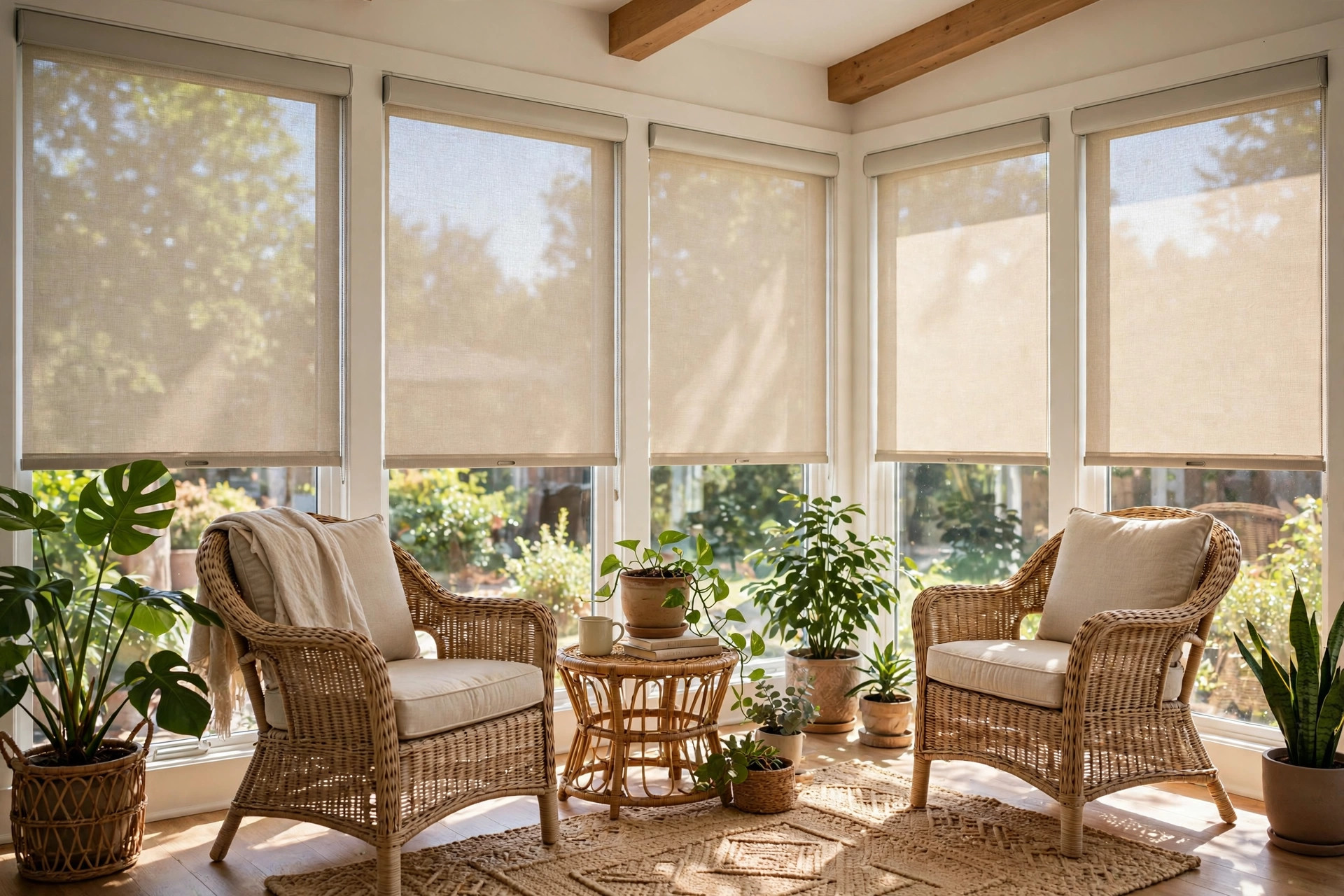

A sunroom is a room made mostly of glass. It gathers the sun like a greenhouse and turns it into a warm, bright place to sit. This thermal solar shades for sunrooms buying guide will help you keep that room pleasant all year. In July the same glass can make the room too hot to use. In January the heat runs out through the glass and the room stays cold. Thermal solar shades fix both problems. They block the strong rays of summer. They hold warmth in winter. They cut glare on your chair, your book, and your television. They also trim the cost of heating and cooling the room.
Why Thermal Solar Shades Matter in a Sunroom
A sunroom has one job: to bring the outdoors in. Glass walls do this well. They also create three problems. The first problem is heat. On a clear summer day a glass room can reach 100 degrees or more. Air conditioning can fight it, but the cost rises fast. The second problem is glare. Bright light bounces off tabletops and screens. It hurts the eyes. It fades the fabric on chairs and rugs. The third problem is cold. Single glass and even double glass lose heat quickly on a winter night. The room becomes the coldest corner of the house.
Thermal solar shades answer all three. The solar part of the shade is a fabric woven to reflect and absorb the rays of the sun. A tight weave blocks ultraviolet light. This is the light that fades furniture and heats the room. The thermal part is the coating or the backing. It slows the movement of heat through the fabric. In summer it keeps the heat of the sun from crossing the glass. In winter it keeps the heat of the room from leaving through the glass.
The result is a room you can use. Many owners of sunrooms report that they use the room only in spring and fall. With the right shades, the room works in July and in January too. That is real value. A sunroom is often the most costly room to build per square foot. Shades let you enjoy it for every month of the year. The U.S. Department of Energy notes that window coverings are one of the simplest ways to improve comfort and cut energy waste in a home.
What to Look For When You Buy: Thermal Solar Shades for Sunrooms Buying Guide
Openness Factor
The openness factor is the share of the fabric left open. It is given as a percent. A one percent fabric lets through very little light. A ten percent fabric lets through much more. For a sunroom that faces west or south, choose one to three percent. The view stays visible but the heat and glare drop sharply. For a shaded north facing room, five to ten percent keeps the view bright and open. Hold a sample to the light before you buy. What looks fine in a store can look dark or pale in your room.
Fabric Color and Heat
Dark fabrics absorb heat and keep glare down. They can make the shade itself warm to the touch. Light fabrics reflect more heat back out through the glass. They keep the room cooler. A common rule: choose a light color on the street side and a color you like on the room side. Many makers sell dual color fabrics that do this. If your sunroom gets full afternoon sun, a white or silver backing is worth the extra cost.
Thermal Backing
Look for words like thermal backing, metallized lining, or insulating coating. These describe a thin layer on the back of the fabric. It reflects radiant heat. It is the feature that turns a plain solar shade into a thermal solar shade. Ask the seller for the shading coefficient or the solar heat gain rating. Lower numbers mean less heat passes through. You do not need the highest number on the market. You need a number suited to your climate and your direction of sun.
Fit and Mounting
Sunroom windows are often deep set or oddly sized. An inside mount looks clean but leaves small gaps at the edges. An outside mount covers the whole frame and blocks more heat. For sloped skylight glass, choose shades made for angled windows. They have side channels that keep the fabric flat. Measure each window twice. Note the width at the top, middle, and bottom. Use the smallest of the three numbers when you order. If the windows are unusual shapes, compare guides such as those at top rated arched window shades for american homes before you commit to a maker.
Controls
Corded shades cost less. They also create a cord hazard for children and pets. Cordless shades lift with a light push and cost a little more. Motorized shades rise and fall with a remote or a phone app. In a sunroom with many tall windows, motorized control is a real comfort. You can shade the whole room without walking from window to window. Some motors run on rechargeable batteries, so no wiring is needed.
Types of Thermal Solar Shades for Sunrooms
Roller Solar Shades
Roller shades are a single sheet of fabric that rolls onto a tube at the top. They are the most common choice for sunrooms. They are simple. They take up little space when open. They suit tall windows because the fabric travels straight down. Look for models with a cassette cover at the top. The cover hides the roll and looks finished. Fabrics run from sheer to blackout. For heat control, pick a dense solar fabric with a thermal backing.
Cellular or Honeycomb Shades
Cellular shades fold into a honeycomb shape. The air pockets trap air and slow heat flow. This is the best insulating shape for a sunroom. Double cell and triple cell versions trap even more air. They work well on windows that lose heat at night. They are less ideal for very tall windows because the stack gets heavy. For skylights, choose a track guided cellular shade made for slopes.
Woven Wood and Natural Shades
Woven shades use bamboo, reeds, or grasses. They look warm and natural. They filter light softly. On their own they do not insulate much. Add a thermal liner on the back and they perform better. They suit sunrooms styled with rattan and wood furniture. They do not suit rooms that need strong heat blocking unless lined.
Panel Track Shades
Panel track shades are wide fabric panels that slide on a track. They suit very wide glass walls and sliding doors. Each panel can carry a solar fabric. They open and close like curtains but with a flat modern look.
Exterior Solar Screens
Exterior screens mount outside the glass. They stop the heat before it enters the room. This makes them the most effective choice in the hottest climates.
When you compare makers, read buyer reviews on large retail sites such as Lowe’s and Wayfair. Real photos from owners show how a fabric looks in a real sunroom. Pair that research with broad buying advice from The Spruce and Bob Vila, which both cover window treatments in depth.
Cost and Price: What to Expect
Prices vary by size, fabric, and control. A basic corded roller solar shade for a standard three by five foot window costs about 40 to 90 dollars. Add a thermal backing and the price rises to 60 to 130 dollars. Cordless operation adds 20 to 40 dollars per shade. Motorized shades start near 150 dollars for small windows and climb past 300 dollars for large ones. Battery powered motors cost less than wired ones because no electrician is needed.
Cellular thermal shades cost more than rollers. A double cell shade for a standard window runs 90 to 180 dollars. Custom sizes and skylight tracks add to the bill. Panel track systems run 200 to 500 dollars per wide opening. Exterior screens cost 150 to 400 dollars per window installed.
A full sunroom often has eight to fourteen windows. Measure your total before you shop. Ten mid range shades at 100 dollars each is 1000 dollars. Motorized versions of the same ten could reach 2500 dollars. Professional measuring and installation usually adds 50 to 100 dollars per window. Many owners save by measuring carefully and mounting the shades themselves. For a broad sense of current pricing across brands, browse the window treatment sections at The Home Depot and IKEA.
A cooler sunroom needs less air conditioning. A warmer one needs less furnace time. ENERGY STAR points to window attachments as a low cost step toward a more efficient home.
Care and Upkeep
Thermal solar shades need little care. Dust them once a month with a soft cloth or a vacuum with a brush head. Work from top to bottom so dust falls away from the clean fabric. For spots, use a damp cloth with mild soap. Blot, do not rub. Rubbing can push dirt into the weave. Let the shade dry fully before you roll it up. A damp roll can grow mildew.
Never use bleach or strong cleaners. They can break the thermal coating. Never put the shades in a washing machine. The fabric and the backing will not survive it. If a cord frays, stop using the shade and call the maker. A worn cord can snap and drop the shade.
Check the mounting brackets once a year. Sunroom heat and vibration can loosen screws. Tighten what is loose. For motorized shades, recharge the battery when the shade starts to move slowly. Most batteries last six to twelve months per charge. For exterior screens, hose them down each spring. Check the frames for rust or bent tracks.
Safety in a Glass Room
A sunroom is bright and open. That openness brings safety duties. Cords are the main danger. Loose cords can wrap around the neck of a small child or a pet. Choose cordless or motorized shades when children or pets use the room. The U.S. Consumer Product Safety Commission urges parents to replace corded window coverings in homes with young children. If you already own corded shades, add cord cleats high on the frame. Wrap every cord tightly and keep cords out of reach.
Heat is the second danger. A closed sunroom in August can harm pets left inside. Shades help, but they are not a cure. Vent the room or run the air conditioning when pets stay there. Keep plants in mind too. Some tropical plants like strong light. Most houseplants burn under direct glass sun. Shades let you tune the light to the plant.
Keep shades clear of portable heaters and candles. For style ideas that keep a sunroom both safe and inviting, Apartment Therapy offers many real room tours.
Frequently Asked Questions
Do thermal solar shades really lower the temperature in a sunroom?
Yes. A dense solar fabric with a light reflective backing can cut the heat entering through glass by a large share. Owners often report a drop of eight to fifteen degrees on a sunny afternoon. The exact number depends on the direction of the sun, the type of glass, and the openness of the fabric. Shades work best when paired with roof venting or a ceiling fan that moves the cooled air.
Should I pick inside mount or outside mount for sunroom windows?
Outside mount blocks more heat because it covers the frame and the small gaps at the edges. It also hides crooked or uneven window frames. Inside mount looks neater and suits deep window wells. If heat control is your first goal, choose outside mount. If looks matter most and the windows are square, inside mount is fine.
Can I use thermal solar shades on sloped skylight windows?
Yes, but buy shades made for slopes. Ordinary roller shades will sag and hang away from the glass on a slope. Skylight shades use side channels or tension cables that hold the fabric flat against the glass. Measure the slope carefully. Some makers ask for the angle of the glass. A photo of the window helps the seller confirm the fit.
Will the shades make my sunroom too dark?
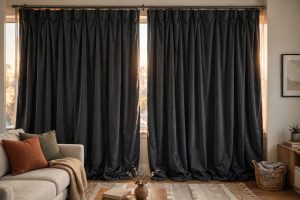
Not if you choose the right openness factor. A three to five percent fabric cuts glare and heat while keeping a clear view of the yard. You can still read and see plants clearly. If you fear darkness, order fabric samples first. Tape them to the glass for a full day. Watch the room at noon and at dusk. Then decide. Rooms with heavy fabrics can also add sheer curtains for soft evening light. For curtain pairing ideas, see guides like navy blue velvet curtains reviews and buying guide.
Are motorized shades worth the cost in a sunroom?
For most owners, yes. A sunroom can hold a dozen windows. Walking the room twice a day to raise and lower each shade grows old fast. A remote or phone app moves them all at once. If the budget is tight, motorize only the hard to reach windows and use cordless shades for the rest.
How do I find a good installer?
Start with the maker of your shades. Many brands list trained installers by zip code. Then compare local pros. Read reviews that mention window treatments by name. Ask for photos of past sunroom work. Get two or three quotes in writing. For an overview of how to vet local services, see best blinds installation companies near me.
A Short Final Word
Thermal solar shades make it so. They tame the summer heat. They soften the winter chill. They cut the glare that drives you out of your own chair. Pick a dense solar fabric with a thermal backing. Choose a light reflective color on the glass side. Mount outside the frame when you can. Go cordless for safety. Measure with care and you can hang most shades yourself in a weekend. The room will thank you every sunny day.
References
Apartment Therapy. (n.d.). Home design ideas and inspiration. https://www.apartmenttherapy.com Bob Vila. (n.d.). Home improvement advice. https://www.bobvila.com ENERGY STAR. (n.d.). Energy efficient products. https://www.energystar.gov IKEA. (n.d.). Home furnishings. https://www.ikea.com Lowe’s. (n.d.). Home improvement products. https://www.lowes.com The Home Depot. (n.d.). Home improvement products. https://www.homedepot.com The Spruce. (n.d.). Home and garden advice. https://www.thespruce.com U.S. Consumer Product Safety Commission. (n.d.). Product safety information. https://www.cpsc.gov U.S. Department of Energy. (n.d.). Energy efficiency and renewable energy. https://www.energy.gov Wayfair. (n.d.). Furniture and home goods. https://www.wayfair.com
Was this guide helpful?

About Robert Taylor
The My Garden US editorial team writes practical, in-depth home and garden guides for American homeowners — tested advice, no fluff.
You May Also Like
Affordable Sliding Panel Track Blinds With Free Shipping: A Complete Buying Guide
July 27, 2026 0 views
Premium Curtain Cleaning Services Near Me: A Practical Guide
April 15, 2026 0 views
Budget Friendly Pet Friendly Curtains Buying Guide
June 6, 2026 0 views