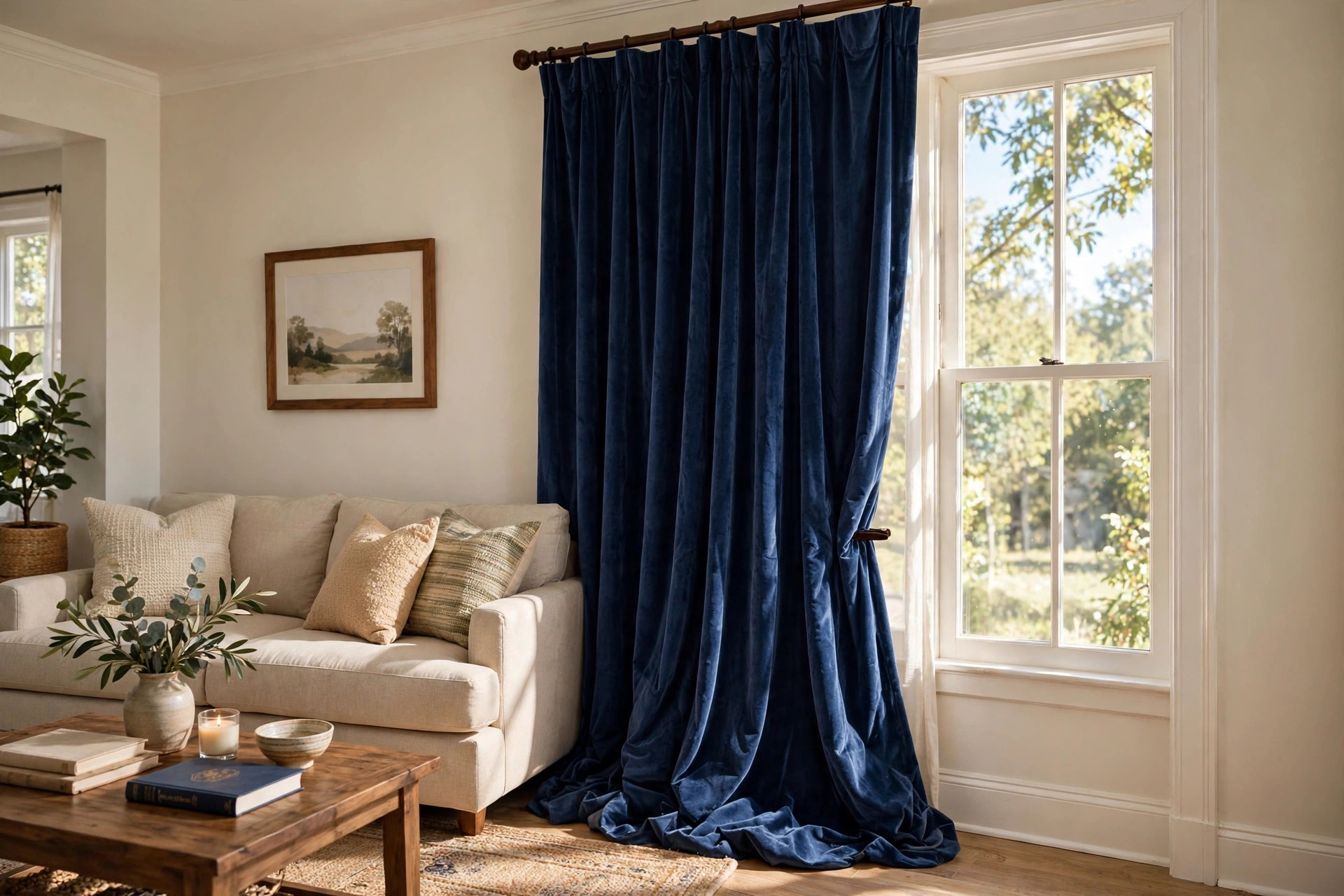

This navy blue velvet curtains reviews and buying guide is for any home owner who wants drapes that look rich, feel soft, and last for years. Velvet has dressed windows for centuries. Navy blue is one of the most loved colors for it. The fabric catches the light in a way that plain cotton never can. But velvet is not a simple purchase. Some panels are heavy and lined. Some are thin and made to look like velvet. Prices run from low to very high. This guide reviews what matters, what to look for, and how to care for the curtains once they are home.
Why Navy Blue Velvet Curtains Matter
Curtains do more work than most people think. They block light. They soften noise. They keep heat inside in winter and out in summer. They also set the mood of a room. Navy blue velvet does all of these jobs well.
Velvet is a woven fabric with a short, dense pile. The pile gives it a soft hand and a deep look. Light does not pass through it the way it passes through sheer fabrics. Even without a blackout liner, heavy velvet cuts most of the glare from a sunny window. This makes it a good pick for bedrooms, dens, and media rooms.
The color navy blue sits between formal and calm. It pairs with warm wood, brass, and cream walls. It also pairs with gray and white for a cooler look. Dark curtains make a room feel grounded. They can make a small room feel cozy rather than closed in, if the rest of the room has enough light.
Home owners also choose velvet for sound control. The thick pile absorbs echoes in rooms with hard floors. A living room with tile or wood floors can sound less hollow once heavy drapes hang at the windows. Home guides at The Spruce note that heavy fabrics are among the simplest ways to quiet a noisy room.
How to Choose Navy Blue Velvet Curtains: Navy Blue Velvet Curtains Reviews and Buying Guide
Buying velvet curtains takes care. Not every panel labeled velvet is made the same way. Here is what to check before you order.
Fabric and Weight
True velvet is usually made from cotton, silk, or a mix. Most home curtains today use cotton velvet or polyester velvet. Cotton velvet feels natural and has a matte look. Polyester velvet costs less and resists wrinkles. It also holds its dye well.
Weight matters as much as fiber. Heavier panels hang in clean folds and block more light. Hold a corner of the fabric up if you can. A good panel should feel firm and fall back into place. Thin panels that feel like a bed sheet are usually a short pile velvet or a printed imitation. They will not block light or hang as well.
Reviews of mid price curtains often note that the best value sits in cotton blend velvet. Pure silk velvet is lovely but costly and fades in sun. Polyester velvet suits most budgets and most rooms.
Color and Dye
Navy blue can lean toward black, gray, or even purple depending on the dye lot. When you shop, look at the panel in both daylight and lamp light. A curtain that looks rich navy in the store may read almost black in a dim bedroom.
Ask about color fastness if the curtains will hang in a sunny window. Sun bleaches velvet over time. Lined curtains hold color longer because the liner takes the sun instead of the velvet. You can also turn the panels or swap them side to side once a year to even out any fading.
Lining and Blackout
Lining is a second layer sewn behind the velvet. It protects the fabric, adds weight, and improves insulation. A simple cotton liner is enough for most rooms. A blackout liner blocks nearly all light. If you want true darkness for sleep, look at blackout curtains for bedrooms, which are built with that liner from the start.
Lined velvet also hangs better. The extra layer helps the folds fall evenly. Unlined velvet can stretch or sag over time, especially on wide windows. For windows wider than fifty inches, plan on two or more panels with a center overlap, or a single wide lined panel.
Types of Velvet Drapes on the Market
Shoppers will meet several styles. Each suits a different home.
Grommet top panels have metal rings set into the header. They slide easily on a rod and make wide, even folds. They suit modern rooms.
Rod pocket panels slip straight onto the rod through a sewn pocket. They gather into soft folds. They suit classic and farmhouse rooms. Some rod pocket velvet is too heavy for a thin rod, so check the rod size.
Pinch pleat drapes are sewn into fixed folds at the top. They look formal and tailored. They need hooks and rings or a track. Our guide to noise reducing pinch pleat drapes covers this style in detail.
Tab top panels have fabric loops at the header. They hang casually and suit cottages and country rooms.
Thermal velvet curtains add an insulated back layer. They slow heat loss at the window in winter and block heat gain in summer. They are worth the extra cost on large glass doors or drafty windows.
Cost and Price of Navy Velvet Curtains
Price varies widely. Expect to pay between thirty and one hundred fifty dollars per panel for ready made velvet curtains in common sizes. Panels from large retailers such as Home Depot, Lowe’s, IKEA, Wayfair, and Target sit in this range. Sale prices drop lower during holiday weekends.
Custom velvet drapes cost far more. A workroom will charge by the yard for fabric and by the hour for sewing. Two custom lined panels for one window can run from four hundred to over one thousand dollars. Custom work gives exact length, exact fullness, and matched dye lots. For odd sized windows, it is often the only choice.
Watch for hidden costs. Wide windows need more panels than the package shows. Most stylists suggest panels that total one and a half to two times the window width for full looks. Add the price of rods, brackets, and rings. A cheap panel on a flimsy rod will sag and spoil the look. A sturdy rod from a store like Blinds.com or a hardware chain can last as long as the curtains.
Reviews often warn that the lowest priced velvet looks good in photos but thin in person. Read reviews that mention weight, lining, and light blocking. These are the true tests of value.
Another point to weigh is panel length. Floor length panels should just kiss the floor or break slightly at the hem. Panels that hang two or three inches above the floor can look unfinished, and the eye notices the gap at once. Measure from the rod to the floor before you order, and decide whether you want the rod mounted at the frame or closer to the ceiling. Mounting near the ceiling makes the window look taller and the room grander. This one choice changes the whole look of the room for no extra cost.
Care and Upkeep of Velvet Curtains
Velvet needs gentle care. Most velvet curtains carry a dry clean only tag. Cotton velvet and silk velvet should go to a dry cleaner, not the washer. Polyester velvet may allow machine washing on gentle cycle, but check the tag first. Hot water can crush the pile and ruin the sheen.
Dust builds up on the pile. Vacuum the panels once a month with an upholstery brush on low suction. Brush in one direction, from top to bottom. This lifts dust and keeps the nap lying the same way. A lint roller works for pet hair between deeper cleans.
Sun is the main enemy. Velvet in a south facing window fades faster. Rotate panels or close sheer linen curtains behind them during the brightest hours to guard the color. Sheers let light in while taking the direct sun off the velvet.
Steam, not iron. Wrinkles come out with a garment steamer held a few inches away. Pressing an iron on velvet crushes the pile and leaves a mark. If a seam pucker bothers you, a tailor or dry cleaner can fix it.
Store spare panels flat or rolled, never folded hard. Sharp folds can leave lines in the pile that take time to relax.
Safety in the Home
Curtains are safe for most homes, but a few rules matter.
Keep long drapes away from heat sources. Do not let velvet rest on a radiator or a baseboard heater. Keep panels clear of space heaters. Heavy fabric near heat is a fire risk in any home.
Cord safety matters if your drapes hang with blinds or shades on the same window. Loose cords can harm small children and pets. The U.S. Consumer Product Safety Commission urges homes with young children to use cordless window coverings. Many retailers now sell only cordless or wand operated shades. When you buy, choose cordless options for any room a child uses.
Mounting hardware must be strong. Velvet panels are heavy. A rod held by small nails will pull out of drywall. Use anchors rated for the weight, or screw brackets into studs. Decorating ideas on HGTV and buying guides from Bob Vila both stress that strong hardware is the difference between drapes that hang straight for years and ones that sag in months.
Check for recalls. Before you buy, you can search the CPSC site for any recall on the rod or shade brand you plan to use. It takes a minute and is good practice.
Frequently Asked Questions
Do navy blue velvet curtains block light fully? Heavy velvet blocks most light but not all. Light leaks at the sides and top of the rod. For full darkness, choose velvet with a blackout liner and mount the rod wide enough that the panels cover the frame edges.
Will velvet curtains keep a room warmer? Yes, to a degree. The dense pile slows heat movement through the glass. Lined or thermal velvet does more. Close them at dusk in winter and open them on sunny winter mornings to gain free heat.
Do they shrink in the wash? Cotton velvet can shrink. That is why most tags say dry clean only. Even polyester velvet may shrink in hot water. Follow the care tag exactly.
How long do velvet curtains last? Good quality lined velvet lasts ten years or more in normal use. Sun, heat, and rough handling shorten the life. Rotating panels and vacuuming the pile add years.
Can I hang velvet curtains in a humid room? Velvet can hold moisture and may grow mildew in damp rooms such as baths. Choose a moisture resistant fabric there instead, or use velvet only in living areas and bedrooms.
Are navy curtains hard to match with furniture? Navy is a neutral in practice. It works with cream, white, gray, tan, wood tones, brass, and many greens. Avoid pairing it with black in a dark room, where the two can merge into one flat mass.
Final Word
Navy blue velvet curtains are a strong choice for home owners who want color, softness, and real function in one panel. Buy for weight, lining, and true color. Mount them on strong hardware. Care for the pile with gentle dusting and steam. Done well, they will anchor a room for a decade. This navy blue velvet curtains reviews and buying guide ends with the same advice that applies to every window treatment: measure twice, read reviews about weight and light blocking, and choose the lined panel when in doubt.
Related guides on this site include affordable outdoor patio curtains with free shipping, top rated blackout curtains for bedrooms for sale, and top rated shutter installation services for homeowners. See also Target for further detail.
References
Blinds.com. (n.d.). Window blinds, shades, and shutters. https://www.blinds.com HGTV. (n.d.). Home and garden ideas. https://www.hgtv.com IKEA. (n.d.). Home furnishings. https://www.ikea.com Target. (n.d.). Retail store. https://www.target.com The Home Depot. (n.d.). Home improvement products. https://www.homedepot.com The Spruce. (n.d.). Home and garden advice. https://www.thespruce.com U.S. Consumer Product Safety Commission. (n.d.). Product safety information. https://www.cpsc.gov Wayfair. (n.d.). Furniture and home goods. https://www.wayfair.com
Was this guide helpful?

About James Carter
The My Garden US editorial team writes practical, in-depth home and garden guides for American homeowners — tested advice, no fluff.
You May Also Like

Luxury Sheer Voile Panels for Florida Homes: A Complete Guide
July 27, 2026 0 views
Best Blackout Curtains for Bedrooms for Small Apartments
March 27, 2026 0 views
Custom Sliding Panel Track Blinds for Midwest Homes
July 14, 2026 0 views