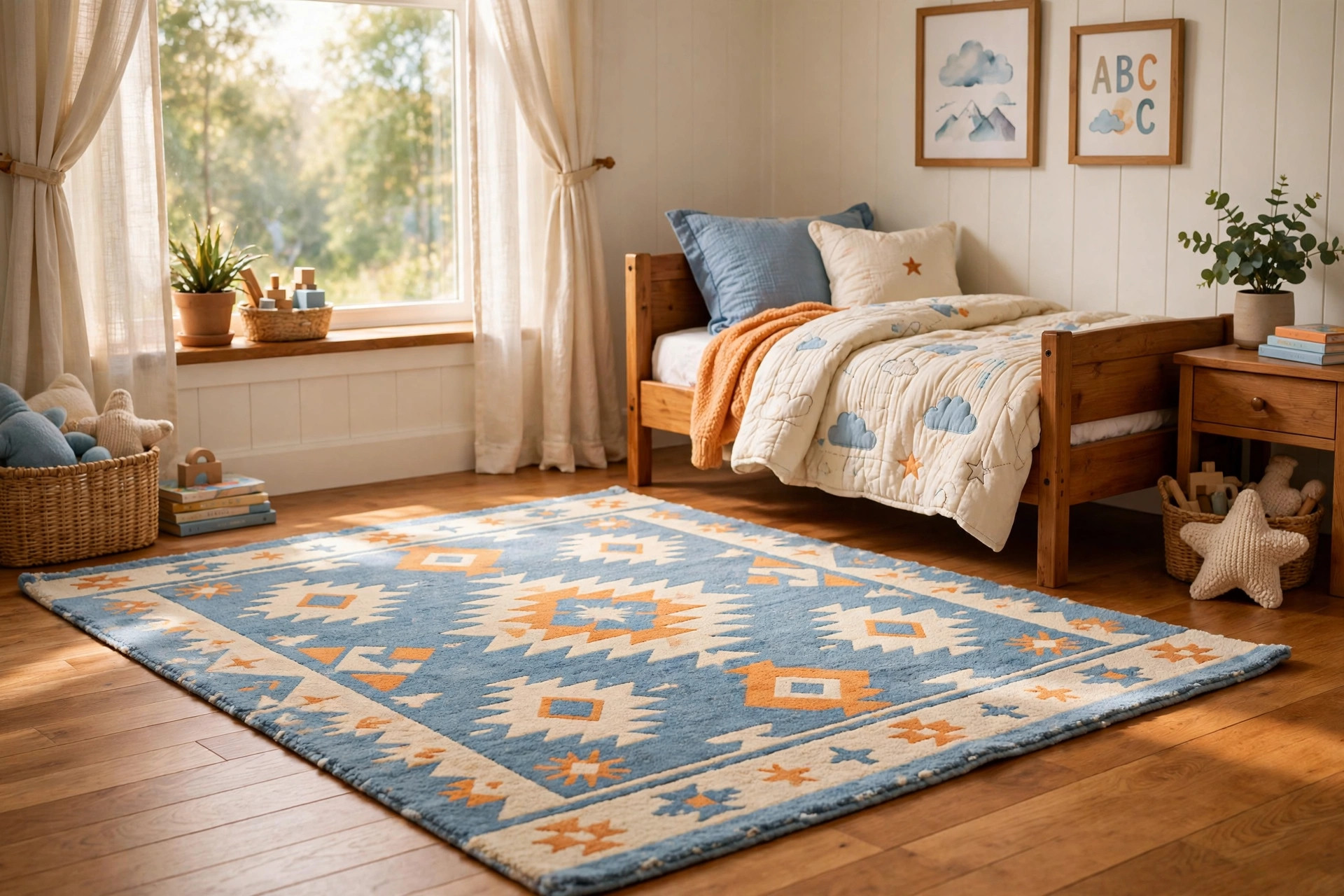

A kids room area rug for hardwood floors is one of the smartest buys for a child’s bedroom. Hardwood floors look beautiful, but they are hard and cold under small feet. A good rug changes that. It adds warmth, cushions falls, and lowers noise. It also gives the room color and style that children love.
Choosing the right rug takes some thought. Parents must think about size, material, safety, and care. A rug that works in a living room may not work in a child’s room. Kids spill drinks, drag toys, and play rough. The best rug for a child’s room can take that wear and still look good.
This guide walks through every step. It covers why the rug matters, what to look for, the main types, the cost, care, and safety. It ends with answers to common questions.
Why a Rug Matters in a Child’s Room
Comfort and Warmth
Hardwood floors feel cold in the morning. They also feel hard when a child sits on them. A kids room area rug for hardwood floors solves both problems. The pile of the rug holds warmth. It gives children a soft place to sit, read, and play. Many children spend most of their floor time on the rug, not on the bed.
Safety and Cushioning
Children fall. Toddlers learning to walk tumble often. Older children wrestle and jump. Bare hardwood offers no give. A rug with a thick pad underneath softens the landing. It cannot stop every bump, but it can turn a hard knock into a soft one. This is one reason safety groups advise soft surfaces where children play. The Consumer Product Safety Commission offers broad guidance on making home spaces safer for children.
Noise Control
Wood floors carry sound. Footsteps, dropped toys, and running children echo through the house. A rug absorbs sound. Bedrooms above a living room or a home office benefit most. Parents notice the difference on the first day. A room with a rug simply sounds calmer.
Style and Room Design
A rug anchors a room. It can pull the bed, the dresser, and the shelves into one look. For children, a rug can also mark a play zone. A round rug under a small table says this is where games happen. A long rug by the bed makes a warm path for cold feet. Stores like IKEA and Wayfair show how a single rug can set the mood of a whole room.
What to Look for When You Buy: Kids Room Area Rug for Hardwood Floors
Size and Placement
Measure the room before you shop. A common mistake is buying a rug that is too small. A rug that floats in the middle of the floor looks lost. For a child’s room, a rug should cover the main play area. If it sits beside the bed, it should run at least two feet past each side of the bed. A 5 by 7 foot rug works in many small rooms. A large room may take an 8 by 10. Leave some wood showing at the edges. That frame of wood keeps the room from feeling crowded.
Material and Fiber
The material sets how the rug feels, wears, and cleans. Cotton rugs are soft and washable. Many fit in a home washing machine. They wear faster than wool, but they cost less. Wool rugs are warm and strong. Wool fights stains better than many fibers, but wool rugs cost more and often need professional cleaning. Nylon and polyester rugs resist stains and fade less. They are a good pick for a busy child’s room. Jute and sisal look natural, but they feel rough. They are not the best choice where children sit and crawl. A soft nursery rug for crawling babies shares many of the same needs: gentle fibers and easy care.
Pile Height
Pile height is how tall the fibers stand. Low pile rugs, under a half inch, are easy to clean. Toys roll across them. Chairs move over them without catching. High pile or shag rugs feel soft and cozy. They trap crumbs and dust more easily. For a child’s room, a medium pile is often the sweet spot. It feels good under hands and knees but still vacuums well.
Backing and Grip
Hardwood floors are smooth. Rugs slide on them. A rug that moves is a trip hazard. Look for a rug with a non-slip backing, or buy a separate rug pad. A good pad does two jobs. It keeps the rug in place, and it adds cushion. Choose a pad made for hardwood. Some rubber pads can stain wood finishes over time. Felt and natural rubber pads are safer for floors. Check the pad label to confirm it suits hardwood.
Types and Options
Machine-Washable Rugs
These rugs have a thin cover that zips off or a whole rug that fits in the washer. They are popular with parents of young children. Juice spills, paint, and mud wash out. The trade is thinner padding. Most washable rugs need a pad under them for comfort. Still, for a room that sees heavy play, easy washing beats plush feel.
Flatweave and Low-Pile Rugs
Flatweave rugs have no raised pile. They are thin, light, and simple to clean. They work well under beds and desks. They do not offer much cushion on their own. Pair them with a thick pad if comfort matters. Their patterns often look modern and clean, which suits older children’s rooms.
Plush and Shag Rugs
Plush rugs invite children to lie down and read. Shag rugs look fun and feel soft. Both need more care. Crumbs hide in long fibers. Vacuuming takes longer. Pet hair clings to them. If the child has allergies, a shorter pile may be the better call. Dust and allergens settle deep in shag. Health sources such as HealthyChildren.org discuss how bedding and room materials can affect children with allergies and asthma.
Play and Learning Rugs
Some rugs carry printed roads, maps, or alphabet designs. Children drive toy cars on road rugs for hours. These rugs double as toys. Check the print quality before buying. Cheap prints fade after a few washes. Also check that the rug lies flat. Curled edges trip small feet.
Round and Shaped Rugs
Round rugs suit reading corners and small rooms. They break up the boxy lines of a bedroom. Shaped rugs, such as clouds or animals, delight younger children. They are harder to place under furniture. Think about where the rug will live before choosing a fun shape.
Cost and Price
Prices vary widely. A small cotton rug from a big-box store may cost under fifty dollars. Large wool rugs can run into the hundreds. Machine-washable rugs sit in the middle range. Most parents spend between eighty and two hundred fifty dollars for a good kids room area rug for hardwood floors.
A few rules help you spend well. First, size drives price more than anything. Measure first, then set a budget. Second, a rug pad is worth the extra cost. A thirty to sixty dollar pad extends the rug’s life and protects the floor. Third, watch for sales at major retailers. Stores such as Home Depot and Lowe’s run regular sales on home goods. Seasonal clearance can cut prices by a third or more.
Do not judge a rug by price alone. Consumer Reports testing has often shown that mid-priced goods can match costly ones in daily use. Read reviews from other parents. Look for notes on shedding, fading, and how the rug holds up to washing. A cheap rug that falls apart in six months costs more than a solid one that lasts five years.
Care and Upkeep
Daily and Weekly Care
Vacuum the rug once or twice a week. Use suction without a beater bar on delicate rugs. The beater bar can pull fibers loose. Shake small rugs outside to remove dust. Rotate the rug every few months. Sunlight fades one side faster than the other. Rotation also spreads wear from foot traffic.
Handling Spills and Stains
Act fast. Blot a spill with a clean cloth. Do not rub. Rubbing pushes the stain deeper. For most water-based spills, plain water and a drop of mild soap work. Test any cleaner on a hidden corner first. For machine-washable rugs, follow the label. Wash in cold water and air dry when the maker advises it. Heat can shrink some rugs.
Deep Cleaning
Once or twice a year, give the rug a deeper clean. Small cotton rugs can go through the washer. Larger rugs may need a carpet cleaner or a professional service. Wool rugs often need professional care. Always let the rug dry fully before putting it back on hardwood. Trapped moisture can harm the wood finish.
Protecting the Floor Beneath
Lift the rug now and then and check the floor. Look for trapped grit, which can scratch wood. Sweep under the rug before replacing it. Make sure the rug pad has not shifted. If the pad bunches, it can wear the finish in spots. A little care keeps both the rug and the floor in good shape for years.
Safety Notes
Slips and Trips
A rug that slides is dangerous. Use a non-slip pad or a rug with a grip backing. Tape the corners down if edges curl. Keep cords and small toys off the rug’s path. In a room where children run, these small steps prevent falls.
Fire and Materials
Check labels for fire safety. Some rugs carry treatments that slow burning. Natural fibers like wool resist flame better than many synthetics. Keep rugs away from space heaters and fireplaces. This is simple care, but it matters in a child’s room.
Allergens and Air Quality
Rugs collect dust, pollen, and pet dander. For most children this is not a problem with regular vacuuming. For children with asthma or dust allergies, choose a low-pile rug and vacuum with a HEPA filter. Washable rugs help, since washing removes what vacuuming leaves behind. What to Expect and similar family resources note that a clean sleep and play space supports better rest.
Small Parts and Choking
Some decorative rugs have tassels, beads, or glued-on pieces. Babies and toddlers pull these loose and put them in their mouths. Choose simple rugs for rooms where very young children play. Skip loose trim. If a rug starts to shed pieces, replace it.
Coordinating the Rest of the Room
A rug works best when the room works with it. Soft blackout curtains for nursery windows help children sleep through early light. A calm toddler bedding set in matching colors ties the bed to the rug. Pottery Barn Kids and The Spruce both publish room guides that show how one rug choice shapes the rest of the decor.
Keep the palette simple. Pick two main colors from the rug and repeat them in curtains, bedding, and art. Too many colors make a small room feel busy. Leave open floor space for play. A room packed with furniture leaves no place for the rug to do its job.
FAQ
What size rug should I buy for a child’s bedroom?
Measure the room first. For most children’s rooms, a 5 by 7 foot rug covers the play area beside or in front of the bed. In a larger room, an 8 by 10 gives more coverage. Leave 12 to 18 inches of wood showing around the edges for a balanced look.
Is a rug safe on hardwood floors?
Yes, when it stays in place. Use a rug pad made for hardwood to stop sliding. Check that the pad will not stain the finish. Felt and natural rubber pads are usually safe. Avoid cheap latex pads, which can mark some finishes.
Which rug material is best for kids?
Cotton and polyester lead for children’s rooms. Cotton is soft and often washable. Polyester resists stains and fading. Wool is lovely but costs more and needs more care. Skip rough fibers like sisal where children sit and play.
Can I put a rug in a baby’s room?
Yes. A soft, low-pile rug gives crawling babies a warm surface. Choose one without loose parts or long tassels. Keep the rug clean, since babies spend much time face-down on it. A washable rug is the easiest choice for a nursery.
How do I stop a rug from sliding on wood?
A quality rug pad is the best fix. It grips both the floor and the rug. For small rugs, non-slip rug tape on the corners also works. Replace worn pads. An old pad loses grip and lets the rug wander.
How often should I clean a child’s room rug?
Vacuum weekly. Clean spills at once. Wash machine-washable rugs every month or two, or as needed. Deep clean larger rugs once or twice a year. Regular care keeps the rug fresh and extends its life.
A Short Final Word
A kids room area rug for hardwood floors is a small change with a large effect. It warms the room, softens falls, quiets noise, and gives children a place of their own on the floor. Take time to measure, choose a kind fiber, and add a good pad. Care for the rug and the floor under it. The result is a room that looks better, feels better, and serves a growing child well for years.
References
American Academy of Pediatrics. (n.d.). HealthyChildren.org. https://www.healthychildren.org Consumer Reports. (n.d.). Product reviews and ratings. https://www.consumerreports.org IKEA. (n.d.). Home furnishings. https://www.ikea.com Lowe’s. (n.d.). Home improvement products. https://www.lowes.com Pottery Barn Kids. (n.d.). Kids furniture and decor. https://www.potterybarnkids.com The Home Depot. (n.d.). Home improvement products. https://www.homedepot.com The Spruce. (n.d.). Home and garden advice. https://www.thespruce.com U.S. Consumer Product Safety Commission. (n.d.). Product safety information. https://www.cpsc.gov Wayfair. (n.d.). Furniture and home goods. https://www.wayfair.com What to Expect. (n.d.). Pregnancy and parenting guidance. https://www.whattoexpect.com
Was this guide helpful?

About Robert Taylor
The My Garden US editorial team writes practical, in-depth home and garden guides for American homeowners — tested advice, no fluff.
You May Also Like
Nursery Crib Sheets Fitted for Standard Crib: A Plain Guide for New Parents
January 30, 2026 0 views
Toddler Step Stool for Bathroom and Kitchen: A Simple Guide for Parents
September 28, 2026 0 views
Nursery Glider Replacement Cushions for Comfort: A Parent’s Guide
May 7, 2026 0 views