
Introduction
Few houseplants suit snake plants indoor texas homes usa growers as well as the snake plant. It is tough. It is cheap to keep. It asks for very little and still looks fine for years. In Texas, homes run hot in summer and dry in winter when heaters run all day. Many houseplants fail in those rooms. The snake plant holds its ground. It stands up straight, keeps its color, and needs water only now and then.
Texas families buy this plant by the thousands each year. Some buy it for looks. Some buy it because they heard it cleans the air. Some buy it because every other plant they owned died. The plant suits them all. It works in apartments, ranch houses, and offices alike.
This guide explains the plant in plain words. It covers why it fits Texas homes, how to choose a good one, the main types, what it costs, and how to care for it week by week. It also covers safety for children and pets. If you live in Texas and want a houseplant that forgives mistakes, read on. The advice here comes from standard gardening practice, and you can check the gardening care guides from Gardening Know How for extra detail on any step.
Why Snake Plants Matter for Texas Homes: Snake Plants Indoor Texas Homes Usa
Texas is a hard state for indoor plants. Summer heat pushes indoor rooms warm even with air conditioning. Winter air grows bone dry when heaters run. Many tropical houseplants brown at the edges and drop leaves in these rooms. The snake plant handles both problems. Its thick leaves store water, so dry air does not hurt it. It grows slow, so heat does not stress it.
The plant also suits busy people. Nurses, oil workers, teachers, and shop owners all keep long hours. A plant that needs water every week dies under such care. A snake plant can wait two or three weeks between waterings in cool months and still look fine. That margin makes it a good first plant.
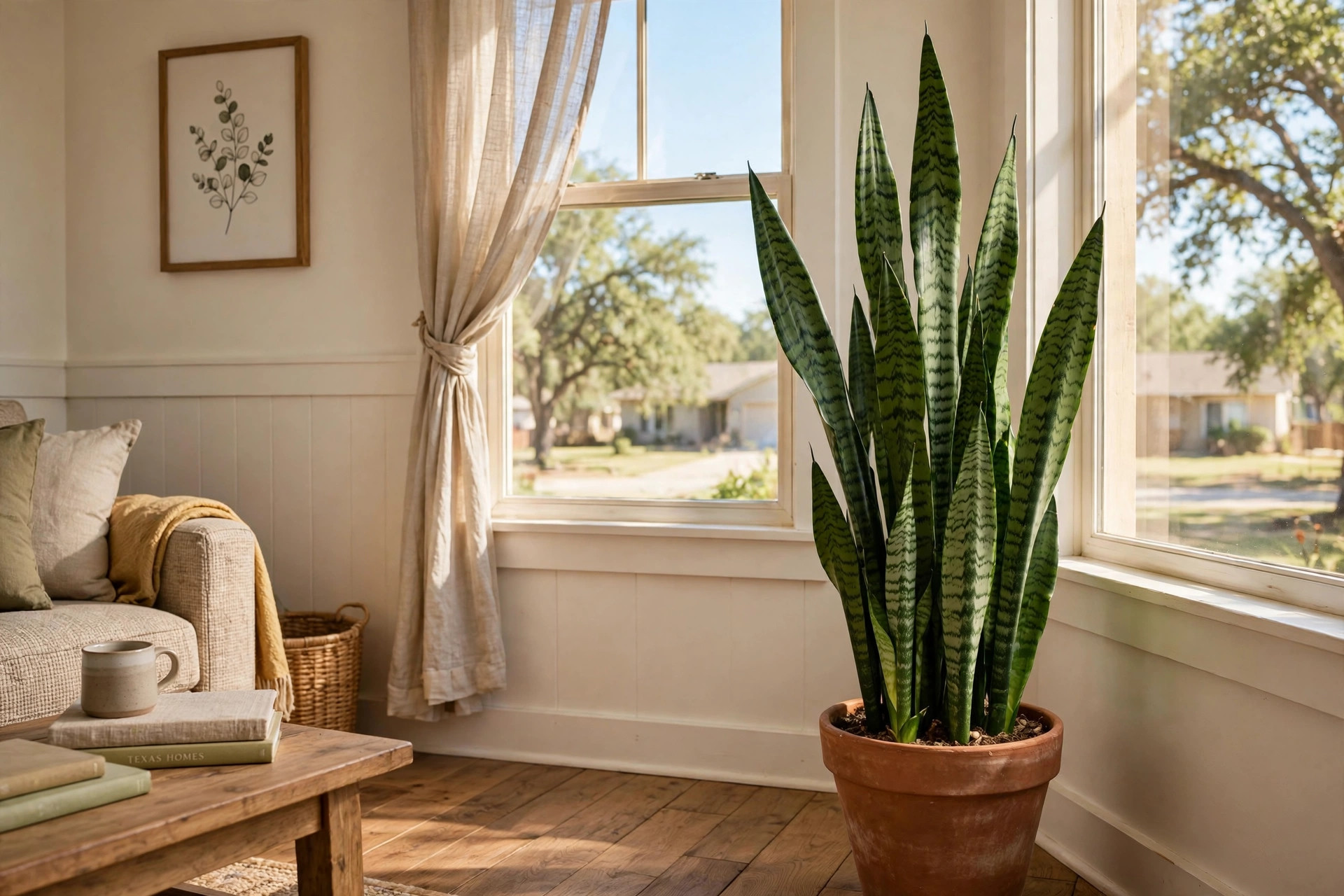
Looks matter too. The stiff upright leaves fit modern rooms and ranch rooms alike. The leaves carry green and yellow stripes that catch light. One plant in a plain pot can dress up a dull corner. It never sprawls. It never sheds. It stays tidy all year.
Some buyers also choose it for air quality. Advice sites like The Spruce still carry simple plant care notes on the topic.
What to Look for and How to Choose
Start with the leaves. Good snake plants have firm leaves that stand straight. The color should be even. Avoid plants with soft spots, brown tips on many leaves, or leaves that lean and flop.
Check the base of the plant. Pull the plant gently from its pot in the store if the seller allows it. White or pale roots are healthy. Brown mushy roots mean rot. A plant with rot can be saved, but a beginner should pick a healthy one instead.
Pick the right size for your room. A small plant in a four inch pot suits a desk or a shelf. A large plant in a ten or twelve inch pot fills a floor corner. Tall types can reach three or four feet in time. Short types stay under one foot. Know your space before you buy.
Check the pot for drainage holes. The snake plant dies from too much water more than from too little. A pot with no holes traps water at the roots. Buy a pot with holes and set it on a saucer.
Buy from a trusted seller. Local Texas nurseries know the climate and sell plants grown for it. Good mail order nurseries such as Burpee and Gurney’s also carry plants and supplies. If you buy online, read the shipping terms. Cold weather in transit can damage leaves.
When you bring the plant home, give it a day or two to rest. Then check the soil. Many store plants sit in heavy soil that holds too much water. A sandy mix made for cactus or succulents drains better. You can mix your own with potting soil and perlite or coarse sand. Plant guides at Monrovia explain good soil mixes for houseplants.
If you already own other houseplants, the snake plant fits the same shelf. Many Texas growers pair it with fiddle leaf figs for Texas homes or with pothos, since both like bright rooms. For a full buying walk-through, see this snake plants indoor buying guide.
Types and Options
The snake plant belongs to a group of plants with many named types. Leaves vary in height, color, and pattern. All types share the same tough habits. Pick the look you like best.
Tall Upright Types
The classic type has tall sword leaves two to four feet high. Leaves are dark green with lighter green bands. It is the most common type in stores and the cheapest. It suits floor pots beside doors and windows. It makes a strong line in a plain room.
A yellow edged type carries a bright yellow border on each leaf. It costs a little more but stays popular. The yellow edge shows best in good light.
Short and Compact Types
Short types grow in a rosette shape under one foot tall. Leaves spread out like a fan. They suit desks, tables, and window sills. They cost about the same as tall types. Their small size makes them good gifts.
One round type has leaves that grow in a cylinder shape. It needs the same care as other types. It is less common, so it may cost more.
Where Types Are Sold
Most garden centers carry two or three types. Big box stores carry the classic tall type all year. Specialty nurseries and online sellers carry the rarer forms. Sellers such as White Flower Farm and Park Seed list many houseplants and garden plants with care notes.
Cost and Price
Snake plants are cheap for what they give. A small plant in a four inch pot costs about five to ten dollars at most Texas stores. A medium plant in a six inch pot costs about ten to twenty dollars. A large floor plant in a ten or twelve inch pot costs about twenty to forty dollars. Rare types cost more.
The pot adds cost. A plain plastic pot with holes costs little. A clay pot costs a bit more. A decorative ceramic pot can cost as much as the plant.
Soil and feed cost little. A bag of cactus mix costs a few dollars and fills several pots. Liquid houseplant feed costs a few dollars and lasts a year or more, since the plant needs feeding only in spring and summer.
Long term cost is very low. The plant lives for many years. It rarely needs a new pot. It rarely gets sick. Over five years it may be the cheapest plant in your home. Compare that with pothos plants and other common houseplants, and the snake plant holds its own on value.
Care and Upkeep
Care is simple. The plant needs four things: the right light, the right water, the right soil, and a warm room. Get these right and the plant takes care of itself.
Light
Snake plants take a wide range of light. Bright indirect light is best. A spot near an east or north window suits them. They also live in low light, such as a dark hallway, but they grow very slow there. Leaf color dulls in dark rooms.
Texas sun is strong. Direct afternoon sun through a south or west window can burn leaves. If leaves show pale scorched patches, move the plant back a foot or two.
Outdoor summer stays are possible. Many Texas growers set pots on shaded porches from April to October. Shade is the key word. Full Texas sun will cook the leaves. Bring the plant inside before the first fall cold snap.
Water
Water less than you think. In spring and summer, water when the top two inches of soil feel dry. In fall and winter, wait until the soil is dry almost all the way down. For most Texas homes that means water every two to three weeks in warm months and every three to five weeks in cool months.
Pour water until it runs from the drainage holes. Then empty the saucer. Never let the pot sit in standing water. Wet roots rot. Rot is the top killer of snake plants. When in doubt, wait one more day. The thick leaves hold water, so the plant does not suffer from a late drink.
Texas well water is often hard. The plant takes it fine.
Soil and Feeding
Use a fast draining mix. Cactus or succulent mix from the store works well. You can also mix regular potting soil with one part perlite or coarse sand. The goal is soil that dries out in days, not weeks. Planting calendars and soil advice from the Old Farmer’s Almanac give a good sense of timing for potting work.
Repot only when roots fill the pot and push out of the drainage holes. That takes two to four years. Move up one pot size. Spring is the best time to repot.
Feed lightly. A half strength liquid houseplant feed once a month in spring and summer is enough. Do not feed in fall or winter. Too much feed causes brown leaf tips. The plant grows slow and needs little food.
Temperature and Air
Snake plants like normal room temperatures. The range of sixty five to eighty five degrees suits them. They stand Texas indoor heat well. Keep them away from cold drafts and from heating vents that blast hot dry air straight at the leaves.
Frost kills the plant. If the plant spends summer on a porch, bring it in when nights drop near fifty degrees. Do not leave it out in a freeze. The leaves turn to mush in freezing weather and the plant does not come back.
Wipe dust off the leaves now and then with a damp cloth. This small chore takes two minutes and helps the plant a lot.
Safety
Snake plants are mildly toxic if eaten. The leaves contain compounds that upset the stomach. A child who chews a leaf may feel sick and vomit. A dog or cat that chews leaves may drool, vomit, or have diarrhea. The plant is not deadly, but it is not safe to eat.
Keep the plant out of reach of small children. Tall floor pots tempt toddlers. Set the plant on a high stand or in a room children use less. Teach older children not to chew houseplants. If a child eats a leaf, call your local poison control center for advice.
Pet owners need care too. Cats like to chew stiff leaves. Dogs may knock pots over and chew fallen leaves. Place the plant where pets cannot reach it. Watch new pets around all houseplants for the first weeks. If a pet eats part of the plant and shows signs of sickness, call your vet.
Wear gloves when you cut or repot the plant. The sap can irritate skin for some people. Wash your hands after handling. These steps are simple and they keep the whole house safe.
Frequently Asked Questions
How often should I water a snake plant in Texas? In warm months, water every two to three weeks when the top two inches of soil dry out. In cool months, stretch to every three to five weeks. Texas homes with strong heat dry soil faster, so check the soil with your finger before you water.
Can a snake plant live in a dark room? Yes, but it grows very slow and leaf color fades. For best results give it bright indirect light. A north or east window is ideal. Move it closer to light for a few weeks if it looks dull.
Why are the leaves turning yellow? Yellow leaves almost always mean too much water. Check the soil. If it is wet, let it dry out fully before watering again. Remove badly yellowed leaves at the base with clean scissors. Make sure the pot has drainage holes.
How big will it get? Tall types reach two to four feet in height indoors over several years. Short types stay under one foot. Growth is slow. A plant may add only a few inches of height each year. Small pots keep the plant small.
Can I keep it outside in Texas summer? Yes, in shade. A covered porch or a spot under a tree works well. Avoid full sun, which burns the leaves. Bring the plant inside before nights drop near fifty degrees. For general plant research standards, the plant science work funded through USDA NIFA supports the growing advice used by gardeners across the country.
A Short Final Word
The snake plant is the right plant for many Texas homes. It stands heat. It stands dry winter air. It stands missed waterings. It costs little and lives long. Buy a healthy plant, pot it in draining soil, give it decent light, and water it only when the soil dries. That is the whole job. For a Texas home that wants easy green, few plants beat it.
References
Burpee. (n.d.). Seeds, plants, and gardening supplies. https://www.burpee.com Gardening Know How. (n.d.). Gardening guides and plant care. https://www.gardeningknowhow.com Gurney’s Seed & Nursery Co. (n.d.). Seeds, plants, and garden supplies. https://www.gurneys.com Monrovia. (n.d.). Plants for home gardens. https://www.monrovia.com National Institute of Food and Agriculture. (n.d.). Agricultural research and extension. https://www.nifa.usda.gov Park Seed. (n.d.). Seeds, plants, and gardening supplies. https://www.parkseed.com The Old Farmer’s Almanac. (n.d.). Gardening calendars and advice. https://www.almanac.com The Spruce. (n.d.). Home and garden advice. https://www.thespruce.com White Flower Farm. (n.d.). Plants, bulbs, and garden supplies. https://www.whiteflowerfarm.com
Was this guide helpful?

About Robert Taylor
The My Garden US editorial team writes practical, in-depth home and garden guides for American homeowners — tested advice, no fluff.
You May Also Like
Daffodil Bulb Packs Buying Guide USA: How to Choose, Buy, and Plant
September 28, 2026 0 views
Where to Find Morning Glory Seeds for Sale in the USA
April 14, 2026 0 views
Wildflower Seed Mixes Texas Homes USA: How to Plant a Prairie at Home
June 10, 2026 0 views