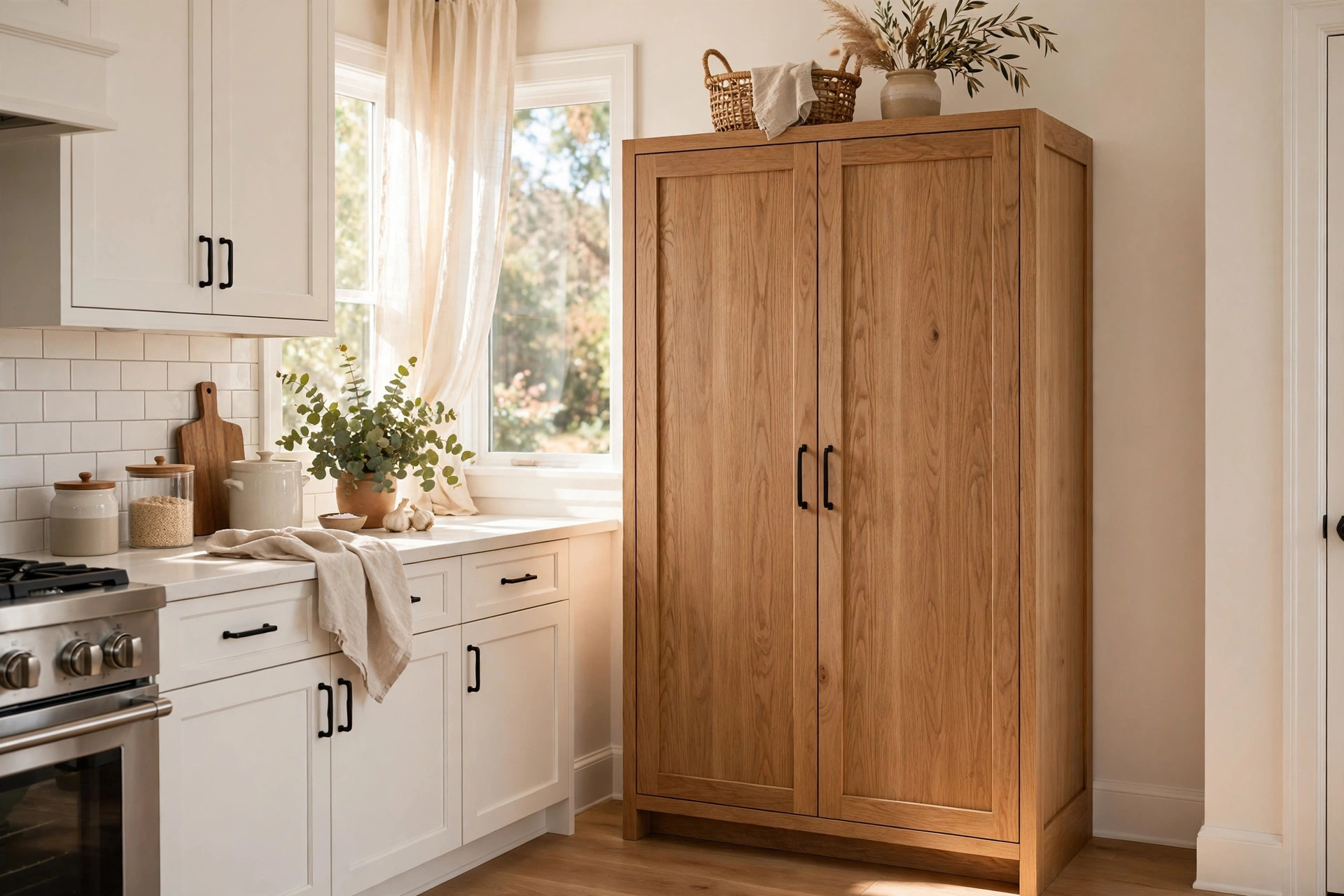

When you search for kitchen pantry cabinets deals near me, you want one thing. You want good storage at a fair price, and you want it close to home. A pantry cabinet is one of the most useful pieces of furniture a kitchen can hold. It gives you a tall, narrow space for dry goods, small appliances, and supplies that do not fit anywhere else. But prices vary widely. The same cabinet can cost twice as much at one store as at another. This guide walks you through how to shop smart. You will learn what to look for, where real deals hide, and how to avoid paying more than you should.
Why a Pantry Cabinet Matters
Every kitchen has a problem with space. Cabinets fill up fast. Pots, pans, boxes of pasta, bags of rice, cans of beans, cleaning supplies, and small machines all fight for room. A pantry cabinet solves this in one move. It stands tall, usually between six and seven feet, and it offers deep shelves in a small footprint. You can put it at the end of a counter run, beside the refrigerator, or against a free wall.
A good pantry cabinet changes how a kitchen feels. Counters stay clear. Shelves stay orderly. You can see what you own, so you stop buying the same box of crackers twice. If you are planning a kitchen pantry cabinets buying guide for your own notes, start here. The pantry cabinet is often the first piece people add when they want more storage without a full remodel.
What to Look for When You Shop: Kitchen Pantry Cabinets Deals near Me
Deals are only deals if the cabinet is worth owning. A cheap cabinet that sags in a year is no bargain. Here is what to check before you buy.
Size and Fit
Measure your space before you shop. Write down the height, width, and depth of the spot where the cabinet will stand. Leave at least one inch of clearance on each side for doors to open. Most pantry cabinets are eighteen to thirty-six inches wide. Depth is usually twelve to twenty-four inches. Tall cabinets near the ceiling may need two people to stand them upright safely.
Material and Build
Solid wood cabinets last the longest, but they cost the most. Plywood with a wood face is a strong middle choice. Particle board or MDF cabinets cost less and work fine in dry kitchens, but they can swell if they sit in water. Open the doors in the store. Pull the shelves. They should feel firm, not springy. Check that the back panel is nailed or screwed, not just stapled.
Shelves and Doors
Look for adjustable shelves. Fixed shelves force you to stack items in ways that waste space. Adjustable shelves let you fit tall cereal boxes on one level and short cans on another. Full overlay doors look modern and cover the frame. Partial overlay and inset doors have a more classic look. If you like the classic farmhouse feel, a shaker cabinet doors guide can help you match your pantry to the rest of the kitchen.
Types of Kitchen Pantry Cabinets
Not all pantry cabinets are alike. The right type depends on your kitchen, your budget, and how much storage you need.
Freestanding pantry cabinets. These stand on their own like a wardrobe. You can move them when you move house. They suit renters and small kitchens well. Many are sold flat-packed, and you put them together at home.
Built-in pantry cabinets. These are fixed to the wall or the floor. They look like part of the kitchen itself. Built-ins cost more, but they add real value to a home. They are the best choice if you plan to stay for years.
Pull-out pantry cabinets. These are narrow and deep, with shelves that slide out toward you. They fit in gaps between appliances, often only six to twelve inches wide. They waste no space at the back of the shelf.
Corner pantry cabinets. A corner is the hardest space in any kitchen to use. A corner pantry turns dead space into deep storage. Look for lazy susan shelves or pull-out trays so nothing gets lost in the back.
Pantry wardrobes with drawers. Some tall cabinets mix shelves up top with drawers down below. The drawers are good for bags, foil, and small packets that slide off shelves.
Where to Find Kitchen Pantry Cabinets Deals Near Me
This is the heart of the matter. Here is where real deals hide, in order of how much you can save.
Clearance aisles at big home stores. Large retailers mark down floor models and last-season finishes. Visit the clearance aisle in person rather than looking online. The best marks are often written by hand on a sticker. Staff at stores like Home Depot or Lowe’s can tell you when new clearance rounds start.
Local cabinet shops and lumber yards. Small shops sometimes sell overstock or canceled orders at deep discounts. A cabinet ordered for a job that fell through may sit in the back room for months. Ask the counter staff what they have. They are often glad to move it.
Habitat for Humanity ReStores and salvage shops. These stores sell donated cabinets from remodels. You can find solid wood pantry cabinets for a small fraction of new prices. Stock changes daily, so visit often.
Online marketplaces with local pickup. Sites where neighbors sell used goods can turn up fine cabinets from kitchen remodels. Always inspect before you pay. Look for water damage along the bottom edge.
Seasonal sales. New cabinet lines arrive in late winter and early spring. Stores cut prices on older stock in January and February. Holiday weekends like Labor Day and Memorial Day bring storewide sales that include pantry cabinets.
Price matching. Many large stores match a lower advertised price from a rival. Bring a printed ad or show the price on your phone. A few minutes of asking can save real money.
Reading reviews before you buy is wise. Sites such as Bob Vila publish practical guides on cabinets and storage. Home improvement coverage at This Old House also walks through kitchen projects step by step.
Cost and Price
Pantry cabinet prices fall into three bands.
Budget: $100 to $300. Flat-packed cabinets in this range use particle board or MDF. They work well in dry kitchens and rental homes. Assembly takes one to three hours. Deals near me for these often appear in big-box clearance aisles.
Mid-range: $300 to $800. This band buys plywood boxes with solid wood doors, soft-close hinges, and adjustable shelves. Most American families shop here. Watch for holiday sales that cut mid-range prices by twenty to thirty percent.
High-end: $800 to $2,000 or more. Solid wood, custom finishes, and built-in installation live here. A high-end pantry cabinet can match the rest of a custom kitchen exactly. Deals are rarer but do exist on floor models and discontinued finishes.
Do not forget hidden costs. Delivery fees can run $50 to $150. Installation by a handyman adds $100 to $300. If you buy a flat-pack, the cost is your own time. A quartz countertop installation guide is worth reading if your pantry project grows into a larger kitchen update, since counters and cabinets are often priced together.
Energy and home standards matter too. If your kitchen project includes new lighting or appliances, the ENERGY STAR program lists efficient products that can cut utility bills over time.
Care and Upkeep
A pantry cabinet will serve you for decades if you treat it well. Keep these habits in mind.
Keep it dry. Wipe spills at once. Water is the main enemy of budget cabinets. A small leak under a nearby sink can ruin a cabinet base in months.
Do not overload shelves. Each shelf has a weight limit. Canned goods are heavy. Spread them across shelves rather than stacking them all on one level. If a shelf bows, move the heavy items down.
Clean with mild soap. Warm water and a drop of dish soap clean most cabinet surfaces. Avoid harsh chemicals and scouring pads. Dry the surface after wiping.
Tighten hardware yearly. Hinges and handles loosen with use. A screwdriver and five minutes once a year keep doors hanging straight.
Line the shelves. Shelf liner protects wood and MDF from stains and makes cleaning easy. Replace it when it wears out.
For deeper home care advice, The Spruce offers clear guides on cleaning and maintenance. Appliance and cabinet reviews from Consumer Reports can help you judge build quality before you buy.
Safety
Pantry cabinets are tall and heavy. They can tip forward if a child climbs them. This is a real risk in homes with small children.
Anchor tall cabinets to the wall. Most cabinets come with an anti-tip strap or bracket. Use it. Screw the cabinet to a wall stud, not just to drywall.
Store heavy items low. Put cans and jars on lower shelves. Keep light items like paper towels and plastic containers up high. This lowers the center of gravity.
Keep cleaning chemicals out of reach. If you store cleaners in the pantry, put them on a high shelf with a childproof latch.
Check for recalls. Before buying a used cabinet, search the model on the U.S. Consumer Product Safety Commission site if you have brand details.
Major appliance makers also set useful standards for kitchen design. Whirlpool and GE Appliances publish kitchen planning resources, and Bosch offers guides on fitting appliances into cabinetry. Big retailers such as Lowe’s and Home Depot list safety and installation tips on their product pages.
Frequently Asked Questions
What is a fair price for a kitchen pantry cabinet? For most homes, $250 to $600 buys a solid pantry cabinet with adjustable shelves and good hardware. Budget flat-packs start near $100. Custom built-ins can pass $1,500. Compare at least three sources before you decide.
Where can I find cheap pantry cabinets near me? Start with the clearance aisle at large home stores, then check local cabinet shops for overstock. ReStores and salvage shops offer the lowest prices on used solid wood pieces. Online marketplaces with local pickup are worth a look, but always inspect in person.
Are freestanding pantry cabinets sturdy? Yes, if you anchor them to the wall. Freestanding cabinets are as strong as built-ins once secured. The weak point is tipping, not the frame. Use the anti-tip strap that comes in the box.
Can I install a pantry cabinet myself? Most freestanding and flat-pack cabinets are made for do-it-yourself assembly. You need a screwdriver, a level, and a drill for the wall anchor. Built-in cabinets that match existing trim are better left to a carpenter.
How do I match a new pantry cabinet to my old kitchen? Bring a cabinet door or a drawer front to the store for color matching. White and light gray finishes are easiest to match. Wood stains vary by batch, so buy all pieces from the same lot when you can.
Should I buy a pantry cabinet online or in a store? Stores let you touch the cabinet and check the build before you pay. Online shops offer a wider range and sometimes lower prices. If you buy online, read the return policy first. Shipping a tall cabinet back is costly.
A Final Word
Finding kitchen pantry cabinets deals near me is not about luck. It is about knowing where to look and what to check. Measure first. Compare three sources. Inspect the build. Anchor the cabinet to the wall. Follow these steps and you will get storage that lasts for years at a price that feels fair. A well-chosen pantry cabinet pays for itself in saved time and saved groceries, one tidy shelf at a time.
References
Bob Vila. (n.d.). Home improvement advice. https://www.bobvila.com Bosch. (n.d.). Home appliances. https://www.bosch-home.com Consumer Reports. (n.d.). Product reviews and ratings. https://www.consumerreports.org ENERGY STAR. (n.d.). Energy efficient products. https://www.energystar.gov GE Appliances. (n.d.). Kitchen and home appliances. https://www.geappliances.com Lowe’s. (n.d.). Home improvement products. https://www.lowes.com The Home Depot. (n.d.). Home improvement products. https://www.homedepot.com The Spruce. (n.d.). Home and garden advice. https://www.thespruce.com This Old House. (n.d.). Home renovation guidance. https://www.thisoldhouse.com U.S. Consumer Product Safety Commission. (n.d.). Product safety information. https://www.cpsc.gov Whirlpool. (n.d.). Home appliances. https://www.whirlpool.com
Was this guide helpful?

About Lisa Anderson
The My Garden US editorial team writes practical, in-depth home and garden guides for American homeowners — tested advice, no fluff.
You May Also Like
Kitchen Pantry Cabinets Buying Guide USA: A Plain Guide for Shoppers
April 15, 2026 0 views
Undermount Stainless Sinks: Reviews and Buying Guide USA
June 3, 2026 0 views
Dual Fuel Ranges Reviews Buying Guide USA: How to Choose the Right Range for Your Kitchen
September 1, 2026 0 views