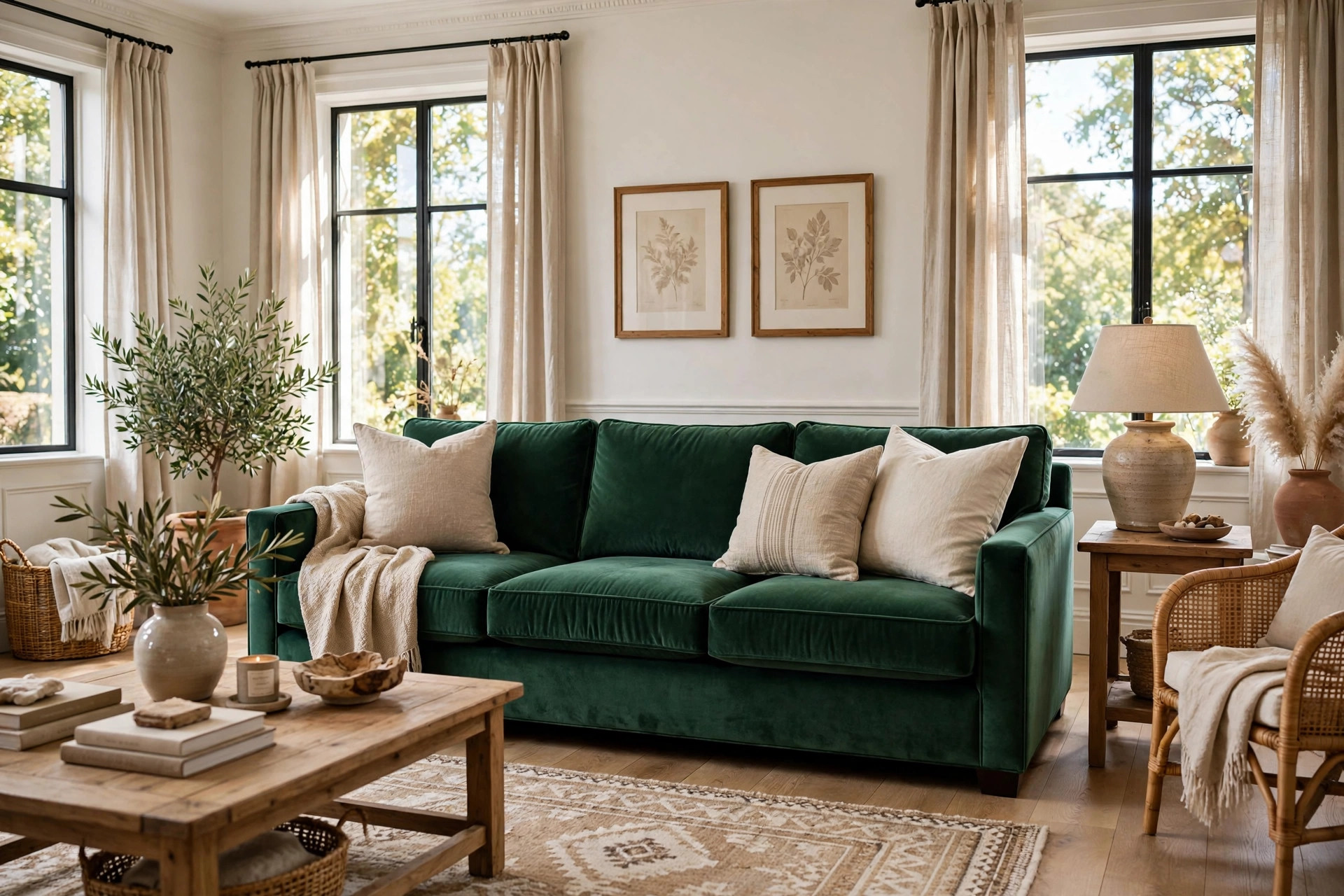

A velvet sofa can change the whole feel of a room. One piece of furniture, covered in soft deep pile, gives a plain living room a sense of weight and care. Many shoppers read velvet living sofas reviews buying guide usa lists before they buy, because a sofa is a large purchase and velvet is a fabric that asks for thought. This guide walks through what matters: why velvet suits a living room, how to choose frame and fabric, what shapes and colors work best, what prices to expect, and how to keep the fabric clean and bright for years.
Why Velvet Belongs in the Living Room
Velvet has been used for upholstery for many decades. It drapes well, it holds color with unusual depth, and it feels warm to the touch. In a living room it gives what decorators call presence. A gray linen sofa sits back and keeps quiet. A velvet sofa in emerald or navy speaks. It becomes the anchor of the room, the thing the eye finds first.
The reasons buyers give in reviews of velvet living sofas are steady and plain. The fabric hides light dust and crumbs better than pale cotton. It does not pill the way knit fabrics do. The pile catches light in bands, so even a dark sofa looks alive rather than flat. And velvet pairs well with almost every style of room, from a formal parlor to a relaxed family room, because the fabric itself does so much of the work.
There is one honest caution. Velvet marks with pressure. Sit in one spot often enough and the pile will show it. Many buyers read Example pages to learn this before they buy, and it is worth saying here plainly: velvet records use. Brush it, and the record fades. Ignore it, and the record stays.
What to Look For When Choosing a Velvet Sofa: Velvet Living Sofas Reviews Buying Guide Usa
Reviews and buying guides agree on the same short list. A good velvet sofa is decided first by its frame, second by its fabric, and third by its cushions. The rest is detail.
The Frame
A sofa frame should be kiln-dried hardwood. Ask the maker or the store which wood is used. Oak, beech, maple, and ash are all sound choices. Avoid frames of soft pine or of particleboard with staples alone, because they loosen in three to five years. The joints should be corner-blocked and glued. If you can lift one corner of the floor model a few inches and the opposite leg stays planted, the frame is rigid enough.
The Fabric
Not every cloth sold as velvet is the same. True velvet is woven, with a dense short pile. Cotton velvet is soft and matte, and it ages with character, but it stains more easily. Synthetic velvets, made of polyester or rayon blends, are stronger against stains and fading, and most of the velvet sofas sold in the United States today use them. Mohair velvet is the old luxury choice: costly, tough, and lovely to the hand.
Rub the fabric sample on a carpet sample or a piece of wool. If loose fibers come away easily, the pile is weak. A good velvet sheds very little. Check the color in daylight as well as in the showroom light, because the pile shifts tone as light moves across it.
The Cushions
Seat cushions should be high-density foam wrapped in down or in a down substitute. Foam alone holds shape but feels flat after a year. Down alone needs daily plumping. The wrap gives the best of both. The seat deck under the cushions should be supported by sinuous springs or webbing that gives a firm, even push back when you press it.
The Legs and Feet
Turned wood legs suit classic rooms. Tapered mid-century legs suit modern rooms. Brass or metal feet suit glam rooms. This is taste, but one practical point holds: legs that unscrew make moving and delivery easier, which matters for a sofa that may weigh two hundred pounds.
Many shoppers pair the sofa with Example in linen or silk, because a firm contrast in texture makes the velvet read richer. Others set the sofa on a Example so the fabric and the floor do not fight for attention.
Types and Options
Velvet sofas come in a handful of shapes. Each suits a different room.
The three-seat straight sofa. The standard piece, about eighty to ninety inches wide. It seats three adults and fits rooms from about twelve feet wide upward. Reviews rate this the safest first buy.
The two-seat loveseat. Sixty to seventy inches wide. Good for small apartments, reading corners, or as a partner to a larger sofa across a coffee table.
The sectional. An L shape or a U shape, built from joined sections. It fills large family rooms and seats many, but it is hard to move and hard to sell later. Buy a sectional only if the room will hold it for a decade.
The chesterfield. Deep button tufting, rolled arms at back height, often in oxblood or forest velvet. A formal, old-world piece. It suits libraries and front parlors and looks heavy in a small room.
The tuxedo sofa. Arms and back at one height, straight clean lines, often on tapered legs. A tailored modern look that lets the velvet do the talking.
The curved or camelback sofa. Rounded lines, softer and more feminine. Reviews praise these for bedrooms and sitting rooms where a hard rectangle would feel stern.
Color Choices That Hold Up
Color is where buyers hesitate longest. A few rules from years of reviews help.
Dark tones wear best. Emerald, navy, charcoal, and chocolate hide wear and look richer as the pile ages. Jewel tones are the classic velvet colors for a reason: the pile gives them a depth that flat cotton cannot reach.
Blush, pale gray, and ivory velvets look striking in photographs but ask for care. They show spills and they show the pale mark where the pile has been crushed by daily sitting. If you love a pale sofa, choose a performance velvet with a stain guard, and keep throws at the usual seats.
Mustard and rust velvets have a warm, retro feel that suits mid-century rooms. They photograph well and hide pet hair better than dark blue or black, a point many pet owners mention in their reviews.
Before you commit, bring home a large swatch and live with it for a few days. Look at it in morning light, in lamp light, and at night. Velvet changes more between lights than any other common upholstery fabric.
Cost and Price: What to Expect in the USA
Prices for velvet living room sofas in the United States fall into clear bands. The ranges below reflect common retail prices across the country.
– Budget, $400 to $900. Small loveseats and compact three-seaters, often from large online sellers. Frames are mixed woods, cushions are plain foam. Reviews are mixed; the fabric is usually fine, but the frame may loosen in a few years. – Mid-range, $900 to $2,000. The sweet spot for most buyers. Kiln-dried hardwood frames, better cushions, and a wider choice of colors. Many of the best-reviewed velvet sofas sit in this band. – Upper mid-range, $2,000 to $3,500. Stronger construction, down-wrapped cushions, and finer fabrics such as cotton velvet or performance blends. Brands in this band often offer custom colors and leg finishes. – Designer and luxury, $3,500 and up. Bespoke makers and high-end showrooms. You pay for craft, unusual colors, and pieces built to last twenty years or more.
Delivery often costs extra, and white-glove delivery that carries the sofa into the room and takes the packaging away is worth the fee for a piece this heavy. Measure your doorways, hallways, and stairwells before ordering. A sofa that cannot turn a stair landing is a common and costly mistake.
Helpful price context comes from furniture retailers and review sources such as Www.wayfair.com, Www.ikea.com, and Www.article.com, where filters let you compare velvet sofas side by side. For styling ideas, Www.houzz.com and Www.apartmenttherapy.com show real rooms with velvet seating. Broader buying advice appears at Www.thespruce.com, West Elm, CB2, Www.crateandbarrel.com, and Www.hgtv.com.
Care and Upkeep
Velvet asks for a small, steady routine. It is not fragile, but it rewards attention.
Weekly brushing. Use a soft clothes brush and sweep the pile in one direction. This lifts dust and restores the nap. A lint roller works for pet hair between brushings.
Vacuuming. Use the upholstery tool with low suction. High suction can pull at the pile. Work in the direction of the nap, and do this once a month or so.
Spot cleaning. Blot spills at once with a clean dry cloth. Never rub, because rubbing pushes the spill into the pile. For water-based stains, a cloth dampened with plain water and a drop of mild dish soap usually serves. Test any cleaner on a hidden spot first. Many performance velvets carry a stain-resistant finish, and plain water is enough for them.
Sunlight. Velvet fades in strong direct sun, especially deep colors. Keep the sofa out of the brightest window light, or use lined curtains during the day. This matters more than most buyers expect; a faded patch on one arm is the most common complaint in long-term reviews.
Rotation. Turn and flip loose cushions every week or two so wear spreads evenly. If the cushions are fixed, vary where you sit when you can.
Professional cleaning. Once a year or two, a professional upholstery cleaner can refresh the pile. Tell them it is velvet before they begin, because steam and strong solvents are wrong for some velvet blends.
Safety Notes
Velvet itself is not a safety risk, but a few points deserve mention. Keep the sofa at least three feet from a working fireplace or stove; sparks damage the pile at once. If the household has small children, choose a sofa with cushions firm enough that a child cannot sink between them, and check that any reclining or sleeper mechanism, if present, has guards over its moving parts.
Buyers concerned about chemical finishes can look for velvets certified free of certain flame retardants and heavy metals. Ask the seller for the fabric specification sheet. Good makers provide it without trouble.
Frequently Asked Questions
Is velvet hard to keep clean in a living room? It is easier than its reputation suggests. Weekly brushing and quick blotting of spills handle most of daily life. The hard part is fading in strong sun and crushed pile in the favorite seat. Both are managed with curtains and cushion rotation.
Does velvet work with pets? Better than many fabrics, worse than leather. Short-pile synthetic velvet sheds pet hair easily with a lint roller, and it does not snag on claws the way woven cotton does. Pale velvet and long-haired pets are a poor match. Darker tones and a washable throw on the favorite seat solve most problems.
How long does a velvet sofa last? A well-made velvet sofa with a hardwood frame lasts ten to fifteen years of daily use. The fabric may need re-covering before the frame gives out. Budget sofas often last three to five years before the frame loosens or the cushions flatten.
Is velvet too hot for summer? Velvet feels warm at first touch, which is why it suits cool rooms. In a hot climate it can feel heavy in summer. Cotton velvet breathes better than polyester velvet. If summers are long where you live, keep the room aired and choose a lighter color, which reads cooler.
Can I put a velvet sofa in a sunny room? You can, with care. Keep it out of the direct sun line, use lined curtains or shades, and rotate the cushions. Deep colors fade fastest. If the room is bright all day, a performance velvet with fade resistance is the safer choice.
What goes with a velvet sofa? Texture contrast helps. Linen or cotton pillows, a wool or jute rug, and wood or metal side tables keep the velvet from looking heavy. A mirror or glass coffee table lightens a room where a dark velvet sofa might otherwise dominate.
A Short Final Word
A velvet sofa is a confident buy. It asks a little care, it rewards a little thought about color and light, and it gives back a room that feels finished. Read the reviews, check the frame, bring home the swatch, and measure twice. Do those four things and the sofa you choose will serve you well for many years.
Related guides on this site include modern farmhouse tables buying guide usa, mid century chairs buying guide usa, and rustic console tables buying guide usa.
References
Apartment Therapy. (n.d.). Home design ideas and inspiration. https://www.apartmenttherapy.com Article. (n.d.). Modern furniture. https://www.article.com CB2. (n.d.). Modern furniture and decor. https://www.cb2.com Crate and Barrel. (n.d.). Furniture and home decor. https://www.crateandbarrel.com Example. (n.d.). Home and garden information. https://example.com HGTV. (n.d.). Home and garden ideas. https://www.hgtv.com Houzz. (n.d.). Home design and remodeling. https://www.houzz.com IKEA. (n.d.). Home furnishings. https://www.ikea.com The Spruce. (n.d.). Home and garden advice. https://www.thespruce.com Wayfair. (n.d.). Furniture and home goods. https://www.wayfair.com West Elm. (n.d.). Modern furniture and home decor. https://www.westelm.com Www. (n.d.). Home and garden information. https://www
Was this guide helpful?

About Jennifer Lee
The My Garden US editorial team writes practical, in-depth home and garden guides for American homeowners — tested advice, no fluff.
You May Also Like

Window Curtain Panels for California Homes: A Plain Guide for American Buyers
August 7, 2026 0 views
Luxury Area Rugs for Florida Homes: A Complete Guide
February 11, 2026 0 views
Couch Throw Pillows for Sale USA: A Simple Guide to Choosing Well
March 27, 2026 0 views