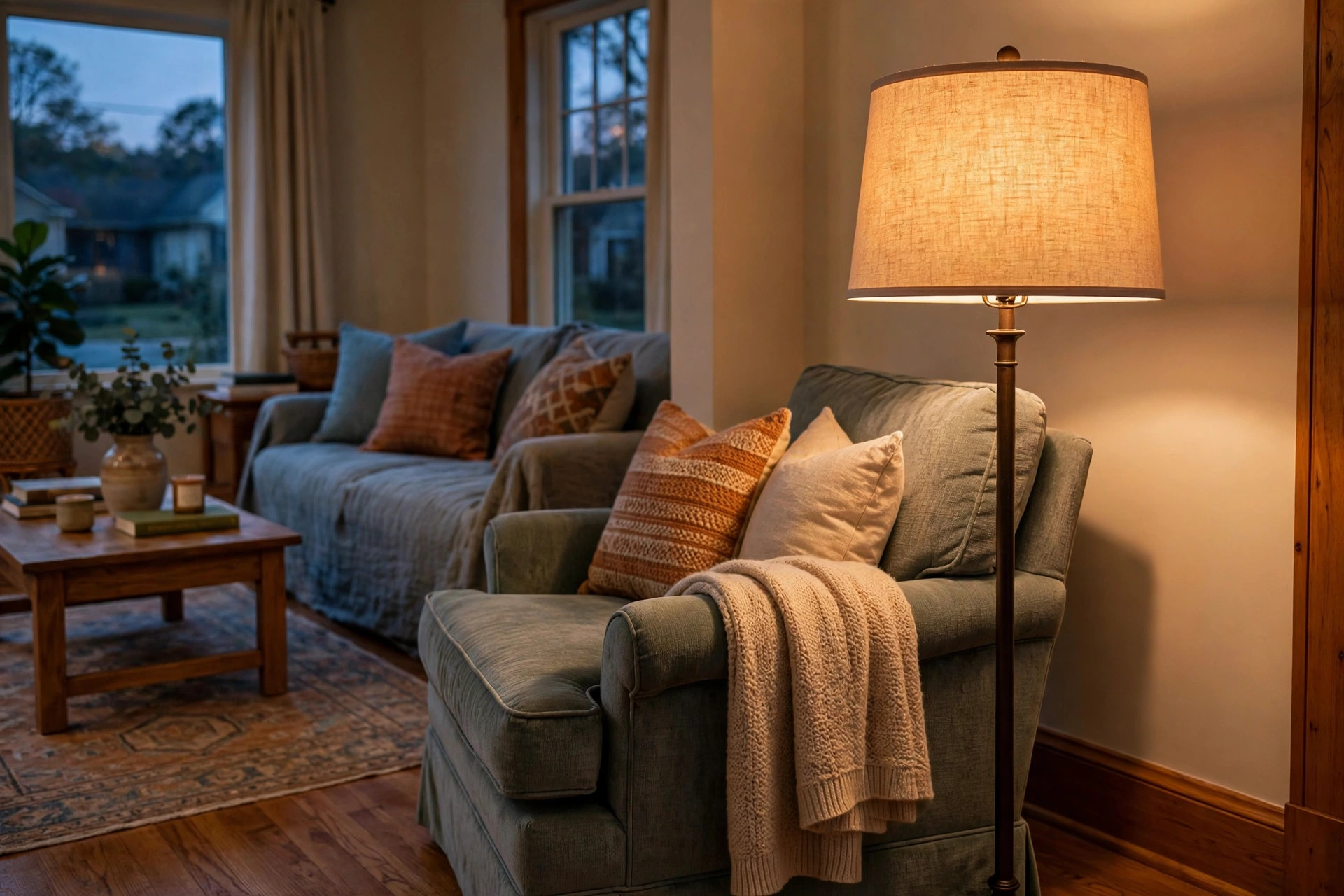

The living room floor lamps reviews buying guide usa starts with a simple truth. Light changes a room more than paint or furniture. A good floor lamp can turn a dark corner into a reading nook. It can make a plain sofa look warm and inviting. This guide walks through the main types of floor lamps sold in the United States, what to look for before you buy, what they cost, and how to keep them working for years.
A floor lamp is a tall light that stands on the floor. Most are between 55 and 72 inches tall. They plug into a wall outlet and need no wiring. That is why so many American homes have one.
Why a Floor Lamp Matters
Overhead lighting is harsh. A single ceiling fixture throws light straight down. It makes shadows. It flattens the room. Designers have long said that a room needs three kinds of light. Ambient light fills the room. Task light helps you read or work. Accent light shows off art or plants. A floor lamp can do all three, depending on the shade and the bulb.
A floor lamp also saves floor space. Unlike a table lamp, it needs no table. It can slide behind a sofa or stand in a corner. In small apartments this matters. One slim lamp can serve a whole sitting area.
Aesthetics matter too. A lamp is furniture as much as it is a light. The right lamp fits the style of the room. The wrong one clashes. Buying guides from retailers like Wayfair show how many shapes exist, from modern to farmhouse to industrial.
How to Choose the Right Lamp: Living Room Floor Lamps Reviews Buying Guide Usa
Measure the Space
Start with the tape measure. Most living room floor lamps stand 60 to 66 inches tall. That height keeps the shade or light source above eye level when you sit on the sofa. If the lamp is too short, the bulb will glare into your eyes. If it is too tall, it may crowd a low ceiling.
Check the base size too. A standard base is about 10 to 12 inches across. A narrow corner may need a smaller footprint. Arc lamps need much more room. They sweep out over a sofa or chair, and the base may sit three feet from where the light lands. Measure both spots before you order.
Match the Light to the Job
Think about what the lamp will do. A reader needs bright, direct light aimed at the page. A lamp for reading with an adjustable head or a pharmacy-style shade works best. An ambient lamp fills a corner with soft light. A torchiere, which points light at the ceiling, does this well.
Look at the bulb type. LED bulbs are now the standard in the United States. They use far less energy than old incandescent bulbs. They last many years. Many new lamps come with LED bulbs built in. Some let you change the bulb. Changeable bulbs give more freedom. Check the socket type before you buy.
Color temperature matters. It is measured in Kelvins. A 2700K bulb gives a warm, yellow glow like old lamps. A 3000K bulb is a touch brighter and still warm. A 4000K bulb looks cooler and more neutral. For living rooms, most buyers pick 2700K or 3000K. Warm light feels restful in the evening.
Check Brightness
Brightness is measured in lumens, not watts. An old 60-watt bulb gave about 800 lumens. For a reading lamp, look for 800 to 1100 lumens. For soft accent light, 400 to 600 lumens may be enough. Many floor lamps now list lumens on the product page.
Think About Controls
Many lamps now have a foot switch on the cord. You tap it with your foot to turn the lamp on or off. Others have a three-way switch for low, medium, and high light. A simple on-off switch is fine for most buyers.
Types of Living Room Floor Lamps
Torchiere
The torchiere is the classic floor lamp. It has a bowl-shaped shade that points up. Light bounces off the ceiling and fills the room with a soft glow. Torchieres suit general ambient light. They look best in corners.
Reading Lamp
A reading lamp aims light down and to the side. Many have a swing arm or an adjustable head. Pharmacy lamps are a popular style. They have a small shade that tilts toward the book. Reading lamps sit next to a chair or at the end of a sofa. The light should fall over your shoulder, not into your eyes.
Arc Lamp
An arc lamp curves out from a heavy base. The light hangs over a sofa or a coffee table. Arc lamps make a strong design statement. They need space. They also need a heavy base so the lamp does not tip. They suit larger living rooms with high ceilings.
Tree Lamp
A tree lamp has a central pole with several arms. Each arm holds a small shade or bulb. You can point each head in a different direction. Tree lamps suit rooms that need both task and accent light.
Tripod Lamp
A tripod lamp stands on three legs and has a modern, sculptural look. Tripod lamps suit mid-century and modern rooms. They pair well with bold living room wall art, which is another way to dress a bare wall.
What to Look for in Reviews
Online reviews help, but read them with care. Look for reviews that mention real use over months, not just the first day. A lamp that wobbles after a month has a poor base design. A shade that yellows in a year used cheap fabric.
Pay attention to assembly notes. Most floor lamps ship in a box and need simple assembly. Good reviews say the poles screw together easily. Bad reviews mention stripped threads or missing parts.
Look at the dimming notes. If a lamp says it is dimmable, check whether the bulb is included and whether it dims smoothly. Some built-in LEDs dim well. Others flicker at low settings. Reviewers often catch this.
Cost and Price Ranges
Floor lamp prices in the United States fall into clear bands. Budget lamps cost $30 to $80. They are simple in design. They use basic materials. Many work fine for years. Mid-range lamps cost $80 to $200. This is where most buyers shop. You get better shades, steadier bases, and nicer finishes. Design lamps cost $200 to $600 or more. These come from brands known for style, such as Article or West Elm. You pay for design and materials.
Arc lamps and tree lamps cost more than simple torchieres. A good arc lamp often starts near $150.
Price guides on sites like Apartment Therapy note that holiday sales in the United States can cut prices by 20 to 40 percent.
Materials and Build Quality
Metal
Metal lamps last. Steel and aluminum poles resist bending. A metal base gives weight, which matters for stability. Look for bases that weigh at least 10 pounds for tall lamps.
Wood
Wood lamps bring warmth. They suit farmhouse and traditional rooms. Check that the finish is even. Solid wood costs more but ages better.
Fabric Shades
Fabric shades soften light. Linen and cotton shades give a classic look. They collect dust. Vacuum them with a brush attachment now and then. Paper shades cost less but tear easily. Glass shades last longest and clean with a damp cloth.
Finish
Finishes set the mood. Brushed nickel and chrome suit modern rooms. Oil-rubbed bronze suits traditional rooms. Black metal fits almost any style. Matte finishes hide fingerprints better than polished ones.
Care and Upkeep
A floor lamp needs little care. Dust the shade once a month. A microfiber cloth works for most shades. For fabric shades, use a lint roller. It lifts dust without pushing it into the weave.
Wipe the pole and base with a damp cloth. Dry it after. Water can spot some finishes. Do not use harsh cleaners on painted or plated finishes.
Change bulbs when they dim or flicker. Let a hot bulb cool before you touch it. With LED bulbs this is rarely an issue, since they run cool.
Check the cord once a year. Look for cracks or frayed spots. If the cord is damaged, stop using the lamp. A damaged cord is a fire risk. Replacement cords are cheap, and an electrician can fit one in minutes.
Tighten the pole joints now and then. Poles can loosen with bumps and moves. A quarter turn keeps the lamp straight.
Safety
Safety is not a side note. A floor lamp is an electrical device in a busy room. Place the lamp where no one will trip on the cord. Run the cord along a wall when you can. Use a cord cover if the cord must cross a walkway.
Keep fabric shades away from hot bulbs. Old halogen torchieres ran very hot and caused fires when curtains or clothes touched them. Modern LED lamps run cool, but the rule still holds. Keep cloth and paper clear of the bulb.
Check the wattage rating on the socket. Never use a bulb with more watts than the rating allows. Look for a UL or ETL mark on the lamp. This mark means a lab tested it for safety.
Keep lamps away from water. Do not place a floor lamp next to a fish tank or a plant you water often. Keep small children from pulling on arc lamps or tree lamps. A heavy lamp can tip and hurt a child.
Where to Place the Lamp
Placement shapes the whole room. A torchiere in a dark corner lifts the whole room. A reading lamp beside the best chair invites someone to sit. Two matching lamps can frame a fireplace or a sofa. Symmetry calms a room.
Think about the rest of the room when you place a lamp. A lamp beside a sofa looks best with a soft luxury area rug under the seating group and a side table within reach.
Near an entry, a slim floor lamp can greet guests with warm light. It pairs well with a mirror, and many buyers shop for entryway decorative mirrors at the same time. Light plus reflection makes a small entry feel larger.
Avoid placing a lamp where its light hits a television screen. Glare ruins the picture. Place the lamp to the side of the screen, not behind the viewer.
Energy Use
LED floor lamps use very little power. A lamp with a 10-watt LED uses less energy than an old clock radio. Running it four hours a day costs only a few dollars a year in most states. The federal ENERGY STAR program lists efficient lighting products. Its site explains how lighting choices affect home energy bills.
Shopping Tips for the USA
Start with your budget and your room size. Then pick a type. Then compare three or four models. Do not buy the first lamp you see. Read the product details. Check the height, the base size, the bulb type, and the switch type.
Measure twice. Lamp photos can fool the eye. A lamp that looks slim in a photo may be wide in real life. The listed dimensions are the truth. Trust them.
Check the return policy. Large retailers like IKEA and CB2 allow returns within a set time. A lamp may look different in your room than in a photo. A fair return policy removes the risk.
Buy the right bulb at the same time if the lamp does not include one. Check the socket. Most floor lamps use an E26 medium base, the standard American bulb size. The product page should say.
Frequently Asked Questions
How tall should a living room floor lamp be?
Most living room floor lamps are 60 to 66 inches tall. This height keeps the light above the eye level of a seated person. For reading lamps, the bottom of the shade should sit near shoulder height when you sit in the chair.
What is the best bulb for a floor lamp?
An LED bulb is the best choice for most buyers. It uses little energy and lasts for years. Pick 2700K for warm light or 3000K for a slightly brighter warm light. Match the socket type to the lamp.
Are floor lamps safe to leave on all day?
Modern LED floor lamps run cool and use little power. They are safer than old halogen lamps. Still, it is wise to turn lamps off when you leave the house. A timer or smart plug can handle this for you.
Can one floor lamp light a whole living room?
One torchiere can light a small to medium room with soft ambient light. A large room needs more than one source. Add a table lamp or a reading lamp for balance. Dark corners may still need help.
How much should I spend on a good floor lamp?
Most buyers find a good lamp between $80 and $200. Budget lamps under $80 can work well. Designer lamps over $200 buy style and build quality. Set your budget before you shop.
Do floor lamps work with smart home systems?
Many do. Any lamp with a simple on-off switch can plug into a smart plug. The plug then joins your smart home system. Check the product details before you buy.
A Short Final Word
A floor lamp is one of the simplest upgrades a living room can get. No wiring. No contractor. Just a lamp, an outlet, and a good spot. This living room floor lamps reviews buying guide usa has covered the main types, what to check in reviews, what to pay, and how to stay safe. Measure your space. Pick the light for the job. Read a few honest reviews. Then buy the lamp that fits your room and your budget. Good light makes a house feel like home.
Related guides on this site include modern farmhouse tables buying guide usa, mid century chairs buying guide usa, and rustic console tables buying guide usa.
References
Apartment Therapy. (n.d.). Home design ideas and inspiration. https://www.apartmenttherapy.com Article. (n.d.). Modern furniture. https://www.article.com CB2. (n.d.). Modern furniture and decor. https://www.cb2.com Crate and Barrel. (n.d.). Furniture and home decor. https://www.crateandbarrel.com IKEA. (n.d.). Home furnishings. https://www.ikea.com The Spruce. (n.d.). Home and garden advice. https://www.thespruce.com Wayfair. (n.d.). Furniture and home goods. https://www.wayfair.com West Elm. (n.d.). Modern furniture and home decor. https://www.westelm.com
Was this guide helpful?

About Emily Rodriguez
The My Garden US editorial team writes practical, in-depth home and garden guides for American homeowners — tested advice, no fluff.
You May Also Like

Mid Century Chairs for Texas Homes USA: A Plain Guide
May 18, 2026 0 views
Leather Recliner Chairs: Where to Buy USA
April 25, 2026 0 views
Sofa Console Tables in California Homes: A Plain Guide to Choice and Care
January 16, 2026 0 views