
A Plain Start to Your Search
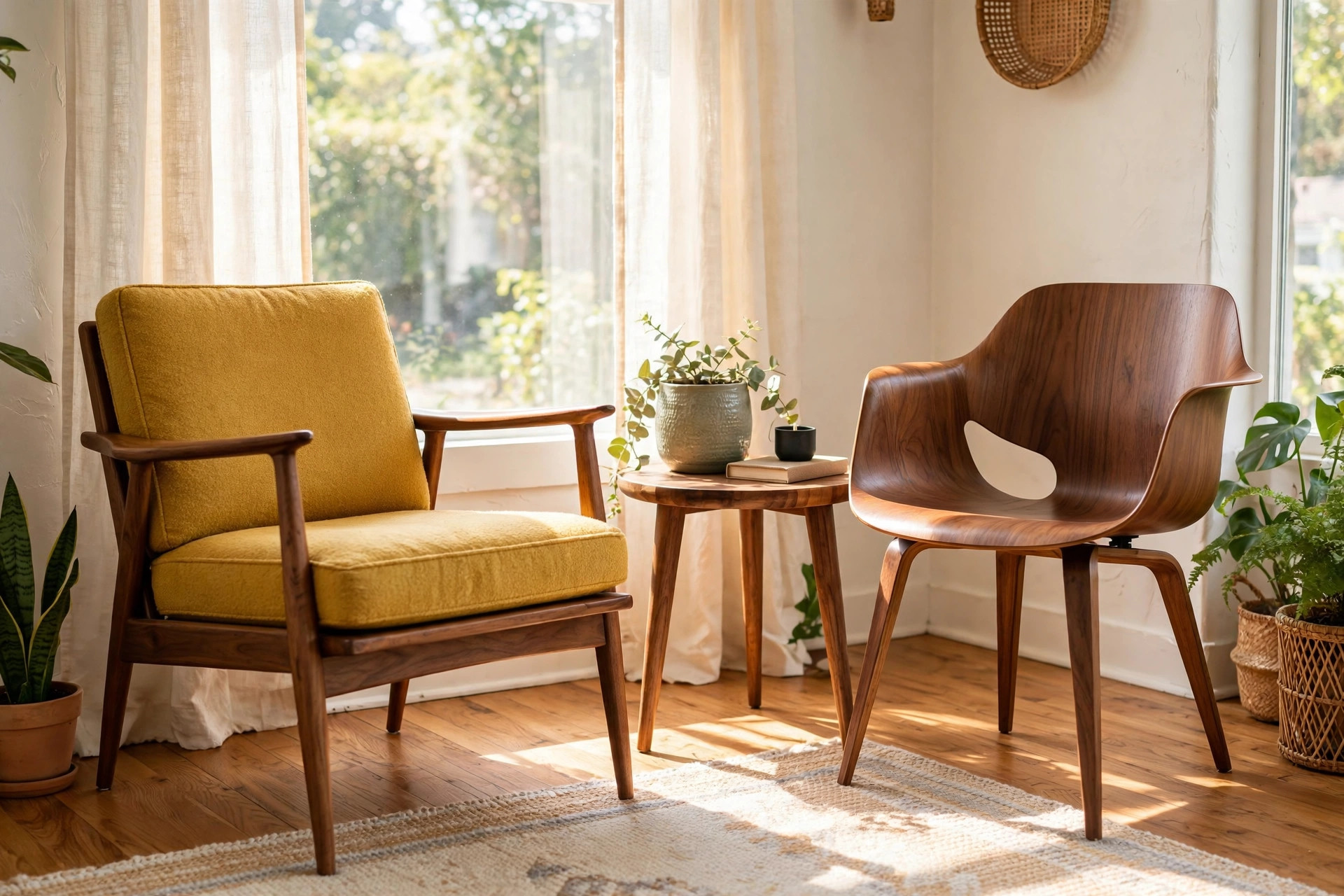
Many people in the United States want chairs that look warm, clean, and classic. The mid century style fits this wish. It comes from the years between the late 1940s and the early 1970s. Designers of that time made chairs with simple lines, soft curves, and honest wood. The look never went away. Today it is as strong as ever.
This mid century chairs buying guide usa will help you shop with calm. You will learn what makes a chair truly mid century. You will learn which woods last longest. You will learn how to check a chair for strength. You will also learn fair prices and easy care steps. By the end, you will know how to bring home a chair that is both fine to look at and safe to sit in for years.
The word “mid century” is used on many tags in stores. Not every tag tells the truth. Some chairs only copy the shape. This guide teaches you how to tell the real style from a cheap copy. Take your time. A chair is a thing you will use every day.
Why It Matters: Mid Century Chairs Buying Guide Usa
Comfort Comes First
A chair must feel good. This seems plain, but many buyers forget it. They pick a chair for its looks and learn too late that the seat is hard or the back gives no rest. Good mid century design was made for real bodies. The seat depth was planned for long talks. The back tilt was planned for ease. When you shop, sit in the chair if you can.
A Chair Shapes the Room
One chair can change a whole room. Place a mid century armchair by a window and the corner comes alive. The style mixes well with other looks too. It sits fine next to a modern sofa or an old wood table. That is why so many American homes keep these chairs for ten, twenty, or thirty years. They do not fall out of fashion the way bold trends do. Many design editors note that the style stays fresh because it is simple. You can read more home style ideas on The Spruce and HGTV.
Good Wood Holds Value
Chairs made of solid walnut, teak, or oak keep their worth. Even used ones sell well. Cheap chairs made of thin board lose value fast. They break sooner too. So a good mid century chair is not just a seat. It is a small asset for your home. Many families hand these chairs down to children.
What to Look For
The Frame
The frame is the bone of the chair. Look for solid hardwood. Walnut is the classic choice for the mid century look. Teak is also common and very strong. Oak and beech are fine too. Press the frame with your hand. It should feel firm and still. Wiggle the legs. A good chair does not sway.
Avoid chairs where the legs are thin hollow tubes with no weight. Metal legs can be fine on some styles, but the best mid century dining chairs have wood legs. Check the joints. Dovetail and mortise joints are signs of care. Staples and thin glue alone are signs of haste.
The Seat
Seats come in many forms. Some are molded plywood with a thin pad. Some are full foam over a wood base. Some are woven cord or cane. Sit down and feel the edges. A good seat has no sharp rim that cuts into your legs. The foam should spring back when you stand up. If your handprint stays in the foam, the foam is weak.
Seat height matters too. Most dining seats sit 17 to 19 inches from the floor. Lounge seats sit lower, around 15 to 16 inches. Make sure the height fits your table or your own body. A seat that is too low at a tall table will hurt your back over time.
The Upholstery
Original mid century chairs often used wool, tweed, or leather. New chairs use these too, along with cotton blends and man-made fabrics. Each has its own care needs. Leather lasts long but costs more. Wool resists stains well. Cotton is soft and easy to clean but wears faster. Ask the store for a fabric sample if you plan to use the chair daily.
Look at the seams. They should be straight and tight. Loose threads at the corners mean poor work. If the chair has buttons or tufts, check that each one is firm. Retailers such as West Elm, Article, and CB2 show close-up photos of seams online. Study those photos before you buy.
The Finish
Wood finish should feel smooth, not sticky. Run your hand along the arm. A good finish has an even color with no pale spots. Cheap stain can look blotchy. If the chair is vintage, some wear is normal. Deep cracks or flaking finish are different. They can mean the wood dried out or was stored in a damp place.
Types and Options
Dining Chairs
Mid century modern dining chairs are the most common type. They are light and easy to move. Many have the classic molded seat with four wood legs. Some have a padded seat for longer meals. When you buy a set, check that each chair matches the others in color and height. A set of four or six should look like one family. If you are also shopping for a table, see our dining room sets buying guide for help with matching sizes.
Lounge and Accent Chairs
Lounge chairs sit lower and lean back more. They are made for reading and rest. Accent chairs are smaller. They add a spot of color to a room. Both types often show the warm walnut arms and tapered legs that mark the style. Pair an accent chair with a footrest or a small stool for full comfort. You may also enjoy our living room ottomans buying guide when you plan a reading corner.
Rockers and Swivels
Some mid century chairs rock gently. Others turn on a swivel base. These are fun and useful. Test the motion in the store. It should be smooth and quiet. Check the base bolts. They should be tight and rust free.
Recliners
A mid century recliner has clean lines, not the bulky look of later years. It leans back in smooth steps. If you want a chair that leans back far, read our leather recliner chairs buying guide as well. Compare the tilt locks. A good lock holds firm and lets go with a light touch.
Vintage Versus New
Vintage chairs have true old wood and real history. They can be a joy. But they may need new foam or fresh glue. New chairs give you a warranty and clean fabric. Many good new chairs copy the old designs with care. Design communities on Houzz and Apartment Therapy share photos of both old and new pieces in real homes.
Cost and Price
What Chairs Cost in the USA
Prices vary a lot. A basic new mid century dining chair from a large store may cost between 80 and 200 dollars. A well-made lounge chair may cost between 400 and 1,200 dollars. True vintage pieces from known makers can cost much more. Some rare chairs sell for several thousand dollars.
Do not trust a very low price on a “solid walnut” claim. Real walnut costs real money. A 60-dollar chair that claims to be solid walnut is likely walnut-colored stain on cheap wood. That is fine if the price is honest, but the claim is not.
Where Your Money Goes
Three things set the price. First, the wood. Solid hardwood costs more than veneer over board. Second, the work. Hand-finished joints cost more than machine staples. Third, the fabric. Real leather and good wool cost more than thin polyester. When a chair costs more, ask the seller which of these three is the cause.
Sales and Timing
Big stores run sales on holidays. You can often save 15 to 30 percent on brands like IKEA, Wayfair, and Crate and Barrel. Floor models can be a good deal too. Check them for damage first. Sit in them. Look at every side. A small scratch on the back leg may earn you a fair discount.
Shipping and Returns
Chairs are bulky. Shipping can add 50 to 150 dollars per chair. Some stores ship free. Always check before you pay. Also read the return rules. A 30-day return window is common. Keep the box until you are sure you love the chair. If the chair arrives broken, take photos at once and call the store the same day.
Care and Upkeep
Wood Care
Dust wood frames once a week with a soft dry cloth. Once or twice a year, use a wood cleaner made for furniture. Do not use harsh sprays. They can dull the finish. Keep chairs out of strong direct sun. Sun can fade walnut and dry out joints over time. Keep them away from heat vents too. Dry heat cracks wood.
Fabric Care
Vacuum fabric seats with a soft brush head each month. Blot spills at once with a clean cloth. Do not rub. Rubbing pushes the stain deeper. For tough stains, use a cleaner made for that fabric type. Test it first on a hidden spot. Leather needs a leather conditioner twice a year. This keeps it soft and stops cracks.
Tightening and Repair
Once a year, turn the chair over and check all screws and bolts. Tighten what is loose. If a joint wobbles, wood glue and a clamp can fix it. Do this before the wobble grows. Small repairs now stop big breaks later. If the foam sags, a local upholstery shop can replace it for far less than a new chair costs.
What to Avoid
Do not drag chairs across hard floors. Lift them. Dragging loosens legs and scratches floors. Do not stand on chairs. They are made for sitting weight, not for the force of a standing foot. Do not let pets scratch the legs. A simple scratch guard or a rug under the chair helps a lot.
Safety
Check for Sturdy Build
Sit and shift your weight side to side. The chair should stay firm. Lean back gently. It should not tip. Lift the chair by one arm. A well-made chair feels solid and balanced. A weak chair twists in your hands. If you shop online, read the weight limit in the product details. Most dining chairs hold 250 pounds or more. Make sure the limit fits your home.
Mind the Edges
Some vintage chairs have sharp metal trim or rough wood edges. Run your hand over every edge before you buy. This matters most if children use the chair. Sand down rough spots or choose a different chair.
Tip-Over Risk
Tall thin chairs can tip if a child climbs them. Place such chairs where small children play less, or pick a wider, lower style for family rooms. Keep the chair on a flat rug or floor. A wobbly floor makes any chair less safe.
Fire and Fabric
Some fabrics burn faster than others. Wool and leather resist flame better than thin synthetics. If you place a chair near a fireplace or heater, keep a safe distance. Never set a hot pan or iron on a fabric seat. Common sense keeps your chairs and your home safe.
FAQ
How can I tell a real mid century chair from a fake?
Look at the wood and the joints. Real mid century chairs use solid hardwood with clean, tight joints. The lines are simple and the shape feels balanced. Fakes often use thin board with printed wood grain. They feel light and weak. The finish may look plastic. Trust your hands as much as your eyes.
Are mid century chairs good for daily use?
Yes, if you buy good ones. The style was made for daily life. Solid wood frames and firm seats hold up well. Choose strong fabric if the chair will see daily meals or work. Cheap copies wear out fast. A well-made chair can serve daily for decades.
What wood is best for mid century chairs?
Walnut is the classic and a top pick. Teak is very strong and resists damp. Oak is hard and takes knocks well. Beech is smooth and common in bent-wood designs. Any of these can last long if the build is good. Avoid soft pine or thin board for chairs you will use each day.
How many mid century chairs should I buy for a dining table?
A 60-inch table fits six chairs well, three on each side. A 48-inch round table fits four. Leave at least 24 inches of table edge per person. Measure your room too. Each seated person needs about 36 inches from the table edge to the wall behind them. Do not crowd the room.
Do mid century chairs work with modern decor?
Yes, very well. The clean lines fit modern rooms with ease. Many designers mix one or two mid century chairs with a modern sofa. The warm wood softens cool modern colors. Photos on Apartment Therapy show many such mixes in real homes.
Should I buy vintage or new mid century chairs?
Buy new if you want a warranty and easy returns. Buy vintage if you love true old wood and do not mind small repairs. Check vintage chairs for firm joints and clean frames. A fair price for vintage depends on the maker and the state of the piece. When in doubt, start with new.
A Final Word
A mid century chair is a quiet thing. It does not shout. It sits in the corner and does its work day after day. Buy with care and it will pay you back with comfort for many years. Use this mid century chairs buying guide usa as a checklist when you shop. Check the frame. Check the seat. Check the seams. Ask about the wood. Then sit down, rest a while, and enjoy the chair you chose.
References
Apartment Therapy. (n.d.). Home design ideas and inspiration. https://www.apartmenttherapy.com Article. (n.d.). Modern furniture. https://www.article.com CB2. (n.d.). Modern furniture and decor. https://www.cb2.com Crate and Barrel. (n.d.). Furniture and home decor. https://www.crateandbarrel.com HGTV. (n.d.). Home and garden ideas. https://www.hgtv.com Houzz. (n.d.). Home design and remodeling. https://www.houzz.com IKEA. (n.d.). Home furnishings. https://www.ikea.com The Spruce. (n.d.). Home and garden advice. https://www.thespruce.com Wayfair. (n.d.). Furniture and home goods. https://www.wayfair.com West Elm. (n.d.). Modern furniture and home decor. https://www.westelm.com
Was this guide helpful?

About Sarah Mitchell
The My Garden US editorial team writes practical, in-depth home and garden guides for American homeowners — tested advice, no fluff.
You May Also Like

A Practical Sofa Console Tables American Homes Guide
April 21, 2026 0 views
Couch Throw Pillows: Where to Buy in the USA
July 20, 2026 0 views
Sofa Console Tables Buying Guide USA: How to Choose
January 17, 2026 0 views